Shoulder clicking and popping without pain is common and often harmless: tendons and soft tissue sliding over bone, or gas bubbles shifting in the joint, can make noise in a healthy shoulder. Noise matters when it comes with pain, weakness, catching, or a feeling that the shoulder slips out and back, which can point to a labral tear, instability, rotator cuff irritation or arthritis. An independent physical therapist near Carmel can test which, if any, of these is behind your clicks.
Last reviewed By the Monon Therapy Collective editorial team
- Painless noise
- Often harmless; keep training
- Noise with pain or slipping
- Worth an examination
- Questionnaire area
- Shoulder
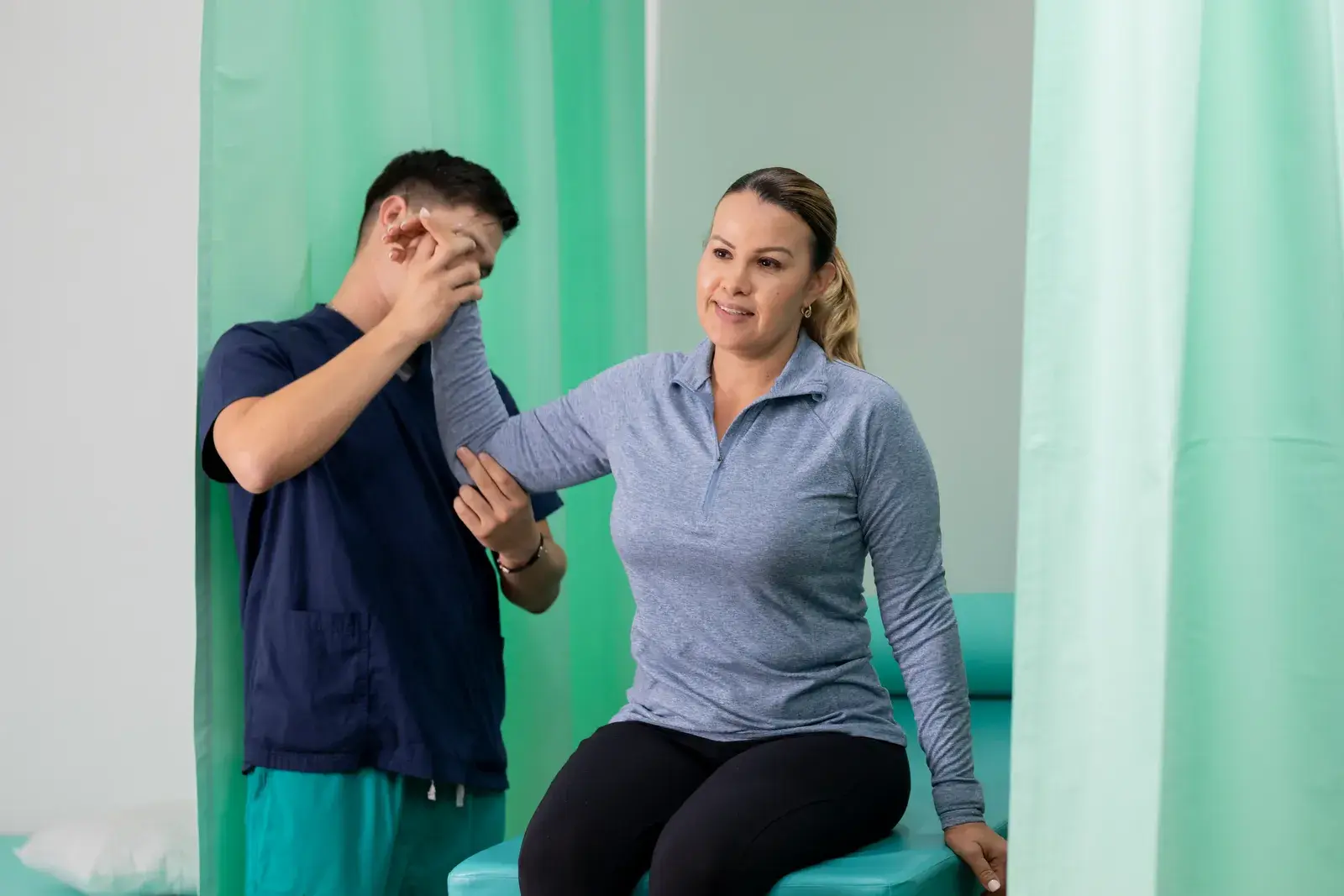
Is a shoulder that clicks but does not hurt something to worry about?
Usually not. A shoulder that clicks or pops without pain, swelling, weakness or a loss of movement is generally safe to keep using and training. The shoulder is a shallow ball-and-socket with many tendons and a large shoulder blade gliding over the ribs, so some noise is normal.
What changes the picture is company. Noise plus pain at the same point in the movement, a catch that stops you mid-reach, or the sense that the ball shifts and clunks back are the combinations a clinician wants to examine. If your shoulder is only noisy, a sensible strength program is often all it needs.
What can cause painful shoulder clicking?
These are the usual sources when noise comes with symptoms. The table describes typical patterns; a therapist confirms which fits.
| Possible cause | What it tends to feel like | Read more |
|---|---|---|
| Labral tear | Deep catching, clicking or locking, often with overhead or throwing movements | Shoulder labral tear |
| Shoulder instability | A slipping or “dead arm” feeling, clunks when the arm is up and back | Shoulder instability |
| Rotator cuff or bursa irritation | Painful arc as the arm lifts, with a soft grinding | Shoulder impingement |
| Shoulder arthritis | Grinding and stiffness, especially in people over 50 | Shoulder arthritis |
| AC joint problem | Pain and clicking on top of the shoulder, worse reaching across the body | AC joint sprain |
| Shoulder blade control | Clunking or snapping under the shoulder blade, sometimes with winging | Winged scapula |
Does a popping shoulder mean it is coming out of the socket?
Not by itself. AAOS OrthoInfo describes instability as the ball being forced partly or fully out of the socket, and once the supporting tissues are loose or torn, slips can happen again. People with instability usually describe a slipping sensation, apprehension with the arm out to the side and back, or episodes of the arm going weak, rather than noise alone.
If you have dislocated the shoulder before and now feel clunks in similar positions, mention it on your questionnaire. A therapist focuses on rotator cuff and shoulder blade strength and on gradually rebuilding confidence in those positions; recurrent dislocation in young athletes is a reason to involve an orthopedic surgeon early.
What should I watch for before a shoulder noise assessment?
A short log makes the first visit faster. Note these over a week of normal activity.
- Which movement makes the noise: reaching overhead, behind the back, across the body, or pushing?
- Does it hurt at the same moment as the click, or is it silent pain-free noise?
- Has the arm ever felt like it slipped, gone dead or locked?
- Is there weakness lifting a gallon of milk to a shelf?
- Did it start after a fall, a lift in the gym, or a season of pitching or serving?
Which tests does a therapist use for a noisy, painful shoulder?
A therapist measures active and passive range, tests rotator cuff strength in several positions, runs labral and instability tests that load the joint in specific angles, examines the AC joint, and watches the shoulder blade as you lift and lower. Noise reproduced with a test is less important than whether the test also reproduces your pain.
Plans are mostly strength based: rotator cuff work such as banded external rotation, shoulder blade control, and a graded return to the overhead or throwing task. Pickleball players and swimmers often need their volume adjusted while the shoulder builds capacity. If tests suggest a significant tear, the therapist refers you on. Start with the shoulder questionnaire.
When a clicking shoulder needs urgent care
- Shoulder pain with chest pressure, shortness of breath, sweating or pain into the jaw: call 911.
- The shoulder looks deformed after a fall or you cannot move the arm.
- Sudden weakness lifting the arm after a fall or a heavy lift.
- A hot, red, swollen shoulder with a fever.
If you think it is an emergency, call 911.
