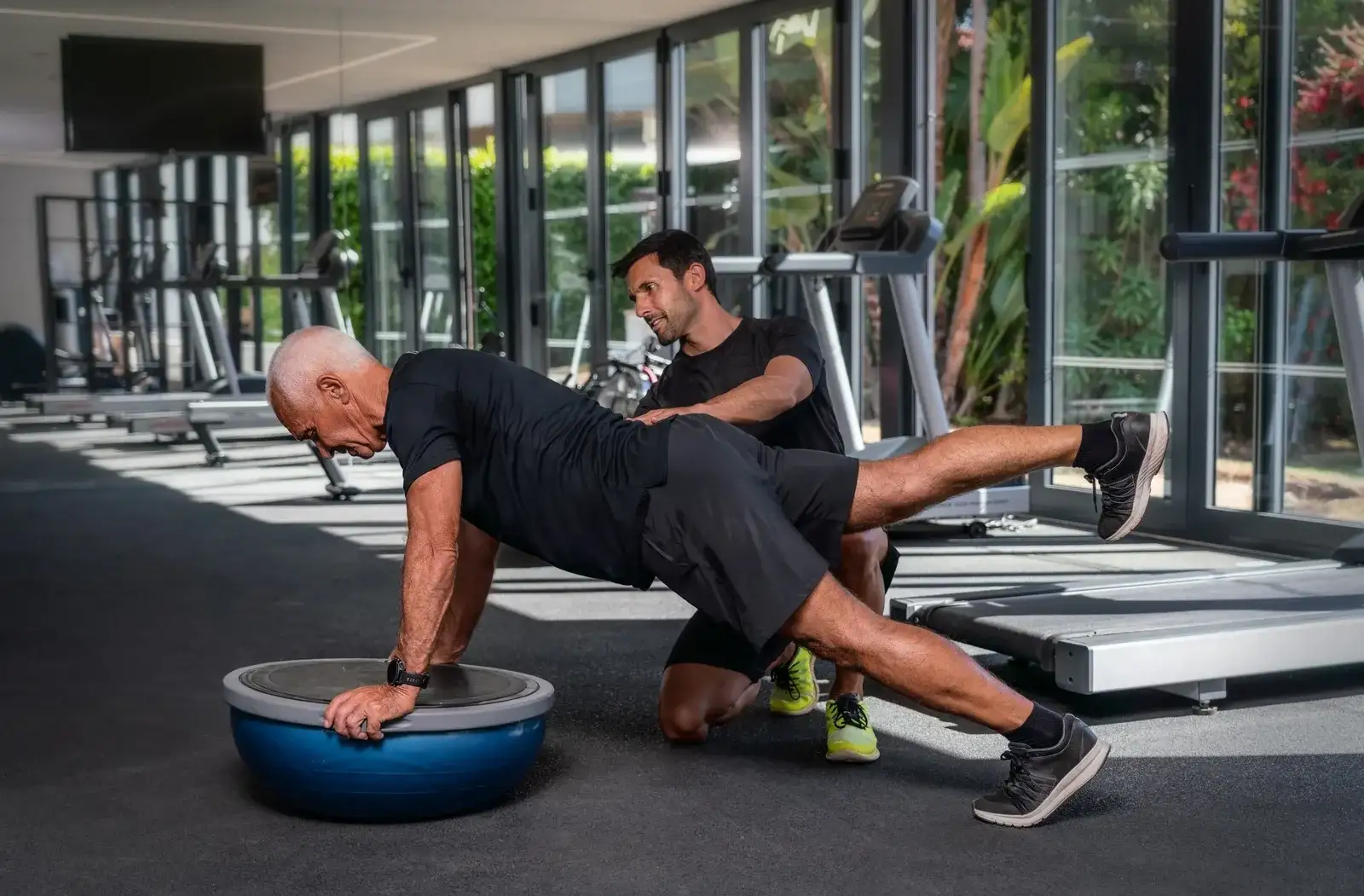
Return-to-sport testing in Carmel, Indiana
Return-to-sport testing is a set of objective physical and psychological checks used to decide whether an athlete is ready to go back to full training and competition after an injury or surgery. In Carmel, Indiana, the licensed physical therapist you are matched with tests strength symmetry, hop performance, movement quality and psychological readiness one-on-one, then gives you a written summary of what passed and what needs more work. Meeting the criteria lowers risk but cannot remove it, and after surgery the final clearance belongs to your surgeon.
What return-to-sport testing measures
Return-to-sport testing measures whether your body and your confidence have recovered enough for the demands of your sport. Time since injury is a poor guide on its own. Two athletes at the same point after the same operation can differ widely in strength and control, so current practice favors criteria you must meet over dates on a calendar.
Testing is most often requested after ACL reconstruction, but the same approach applies after ankle sprains, hamstring strains, meniscus surgery, Achilles injuries and shoulder surgery in overhead athletes. The battery covers four areas, and each one is explained to you before you perform it. These are field tests that need space, a tape measure and a stopwatch, not laboratory equipment.
- Strength symmetry: how the injured side compares with the uninjured side under load
- Hop tests: how far, how fast and how evenly you can hop on each leg
- Movement quality: how your trunk, hips and knees behave when you land, cut and decelerate
- Psychological readiness: your confidence in the limb and your fear of reinjury
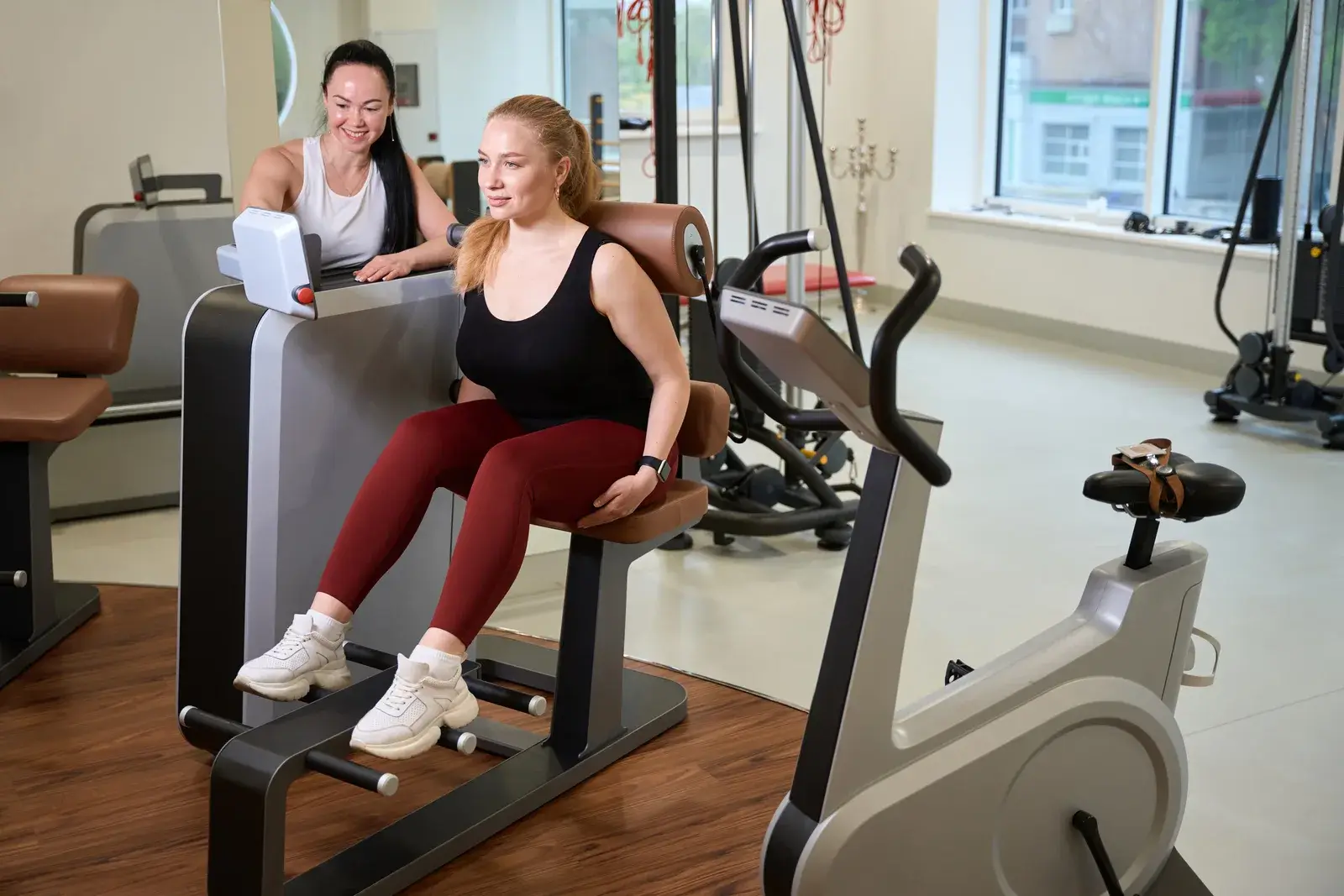
The tests explained: strength, hops, movement and mindset
Strength symmetry is tested with loaded, repeatable exercises using the lifting rack, cable system, dumbbells and bench in the private suite. Examples include a single-leg rise from the bench, a loaded split squat, a single-leg calf raise count and, for shoulders, pressing and pulling tests on the cable system. Each side is tested the same way, and the results are compared.
Hop tests are performed on the indoor turf corridor. The standard set includes a single hop for distance, a triple hop, a crossover hop in which you hop forward while crossing back and forth over a line, and a timed hop over a set distance. A common benchmark is for the recovering leg to come close to the other leg on every test, with landings you can hold.
Movement quality is judged by watching step-downs, jump landings, deceleration and cutting for signs such as a knee that collapses inward or a trunk that leans away from the injured side. Psychological readiness is assessed with a short questionnaire and a frank conversation, because athletes who are physically ready but fearful often move differently.
When testing happens during rehab and what the results mean
Testing is not a single exam at the end. It is most useful as a series of checkpoints that open the next stage of rehab: one before you start running, one before jumping and cutting drills, and a full battery before unrestricted practice. After ACL reconstruction, many surgeons and therapists do not plan a full return to pivoting sports before about nine months, and only when criteria are met.
You receive a written summary that lists each test, your result on each side and what it means. If you fall short somewhere, the summary becomes a training target, not a verdict. A result such as a weak single-leg rise or an uneven triple hop tells you exactly what to work on before the next test.
No battery of tests can rule out another injury. What testing does is replace guesswork with information, so you, your therapist and your surgeon can make a sound decision together, and so the last phase of your training is aimed at the right target.
- Checkpoint 1, before running: full joint motion, minimal swelling, and basic single-leg strength and control.
- Checkpoint 2, before jumping and cutting: closer side-to-side strength results and clean double-leg and single-leg landings.
- Checkpoint 3, before full practice: the complete hop battery, sport-speed movement checks and the readiness questionnaire.
- Follow-up: a staged return from non-contact practice to full competition, with a re-test if anything changes.
Who should book testing and who is not ready yet
Testing suits athletes who are in the later stages of rehab, or who were discharged elsewhere and want an objective check before the season starts. You do not need to have done your rehab with a therapist in the network. It also suits active adults going back to physically demanding recreation, such as skiing, trail running or competitive pickleball, after a significant injury.
You are not ready for a full battery if the joint is still swollen, you lack full range of motion, daily activities are painful, or your surgeon has not cleared running and jumping. In those cases your therapist starts with an evaluation and ordinary rehab, and testing comes later. After surgery, the decision to clear you for sport rests with your surgeon, and the therapist’s report is there to inform it.
Stop and seek medical advice if you have a new episode of the joint giving way, locking, or sudden swelling after a twist. Those signs may mean a new injury, and it should be examined by a physician before you do any hopping, landing or cutting, in a test or anywhere else.
What comes after you pass, or do not pass, at FlexWerk
If the results show gaps, the next step is targeted rehab through sports physical therapy, with a re-test once your body has had time to adapt, often after four to six weeks of focused training. If your history involves a knee ligament, the page on ACL injury rehab explains the longer road in detail.
If you pass, you still benefit from continued strength work, because conditioning tends to slip once formal rehab stops and the season takes over. One option is post-rehab strength training, where an independent FlexWerk coach picks up your program without you changing buildings. Since coaches are personal trainers, not clinicians, they work from your test summary and your therapist’s written guidance.
To arrange testing, complete the online assessment and note your injury, surgery date and sport. We reply by call or text, and the free phone consultation is a good place to check whether you are at the right stage. The facility is open Monday to Friday from 5 AM to 9 PM and on weekends from 7 AM to 4 PM, and testing is scheduled inside those hours.
Who it helps
Return-to-sport testing is useful if
- You are several months into rehab after ACL reconstruction or another sports surgery
- A surgeon or coach has asked for objective results before clearing you
- You were discharged from therapy but do not trust the limb at full speed
- You have had repeated ankle sprains or hamstring strains and want to know what is still lacking
- Your season or a ski trip is approaching and you want a clear answer
- You want numbers to guide the last phase of your training
Conditions
Problems this kind of care treats
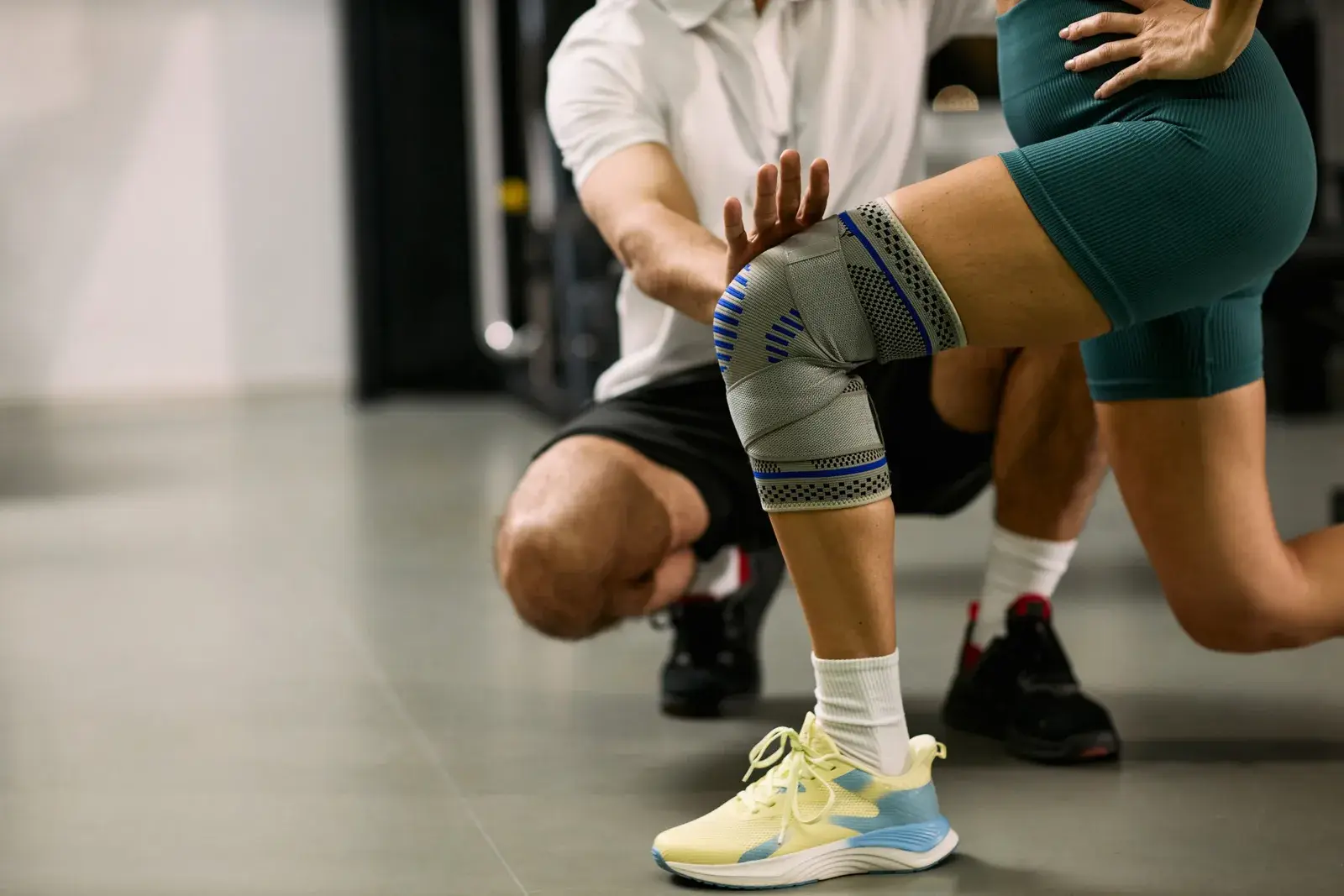 ACL injuryPrehab, post-reconstruction rehab and criteria-based return to sport for ACL injuries, one-on-one in a private suite.
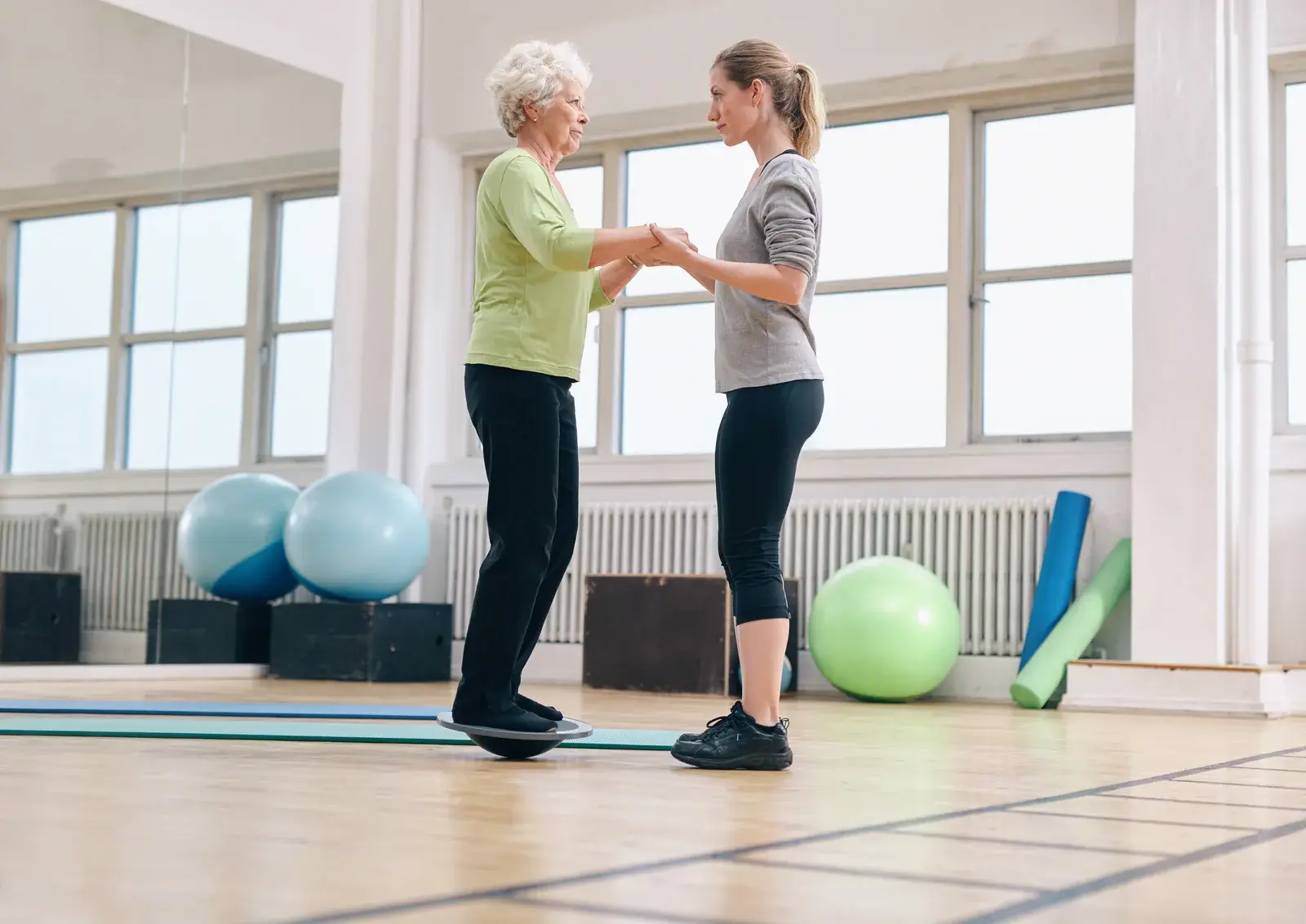 Ankle sprainRehab for fresh sprains and ankles that keep rolling: strength, balance retraining and a tested return to sport.
 Knee painHelp for runner’s knee, meniscus irritation, tendon pain and arthritis flares, built on progressive strength work.
Two-minute assessment
Not sure which therapist is right for you?
Answer a few questions about what hurts, how long it has been going on and what you want to get back to. Our matching team reads every answer and proposes a licensed physical therapist in the network whose focus, schedule and coverage fit. Two minutes, no obligation.
- No referral needed to start in Indiana (first 42 days)
- We check which therapists work with your plan before you book
- One-on-one care in a private suite at Carmel City Center
Questions
About return-to-sport testing
Information on this website is general education, not medical advice, a diagnosis or a treatment plan. Only a licensed clinician who examines you can advise on your condition. If you may be having a medical emergency, call 911.
Something we did not cover? Ask the matching team or ring (888) 353-9975.
How long does a return-to-sport test take?
Plan for a full session. The battery includes a warm-up, strength tests on both sides, several hop tests with rest between attempts, movement checks and a short questionnaire, followed by a review of the results.
What should I bring to return-to-sport testing?
Wear athletic clothing and the shoes you train in, and bring any brace you use for sport. If you have a surgeon’s protocol or results from earlier testing, bring those too so your therapist can compare.
What happens if I do not pass?
You get a specific list of what fell short and a plan to address it. Common shortfalls are single-leg strength and hop symmetry, both of which respond to focused training, and a re-test follows a training block.
Do you test high school athletes?
The services described on this site are built for adults. If you are asking about a teenage athlete, call the matching team at (888) 353-9975 first so we can tell you honestly whether a therapist in the network sees younger athletes, and which one. Each therapist sets their own policy for patients under 18, and a parent or guardian makes the enquiry.
Do you use force plates or isokinetic machines?
The testing described here relies on established field tests and loaded strength measures, which need a rack, dumbbells, a tape measure and a stopwatch, not laboratory devices. If your surgeon specifically requests isokinetic machine testing, their office can tell you where it is performed, and your therapist can work from those results.
Google reviews
What guests say about FlexWerk
These are live Google reviews of FlexWerk at Carmel City Center, the private-suite facility where therapists in the network practise.
Continue
Related services
- Sports physical therapyRehab for active adults that goes past pain relief to the strength, power and movement your sport actually demands.
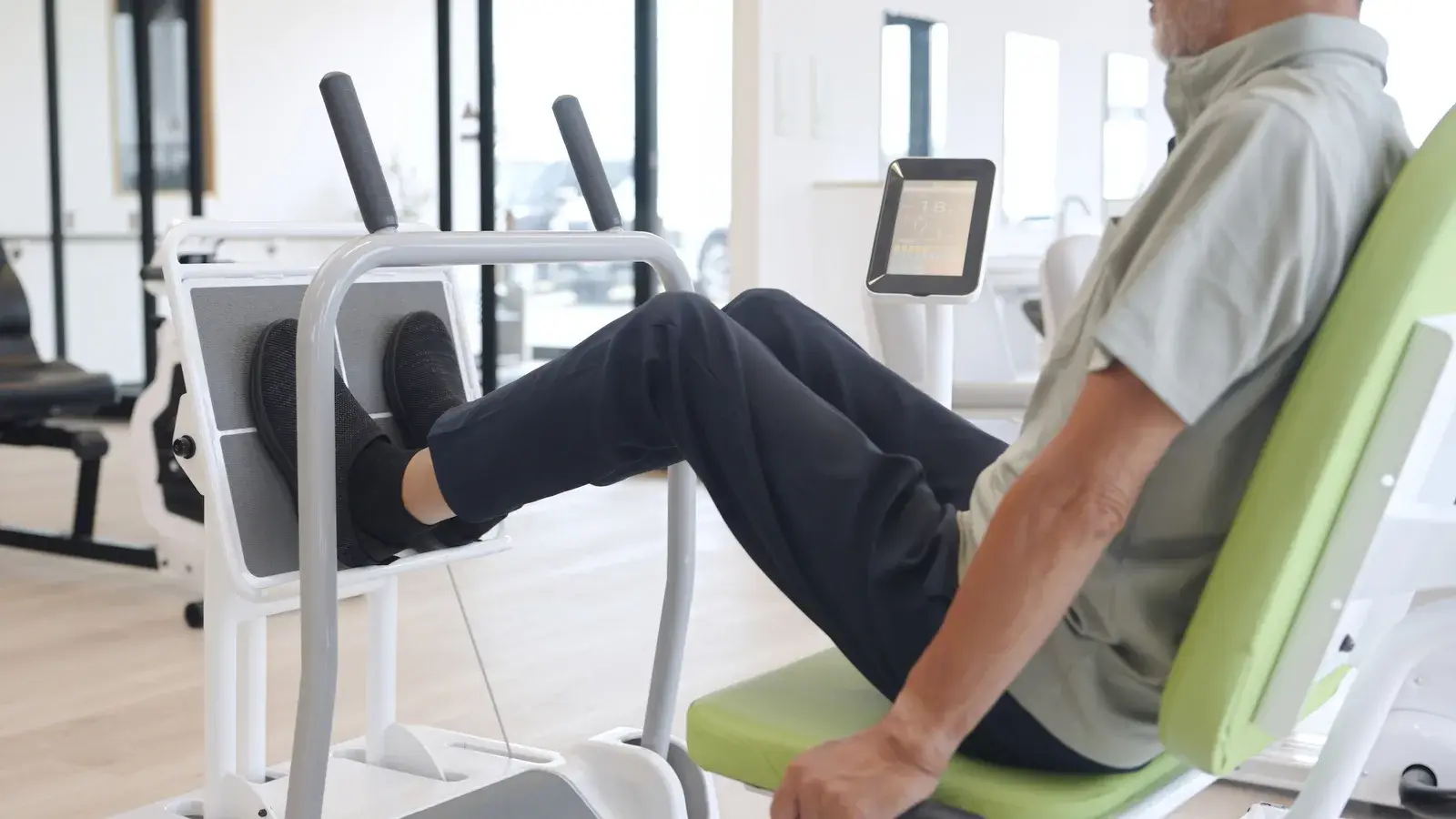 Post-surgical rehabilitationProtocol-led rehab after joint replacement, ligament, tendon and spine surgery, in a quiet private room instead of a crowded gym.
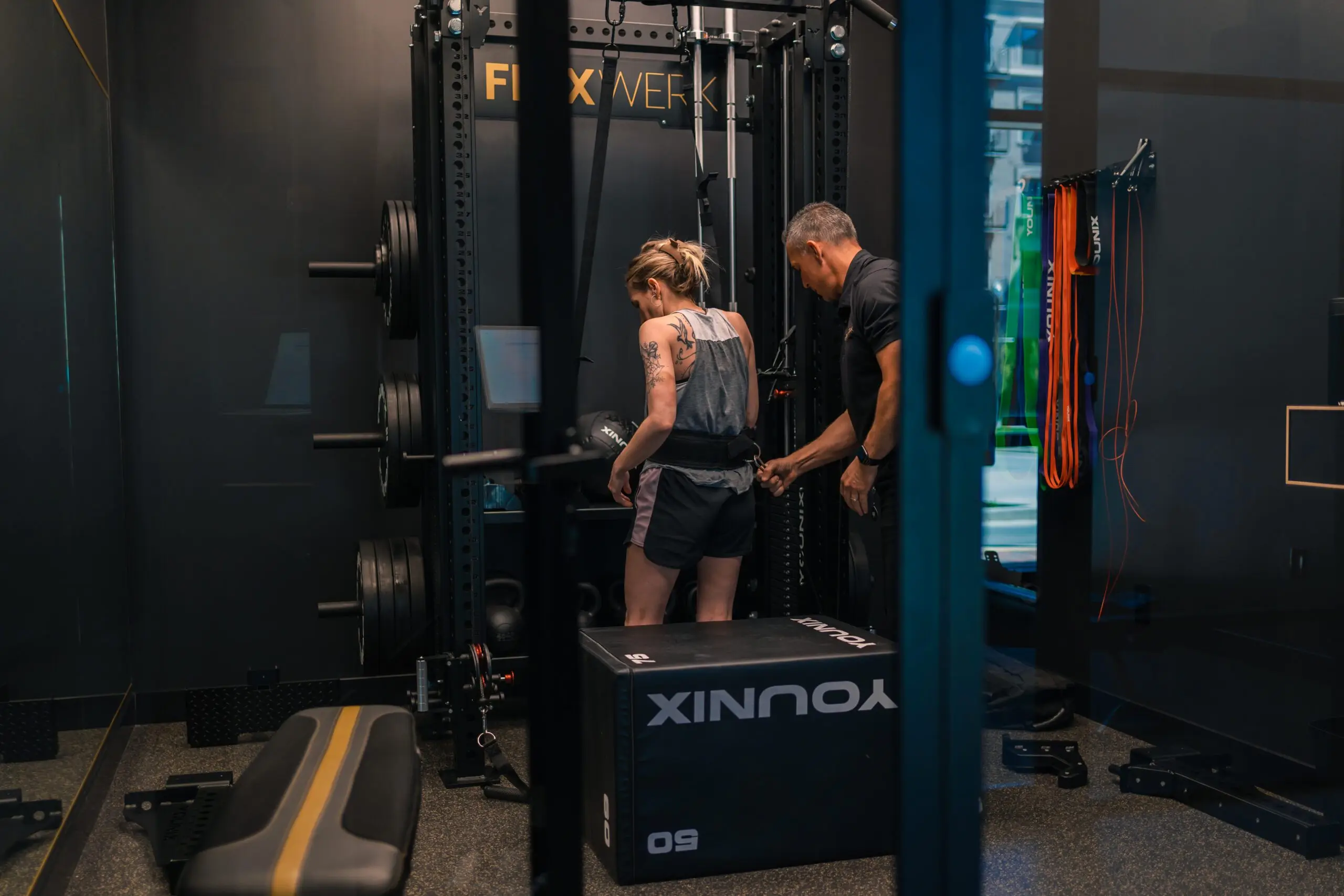 Post-rehab strength trainingThe bridge from discharge to lasting strength: a written handoff from your therapist to a FlexWerk coach in the same building.
Page reviewed By the Monon Therapy Collective editorial team

Carmel City Center · Carmel, Indiana
Start with a conversation
Tell us what hurts and what you want to get back to. We will tell you honestly whether a therapist in the network is likely a good fit for what you describe, and match you with an independent, licensed therapist who is. Only that therapist can assess what will help.
885 Monon Green Blvd, Suite 120, Carmel, IN 46032 · Monday to Friday 5 AM to 9 PM · Saturday and Sunday 7 AM to 4 PM