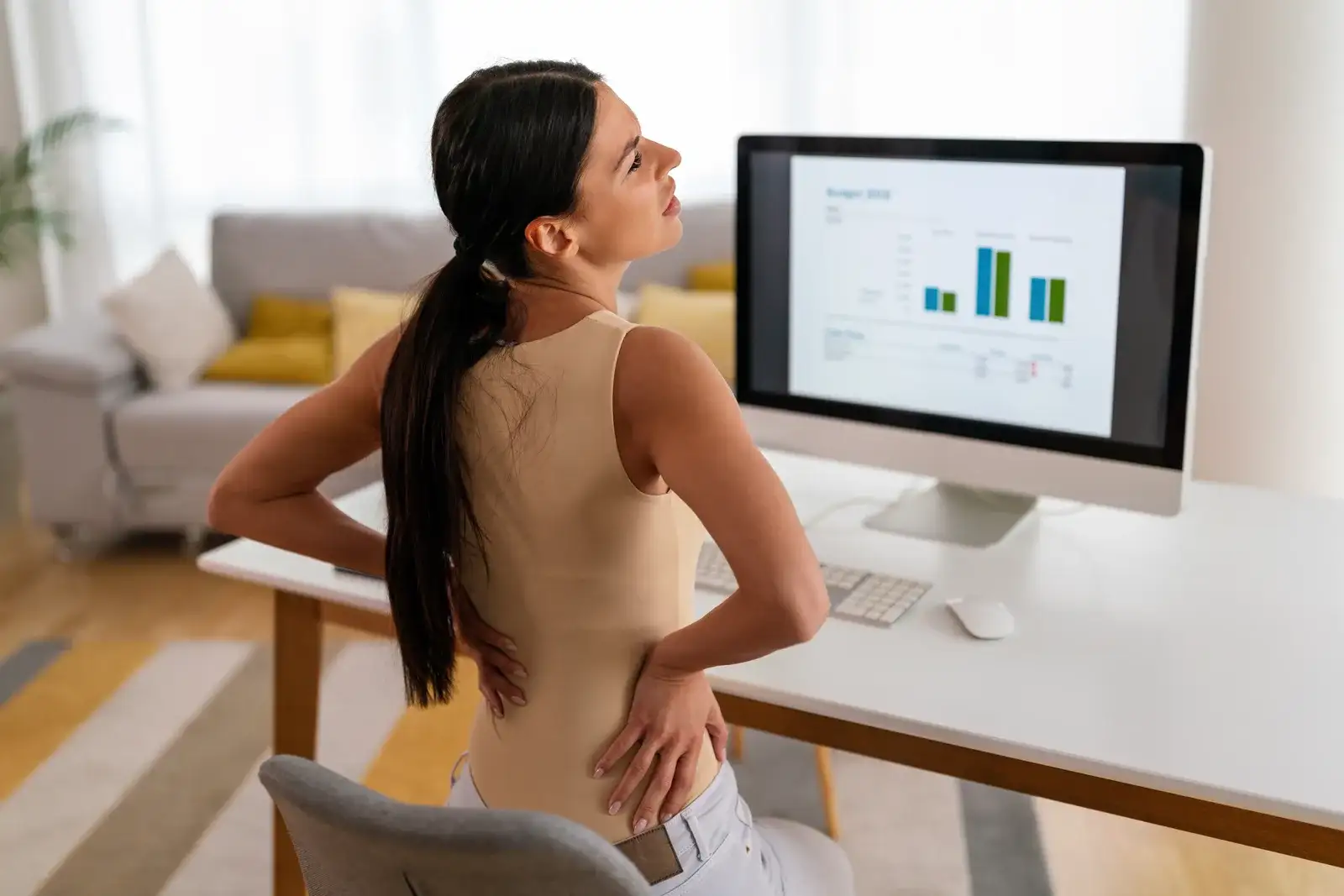
Low back pain physical therapy in Carmel, Indiana
Physical therapy for low back pain in Carmel starts with a one-on-one assessment to rule out anything serious and to find the movements, loads and habits that are keeping your back sensitive. The therapist you are matched with treats you in a private suite, centering on education, staying active and progressive strengthening, with manual therapy as a supporting tool. Many new episodes of back pain ease within a few weeks, and Indiana law lets a physical therapist evaluate and treat you without a referral for up to 42 calendar days.
At a glance
Common signs of low back pain
Also called: Lower back pain, Lumbar pain, Lumbago, Back strain.
What causes low back pain, and why does it keep coming back?
Low back pain is pain felt between the bottom of the ribs and the crease of the buttocks. In most cases no single disc, joint or muscle can be reliably named as the source, which is why clinicians call it non-specific low back pain. That label is reassuring, not dismissive: it means the back is sore and sensitive, not seriously damaged.
Flare-ups usually follow a change in what the back is asked to do. A weekend of yard work after a quiet winter, long drives down Keystone Parkway, a new lifting program, poor sleep or a stressful stretch at work can each lower the back’s tolerance. Pain that returns months later is common, and it is more often a sign of reduced capacity than of new injury.
Scan findings such as disc bulges and joint wear are frequently seen in adults who have no pain at all, so a report full of alarming words does not predict how you will do. What tends to matter more is how well your back, hips and trunk handle load, and that is something physical therapy can change.
How does a physical therapist assess low back pain?
A physical therapist assesses low back pain by listening to your history, screening for signs that need a physician, and then testing how your back and hips move and tolerate load. The goal is not to pin the blame on one structure. It is to find which positions, movements and activities aggravate or ease your symptoms so the plan fits your life.
Your first session with the therapist you are matched with is one-on-one in a closed private suite at FlexWerk in Carmel City Center, so you can describe symptoms and move freely without an audience. If you would like to share details ahead of time, the online physical therapy assessment takes a few minutes and gives the matching team what it needs to propose a therapist and arrange your first conversation.
- A conversation about how the pain started, what a normal week looks like and what you want to get back to
- Screening questions about bladder changes, numbness, fever, injury and unexplained weight loss
- Bending, arching, twisting and hip movement, noting what changes your symptoms
- A nerve check of leg strength, reflexes and sensation if pain travels below the buttock
- Functional tests such as sit to stand, a hip hinge, a carry or the specific lift that bothers you
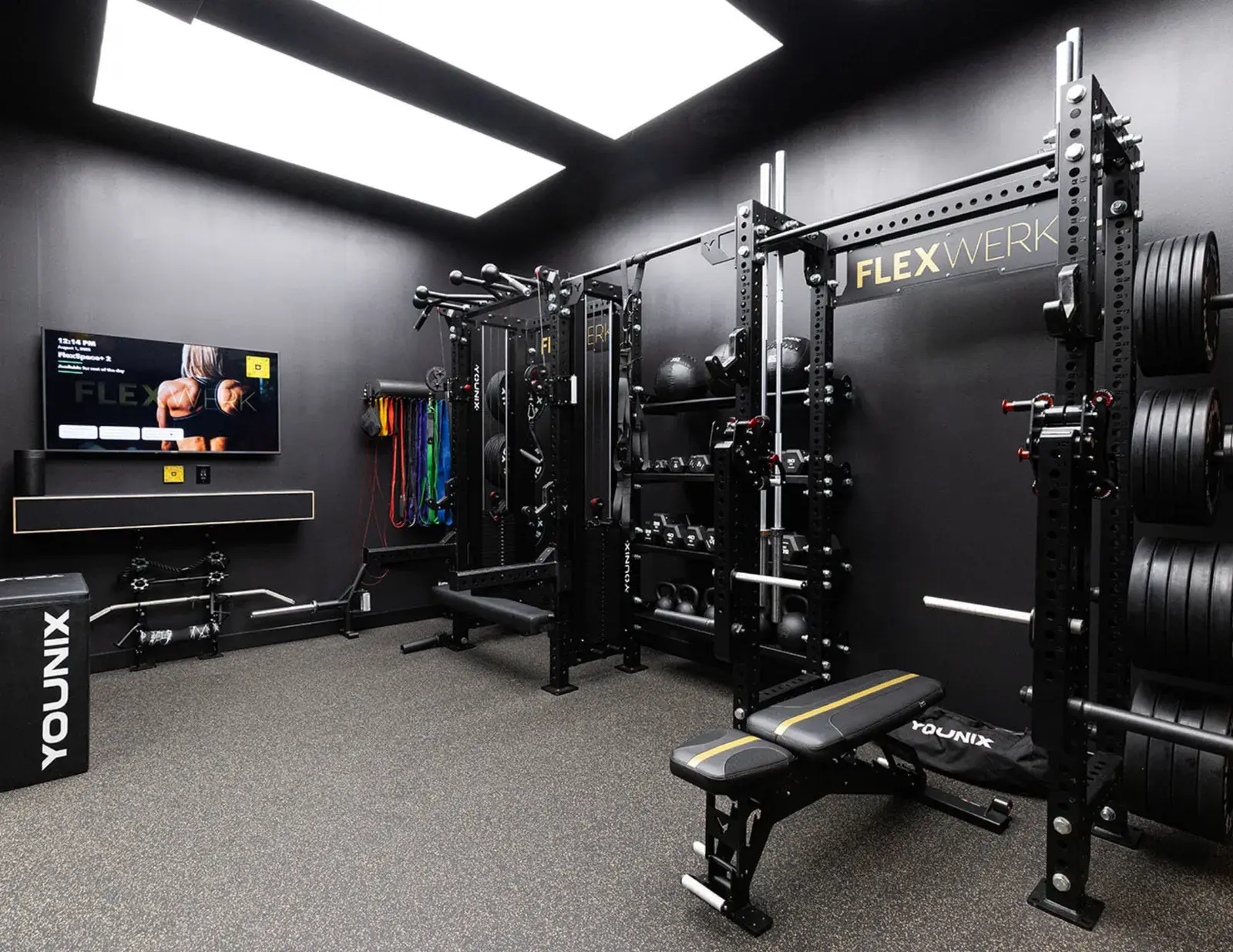
What does low back pain treatment look like in a private suite at FlexWerk?
Treatment for low back pain from a therapist in the network is active. It combines clear education about what your pain does and does not mean, a graded return to the activities you have been avoiding, and progressive strengthening for the trunk and hips. Hands-on manual therapy may be used to ease pain and stiffness, but as an adjunct that makes movement easier, not as the whole plan.
Because each suite has its own lifting rack, cable system, dumbbells and bench, your therapist can coach the exact tasks your life demands: a hip hinge for picking up a toddler, a loaded carry for groceries, a deadlift pattern for the gym. Loads start where your back is comfortable and rise steadily as tolerance improves.
When formal rehab ends, the work does not have to. Many people with recurring back pain do well when they keep getting stronger, and you can continue in the same building through post-rehab strength training with an independent FlexWerk coach. Coaches are personal trainers, not clinicians, and your therapist can hand over a clear plan.
How long does low back pain take to get better with physical therapy?
Many new episodes of low back pain improve noticeably within 2 to 6 weeks, and a short course of physical therapy often fits inside that window. Pain that has lingered for more than three months usually needs longer, often 8 to 12 weeks or more of steady work, because the goal shifts from calming a flare-up to rebuilding capacity and confidence.
Progress is rarely a straight line. A good week can be followed by a sore few days after a long drive or a poor night of sleep, and that does not mean you are back at the start. Your therapist will track what you can do, not only how much it hurts, and adjust the plan. Timelines vary with general health, job demands, sleep and how long symptoms have been present.
If you are starting without a referral, Indiana’s direct access rule allows up to 42 calendar days of treatment from your first visit before a referral from a physician or another listed provider is required. Some insurance plans ask for one sooner. The details are explained in do I need a referral for physical therapy in Indiana.
What can I do for low back pain right now, and what should I avoid?
The most useful thing you can do for a sore back today is keep moving within comfortable limits. Short walks, gentle bending and frequent changes of position tend to help more than rest. Heat can take the edge off stiffness. Staying in bed for days usually slows recovery, and bracing or guarding every movement can keep the back sensitive for longer.
None of this replaces an assessment if pain is severe, keeps returning, or is stopping you from working, sleeping or training. If leg pain, tingling or numbness is part of the picture, the page on sciatica physical therapy explains how nerve-related symptoms are handled differently.
- Walk for 5 to 10 minutes several times a day, on the Monon Trail or around the office
- Break up sitting every 30 to 45 minutes, and stop for a stretch on long drives
- Use heat for 15 to 20 minutes if it feels good
- Keep lifting, but lighten the load and hold it close to your body for now
- Avoid long stretches of bed rest, and avoid testing the painful movement over and over
When to see a physician or go to the ER first
Physical therapy is the right start for most low back pain. These symptoms are different and need medical attention before, or instead of, a physical therapy visit:
- New loss of bladder or bowel control, or new difficulty starting or stopping urination
- Numbness in the saddle area: the groin, genitals, buttocks or inner thighs
- Leg weakness that is getting worse, such as a foot that drags or a knee that gives way
- Back pain after a significant fall or car accident, or after a minor fall if you have osteoporosis
- Back pain together with fever, unexplained weight loss or a history of cancer
- Constant pain at night that does not change with position or movement
If you think it is an emergency, call 911.
Two-minute assessment
Get your low back pain looked at
Tell us how your low back pain started, how long it has been going on and what it is stopping you from doing. The matching team proposes a therapist in the network who focuses on it, and you hear back, usually within one business day.
- No referral needed to start in Indiana (first 42 days)
- We check which therapists work with your plan before you book
- One-on-one care in a private suite at Carmel City Center
How therapists treat it
Kinds of care used for low back pain
- Orthopedic physical therapyExercise-led care for back, neck, shoulder, hip, knee and ankle problems, delivered one-on-one in a private suite.
- Manual therapyHands-on joint and soft-tissue treatment that eases stiffness so the exercise part of your plan can do its job.
- Post-rehab strength trainingThe bridge from discharge to lasting strength: a written handoff from your therapist to a FlexWerk coach in the same building.
Questions
Low back pain: what people ask
Information on this website is general education, not medical advice, a diagnosis or a treatment plan. Only a licensed clinician who examines you can advise on your condition. If you may be having a medical emergency, call 911.
Something we did not cover? Ask the matching team or ring (888) 353-9975.
Do I need an X-ray or MRI before starting physical therapy for low back pain?
Usually not. Imaging is generally reserved for suspected serious conditions, significant trauma, or symptoms that are not improving as expected, and findings often do not change early treatment. Your physical therapist screens for warning signs at the first visit and will send you to a physician if imaging looks warranted.
Should I rest or stay active when my lower back hurts?
Stay gently active. Short walks and normal light activity generally help backs recover faster than bed rest, as long as you scale things to what is tolerable.
Is it safe to lift weights with low back pain?
In most cases yes, with sensible changes. A physical therapist can adjust the load, range and exercise choice so you keep training while symptoms settle, then build back toward your usual lifts.
Should I see a physical therapist or a chiropractor for low back pain?
Both see people with back pain, and the right choice depends on what you want from care. Physical therapy centers on assessment, exercise and building long-term capacity. Our guide on physical therapy vs chiropractor compares the two fairly.
Can I see a physical therapist in Carmel for back pain without a doctor’s referral?
Yes. Indiana allows a physical therapist to evaluate and treat you without a referral for up to 42 calendar days from your first treatment. Some insurance plans still require one for coverage, so the matching team checks which therapists in the network work with your plan and the therapist’s office confirms your benefits before your first visit, as explained on the cost and insurance page.
Google reviews
What guests say about FlexWerk
These are live Google reviews of FlexWerk at Carmel City Center, the private-suite facility where therapists in the network practise.
Related
Conditions that travel together
 SciaticaCare for nerve-related leg pain: find what calms it, restore movement, then rebuild strength.
 Hip painCare for outer hip pain often called bursitis, hip impingement, hip osteoarthritis and hip flexor strains.
 Neck painHelp for stiff, aching necks, neck-related headaches and arm symptoms that start at the neck.
Page reviewed By the Monon Therapy Collective editorial team

Carmel City Center · Carmel, Indiana
Start with a conversation
Tell us what hurts and what you want to get back to. We will tell you honestly whether a therapist in the network is likely a good fit for what you describe, and match you with an independent, licensed therapist who is. Only that therapist can assess what will help.
885 Monon Green Blvd, Suite 120, Carmel, IN 46032 · Monday to Friday 5 AM to 9 PM · Saturday and Sunday 7 AM to 4 PM