
Your first physical therapy visit
Your first visit with a therapist in the network takes about an hour and happens one-on-one in a private suite at Carmel City Center. You talk through your history and goals, the therapist examines how you move, you get a first treatment, and you leave with a clear plan. You do not need a referral to book it.
The hour, step by step
What happens at the evaluation
A physical therapy evaluation is part interview, part physical examination and part first treatment. Here is the order it usually runs in. Each therapist in the network has their own style and adapts it to you, and you can stop or slow down at any point.
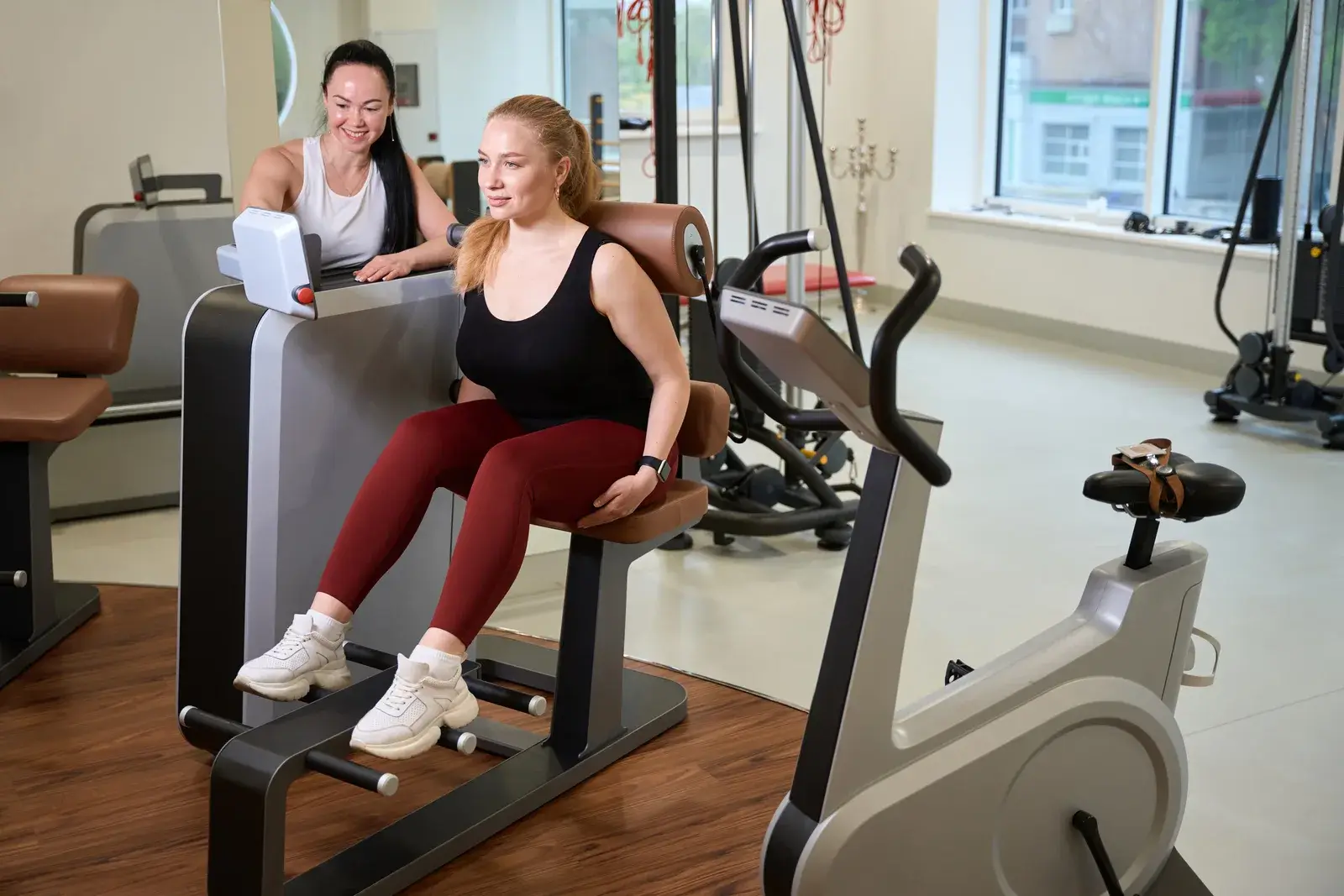
Arrive and settle in
Park in the Carmel City Center garage and walk to Suite 120 at 885 Monon Green Blvd. The therapist you were matched with meets you at the front and takes you to their private suite. There is no waiting room full of other patients and no shared gym floor.
Your story first
The visit starts with a conversation: how this began, what makes it better or worse, what you have already tried, your health history, and above all what you want to get back to. Goals drive the plan.
The examination
Your therapist watches how you move, then tests range of motion, strength, joint and nerve mobility, balance and the specific movements that reproduce your symptoms. They also screen for anything that needs a physician instead.
A clear explanation
You hear, in plain language, what your therapist thinks is going on, why it hurts, what usually helps, and roughly how long recovery takes for problems like yours. You are encouraged to ask everything.
First treatment
Most first visits include treatment, not just testing: usually one or two exercises that ease your symptoms, some hands-on work when it is useful, and advice on what to keep doing and what to pause.
Your plan
You leave with a short home program, a recommended visit frequency, and the milestones that tell you it is working. If you came without a referral, your therapist also explains the 42-day rule and handles the paperwork if you need more time.
Checklist
What to bring and wear
Forgot something? Come anyway. None of it is a reason to reschedule.
- Photo ID, and your insurance card if you are using insurance
- A referral or prescription, if you have one (you do not need one to start)
- Imaging reports, surgical notes or a protocol from your surgeon
- A list of your medications and relevant medical history
- Any brace, sling, orthotic or the running shoes you actually train in
- Clothes you can move in: shorts for a lower-body problem, a tank or loose T-shirt for neck and shoulder
What follow-up visits look like
Follow-up visits are where the work happens. Each one starts with a quick check on how you responded to the last session, then moves through the exercises and hands-on treatment in your plan, progressing the load as your body allows. Because the suite has a rack, cables and free weights in the room, there is no ceiling on how far that progression can go.
Most people come once or twice a week at first and taper as they take over with a home program. How often you really need to come and how long physical therapy usually takes depend on the problem, and your therapist gives you their honest estimate at the first visit. If at any point the match does not feel right, tell the matching team and we propose someone else.
When you have met your goals, your therapist discharges you with a written plan. If you want to keep building, they can hand you off to a FlexWerk coach in the same building for post-rehab strength training.
Questions
First visit questions
Cost questions are answered on physical therapy cost and insurance.
Page reviewed By the Monon Therapy Collective editorial team
How long is the first physical therapy visit?
Plan for about an hour. The first visit is longer than most follow-ups because it includes your history, a movement and strength examination, a first treatment and your starting plan. Your therapist’s office confirms the exact length when you book.
What should I bring to my first appointment?
A photo ID and insurance card if you are using insurance, a referral or prescription if you have one, any imaging reports or surgical notes, a list of your medications, and any brace, orthotic or running shoes that relate to the problem.
What should I wear?
Clothes you can move in that let your therapist see the area: shorts for a hip, knee or ankle, a tank top or loose T-shirt for a neck or shoulder. What to wear to physical therapy, by body part.
Will the first visit hurt?
It should not be an ordeal. Your therapist needs to find the movements that reproduce your symptoms, so you may feel familiar discomfort for a moment, but you stay in control of the pace. What normal soreness feels like.
Can someone come with me?
Usually yes. A partner, parent or friend is welcome, and a private suite makes that comfortable. Each therapist sets their own policy for patients under 18, so ask when you book.
Two-minute assessment
Not sure which therapist is right for you?
Answer a few questions about what hurts, how long it has been going on and what you want to get back to. Our matching team reads every answer and proposes a licensed physical therapist in the network whose focus, schedule and coverage fit. Two minutes, no obligation.
- No referral needed to start in Indiana (first 42 days)
- We check which therapists work with your plan before you book
- One-on-one care in a private suite at Carmel City Center

Carmel City Center · Carmel, Indiana
Start with a conversation
Tell us what hurts and what you want to get back to. We will tell you honestly whether a therapist in the network is likely a good fit for what you describe, and match you with an independent, licensed therapist who is. Only that therapist can assess what will help.
885 Monon Green Blvd, Suite 120, Carmel, IN 46032 · Monday to Friday 5 AM to 9 PM · Saturday and Sunday 7 AM to 4 PM