
Ankle sprain physical therapy in Carmel, Indiana
Most ankle sprains heal well with early protected movement, progressive strengthening and balance retraining, and skipping that rehab is a common reason ankles keep rolling. The therapist you are matched with in Carmel screens for signs of a fracture before anything else, then rebuilds range of motion, strength and balance with you in a private suite. If you cannot bear weight or the bone itself is tender, get an X-ray before starting therapy.
At a glance
Common signs of ankle sprain
Also called: Rolled ankle, Twisted ankle, Lateral ankle sprain, Chronic ankle instability.
What happens when you sprain an ankle?
A sprain is a stretch or tear of the ligaments that hold the ankle bones together. In the most common type, the lateral sprain, the foot rolls inward and the ligaments on the outside of the ankle take the strain. Pain, swelling and bruising follow, and the small sensors in the ligaments that help your brain judge foot position are disrupted, which is why a sprained ankle feels clumsy as well as sore.
Locally the usual culprits are a quick lateral step on a pickleball court, landing on another player’s foot under a basketball hoop, a root or loose gravel on a trail run, a curb hidden by leaves, and black ice in an Indiana January. Less often the injury is a high ankle sprain, which affects the ligaments between the two shin bones and generally recovers more slowly.
When a first sprain is never properly rehabilitated, some people develop chronic ankle instability, meaning the ankle keeps giving way, feels unreliable on uneven ground and re-sprains with little provocation. This is a strength, balance and confidence problem as much as a ligament problem, and it responds to training even years after the original injury.
Do I need an X-ray for a sprained ankle before physical therapy?
You need an X-ray first if you could not take four steps right after the injury or cannot now, or if pressing on the bone itself is painful. These checks come from the Ottawa ankle rules, a screening tool clinicians use to decide who needs imaging. When neither applies, a fracture is unlikely and rehabilitation can usually begin without a scan.
A physical therapist repeats this screen at your first visit and then examines swelling, range of motion, ligament stability, strength and balance to grade the sprain and set a starting point. Indiana’s direct access law allows 42 calendar days of care with no referral, so you can start with a therapist in the network without seeing a physician first, and your therapist will send you for imaging if the screen is positive.
The bone tenderness that matters is found in four specific places, listed below. Soreness in the soft hollow in front of the outer ankle bone is typical of a ligament sprain and is less worrying. If you are unsure, an urgent care visit for an X-ray is a reasonable and quick way to settle it.
- The back edge or tip of the outer ankle bone
- The back edge or tip of the inner ankle bone
- The bony bump on the outer edge of the midfoot, at the base of the little toe’s long bone
- The bone on the inner side of the midfoot, in front of the ankle
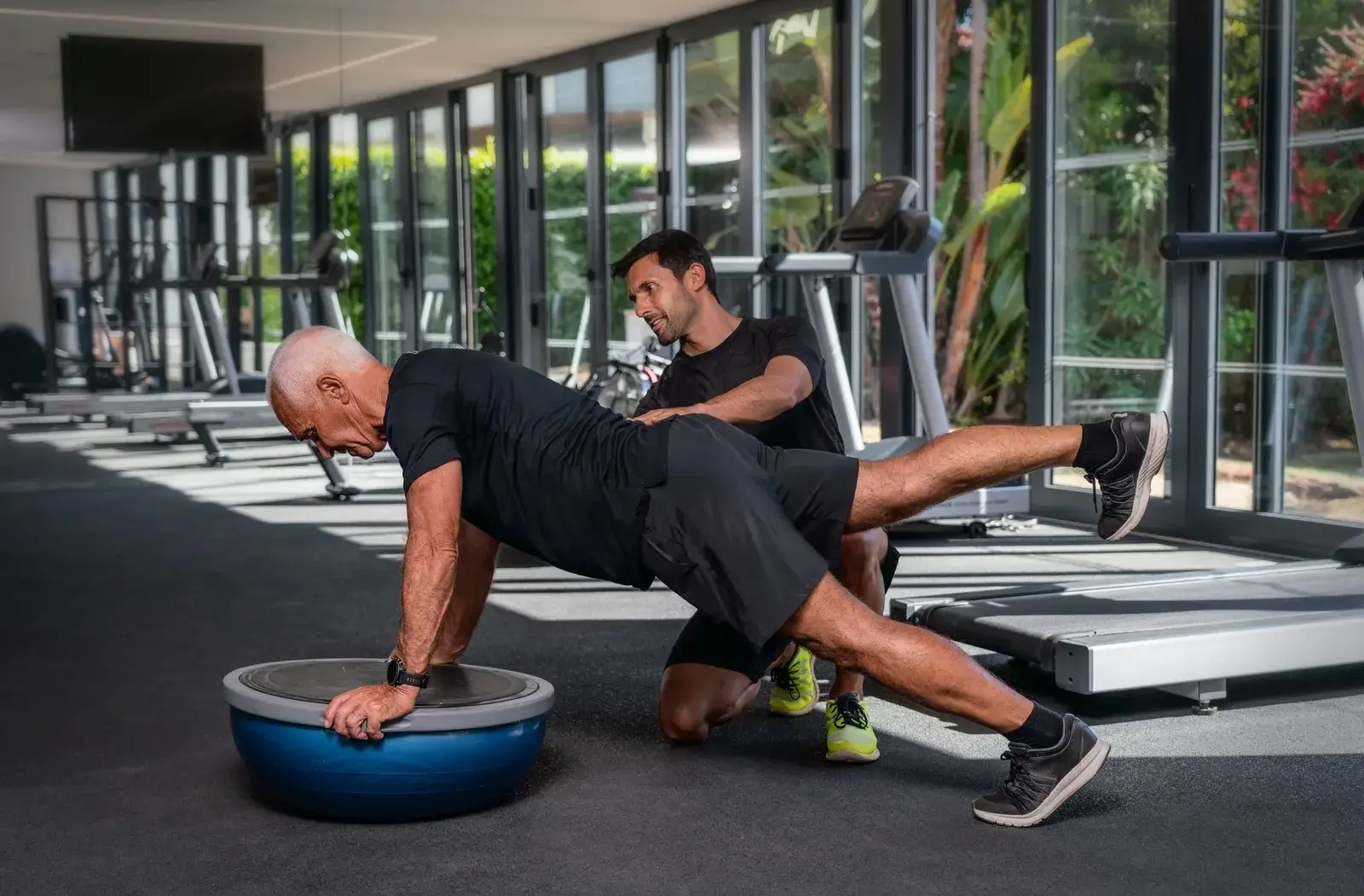
What does ankle sprain rehab involve in a private suite at FlexWerk?
Rehab moves from protecting the ankle to loading it, then to challenging it. In the first days the aim is to control swelling and restore comfortable walking, because early, protected movement tends to serve simple sprains better than long periods of rest. A lace-up brace or tape may be suggested for support while the ligaments heal.
Next comes range of motion, especially the ability to bring the knee forward over the toes, along with calf, peroneal and hip strengthening. The peroneals are the muscles along the outer shin that pull the foot back from a roll. Hands-on joint mobilization can help a stiff ankle bend again, and it is always paired with exercise that keeps the new movement.
The final stage, and the one most often skipped, is balance and reaction training. In a private suite you progress one-on-one from standing on one leg, to unstable surfaces, to hopping, landing and cutting drills on the turf. That same approach underpins balance and fall prevention therapy for people whose concern is steadiness more than sport.
How long does a sprained ankle take to heal?
Mild sprains often feel much better within 1 to 3 weeks, moderate sprains commonly take 3 to 6 weeks before sport feels realistic, and severe or high ankle sprains can need several months. Feeling better is not the same as being ready, though. Ligament tissue keeps remodeling for months, and the chance of spraining the same ankle again is highest in the period soon after the first injury.
Return to pickleball, basketball or trail running is safer when it is based on tests instead of a date: full range of motion, strength close to the other side, steady single-leg balance, and hopping and cutting without pain or hesitation. The sports physical therapy page describes how those checkpoints are built into the plan. How quickly you get there varies with the grade of the sprain, your history of previous sprains and how consistently you train.
What should I do right after rolling my ankle, and what should I avoid?
For the first few days, protect the ankle, keep it elevated when you can, use compression, and walk as normally as pain allows, with crutches if you need them. Gentle ankle circles and pumping the foot up and down help limit stiffness. Ice is fine for comfort. For questions about pain medication, a pharmacist or physician is the right person to ask.
Avoid the two opposite mistakes: doing nothing for weeks, or testing the ankle in a game as soon as the swelling goes down. Both raise the odds of a repeat sprain. If the ankle still swells, aches or gives way a couple of weeks later, or if this is one sprain in a long series, fill out the physical therapy assessment questionnaire, then watch for a call or text from the matching team. Meanwhile, the basics below are a safe starting point.
- Trace the alphabet with your foot a few times a day
- Practice standing on the injured leg near a counter once walking is comfortable
- Wear a supportive, closed shoe instead of sandals or slippers
- In winter, choose footwear with real tread and slow down on untreated pavement
When to see a physician or go to the ER first
Physical therapy is the right start for most ankle sprain. These symptoms are different and need medical attention before, or instead of, a physical therapy visit:
- You could not take four steps immediately after the injury, or still cannot
- Pain when pressing directly on either ankle bone, the outer edge of the midfoot or the inner midfoot bone
- The ankle or foot looks deformed or is pointing the wrong way
- Numbness, tingling, or a cold, pale or blue foot
- A snap at the back of the heel with difficulty pushing off, which can mean an Achilles tendon rupture
- A swollen, warm, tender calf, particularly after time in a boot or on crutches
If you think it is an emergency, call 911.
Two-minute assessment
Get your ankle sprain looked at
Tell us how your ankle sprain started, how long it has been going on and what it is stopping you from doing. The matching team proposes a therapist in the network who focuses on it, and you hear back, usually within one business day.
- No referral needed to start in Indiana (first 42 days)
- We check which therapists work with your plan before you book
- One-on-one care in a private suite at Carmel City Center
How therapists treat it
Kinds of care used for ankle sprain
- Sports physical therapyRehab for active adults that goes past pain relief to the strength, power and movement your sport actually demands.
- Balance and fall preventionStrength, walking and balance training for older adults who feel unsteady, have fallen, or want to stay confident on their feet.
- Return-to-sport testingCriteria-based testing of strength, hopping, movement and confidence, so your return to sport rests on evidence, not the calendar.
Questions
Ankle sprain: what people ask
Information on this website is general education, not medical advice, a diagnosis or a treatment plan. Only a licensed clinician who examines you can advise on your condition. If you may be having a medical emergency, call 911.
Something we did not cover? Ask the matching team or ring (888) 353-9975.
Will my insurance need a referral for ankle sprain rehab?
Some plans do, even though Indiana law itself does not require one for the first 42 calendar days of care. Before anything is booked, we check which network therapists work with your plan, and the therapist’s office verifies your coverage ahead of the first appointment so you know where you stand. Our answer on referrals for physical therapy in Indiana covers the rules.
Should I wear an ankle brace when I go back to sport?
A lace-up brace or taping is commonly recommended for the first several months back in court or field sports after a sprain, because it appears to lower the chance of another one. It works alongside strength and balance training, not instead of it.
Why does my ankle keep rolling?
After a sprain the ligaments can stay lax, the muscles that protect the ankle react more slowly and balance is reduced, particularly if rehab was cut short. A targeted program of strengthening and balance retraining addresses all three.
Do I need an MRI for an ankle that keeps giving way?
Usually not at first. Repeated giving way is most often addressed with a structured strength and balance program, and a physician may order imaging if the ankle fails to improve or if cartilage or tendon damage is suspected.
What should I wear to an ankle appointment?
Wear shorts or pants that roll above the calf and bring the athletic shoes you normally play or run in, plus any brace you have been using. There is more detail in what to wear to physical therapy.
Google reviews
What guests say about FlexWerk
These are live Google reviews of FlexWerk at Carmel City Center, the private-suite facility where therapists in the network practise.
Related
Conditions that travel together
 Plantar fasciitisHeel pain and first-step morning pain treated with calf and foot loading, footwear advice and load management.
 Knee painHelp for runner’s knee, meniscus irritation, tendon pain and arthritis flares, built on progressive strength work.
 ACL injuryPrehab, post-reconstruction rehab and criteria-based return to sport for ACL injuries, one-on-one in a private suite.
Page reviewed By the Monon Therapy Collective editorial team

Carmel City Center · Carmel, Indiana
Start with a conversation
Tell us what hurts and what you want to get back to. We will tell you honestly whether a therapist in the network is likely a good fit for what you describe, and match you with an independent, licensed therapist who is. Only that therapist can assess what will help.
885 Monon Green Blvd, Suite 120, Carmel, IN 46032 · Monday to Friday 5 AM to 9 PM · Saturday and Sunday 7 AM to 4 PM