Post-rehab strength training in Carmel, Indiana
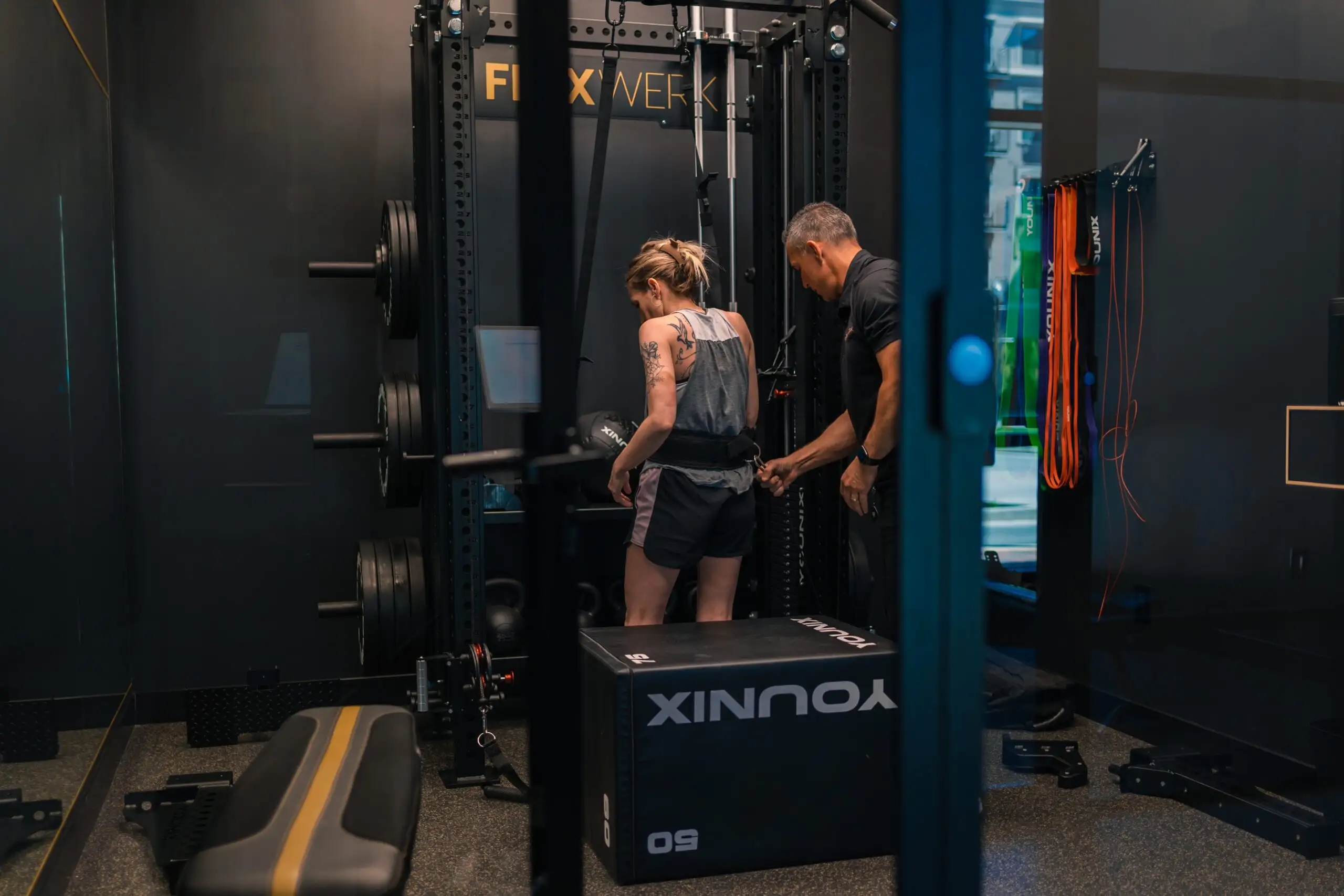
Post-rehab strength training is the step after physical therapy ends, when you keep building strength with a personal trainer so the gains from rehab last. In Carmel, Indiana, the therapist you are matched with writes a handoff plan at discharge, and you can continue in the same building at Carmel City Center with an independent FlexWerk coach in the same kind of private suite. Coaches are personal trainers, not clinicians: they do not diagnose or treat injuries, and your therapist remains the person to see if symptoms return.
What post-rehab strength training is, and what it is not
Post-rehab strength training is ongoing, coached exercise that begins when physical therapy ends. Therapy gets you out of pain and back to daily function. It is rarely long enough to take you all the way to the strength you want for decades of golf, pickleball, yard work and carrying grandchildren. That longer job belongs to training.
It is not physical therapy. FlexWerk coaches are personal trainers, not clinicians. They do not evaluate injuries, diagnose, perform hands-on treatment or decide when a surgical repair is ready for load. Those are your physical therapist’s responsibilities, and they are finished, or nearly finished, before a coach takes over. The difference between the two roles is laid out in physical therapist vs personal trainer.
What makes this version unusual is location. FlexWerk has operated private training suites at Carmel City Center since 2023, and therapists in the network treat in private suites in the same building. Your therapist and your future coach are under one roof, not across town, which removes the usual gap between the end of rehab and the start of real training.

How the handoff from therapist to coach works
The handoff is a written plan that your physical therapist prepares as you approach discharge and shares with you, and with your coach if you give permission. It turns what was learned in rehab into instructions a trainer can act on, so nothing important depends on your memory of a conversation.
With your consent, therapist and coach can also talk directly, which is simple when both work at 885 Monon Green Blvd. Your health information is shared only with your permission. If you would rather carry the plan yourself and keep the two relationships separate, that works too.
- What was injured or operated on, in plain language, and where you are in recovery
- Exercises and loads you are currently doing well, as a starting point
- Movements to avoid or limit for now, and the date or criteria for reintroducing them
- Strength or mobility gaps that still need work, in priority order
- Warning signs that mean training should pause and you should see your therapist
- Your own goals, such as a golf season, a hiking trip or lifting a set weight
What training looks like in the months after discharge
In the first months after discharge, training looks like a gradual extension of late-stage rehab: the same movement patterns, progressed with more load, more variety and more independence. Sessions with a FlexWerk coach are one-on-one in a private suite with a lifting rack, cable system, dumbbells and bench, so the room will feel familiar.
How often you train, and for how long, is between you and your coach. Many people find that two or three strength sessions a week, some coached and some on their own, is enough to keep progressing. The outline below is a typical pattern, not a rule, and it shifts with your injury, your age and your training history.
- First month: repeat the discharge program under the coach’s eye, confirm technique and establish baseline loads.
- Months 2 to 3: add load steadily, widen exercise selection and rebuild whole-body conditioning.
- Months 3 to 6: train toward your own goals, with restricted movements reintroduced as the handoff plan allows.
- Ongoing: a sustainable weekly routine, with or without a coach, that keeps the strength you built.
Who is ready for a coach and who still needs a clinician
You are ready for a coach when your therapist has discharged you or agrees that you are close: pain is minimal and predictable, daily activities are comfortable, swelling is gone, and you can perform your exercises with good form. People coming from post-surgical rehabilitation should also be past the restrictions in their surgeon’s protocol, or have them clearly written into the handoff.
You still need a clinician, not a trainer, if anything on the list below describes you. In that case, begin or resume physical therapy first. People with balance concerns can start with balance and fall prevention therapy and move to coaching later. If you were treated somewhere else and are unsure which group you belong to, an evaluation with a therapist in the network can answer the question.
- Pain that is worsening, constant, or present at night
- Swelling, locking, giving way or a joint that feels unstable
- Numbness, tingling or weakness that is new or spreading
- A recent operation with restrictions you do not fully understand
- An injury that has never been evaluated by a licensed clinician
- Unsteadiness or recent falls
Moving between therapy and training under one roof
The bridge runs in both directions. If something flares up during training, such as a knee that swells after a new exercise or back pain that lingers, you can be seen by a physical therapist in the same building, often without a new referral. State law gives physical therapists in Indiana a window of 42 calendar days, starting at the first treatment, to evaluate and treat before a referral becomes necessary.
Coaching is arranged with the coach and is separate from your physical therapy care. It is fitness training, not health care, so ask the coach directly about scheduling and cost. For the therapy side, the therapist’s office verifies benefits ahead of your first session, and the cost and insurance page explains the details.
If you are finishing rehab with a therapist in the network, ask them about the handoff at any visit. If you have not been matched yet and want rehab that leads somewhere, start with the online assessment. You can also read more about the network and how it is powered by FlexWerk.
Who it helps
Post-rehab strength training makes sense if
- You are being discharged from physical therapy and do not want to lose momentum
- You feel better but know you are not yet as strong as before the injury
- You have had the same injury more than once after stopping exercise
- You are unsure how to progress weights safely on your own
- You had a joint replacement or ligament surgery and want long-term strength
- You like the privacy of a suite and want to keep training in that setting
Conditions
Problems this kind of care treats
 Low back painActive, one-on-one care for new or long-running low back pain, from first flare-up to confident lifting.
 Knee painHelp for runner’s knee, meniscus irritation, tendon pain and arthritis flares, built on progressive strength work.
 OsteoarthritisStrength, pacing and joint-friendly exercise for knee and hip osteoarthritis, including preparation for joint replacement.
 Rotator cuff injuryProgressive loading for cuff tendinopathy and tears, plus protocol-led rehab after surgical repair.
Two-minute assessment
Not sure which therapist is right for you?
Answer a few questions about what hurts, how long it has been going on and what you want to get back to. Our matching team reads every answer and proposes a licensed physical therapist in the network whose focus, schedule and coverage fit. Two minutes, no obligation.
- No referral needed to start in Indiana (first 42 days)
- We check which therapists work with your plan before you book
- One-on-one care in a private suite at Carmel City Center
Questions
About post-rehab strength training
Information on this website is general education, not medical advice, a diagnosis or a treatment plan. Only a licensed clinician who examines you can advise on your condition. If you may be having a medical emergency, call 911.
Something we did not cover? Ask the matching team or ring (888) 353-9975.
Are FlexWerk coaches physical therapists?
No. FlexWerk coaches are independent personal trainers, not licensed clinicians. They build strength and fitness, and they work from the written plan your physical therapist provides.
Do I have to do my rehab at FlexWerk to train with a coach afterward?
No. If you were discharged elsewhere, a coach can still work with you, though a handoff plan from a physical therapist makes the start safer. If you would like one, an evaluation with a therapist in the network is a sensible first step.
How soon after discharge should I start strength training?
Ideally within a week or two, while your exercises are fresh and before strength starts to fade. Some people overlap their last therapy visits with their first coaching sessions so the change feels gradual.
Will my coach know what I should not do?
Yes, provided you share the handoff plan. It lists movements to limit, the criteria for bringing them back and the warning signs that mean you should stop and check in with your therapist.
Can I strength train on my own instead of with a coach?
Yes. The written plan is yours, and many people follow it independently at home or at their own gym. A coach adds technique feedback, progression and accountability, which some people value and others do not need.
Google reviews
What guests say about FlexWerk
These are live Google reviews of FlexWerk at Carmel City Center, the private-suite facility where therapists in the network practise.
Continue
Related services
 Sports physical therapyRehab for active adults that goes past pain relief to the strength, power and movement your sport actually demands.
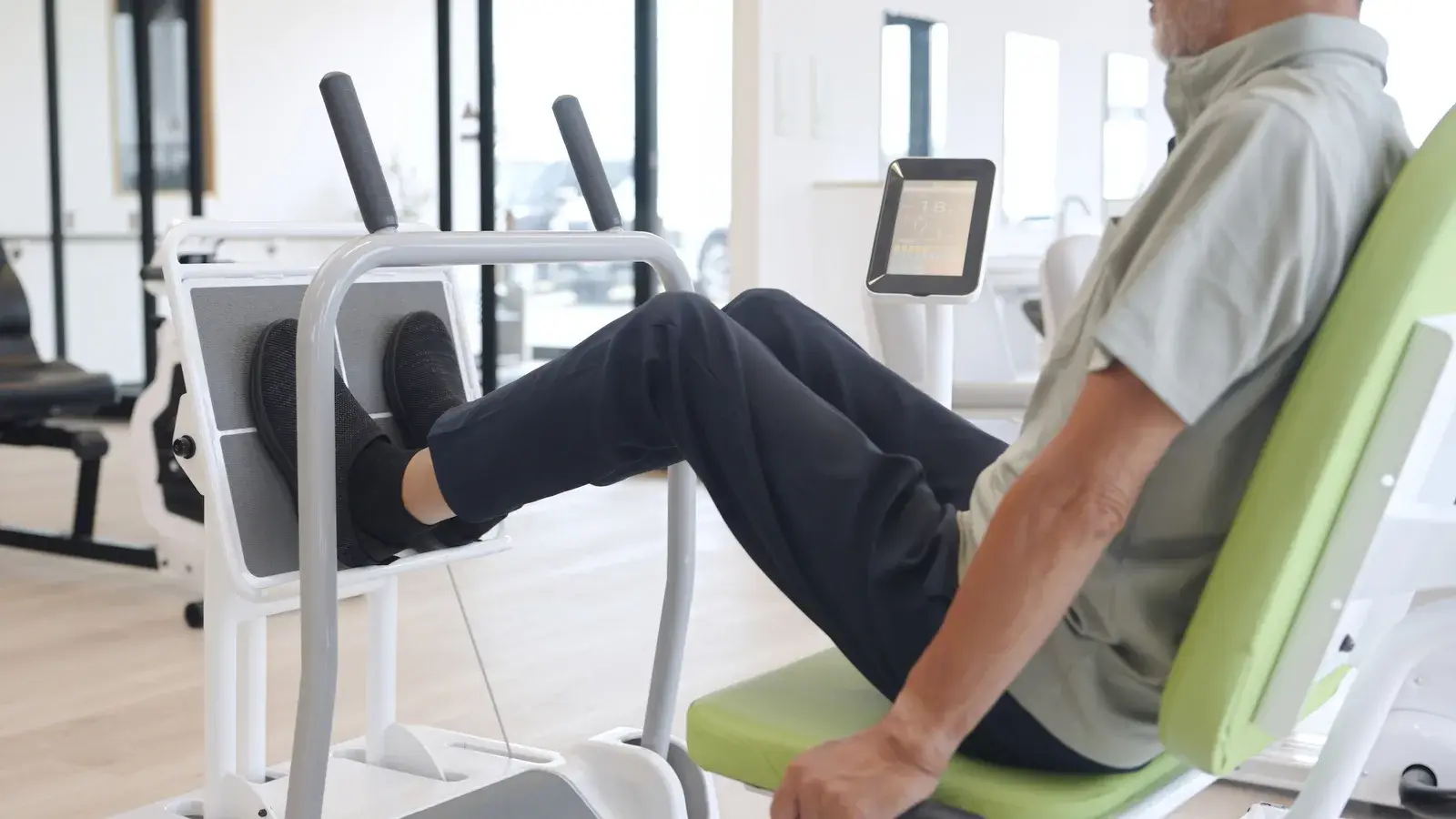 Post-surgical rehabilitationProtocol-led rehab after joint replacement, ligament, tendon and spine surgery, in a quiet private room instead of a crowded gym.
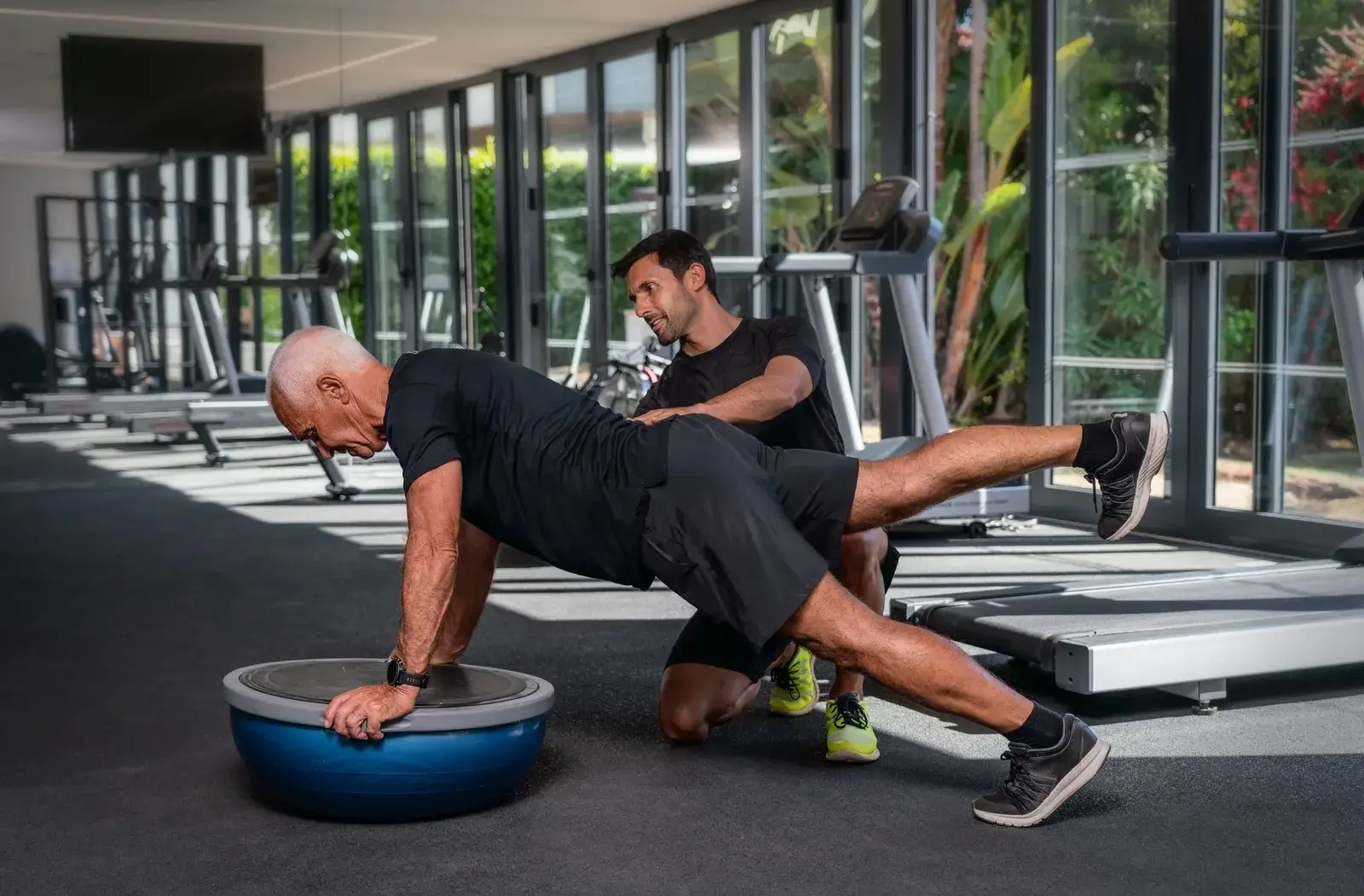 Return-to-sport testingCriteria-based testing of strength, hopping, movement and confidence, so your return to sport rests on evidence, not the calendar.
Page reviewed By the Monon Therapy Collective editorial team

Carmel City Center · Carmel, Indiana
Start with a conversation
Tell us what hurts and what you want to get back to. We will tell you honestly whether a therapist in the network is likely a good fit for what you describe, and match you with an independent, licensed therapist who is. Only that therapist can assess what will help.
885 Monon Green Blvd, Suite 120, Carmel, IN 46032 · Monday to Friday 5 AM to 9 PM · Saturday and Sunday 7 AM to 4 PM