
Arthritis physical therapy in Carmel, Indiana
Exercise and strengthening are recommended as first-line care for knee and hip osteoarthritis, and physical therapy is where many people learn to do them safely. In Carmel, the matching team pairs you with a licensed physical therapist in the network for a private, individual program covering strength, activity pacing and confidence putting weight through the joint. Therapy does not reverse arthritis, but many people end up with less pain and better function. Rheumatoid and other inflammatory arthritis need a rheumatologist’s care first.
At a glance
Common signs of osteoarthritis
Also called: Osteoarthritis, Degenerative joint disease, Knee arthritis, Hip arthritis.
What is osteoarthritis, and is it really just wear and tear?
Osteoarthritis is a condition of the whole joint in which cartilage thins, the bone underneath remodels and the joint lining can become irritable. Calling it wear and tear is misleading, because it suggests that using the joint grinds it down. In reality cartilage depends on regular movement and loading for its nutrition, and well-chosen exercise is considered protective, not harmful.
Knees and hips are the joints a physical therapist sees most often, followed by hands and the spine. Age, previous joint injury, family history, body weight and physically heavy work all raise the likelihood. Symptoms fluctuate: a quiet month can be followed by a flare after travel, a long day of gardening or the first cold snap of an Indiana winter. For single-joint detail, see knee pain physical therapy and hip pain physical therapy.
It is important to separate osteoarthritis from inflammatory types such as rheumatoid arthritis, psoriatic arthritis and gout. Those are driven by the immune system or by crystal deposits, often cause prolonged morning stiffness and warm, swollen joints, and are managed by a rheumatologist or physician with medication. Exercise can still play a supporting role, but medical treatment comes first.
How does a physical therapist evaluate an arthritic knee or hip?
The evaluation focuses on what the joint can do, not on how it looks on an X-ray. Your therapist measures range of motion, leg strength, swelling and walking pattern, and times practical tasks such as standing up from a chair repeatedly, climbing steps and balancing on one leg. Those numbers become the baseline your progress is judged against.
Equally useful is a conversation about your week: which activities flare the joint, how long the flare lasts, what you have stopped doing, and what you most want back, whether that is 18 holes, a lap of the Monon Trail with friends, or stairs without the handrail. X-ray severity and pain often match poorly, so a report that says bone on bone does not by itself predict how you will respond to exercise.
The screen also looks for anything that does not fit osteoarthritis, such as a hot swollen joint, multiple joints flaring together or stiffness lasting well over an hour each morning. Findings like these are passed to your physician, since they may call for blood tests or a rheumatology referral.
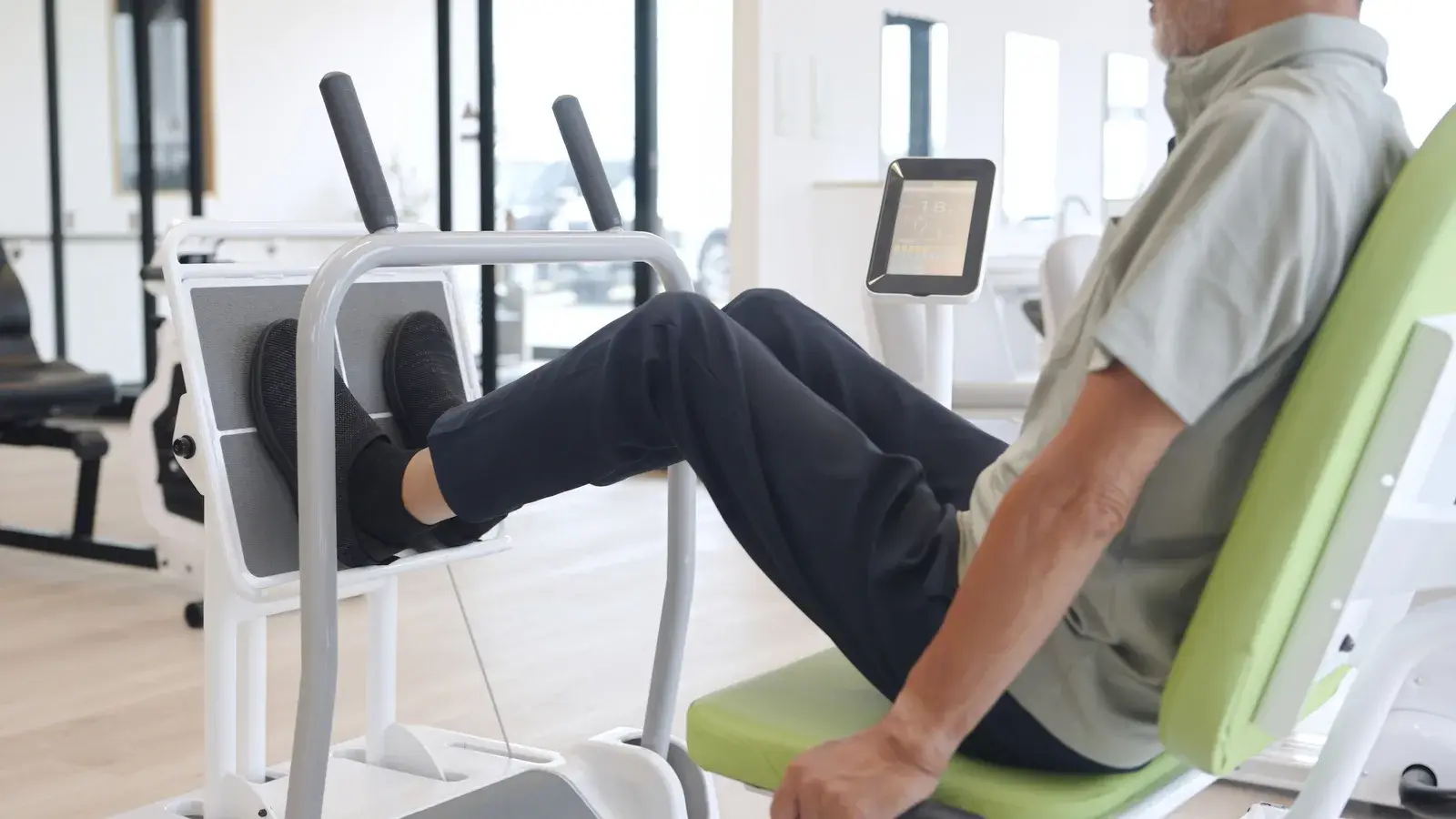
What does arthritis treatment in a private suite at FlexWerk include?
Treatment is built on strengthening, because stronger thigh and hip muscles absorb load that would otherwise reach the joint. Each session pairs you with a licensed physical therapist, nobody else, in a private suite equipped with a rack, cable system, dumbbells and a bench. Exercises begin at a level your joint tolerates, such as sit-to-stands, step-ups and supported squats, and the resistance is raised gradually.
Alongside strength, you will work on activity pacing, which means spreading demanding tasks across the day and week so the joint is loaded regularly without being overwhelmed. Balance practice and graded exposure to stairs, slopes and getting down to the floor rebuild trust in the leg. Manual therapy may be added to ease stiffness as a complement to the exercise program.
Arthritis care does not end at discharge, because the benefits of exercise last only as long as the exercise does. FlexWerk’s bridge is that an independent coach based under the same roof can take over your training through post-rehab strength training. These coaches are personal trainers, not clinicians, a difference explained in physical therapist vs personal trainer. A typical plan of care includes the elements below.
- Progressive leg and hip strengthening two to three times a week
- A walking or cycling plan you can carry out on your own
- Pacing strategies for flares, travel and long days
- Balance and stair confidence practice
- Range of motion work for a stiff knee or hip
- Guidance on footwear, walking aids and heat or ice for comfort
Can physical therapy delay or prepare me for a joint replacement?
For many people, yes to both. A consistent strengthening program can reduce pain and improve function enough that surgery is postponed, sometimes for years, and some people find they no longer want it. Therapy cannot regrow cartilage, however, and when pain remains severe, sleep is disturbed and daily life keeps shrinking despite good rehab, joint replacement is a reasonable option to discuss with an orthopedic surgeon.
If surgery is already planned, the weeks beforehand are well spent. Going in with stronger legs, practiced use of a walker or cane, and a home set up for recovery tends to make the early days after the operation more manageable. Afterward, post-surgical rehabilitation with your therapist restores motion, strength and walking under your surgeon’s protocol.
As for timelines, many people with knee or hip osteoarthritis notice less pain and easier movement after 6 to 12 weeks of regular strengthening, with further gains over the following months. Results vary with the severity of symptoms, other health conditions and consistency, and a flare along the way is expected, not a failure. We explain the reasoning in can physical therapy help me avoid surgery.
How should I exercise with arthritis, and what should I avoid?
Keep moving most days, and let your symptoms set the dose. A practical guide is that discomfort during exercise should stay mild to moderate and return to your usual level within about a day. If it does, you chose well. If the joint is more swollen or sore the next morning, reduce the amount next time instead of abandoning the activity.
Low-impact options such as walking, cycling and swimming are easy on sore joints, and adding strength training twice a week builds the muscle support that sore joints rely on. Golfers and pickleball players in Carmel can usually keep playing with sensible adjustments, such as a warm-up, a cart on bad days or shorter sessions during a flare. In winter, icy sidewalks are a real fall risk, so consider indoor walking and footwear with good tread.
What to avoid is mostly about extremes: long stretches of bed rest or sitting, sudden bursts of unaccustomed activity, and giving up valued activities because of a scan report. To be matched with a therapist who can build a program around your joints, start with the short online assessment. The matching team replies by call or text, and a free phone conversation is available if you would like to talk first. The pacing habits below are a good place to start.
- Warm up stiff joints with a few minutes of easy movement before harder work
- Break long chores into shorter blocks with rests between them
- Alternate harder and easier days across the week
- Use a trekking pole, cane or handrail when it lets you walk farther with less pain
- Keep a simple log of activity and next-day soreness to spot your limits
When to see a physician or go to the ER first
Physical therapy is the right start for most osteoarthritis. These symptoms are different and need medical attention before, or instead of, a physical therapy visit:
- A single joint that becomes hot, red and very swollen, especially with fever or feeling unwell
- Sudden severe joint pain that wakes you or makes the joint impossible to move
- Morning stiffness lasting more than an hour with several swollen joints, which suggests inflammatory arthritis
- You cannot put weight on the leg after a fall or a sudden giving way
- Constant night pain with unexplained weight loss, fatigue or a history of cancer
- One calf that is newly swollen, warm and sore, which may point to a blood clot
If you think it is an emergency, call 911.
Two-minute assessment
Get your osteoarthritis looked at
Tell us how your osteoarthritis started, how long it has been going on and what it is stopping you from doing. The matching team proposes a therapist in the network who focuses on it, and you hear back, usually within one business day.
- No referral needed to start in Indiana (first 42 days)
- We check which therapists work with your plan before you book
- One-on-one care in a private suite at Carmel City Center
How therapists treat it
Kinds of care used for osteoarthritis
- Orthopedic physical therapyExercise-led care for back, neck, shoulder, hip, knee and ankle problems, delivered one-on-one in a private suite.
- Post-surgical rehabilitationProtocol-led rehab after joint replacement, ligament, tendon and spine surgery, in a quiet private room instead of a crowded gym.
- Post-rehab strength trainingThe bridge from discharge to lasting strength: a written handoff from your therapist to a FlexWerk coach in the same building.
Questions
Osteoarthritis: what people ask
Information on this website is general education, not medical advice, a diagnosis or a treatment plan. Only a licensed clinician who examines you can advise on your condition. If you may be having a medical emergency, call 911.
Something we did not cover? Ask the matching team or ring (888) 353-9975.
Does Medicare cover physical therapy for arthritis, and do I need a referral?
Indiana lets you begin physical therapy without a referral, but Medicare requires a physician or qualified provider to certify your plan of care, so your doctor will need to be involved. Mention your specific plan when you talk with the matching team, and see our cost and insurance page for how costs work.
Will exercise wear out my joint faster?
No. Appropriately dosed exercise does not speed up osteoarthritis, and clinical guidelines recommend it as a core treatment because it tends to reduce pain and improve function.
Can physical therapy help rheumatoid arthritis?
Rheumatoid and other inflammatory arthritis must be managed by a rheumatologist, usually with medication that controls the disease. Once it is under control, a physical therapist can help with strength, mobility and joint protection in coordination with that care.
Is it normal for arthritic joints to hurt more in cold weather?
Many people with osteoarthritis say their joints feel stiffer and achier in cold, damp weather, although the reasons are not well understood. Staying active through the Indiana winter, warming up longer and dressing warmly are sensible responses.
Should I use a cane or a brace for knee arthritis?
A cane held in the hand opposite the sore leg can reduce joint load and help you walk farther, and there is no shame in using one on bad days. Braces help some people with knee arthritis, and a physician or orthotist can advise on the type.
Google reviews
What guests say about FlexWerk
These are live Google reviews of FlexWerk at Carmel City Center, the private-suite facility where therapists in the network practise.
Related
Conditions that travel together
 Knee painHelp for runner’s knee, meniscus irritation, tendon pain and arthritis flares, built on progressive strength work.
 Hip painCare for outer hip pain often called bursitis, hip impingement, hip osteoarthritis and hip flexor strains.
 Low back painActive, one-on-one care for new or long-running low back pain, from first flare-up to confident lifting.
Page reviewed By the Monon Therapy Collective editorial team

Carmel City Center · Carmel, Indiana
Start with a conversation
Tell us what hurts and what you want to get back to. We will tell you honestly whether a therapist in the network is likely a good fit for what you describe, and match you with an independent, licensed therapist who is. Only that therapist can assess what will help.
885 Monon Green Blvd, Suite 120, Carmel, IN 46032 · Monday to Friday 5 AM to 9 PM · Saturday and Sunday 7 AM to 4 PM