A physical therapist is a licensed clinician who evaluates and treats injury, pain and movement problems. A personal trainer builds strength and fitness in people who are healthy or medically cleared, and does not diagnose or treat. If something hurts, is recovering from surgery or keeps getting re-injured, start with a physical therapist; if you are cleared and want to get stronger, a trainer is the right fit. In Carmel, therapists in the network and FlexWerk coaches work in the same building, so rehab can hand off directly to coaching.
Last reviewed By the Monon Therapy Collective editorial team
What can a physical therapist do that a personal trainer cannot?
A physical therapist can evaluate, diagnose and treat injury, pain and movement problems; a personal trainer cannot. Physical therapists are licensed by the state, and today’s entry-level qualification is a Doctor of Physical Therapy degree followed by a national licensing exam. That training covers anatomy, pathology, healing timelines and screening for conditions that need a physician.
That scope is what makes certain work possible: managing a surgeon’s protocol after a rotator cuff repair, deciding how much load a healing tendon can take, or working out why a knee swells after every run. Personal training is not a state-licensed profession in Indiana. Most trainers hold a certification from a private organization, and standards vary between them.
- Examine an injury and identify the structures and movements involved
- Treat pain with exercise, hands-on techniques and education
- Guide rehabilitation after surgery within the surgeon’s protocol
- Screen for red flags and refer you to a physician when needed
- Provide care that health insurance may cover when it is medically necessary
What does a personal trainer do well?
A skilled personal trainer is a specialist in building fitness: strength, muscle, conditioning and the habit of showing up. Trainers design long-term programs, coach lifting technique, adjust the plan as you improve and provide accountability that most people cannot supply for themselves. Their clients are healthy, or have been cleared for exercise by a clinician.
None of this is a lesser job. Long-term strength training is one of the most useful things an adult can do for joints, bones, balance and independence, and it is work that continues for years after any episode of rehab ends. The limit is simply scope: a trainer should not diagnose pain, treat an injury or override medical advice.
Which one should I see right now?
Start with a physical therapist if something hurts, is healing or keeps breaking down. Start with a personal trainer if you are healthy or cleared and your goal is fitness. If you are not sure which group you belong to, an assessment by a therapist answers the question, and in Indiana you do not need a referral to get one.
Pain that appears during training is a gray area. A trainer can modify an exercise, but if the same pain keeps returning, that is a signal for an evaluation and not another workaround. Common examples are shoulder pain with pressing and knee pain with squatting.
- See a physical therapist: pain that has lasted more than a week or two.
- See a physical therapist: recovery from surgery, a fracture or a significant sprain.
- See a physical therapist: an injury that returns whenever training ramps up.
- See a physical therapist: numbness, giving way, or unsteadiness on your feet.
- See a personal trainer: you have no pain, or have been cleared, and want to build strength or fitness.
- See a personal trainer: you have finished rehab and want structured, progressive training.
What happens in the gap between rehab and full training?
Too often, nothing, and that is where re-injuries happen. Formal rehab usually ends when pain has settled and daily function is back. That point can sit well short of what a sport or a heavy gym program demands. Someone discharged after an ankle sprain may walk comfortably yet be unready for a full season on the fields at Grand Park.
A careful handoff closes that gap. The therapist passes on what the trainer needs to know, and the trainer builds from the last rehab session instead of starting from a generic template. Athletes may also complete return to sport testing so that the decision to resume competition rests on measurements and not guesswork.
- The exercises and loads you finished rehab with
- Movements to progress slowly, and any to avoid for now
- Strength or range of motion targets still to be reached
- Warning signs that mean you should check back with the therapist
How does the handoff work at FlexWerk in Carmel?
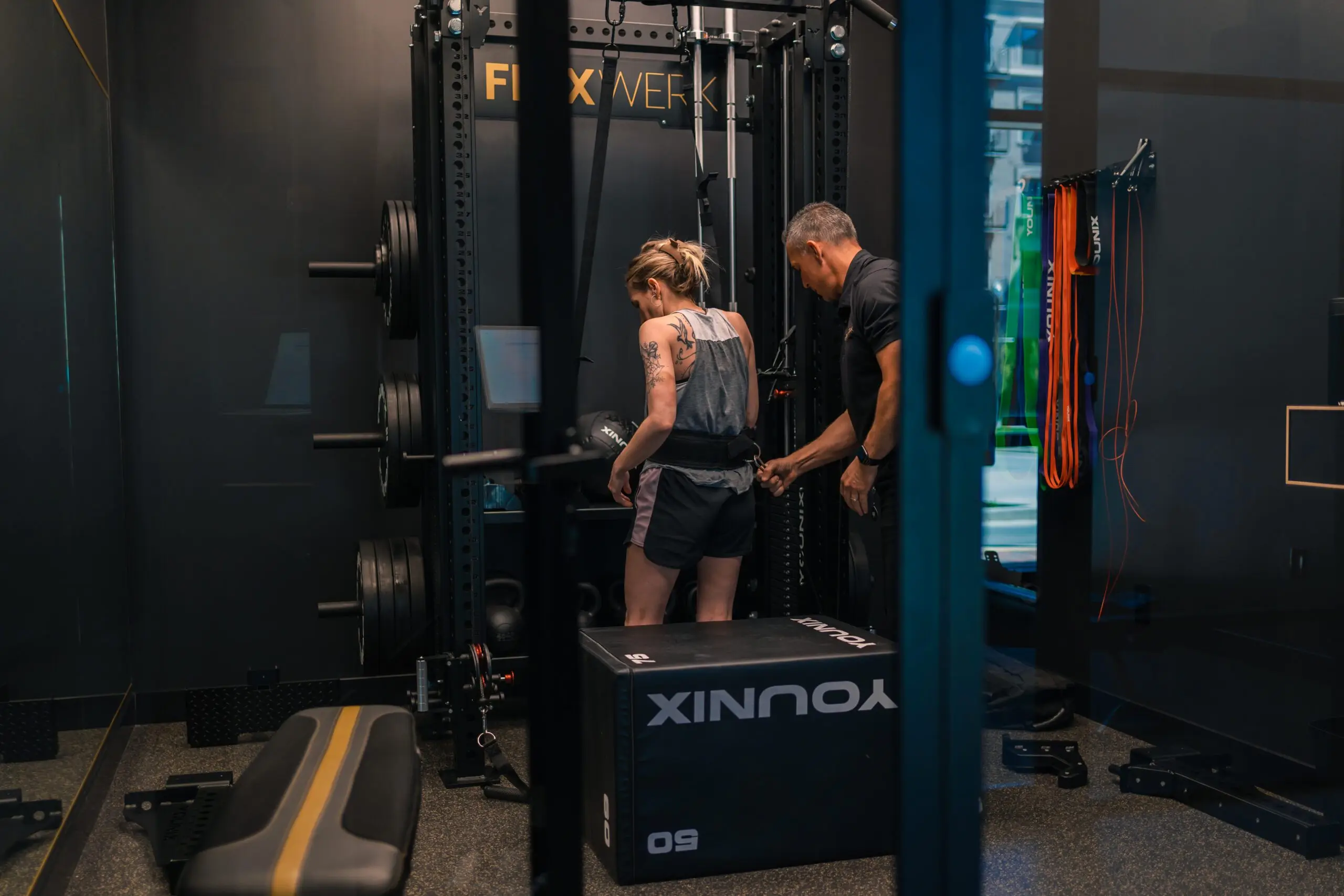
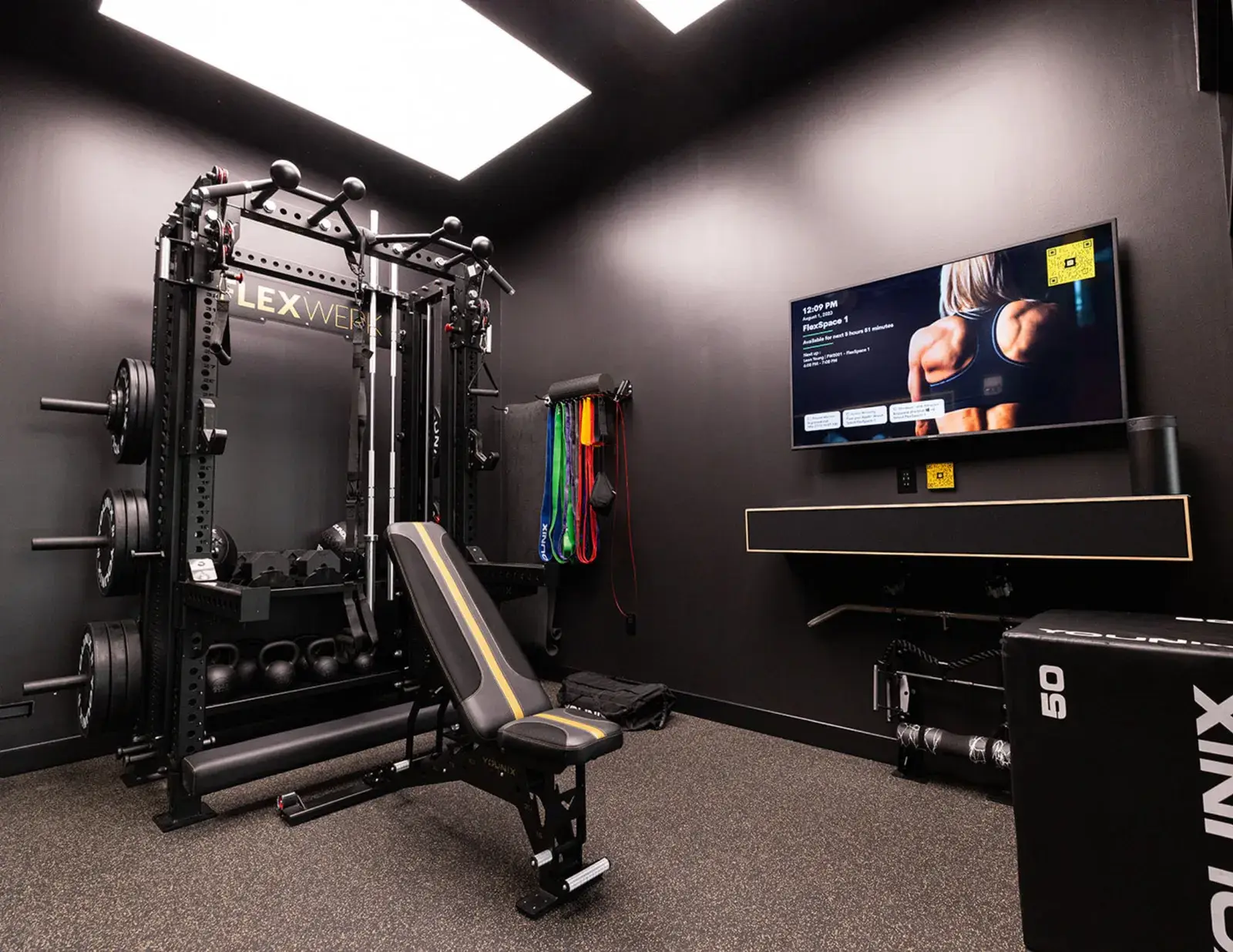
The arrangement is unusual because therapists in the network and FlexWerk coaches work in the same building at Carmel City Center. Physical therapy takes place in a private suite, with a licensed physical therapist working with one patient at a time. After discharge, you can keep training in the building with an independent FlexWerk coach through post-rehab strength training.
The roles stay clearly separate. Coaches are personal trainers, not clinicians, so they do not diagnose or treat, and coaching is a fitness service, not health care. What the shared building offers is continuity: familiar equipment, a familiar setting and an easy route back to a therapist if something flares. To find out which side you should start on, complete the online assessment.
Related questions
Can a personal trainer help with back pain?
A trainer can help a cleared client build the strength that often makes backs more resilient, but cannot diagnose or treat pain. Back pain that persists, spreads down a leg or is getting worse should be assessed by a physical therapist or physician first.
Do I need clearance before working with a trainer after an injury?
It is wise. After an injury or operation, ask your physical therapist or physician to confirm what you are ready for, and share that with your trainer.
Are FlexWerk coaches physical therapists?
No. FlexWerk coaches are independent personal trainers, not clinicians. Physical therapy sessions are delivered by a licensed physical therapist.
Is personal training covered by health insurance?
Generally no, because it is a fitness service and not medical treatment. Physical therapy is commonly covered when it is medically necessary.
Can I do physical therapy and personal training at the same time?
Yes, if your therapist agrees and both know the plan. A common arrangement is for the trainer to work around the injured area while the therapist handles it directly.
Keep reading
- Physical therapy vs chiropractor: which should I see?
- How long does physical therapy take?
- When should I see a physical therapist?
- Post-rehab strength training with a FlexWerk coach
- Return to sport testing in Carmel
- Sports physical therapy in Carmel
- About the network
This page is general education, not medical advice. A physical therapist can only advise on your situation after an examination.