Shoulder arthritis physical therapy in Carmel, Indiana
Shoulder arthritis is wear of the cartilage in the ball-and-socket joint, causing pain, stiffness and grinding that tend to build over years. Physical therapy in Carmel cannot regrow cartilage, but a licensed physical therapist matched through the network can improve motion, rotator cuff and shoulder blade strength, and how you reach, lift and sleep, which often reduces pain and helps many people delay surgery. If a shoulder replacement is eventually needed, the same work prepares you for it.
At a glance
Common signs of shoulder arthritis
Also called: Glenohumeral osteoarthritis, Shoulder osteoarthritis, Degenerative joint disease of the shoulder, Arthritic shoulder.
What wears out in the shoulder joint, and who gets it?
In glenohumeral osteoarthritis, the smooth cartilage covering the ball of the arm bone and its socket thins and roughens over time, and bone spurs can form around the edges. The joint capsule often stiffens as well, which is why loss of motion is such a feature.
It is less common than knee or hip arthritis, partly because the shoulder does not carry body weight, and AAOS OrthoInfo notes that osteoarthritis usually affects people over 50 and is more common in the small AC joint on top of the shoulder than in the ball-and-socket joint itself. Contributors include age, previous shoulder dislocations or fractures, prior surgery, heavy manual work and long-standing rotator cuff tears, which can lead to a specific pattern called cuff tear arthropathy.
AC joint arthritis causes pain on the top of the shoulder rather than deep inside it. Inflammatory types such as rheumatoid arthritis are managed alongside a rheumatologist; the general arthritis physical therapy page covers how arthritis rehab works across joints.
What does an X-ray tell us, and what does the examination add?
An X-ray, ordered by a physician, shows joint space narrowing and bone spurs that confirm arthritis, but it does not tell you how much the shoulder can do or how much exercise will help. Two people with similar X-rays can have very different pain and function, which is why the report is a starting point rather than a verdict on what you can do.
A physical therapist measures active and passive motion in each direction, strength of the rotator cuff and shoulder blade muscles, and how you perform the daily tasks that are hard. Comparing passive motion with what you can do on your own helps separate stiffness in the joint from weakness.
The therapist will also screen the neck and upper back, which often contribute to shoulder pain in older adults, and ask about other conditions such as diabetes or osteoporosis. If pain is out of keeping with the findings, a physician recheck may be suggested.
Expect the therapist to set a few practical benchmarks at the first visit, such as how high you can reach on a wall, whether you can touch the back of your head and the small of your back, and how heavy a jug you can lift to a shelf. Those tasks are retested every few weeks, so you can see change in terms that matter to your day.
How does exercise help a shoulder with worn cartilage?
Exercise helps by keeping the joint moving through the range it still has, strengthening the muscles that control and support it, and gradually making the shoulder less sensitive to load. Cartilage itself responds to movement, and stronger surrounding muscles share the work.
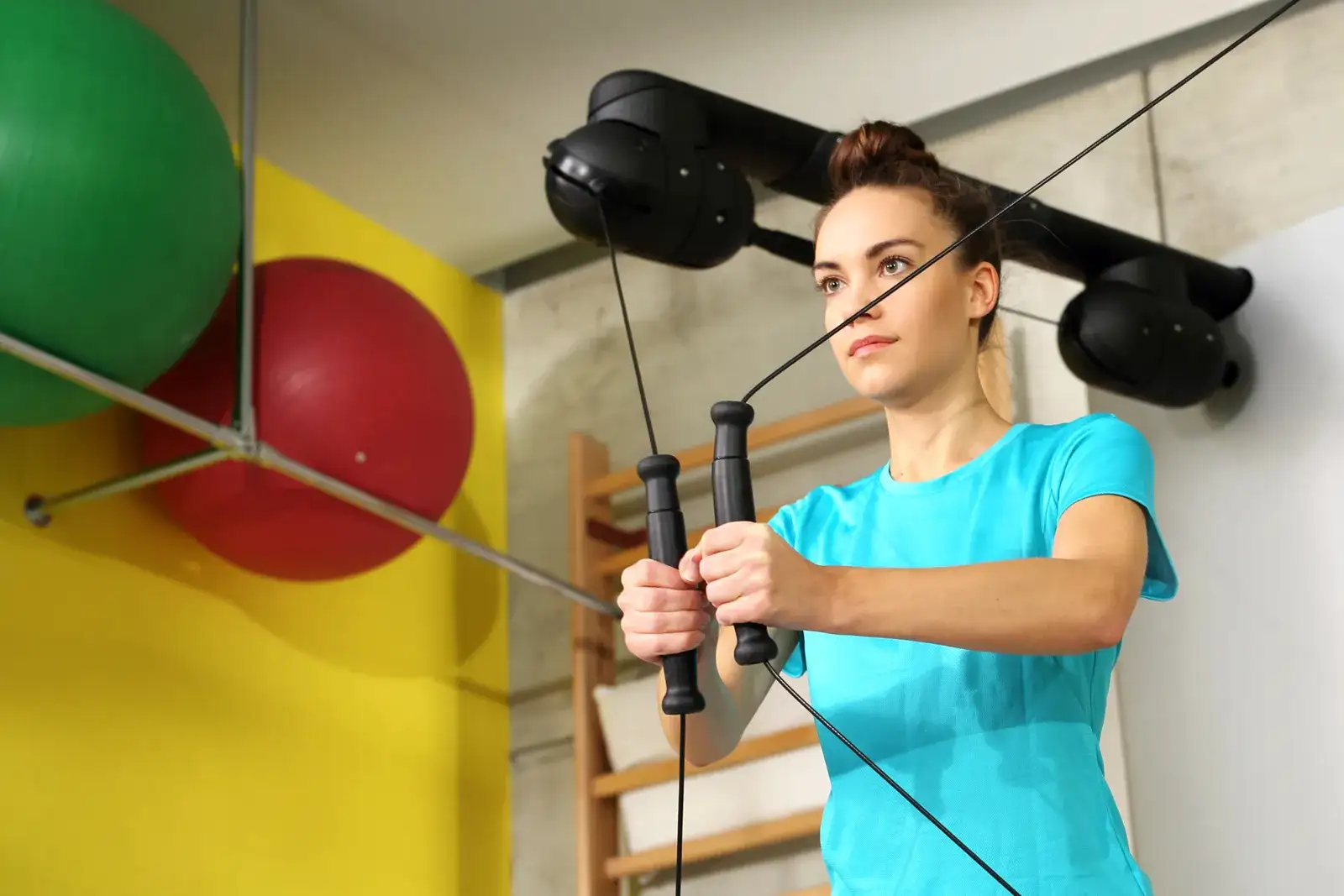
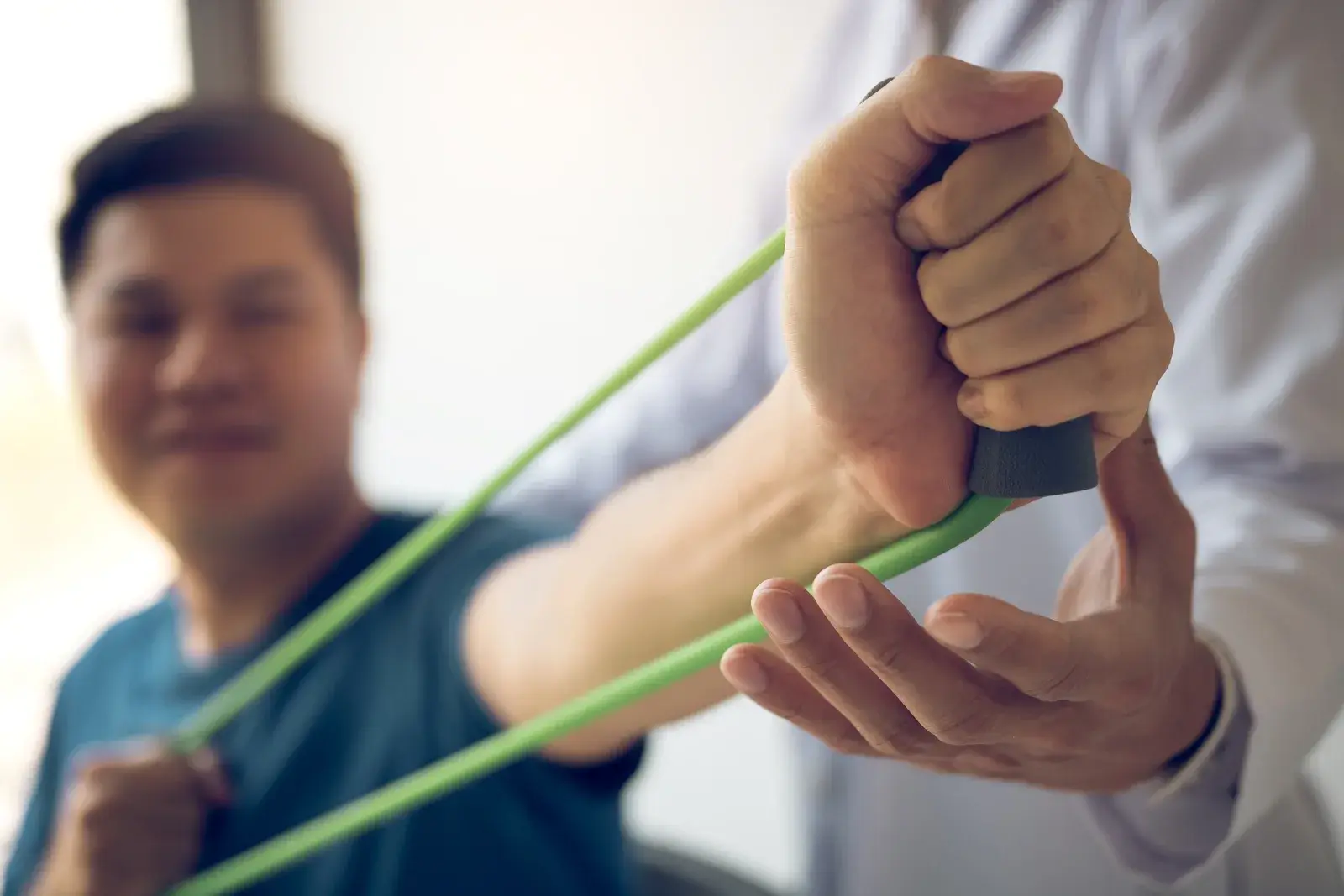
In a private suite at FlexWerk, a therapist in the network may use gentle joint mobilization, active-assisted range with a dowel or pulley, rotator cuff strengthening with bands and cables, rows, and pressing in ranges that stay comfortable. Upper back mobility matters too, because a stiff thoracic spine makes overhead reaching harder.
Daily-life training is part of the plan: how to reach a high cupboard, lift a carry-on into an overhead bin, garden or swing a golf club with less strain. Many golfers and pickleball players keep playing with modified technique and a planned warm-up. Swimmers often swap freestyle for breaststroke or sidestroke for a while, because the overhead recovery phase is the part an arthritic shoulder tends to dislike most.
Heat before exercise and pacing during busy weeks help. Your physician may offer injections during flares, and the exercise plan continues alongside.
Flares are part of living with arthritis. A heavier week of yard work, a long drive, or a cold, damp spell can make the joint ache for a few days. The usual response is to scale the exercise back for a short time rather than stopping, then rebuild once it settles, and to keep a note of what triggered the flare so you can plan around it next time.
- Gentle range of motion daily, often after a warm shower
- Rotator cuff and shoulder blade strengthening
- Comfortable pressing, rows and carries
- Thoracic spine mobility
- Task practice for reaching, lifting and sleeping positions
Can physical therapy delay a shoulder replacement, and what happens if I need one?
For many people with mild to moderate shoulder arthritis, exercise and activity changes keep pain manageable for a long time, sometimes years. Surgery is considered when pain at rest and at night, or loss of function, is no longer acceptable despite good conservative care.
A typical course of physical therapy runs about 6 to 12 weeks, after which you continue a home or gym routine with periodic check-ins. Some people continue strength training with a coach after discharge to stay ahead of stiffness, and the post-rehab strength training page explains how that handover works.
If you do have a shoulder replacement, strength and motion gained beforehand often make the early weeks after surgery easier. The shoulder replacement rehab page explains the recovery, and how long recovery after a shoulder replacement takes covers timelines.
How can I make everyday reaching and sleeping easier with an arthritic shoulder?
Keep moving the shoulder every day within comfort, rather than resting it for long periods, which tends to increase stiffness. Rearrange your kitchen and closet so frequently used items sit between waist and shoulder height, and use a step stool rather than reaching high.
For sleep, lie on your back or the other side with a pillow supporting the arthritic arm. In winter, warm the shoulder before going out to shovel or scrape the car, or ask for help with heavy snow. Light dumbbell work and walking keep you active through the colder months. Front-opening clothes, a long-handled brush and a bag with a cross-body strap remove several small daily strains on the joint.
If shoulder arthritis is limiting your day, the two-minute questionnaire lets you describe your shoulder and goals. The matching team proposes a therapist in the network, and the therapist’s office verifies your benefits, including Medicare rules, before the first visit.
When to see a physician or go to the ER first
Physical therapy is the right start for most shoulder arthritis. These symptoms are different and need medical attention before, or instead of, a physical therapy visit:
- A hot, red, swollen shoulder with fever, which may be infection
- Sudden loss of arm function after a fall
- Severe night pain with unexplained weight loss or a cancer history
- Left arm or shoulder pain with chest pain or breathlessness: call 911
- Numbness or weakness spreading down the arm
If you think it is an emergency, call 911.
Two-minute assessment
Get your shoulder arthritis looked at
Tell us how your shoulder arthritis started, how long it has been going on and what it is stopping you from doing. The matching team proposes a therapist in the network who focuses on it, and you hear back, usually within one business day.
- No referral needed to start in Indiana (first 42 days)
- We check which therapists work with your plan before you book
- One-on-one care in a private suite at Carmel City Center
How therapists treat it
Kinds of care used for shoulder arthritis
- Orthopedic physical therapyExercise-led care for back, neck, shoulder, hip, knee and ankle problems, delivered one-on-one in a private suite.
- Post-surgical rehabilitationProtocol-led rehab after joint replacement, ligament, tendon and spine surgery, in a quiet private room instead of a crowded gym.
- Post-rehab strength trainingThe bridge from discharge to lasting strength: a written handoff from your therapist to a FlexWerk coach in the same building.
Questions
Shoulder arthritis: what people ask
Information on this website is general education, not medical advice, a diagnosis or a treatment plan. Only a licensed clinician who examines you can advise on your condition. If you may be having a medical emergency, call 911.
Something we did not cover? Ask the matching team or ring (888) 353-9975.
Is shoulder arthritis the same as frozen shoulder?
No. Both cause stiffness, but arthritis is wear of the joint cartilage seen on X-ray, while frozen shoulder is a thickening of the capsule with normal X-rays.
Should I avoid lifting weights with shoulder arthritis?
Most people benefit from strength training with sensible weight and comfortable ranges. A therapist can help you choose which lifts to keep and how to modify the rest.
Do cortisone shots help shoulder arthritis?
Injections may ease pain for a period and can make exercise more comfortable. They are a physician decision and are usually combined with an exercise plan.
Can I still play golf with an arthritic shoulder?
Many people do, with a shorter backswing, a longer warm-up and attention to how many holes or balls they hit. The physical therapy for golfers page covers swing-related rehab.
Does Medicare cover physical therapy for shoulder arthritis?
Medicare Part B covers medically necessary outpatient physical therapy when a physician or qualified provider certifies the plan of care. The cost and insurance page explains what is checked before you start.
Can a diet or supplement reverse shoulder arthritis?
No supplement is known to reverse arthritis. General health, a healthy weight and staying active help the whole body, and your physician can advise on any supplements.
Google reviews
What guests say about FlexWerk
These are live Google reviews of FlexWerk at Carmel City Center, the private-suite facility where therapists in the network practise.
Related
Conditions that travel together
 OsteoarthritisStrength, pacing and joint-friendly exercise for knee and hip osteoarthritis, including preparation for joint replacement.
 Frozen shoulderStage-matched care for adhesive capsulitis, from calming a painful freezing shoulder to regaining reach as it thaws.
 Rotator cuff injuryProgressive loading for cuff tendinopathy and tears, plus protocol-led rehab after surgical repair.
Page reviewed By the Monon Therapy Collective editorial team

Carmel City Center · Carmel, Indiana
Start with a conversation
Tell us what hurts and what you want to get back to. We will tell you honestly whether a therapist in the network is likely a good fit for what you describe, and match you with an independent, licensed therapist who is. Only that therapist can assess what will help.
885 Monon Green Blvd, Suite 120, Carmel, IN 46032 · Monday to Friday 5 AM to 9 PM · Saturday and Sunday 7 AM to 4 PM