
Winged scapula physical therapy in Carmel, Indiana
A winged scapula is a shoulder blade that lifts away from the rib cage, most often because the muscles that hold it flat are weak, tired or poorly coordinated, and occasionally because a nerve has been stretched or irritated. Physical therapy retrains the serratus anterior and trapezius so the blade glides smoothly as you lift your arm. In Carmel, a licensed therapist in the network tests which pattern you have, then works one-on-one with you in a private suite at Carmel City Center.
At a glance
Common signs of winged scapula
Also called: Scapular winging, Scapular dyskinesis, Serratus anterior palsy, Long thoracic nerve palsy.
Is a shoulder blade that sticks out a muscle problem or a nerve problem?
Most of the time it is a muscle control problem, not a nerve injury. Clinicians call this pattern scapular dyskinesis: the blade moves a little out of rhythm because the serratus anterior and lower trapezius are weak or fatigued, often alongside shoulder pain from another cause. A smaller group of people have true winging from a nerve that stopped working properly, which behaves very differently and recovers on a much slower clock.
The serratus anterior, a fan of muscle along the side of the ribs, keeps the inner edge of the blade pressed flat. It is powered by the long thoracic nerve, which can be stretched by heavy overhead lifting, a backpack strap, a fall or sometimes a viral illness. When that nerve is affected, the inner border flares out dramatically as you push forward. Weakness of the trapezius, supplied by the spinal accessory nerve, produces a different picture, with a drooping shoulder and winging most visible when you lift the arm out to the side.
The difference matters because you cannot strengthen a muscle that is not receiving a signal. Recognizing which situation you are in sets the plan, the expectations and whether a physician needs to be involved.
- Dyskinesis (most common): subtle, often both sides, improves when the therapist assists the blade, usually linked with pain elsewhere in the shoulder.
- Serratus anterior palsy: marked winging of the inner border on a wall push, often after a specific strain or illness, sometimes with a burning ache first.
- Trapezius palsy: drooping shoulder, difficulty raising the arm sideways, sometimes after a procedure in the side of the neck.
What tests show why a shoulder blade wings?
A physical therapist watches the blade move from behind while you raise and lower your arms several times, then while you push against a wall. Repetition matters, because fatigue often brings out winging that is invisible on the first lift.
Two quick hands-on checks are common. In the scapular assistance test, the therapist guides the blade upward and around the ribs as you lift; if pain eases or range improves, the problem is likely control rather than structure. In the scapular retraction test, the blade is held back against the ribs while shoulder strength is retested. The therapist will also screen your neck, check sensation and reflexes in the arm, and compare the strength of individual muscles side to side.
If the picture suggests a nerve palsy, such as strong winging with clear serratus or trapezius weakness, your therapist will usually recommend a physician visit. Nerve conduction studies and electromyography (EMG), which measure how well a nerve carries its signal, are ordered by a physician and help track recovery over months.
Which exercises retrain the serratus anterior and lower trapezius?
For dyskinesis, treatment is progressive strengthening and timing work for the muscles that steer the blade, done in positions your shoulder tolerates. The push-up plus is the signature exercise: at the top of a wall push, you press a little further so the blade wraps around the ribs. From there the plan moves to the floor, to a cable and to load.
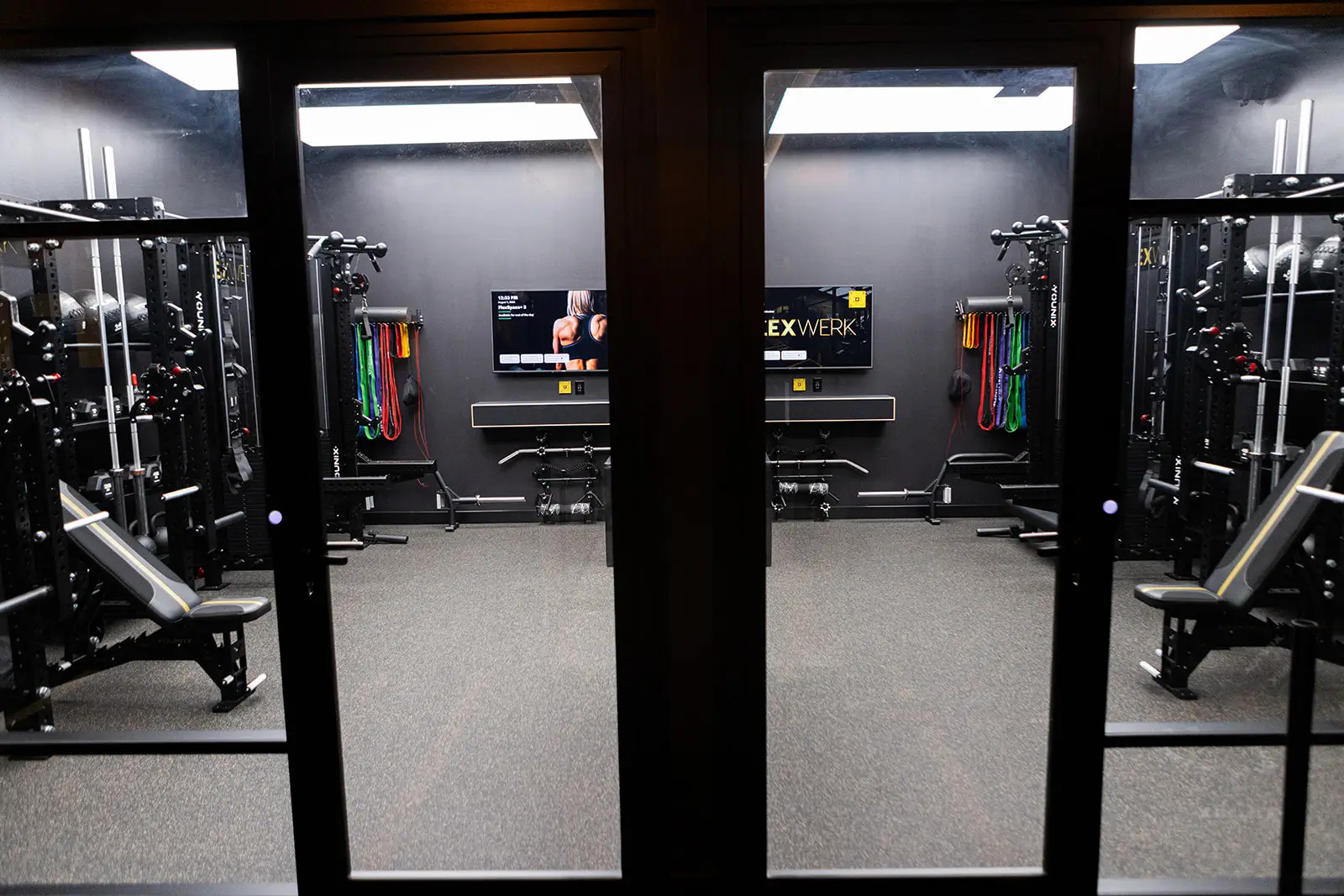
A private suite with a cable column, dumbbells and a bench lets your therapist progress you beyond band work: serratus punches on the cable, incline push-up plus on the bench, prone Y raises for the lower trapezius, and carries that teach the blade to sit quietly under load. Posture cues alone rarely change much; repeated, gradually heavier practice does.
With a nerve palsy the emphasis shifts. Early work protects the shoulder from overstretch, maintains motion, and strengthens the muscles that still work well, sometimes with a brace or taping your physician suggests. Targeted serratus or trapezius loading increases as the nerve shows signs of recovery. If the blade is part of a broader problem, the shoulder impingement physical therapy page explains how scapular control fits into overhead pain.
- Wall, then incline, then floor push-up plus
- Cable or band serratus punch and wall slides with a foam roller
- Prone Y and T raises for the lower and middle trapezius
- Overhead and suitcase carries for endurance
- Rowing variations to balance pressing work
How long does scapular winging take to settle?
Scapular dyskinesis often improves noticeably within 6 to 12 weeks of regular strengthening. Nerve-related winging is slower: published reviews describe most long thoracic nerve injuries recovering on their own, though that recovery can take up to about two years, with physical therapy used throughout to keep the shoulder strong and moving.
Recovery time depends on the cause, how long the winging has been present and how consistently the exercises are done. Your therapist will retest the blade every few weeks, sometimes filming it from behind, so you can see change that is hard to notice in a mirror. The ranges below are typical, not promises.
- Dyskinesis with shoulder pain: pain often eases within 4 to 8 weeks; blade control keeps improving to about 3 months.
- Nerve palsy: most people recover without surgery, but it can take up to about two years, and a physician usually tracks progress with nerve tests.
- Nerve palsy with no improvement after about a year: a surgeon may be asked to review the options.
- Mild endurance deficits: may linger after recovery and respond to continued strength work.
What should I do while a winged shoulder blade is being worked out?
Keep the arm moving in comfortable ranges, and temporarily trim the activities that load the blade hardest. Heavy bench pressing, overhead pressing, hanging from a bar and long periods carrying a heavy shoulder bag are the usual culprits. Keep training the rest of your body.
Pay attention to how the winging started. A sudden change after lifting, a backpack strap or a viral illness, especially with a burning ache across the shoulder first, deserves a physician visit as well as physical therapy. Gradual, mild winging with shoulder pain is the more common and more quickly helped pattern.
If you want a therapist to look at it, the two-minute shoulder questionnaire tells the matching team what you are noticing, and someone calls or texts you back. You can also read about general shoulder pain physical therapy for related problems.
When to see a physician or go to the ER first
Physical therapy is the right start for most winged scapula. These symptoms are different and need medical attention before, or instead of, a physical therapy visit:
- Sudden severe shoulder pain followed within days by marked weakness or winging
- Winging after neck surgery, a lymph node biopsy or chest surgery
- Weakness spreading to the hand or numbness in the arm
- Winging together with fever, weight loss you cannot explain or night sweats
- Shortness of breath or chest pain with the shoulder symptoms
If you think it is an emergency, call 911.
Two-minute assessment
Get your winged scapula looked at
Tell us how your winged scapula started, how long it has been going on and what it is stopping you from doing. The matching team proposes a therapist in the network who focuses on it, and you hear back, usually within one business day.
- No referral needed to start in Indiana (first 42 days)
- We check which therapists work with your plan before you book
- One-on-one care in a private suite at Carmel City Center
How therapists treat it
Kinds of care used for winged scapula
Questions
Winged scapula: what people ask
Information on this website is general education, not medical advice, a diagnosis or a treatment plan. Only a licensed clinician who examines you can advise on your condition. If you may be having a medical emergency, call 911.
Something we did not cover? Ask the matching team or ring (888) 353-9975.
Can posture alone cause a winged scapula?
Slumped sitting can contribute to poor blade control, but it is rarely the whole explanation. Strength, endurance and timing of the serratus anterior and trapezius are usually what change the picture.
Is it safe to keep lifting weights with scapular winging?
Usually yes, with changes. Lighter pressing, more rowing and carrying, and avoiding heavy work that makes the blade flare are typical adjustments while strength builds. A therapist can set limits for your situation.
Does a winged scapula ever need surgery?
Occasionally. When a nerve palsy has not recovered after about 12 months of conservative care, a surgeon may discuss nerve decompression or tendon transfer procedures. Most people never reach that point.
Will kinesiology tape fix the shoulder blade?
Tape may give a helpful reminder of position during exercise, but it does not strengthen anything. Read more in our answer on whether kinesiology tape works.
Do I need a doctor’s note to start in Indiana?
Not to start. Indiana lets a physical therapist evaluate and treat without a referral for up to 42 calendar days, although suspected nerve palsy should also be checked by a physician and some insurance plans want a referral for coverage.
Google reviews
What guests say about FlexWerk
These are live Google reviews of FlexWerk at Carmel City Center, the private-suite facility where therapists in the network practise.
Related
Conditions that travel together
 Shoulder impingementGraded rotator cuff and shoulder blade loading for painful overhead reaching, usually tried before any thought of surgery.
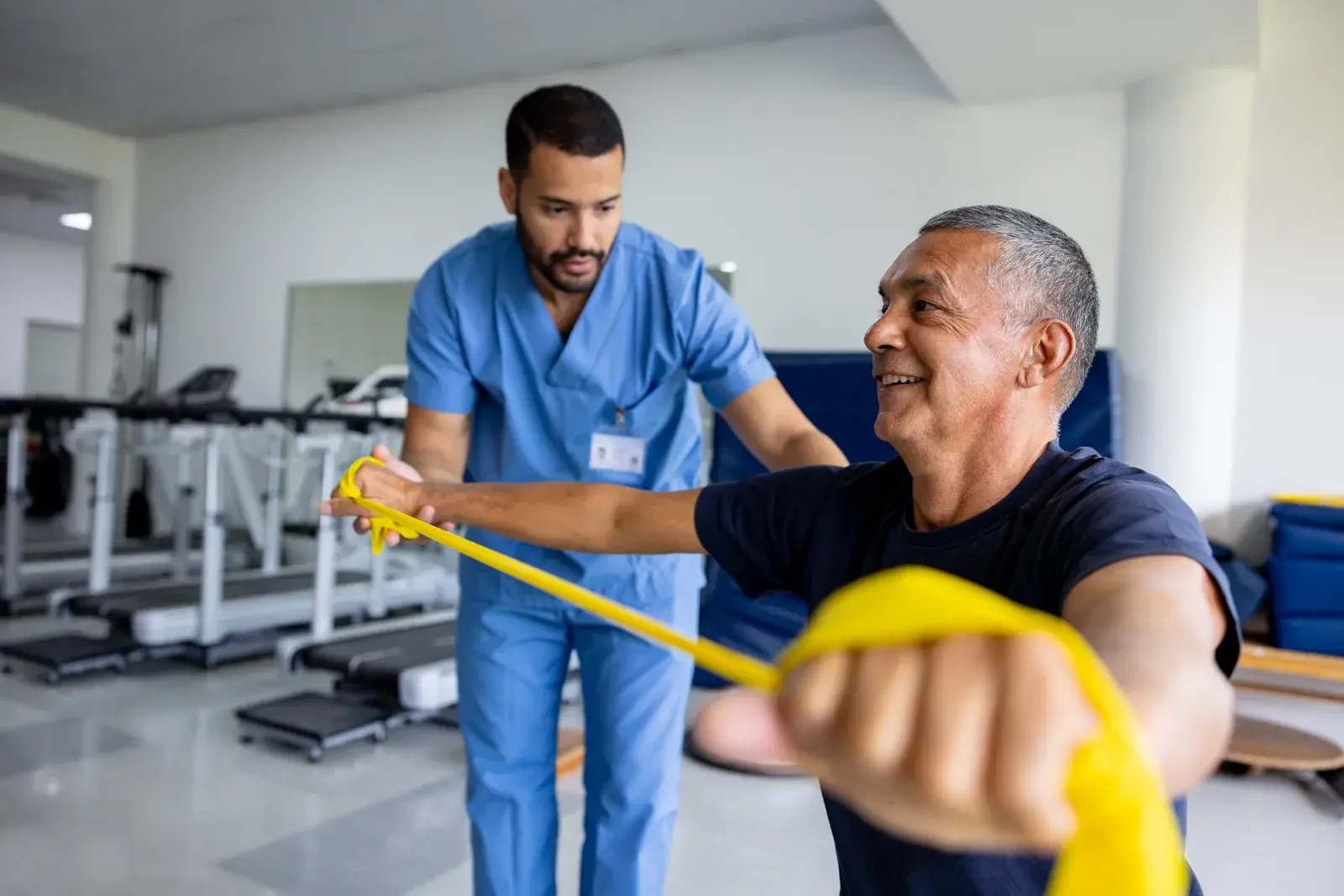 Shoulder painOne-on-one care for impingement-type pain, frozen shoulder, instability and overhead sport shoulders.
 Thoracic outlet syndromeConservative care for the neurogenic form of thoracic outlet syndrome: posture of the shoulder girdle, breathing, nerve glides and graded arm work.
Page reviewed By the Monon Therapy Collective editorial team

Carmel City Center · Carmel, Indiana
Start with a conversation
Tell us what hurts and what you want to get back to. We will tell you honestly whether a therapist in the network is likely a good fit for what you describe, and match you with an independent, licensed therapist who is. Only that therapist can assess what will help.
885 Monon Green Blvd, Suite 120, Carmel, IN 46032 · Monday to Friday 5 AM to 9 PM · Saturday and Sunday 7 AM to 4 PM