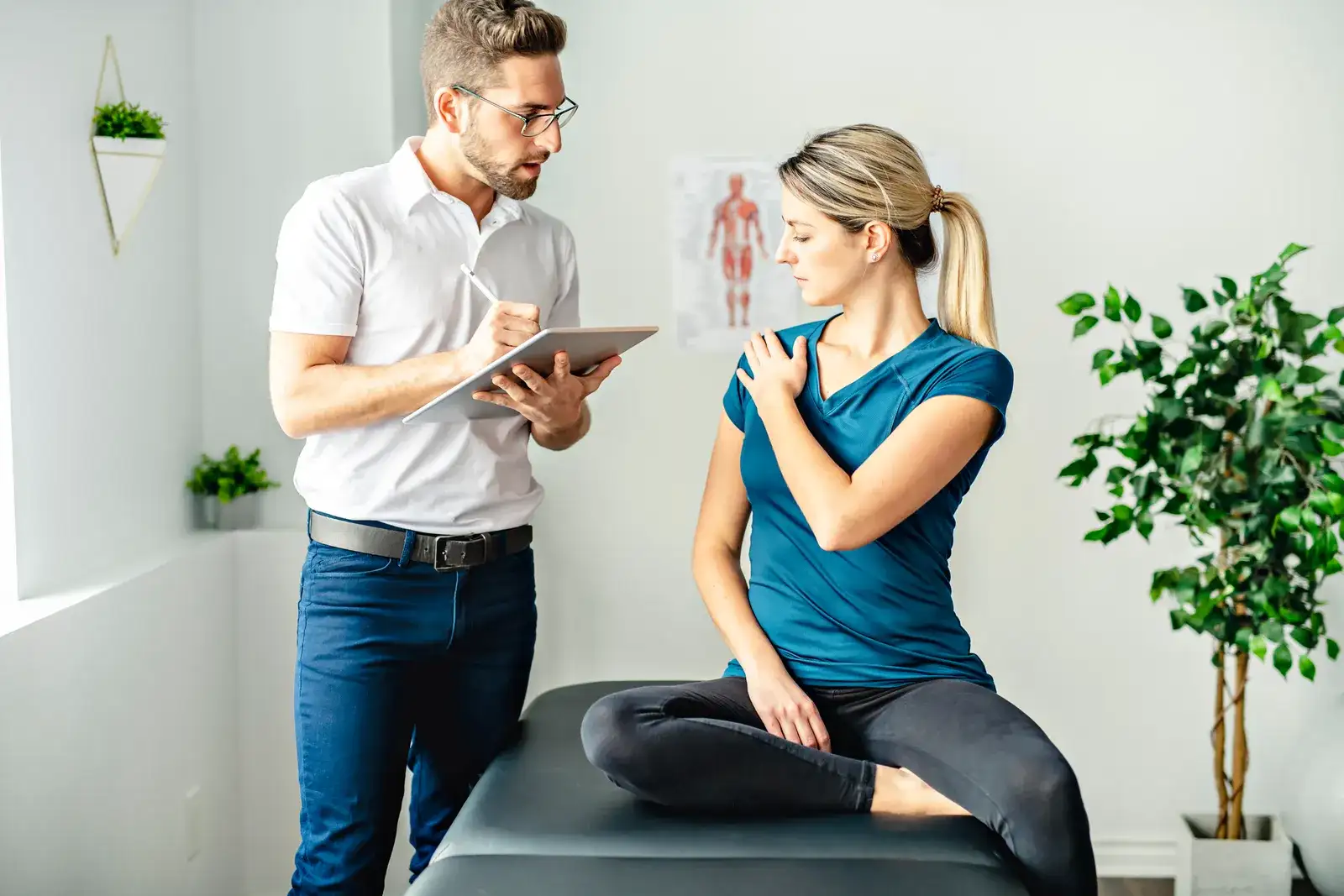
Shoulder instability physical therapy in Carmel, Indiana
Shoulder instability means the ball of the upper arm slips partly or fully out of its socket, either after a dislocation or because the joint is naturally loose. After a physician has confirmed the shoulder is back in place with no fracture, a licensed physical therapist matched through the network in Carmel rebuilds rotator cuff and shoulder blade control, then strength and confidence in the positions where it slipped. Some people, especially young athletes with repeated dislocations, eventually need surgery, and rehab is central either way.
At a glance
Common signs of shoulder instability
Also called: Glenohumeral instability, Shoulder dislocation, Shoulder subluxation, Recurrent shoulder dislocation, Multidirectional instability, Loose shoulder.
What happens inside the joint when a shoulder dislocates?
In a dislocation, the ball at the top of the arm bone comes fully out of the shallow socket; in a subluxation, it slips partly out and back in. The vast majority of dislocations go out the front, usually when the arm is up and forced backward, as in a fall on an outstretched hand, a tackle, a block at the net or a skiing crash.
On the way out, the ball often tears the labrum, the rim of cartilage that deepens the socket, along with the ligaments attached to it. This is called a Bankart lesion. The ball can also bump against the socket edge and leave a dent on its back surface, called a Hill-Sachs lesion. Those changes explain why a shoulder that has dislocated once is more likely to do it again.
Not all instability starts with a single big event. Some people, often swimmers, gymnasts, volleyball players or anyone with joint hypermobility, have naturally loose shoulders that slip in several directions. This multidirectional pattern responds especially well to long-term strengthening.
Winter adds its own version of the injury in central Indiana. A slip on an icy parking lot with the arm thrown out to catch yourself, or a fall while sledding, produces the same arm-up-and-back force that sends the ball forward out of the socket. In adults over about 40, that kind of fall can also tear the rotator cuff, which changes the rehab plan.
Should I have surgery or rehab after a first-time shoulder dislocation?
For most adults with a first-time dislocation, structured rehab is the starting point, with surgery considered if the shoulder keeps slipping or limits the life they want. The risk of another dislocation is highest in teenagers and young adults, particularly those in contact or overhead sports, so an orthopedic surgeon may discuss early stabilization with them.
The decision depends on age, sport, how much bone was damaged, whether this is a repeat episode, and your own goals. A recreational lifter in their forties and a 19-year-old college football player can reasonably reach different answers after the same injury. This is a conversation with an orthopedic surgeon, informed by imaging.
If surgery is chosen, procedures include an arthroscopic labral repair or a bone block procedure such as the Latarjet. Each has its own protocol, covered on the shoulder labral repair rehab and Latarjet surgery rehab pages.
How is a dislocated shoulder rehabilitated without surgery?
Nonsurgical rehab moves through protection, controlled motion, strength and then sport or work-specific training, with each phase unlocked by meeting criteria rather than by a date. The early weeks often include a sling for comfort for a short period, as directed by your physician, with gentle motion that stays out of the vulnerable arm-up-and-back position.
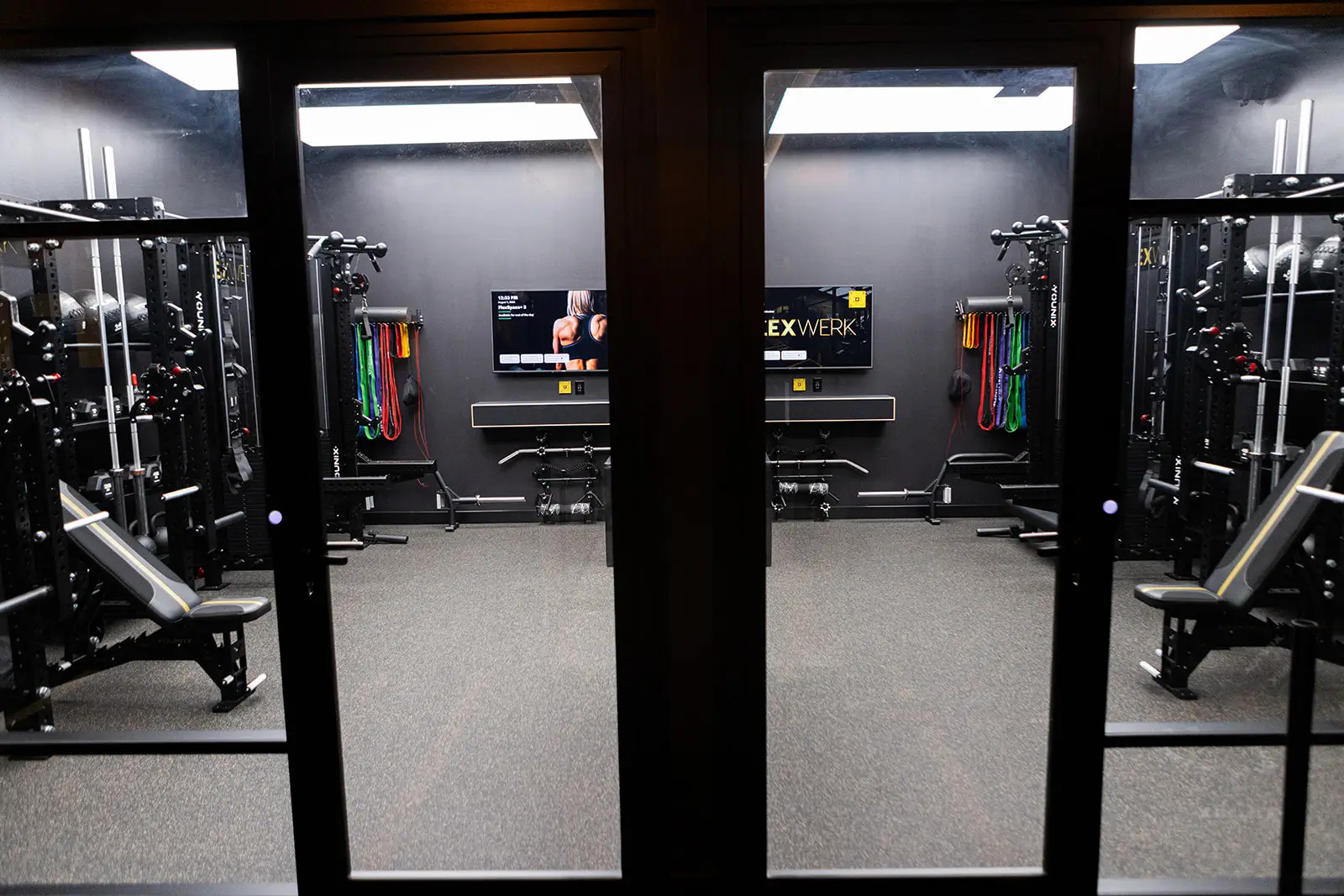
In a private suite at FlexWerk, a therapist in the network can progress from isometrics and rotator cuff band work to closed-chain drills such as wall and floor weight shifts, then to cable rotations, presses, rows and carries. Later stages train the shoulder in the positions that used to feel risky, with gradually increasing speed, load and reaction demands.
For athletes, the final phase adds throwing, catching, landing and contact drills, and objective testing of strength and endurance before return; the return-to-sport testing page explains how those criteria work. A therapist will also address apprehension directly, because fear of the arm slipping often outlasts the physical weakness.
- Short-term protection and pain control
- Rotator cuff activation and shoulder blade control
- Closed-chain stability: wall, table and floor drills
- Progressive strength in the at-risk positions
- Speed, reaction and plyometric work for sport
- Objective strength and function testing before return
How soon can I return to sport or the gym after a dislocation?
Recovery after a nonsurgical first-time dislocation usually takes about 6 to 12 weeks, and the NHS notes that a full return to some sports can take up to 16 weeks or longer, depending on the sport, the season, the arm involved and how the shoulder performs on testing. Contact and overhead athletes generally need longer than people returning to light gym work.
Typical milestones include full painless motion, strength on the injured side close to the other side, no apprehension in the positions you need, and the ability to handle sport-specific drills at full speed. Your therapist may use hand-held dynamometer readings, timed closed-chain tests and throwing or serving volume to document these milestones, so the decision rests on numbers rather than a hopeful guess. Some athletes play the rest of a season in a brace after discussion with their physician and accept the risk of another episode.
After surgery, the timeline is longer, often many months for collision sports, and is set by the surgeon’s protocol. For high school athletes, a parent or legal guardian completes the questionnaire and attends visits.
What should I avoid while a loose or recently dislocated shoulder recovers?
Avoid the combined position of the arm out to the side, raised and turned backward, such as a wide-grip bench press, behind-the-neck pressing, dips or the cocking phase of a throw, until your therapist has rebuilt strength there. Sleeping with the arm overhead can also provoke slipping.
Keep training everything else. Lower body, core and the other arm stay in your program, and the injured shoulder works within its safe zone. If you play volleyball at Grand Park or lift at home, write down which movements provoke apprehension so the therapist can rebuild them in order.
If your shoulder has dislocated or feels loose, the two-minute assessment tells the matching team what happened and what you want to get back to. They will propose a therapist whose focus fits sports shoulder rehab and arrange a call back.
When to see a physician or go to the ER first
Physical therapy is the right start for most shoulder instability. These symptoms are different and need medical attention before, or instead of, a physical therapy visit:
- A shoulder that is still out of place: go to an emergency department, do not try to force it back
- Numbness on the outer upper arm or a cold, pale hand after a dislocation
- Inability to lift the arm at all after a dislocation in someone over 40, which may mean a rotator cuff tear
- Severe pain or visible deformity of the collarbone or upper arm, which may be a fracture
- Repeated dislocations with minimal force
If you think it is an emergency, call 911.
Two-minute assessment
Get your shoulder instability looked at
Tell us how your shoulder instability started, how long it has been going on and what it is stopping you from doing. The matching team proposes a therapist in the network who focuses on it, and you hear back, usually within one business day.
- No referral needed to start in Indiana (first 42 days)
- We check which therapists work with your plan before you book
- One-on-one care in a private suite at Carmel City Center
How therapists treat it
Kinds of care used for shoulder instability
- Sports physical therapyRehab for active adults that goes past pain relief to the strength, power and movement your sport actually demands.
- Return-to-sport testingCriteria-based testing of strength, hopping, movement and confidence, so your return to sport rests on evidence, not the calendar.
- Post-surgical rehabilitationProtocol-led rehab after joint replacement, ligament, tendon and spine surgery, in a quiet private room instead of a crowded gym.
Questions
Shoulder instability: what people ask
Information on this website is general education, not medical advice, a diagnosis or a treatment plan. Only a licensed clinician who examines you can advise on your condition. If you may be having a medical emergency, call 911.
Something we did not cover? Ask the matching team or ring (888) 353-9975.
Do I need an MRI after a shoulder dislocation?
X-rays are usually taken first to confirm the shoulder is back in place and to check for fractures. An MRI is often ordered for young athletes, repeat dislocations or when surgery is being considered.
How long should I wear a sling after a dislocation?
Follow your physician’s instructions. Many people use a sling only for comfort for a short time, then begin gentle movement guided by a therapist.
Will my shoulder dislocate again?
The risk depends heavily on age and activity, and it is highest in young people who return to contact or overhead sports. Rehab reduces symptoms and builds control, but no one can promise it will not happen again.
Can I lift weights with an unstable shoulder?
Yes, with smart exercise choices and progression. A therapist will usually start with neutral grips and ranges where the shoulder feels secure, then gradually expand them.
What is multidirectional instability?
It is looseness of the shoulder in more than one direction, often without a single injury and commonly in naturally flexible people. Long-term strengthening of the rotator cuff and shoulder blade muscles is the main treatment.
Is a dislocated shoulder the same as a separated shoulder?
No. A dislocation involves the ball-and-socket joint, while a separation is an injury to the joint at the top of the shoulder where the collarbone meets the shoulder blade, covered on the AC joint sprain page.
Google reviews
What guests say about FlexWerk
These are live Google reviews of FlexWerk at Carmel City Center, the private-suite facility where therapists in the network practise.
Related
Conditions that travel together
 Shoulder labral tearRehab for SLAP and other labral tears in throwers, lifters and overhead athletes, before or instead of surgery.
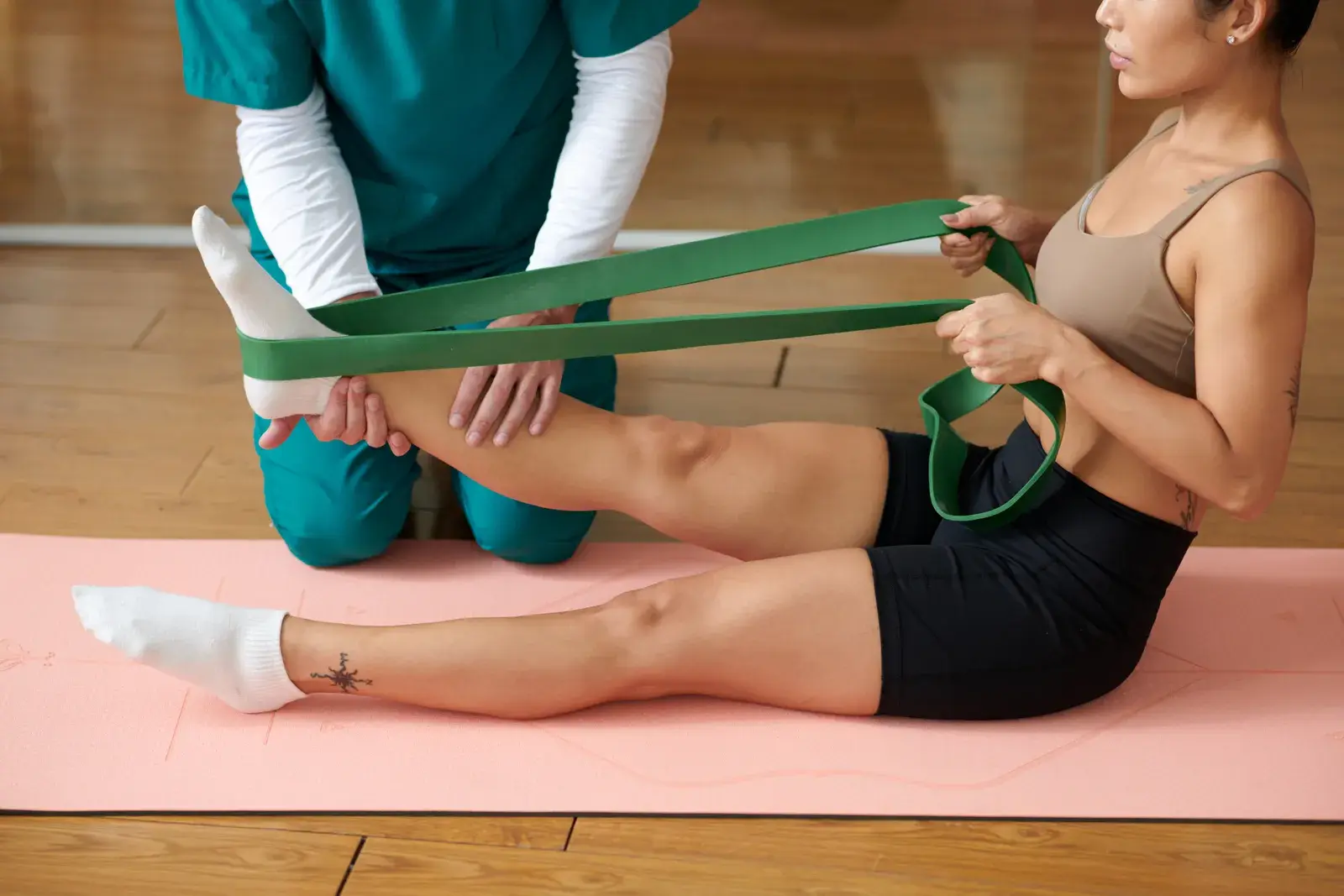 Joint hypermobilityStrength, control and pacing for flexible joints that ache, slip or tire easily.
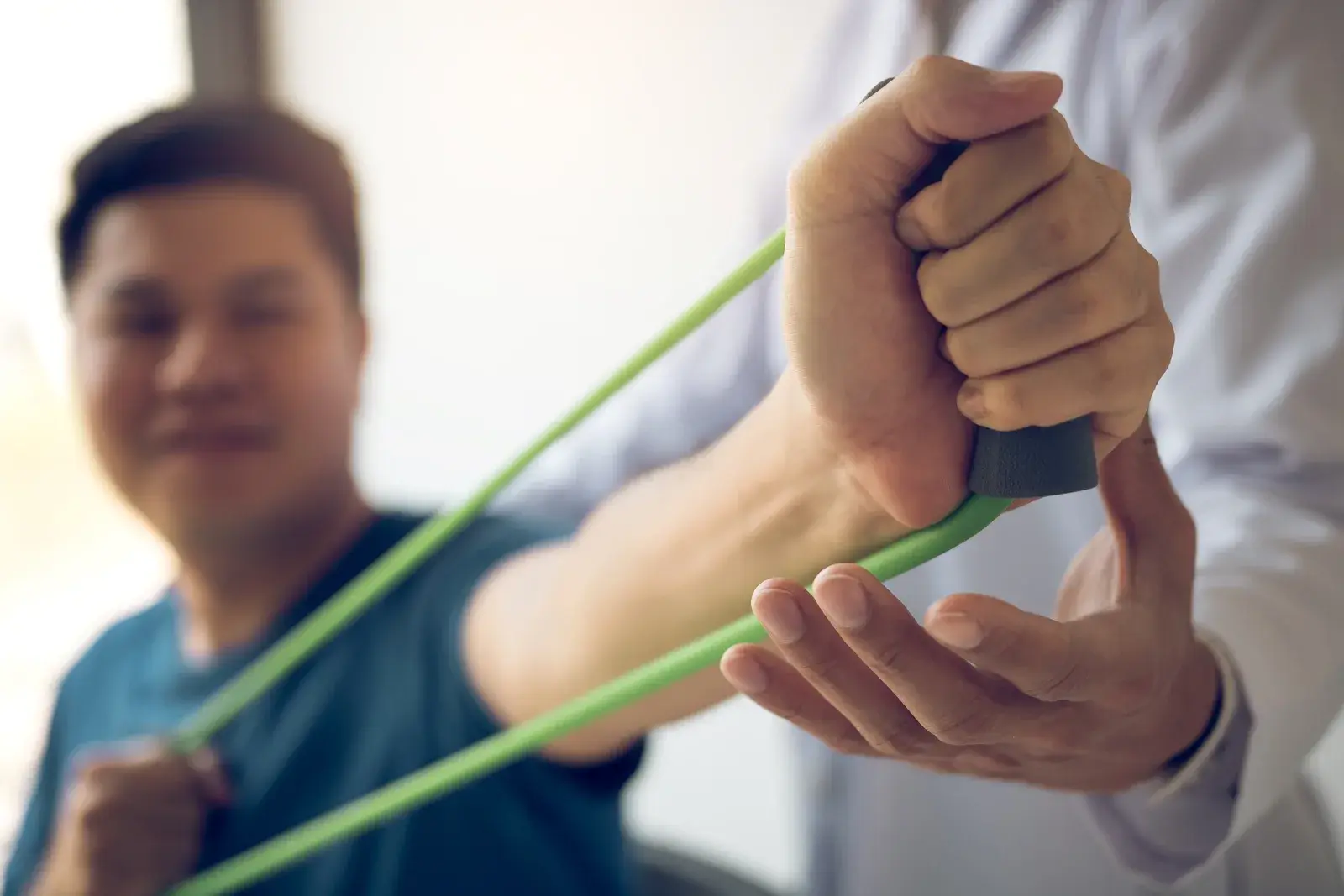 Rotator cuff injuryProgressive loading for cuff tendinopathy and tears, plus protocol-led rehab after surgical repair.
Page reviewed By the Monon Therapy Collective editorial team

Carmel City Center · Carmel, Indiana
Start with a conversation
Tell us what hurts and what you want to get back to. We will tell you honestly whether a therapist in the network is likely a good fit for what you describe, and match you with an independent, licensed therapist who is. Only that therapist can assess what will help.
885 Monon Green Blvd, Suite 120, Carmel, IN 46032 · Monday to Friday 5 AM to 9 PM · Saturday and Sunday 7 AM to 4 PM