Joint hypermobility physical therapy in Carmel, Indiana
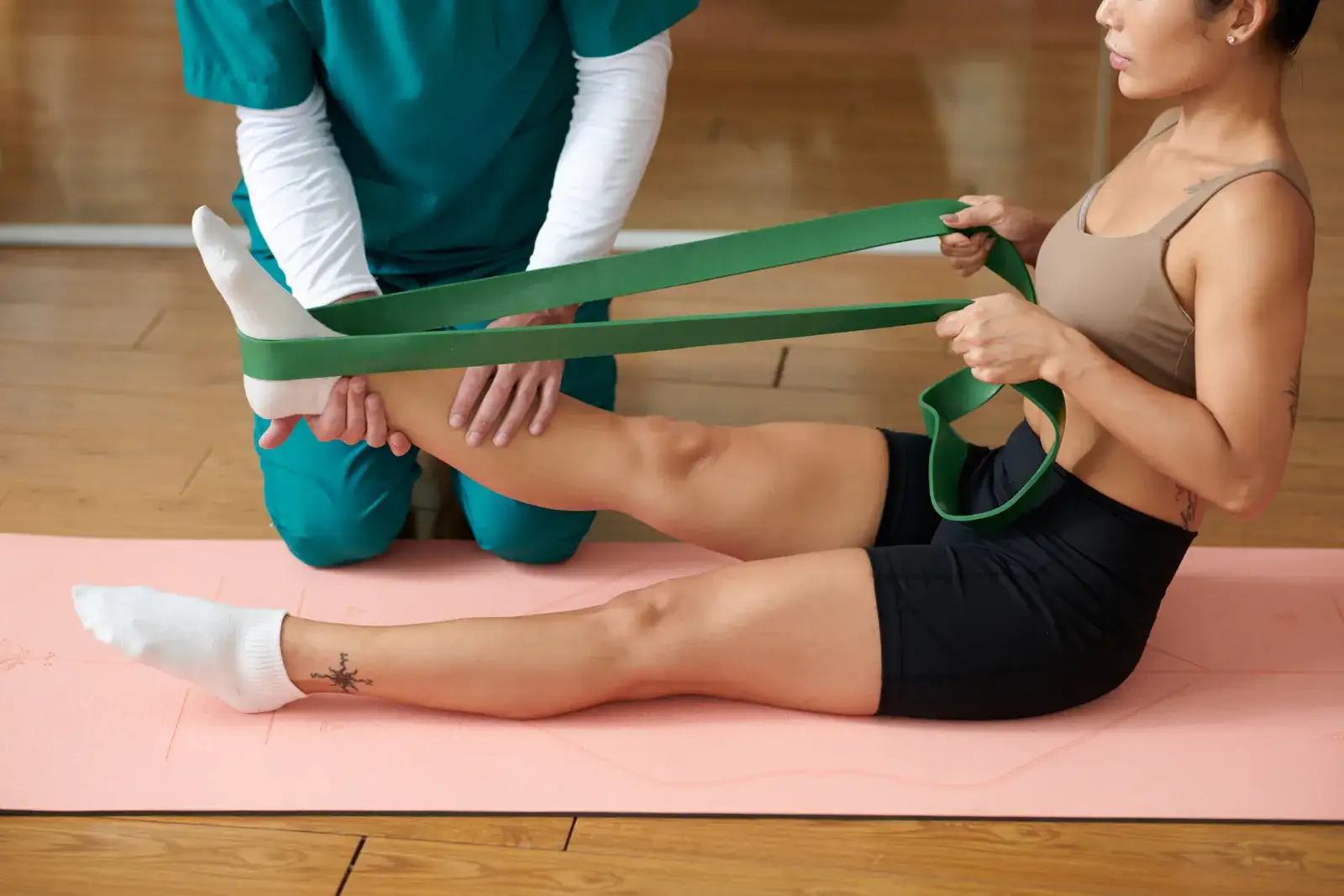
If your joints move further than most people’s and that causes pain, slips or fatigue, physical therapy focuses on building strength and control through your whole range rather than more stretching. A licensed physical therapist in Carmel can help you find which joints need the most support, start loading at a level your body tolerates and pace activity so flares become less frequent. Diagnosing hypermobility spectrum disorder or hypermobile Ehlers-Danlos syndrome is a physician’s job; therapy works alongside that care.
At a glance
Common signs of joint hypermobility
Also called: Hypermobility spectrum disorder, Hypermobile Ehlers-Danlos syndrome, Double-jointedness, Generalized joint hypermobility.
When does being flexible become a problem worth treating?
Being flexible becomes a problem worth treating when the extra range comes with pain, repeated joint slips or sprains, or fatigue that limits daily life. Plenty of people with very bendy joints, including many dancers and gymnasts, have no symptoms at all and need nothing.
Clinicians often screen for generalized hypermobility with the Beighton score, a 9-point check of the little fingers, thumbs, elbows, knees and the ability to place your palms flat on the floor with straight knees. A high score shows flexibility, not illness. Under the 2017 international classification, people with symptomatic hypermobility are usually described as having hypermobility spectrum disorder, and a smaller group meets the stricter criteria for hypermobile Ehlers-Danlos syndrome.
Those labels are assigned by a physician, often a rheumatologist or geneticist, who may also look at the skin, heart and family history. A physical therapist does not diagnose either condition, but can assess how your joints behave under load and build a plan around that.
Hypermobility often shows up first in sport or dance, where flexibility is an advantage, and only becomes a problem later when joints start slipping, aching after practice or spraining easily. It is also common for symptoms to change with growth, hormones, pregnancy or a period of inactivity, which is why a plan that worked a few years ago may need updating.
What does a hypermobility assessment look at beyond the Beighton score?
Beyond the Beighton score, a hypermobility assessment looks at how well you control the range you have. A physical therapist watches you squat, lunge, balance, reach overhead and push off a step, looking for joints that wobble, lock straight or drift toward the end of their range when you are tired.
Joint position sense is often tested too, for example asking you to return a joint to a set angle with your eyes closed, since many hypermobile people have a less precise sense of where a joint is. Strength is checked around the joints that trouble you most, commonly the shoulders, knees, ankles and hips.
The therapist will also ask about fatigue, sleep, dizziness on standing, digestive symptoms and how flares behave, because hypermobility rarely shows up in just one place. Some of those symptoms, particularly fainting or a racing heart on standing, warrant a conversation with your physician.
Expect the first visit to end with a small number of priorities rather than a long list of exercises. Many hypermobile people have tried long home programs before and found them hard to sustain, so starting with a few well-chosen movements done consistently is usually more useful.
- Control during squats, lunges, step-downs and reaching
- Joint position sense with eyes closed
- Strength around the most troublesome joints
- Balance and how it changes with fatigue
- History of slips, sprains, flares and dizziness
Why do hypermobile joints need strength rather than more stretching?
Hypermobile joints need strength because their ligaments already allow plenty of range; what is often missing is muscle that can hold and control the joint, especially near the end of that range. Stretching into a feeling of pull can feel satisfying but usually adds no useful stability and can aggravate irritated tissue.
Rehab typically starts with slow, controlled exercises in the middle of the range, such as the dead bug for the trunk, wall sits, rows and gentle shoulder work, then extends toward the ends of the range as control improves. Resistance grows gradually. Many people do well with lower repetitions and longer rests than standard gym programs suggest, because fatigue erodes control.
Balance and joint position drills, such as standing on one leg while reaching or catching, retrain the sense of where joints are. Pacing is just as important: spreading activity through the week, planning lighter days after big ones, and avoiding a boom-and-bust pattern where good days are followed by long flares.
- Controlled mid-range strength first, then toward end range
- Slow tempo and modest repetitions to keep form
- Balance and joint position training
- Reducing habitual end-range postures such as locked knees
- Pacing that spreads activity across the week
How long does it take to feel more stable with hypermobility?
Many people start to feel more stable and confident after 8 to 12 weeks of consistent strength work, but hypermobility is a lifelong trait, so the aim is a durable routine rather than a short fix. Progress tends to be gradual, with periods of improvement interrupted by flares that become shorter and less frequent over time.
Flares are not a sign that the plan has failed. A therapist will help you build a flare plan: what to cut back, what to keep doing at a lower level and how to restart. Tracking things you value, such as how long you can walk, whether you completed a week of work without a slip or how often you sleep through, shows progress that pain scores alone can hide.
Because this is long-term work, many people move from supervised physical therapy to a structured strength routine after discharge. The post-rehab strength training page explains how that handover usually works.
Life changes can shift the picture. Pregnancy, a busy stretch at work, an illness that keeps you inactive for a few weeks or a growth spurt in a teenager can all make joints feel less steady for a while. Returning to the basic routine, at a slightly lower level, is usually the quickest way back.
Which daily habits protect bendy joints at work, at the gym and in sport?
The daily habits that protect bendy joints are avoiding long holds at the end of range, mixing positions often, and building up any new activity gradually. Standing with knees locked back, sitting on folded legs, and resting on the very end of the elbows or wrists all load ligaments that already stretch easily.
At the gym, slower lifts with a clear stopping point before end range are usually kinder than bouncy stretching classes or ballistic movements. In sport, ankle and knee strength matter most for court and field games, and dancers often benefit from working with a therapist who understands turnout and extreme ranges; see physical therapy for dancers. For people with repeated ankle sprains, the chronic ankle instability page shows how balance training fits in.
If joint pain, slips or fatigue are limiting you, complete the physical therapy assessment. The matching team reads it and gets back to you about whether a therapist in the network has a focus that fits. For a patient under 18, a parent or legal guardian completes the questionnaire and attends with them.
When to see a physician or go to the ER first
Physical therapy is the right start for most joint hypermobility. These symptoms are different and need medical attention before, or instead of, a physical therapy visit:
- A joint that dislocates and does not go back into place
- Fainting, chest pain or a racing heart on standing
- A sudden, severe headache unlike any before
- New numbness, weakness or loss of coordination
- A swollen, hot joint with fever
If you think it is an emergency, call 911.
Two-minute assessment
Get your joint hypermobility looked at
Tell us how your joint hypermobility started, how long it has been going on and what it is stopping you from doing. The matching team proposes a therapist in the network who focuses on it, and you hear back, usually within one business day.
- No referral needed to start in Indiana (first 42 days)
- We check which therapists work with your plan before you book
- One-on-one care in a private suite at Carmel City Center
How therapists treat it
Kinds of care used for joint hypermobility
- Orthopedic physical therapyExercise-led care for back, neck, shoulder, hip, knee and ankle problems, delivered one-on-one in a private suite.
- Post-rehab strength trainingThe bridge from discharge to lasting strength: a written handoff from your therapist to a FlexWerk coach in the same building.
- Sports physical therapyRehab for active adults that goes past pain relief to the strength, power and movement your sport actually demands.
Questions
Joint hypermobility: what people ask
Information on this website is general education, not medical advice, a diagnosis or a treatment plan. Only a licensed clinician who examines you can advise on your condition. If you may be having a medical emergency, call 911.
Something we did not cover? Ask the matching team or ring (888) 353-9975.
Is being double-jointed the same as hypermobility spectrum disorder?
No. Many double-jointed people have no symptoms. Hypermobility spectrum disorder describes symptomatic hypermobility, and a physician assigns that label after excluding other causes.
Should people with hypermobility avoid yoga?
Not necessarily, but deep stretching poses can push joints further than is helpful. Strength-focused practice that stops short of end range is usually a better fit.
Can a physical therapist diagnose Ehlers-Danlos syndrome?
No. A physical therapist can note signs and suggest seeing a physician, but diagnosing Ehlers-Danlos syndrome requires a medical evaluation, sometimes including genetic assessment.
Will braces help unstable joints?
A brace or tape can help for a specific activity or during a flare. It does not replace strength work, and wearing one all the time is rarely necessary.
Why do I get so tired with hypermobility?
Fatigue is commonly reported, and it may relate to the extra work of controlling joints, poor sleep or related conditions. Pacing and gradual conditioning often help, and your physician can look for other causes.
Google reviews
What guests say about FlexWerk
These are live Google reviews of FlexWerk at Carmel City Center, the private-suite facility where therapists in the network practise.
Related
Conditions that travel together
 Shoulder instabilityRehab after a shoulder dislocation or for a loose shoulder, from protected motion to sport-ready strength.
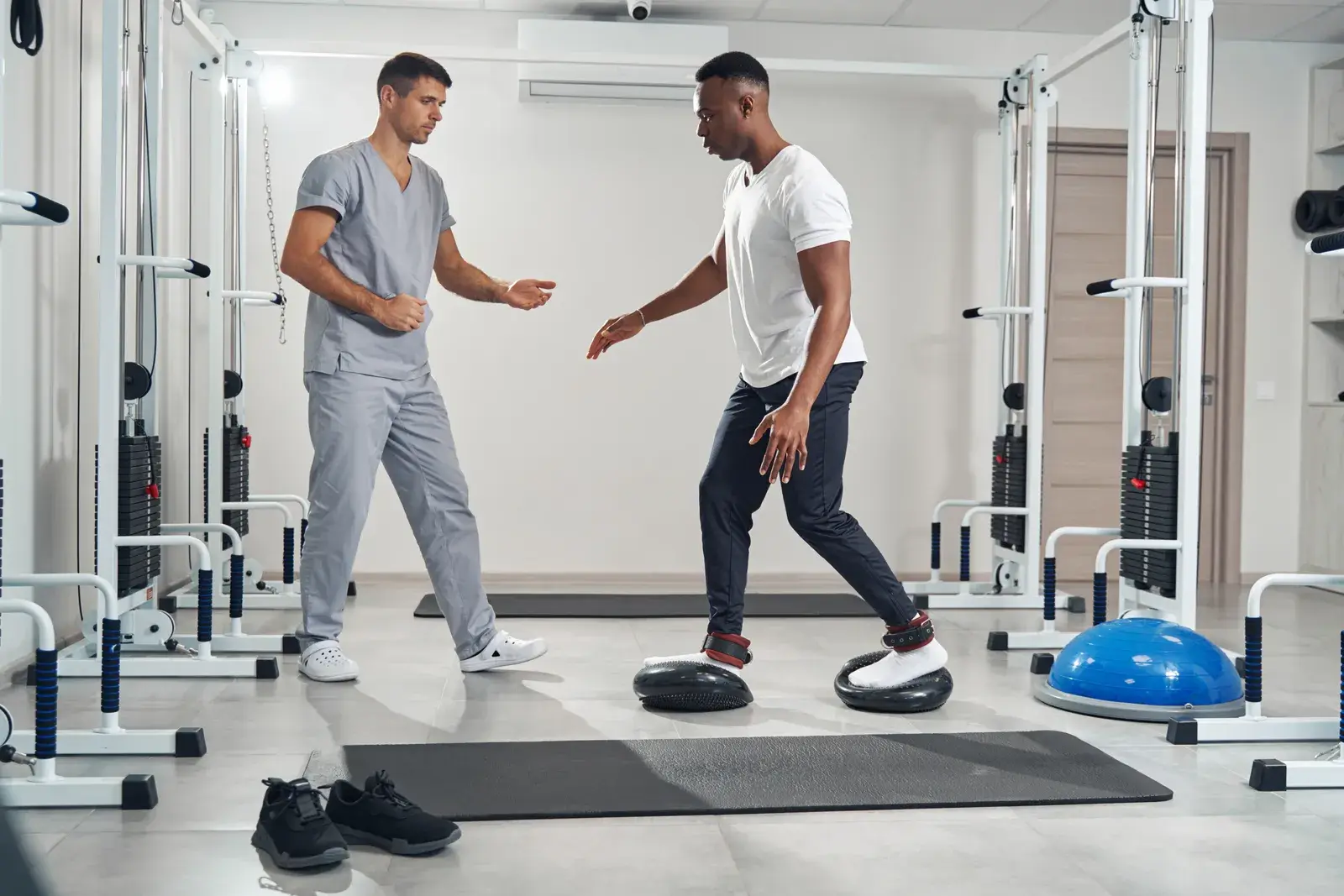 Chronic ankle instabilityFor ankles that keep rolling after an old sprain: balance and reaction training, peroneal strength and sport-ready hop testing.
 Patellar dislocationKneecap dislocations and subluxations, rehabbed with quad and hip control to lower the risk of another one.
Page reviewed By the Monon Therapy Collective editorial team

Carmel City Center · Carmel, Indiana
Start with a conversation
Tell us what hurts and what you want to get back to. We will tell you honestly whether a therapist in the network is likely a good fit for what you describe, and match you with an independent, licensed therapist who is. Only that therapist can assess what will help.
885 Monon Green Blvd, Suite 120, Carmel, IN 46032 · Monday to Friday 5 AM to 9 PM · Saturday and Sunday 7 AM to 4 PM