
Chronic ankle instability physical therapy in Carmel, Indiana
Chronic ankle instability is an ankle that keeps rolling or feels like it will give way months after an earlier sprain, and supervised physical therapy is the standard first treatment. In Carmel, the Indiana-licensed physical therapist you are matched with retrains balance and reaction, strengthens the muscles that catch a roll, restores lost ankle motion and tests hopping and cutting before you return to sport. Surgery is usually considered only if a well-run rehab program has not settled the giving way.
At a glance
Common signs of chronic ankle instability
Also called: Recurrent ankle sprains, Functional ankle instability, Mechanical ankle instability, Weak ankle.
Why does an ankle keep rolling years after the first sprain?
An ankle keeps rolling because the first sprain left behind two kinds of problem: looser ligaments and a slower, less accurate nervous system response. The ligaments on the outside of the ankle may heal stretched, which is called mechanical instability. Just as often, the sensors in those ligaments and the muscles that react to a roll lose their sharpness, which is called functional instability.
Many people never had structured rehab after that first sprain. The swelling went down, walking felt normal, and they went back to sport. Balance and reaction speed on that side were never retrained, so the next misstep in a pickleball rally or on a root along the trail turns into another sprain.
Each further sprain can stretch the ligaments a little more. That is the cycle physical therapy aims to break, and it is why an ankle that has rolled three or four times deserves a proper assessment rather than another round of ice and a brace. The page on an ankle that keeps giving way walks through other causes of that feeling.
Which tests show whether my ankle is loose or just poorly controlled?
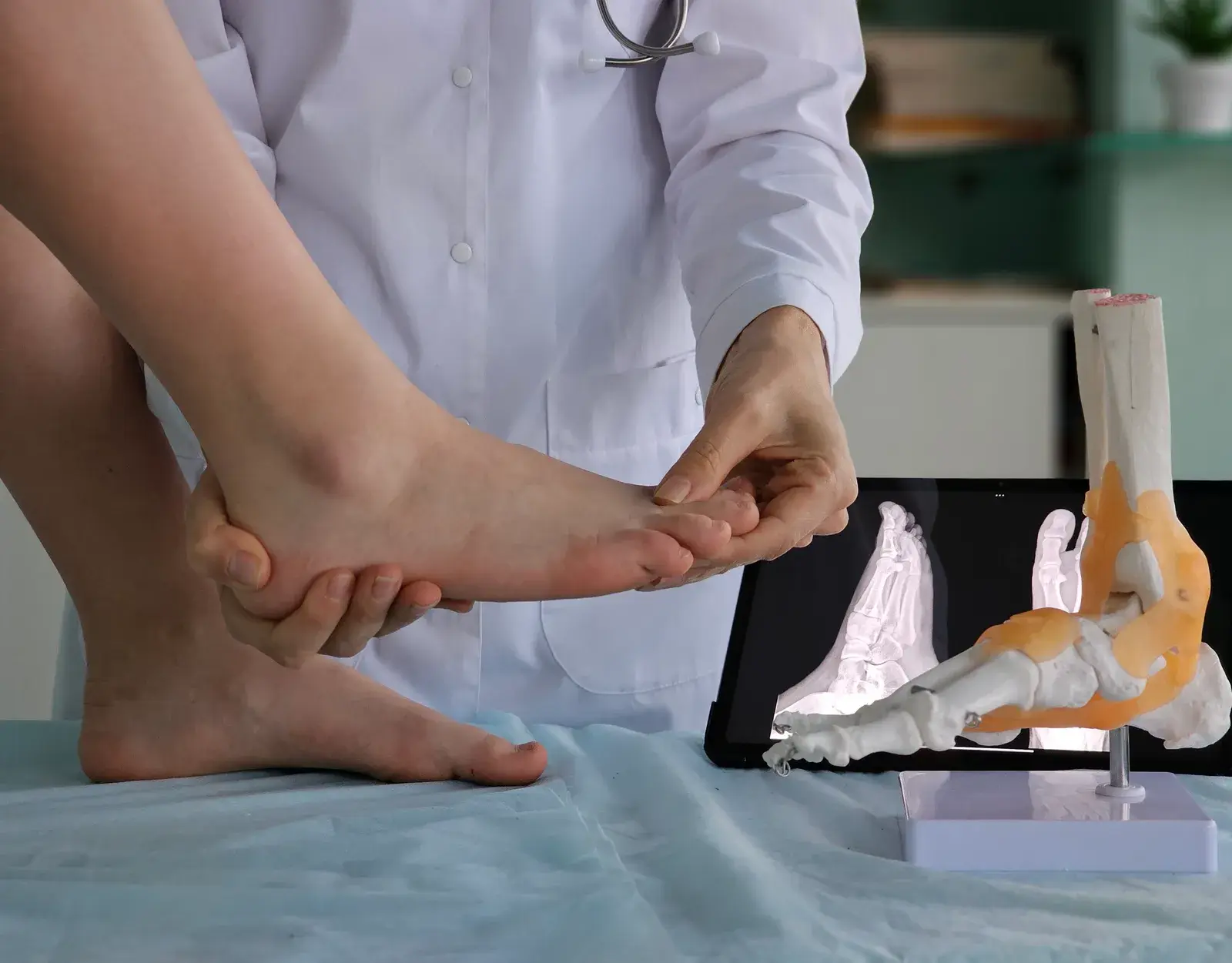
A physical therapist uses ligament stress tests to look for looseness and balance and hop tests to measure control, and the mix of results guides the plan. The anterior drawer and talar tilt tests compare how far the ankle shifts against the other side. Single-leg balance with eyes open and closed, a star excursion reach test, and side hops show how well the ankle is controlled.
The therapist will also check ankle dorsiflexion, since a stiff ankle after a sprain is common and changes how you land, along with peroneal strength, calf strength and hip control. Some use a short questionnaire such as the Cumberland Ankle Instability Tool to track how unstable the ankle feels in daily life.
Findings that suggest something more than instability, such as a painful catching inside the joint, persistent deep swelling or pain on the inside of the ankle, may point to cartilage or tendon damage. In that case the therapist will suggest a physician review and imaging.
What does balance and peroneal training involve for an unstable ankle?
Treatment is a progressive program of balance, reaction and strength training that makes the ankle harder to roll and faster to recover when it starts to. It usually starts simple, standing on one leg on a firm floor, and progresses to foam, eyes closed, head turns, catching a ball, reaching in different directions and finally hopping and landing.
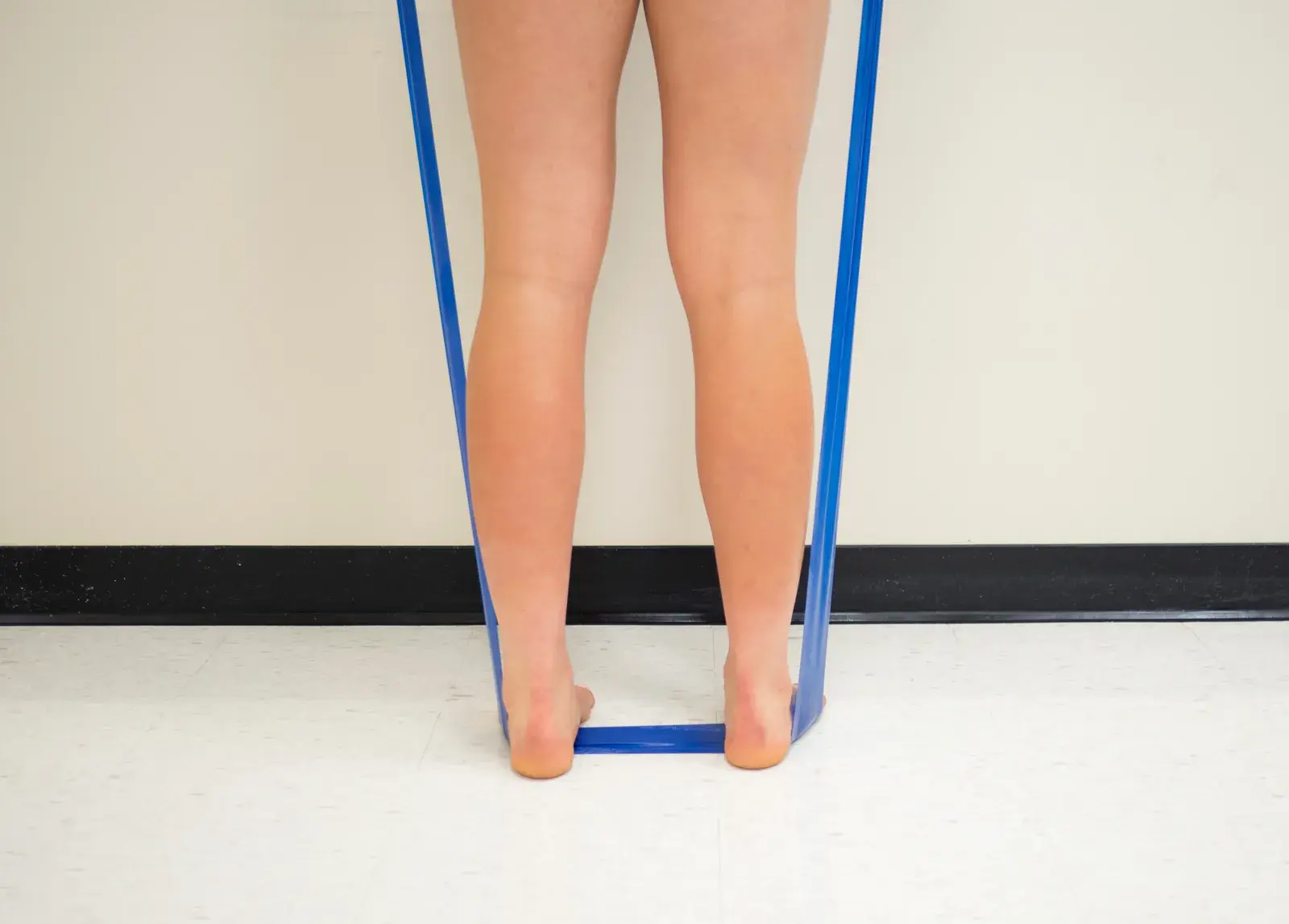
Strength work targets the peroneal muscles on the outside of the lower leg, which pull the foot out of a roll, along with the calf and the hip abductors. Banded eversion is a typical starting point; later work uses heavier calf raises, lateral hops and cutting drills. The indoor turf corridor outside the suites is useful for that later stage, since it lets you practice change of direction on a sport-like surface.
Ankle mobility work and joint mobilization may be used to restore dorsiflexion, and a brace or tape is often worn for sport during the rebuilding months. The single-leg balance exercise explains the starting drill most programs share.
- Single-leg balance progressions on firm and soft surfaces
- Perturbation and reaction drills
- Peroneal, calf and hip strengthening
- Ankle dorsiflexion mobility and joint mobilization
- Hop, landing and cutting practice
- Advice on bracing or taping for sport during the program
How many weeks of rehab does an unstable ankle usually need?
A structured instability program usually runs for a few months, with balance gains often showing within the first several weeks. Return to cutting sports comes toward the end of that period, once hop tests on the affected side are close to the other leg.
Progress depends on how many sprains you have had, how loose the ligaments are, and how consistently you train balance at home, since short daily practice matters more than one long session a week. Some people still feel unstable despite good rehab, often because the ligaments are very lax. An orthopedic surgeon may then discuss a lateral ligament repair; the Broström surgery rehab page covers what recovery from that looks like.
Winter adds a local twist. Icy sidewalks and parking lots around Carmel from December to March are a common place for an unstable ankle to roll, so many programs add balance work on uneven and unpredictable surfaces before the season turns, along with practical advice on footwear with better grip.
Your therapist will not promise that the ankle will never roll again. The aim is fewer episodes, less swelling and the confidence to play and walk without thinking about the ankle.
What should I do after my ankle rolls again?
After a fresh roll, protect the ankle for a day or two, then start gentle movement and walking as soon as it tolerates it rather than staying off it for weeks. Check for warning signs first: if you cannot put weight on it or walk more than a few steps, or the bone on either side of the ankle is tender, see a physician or urgent care to rule out a fracture.
Once the acute soreness eases, begin simple balance work on the floor, and keep a brace for sport until you have rebuilt control. Do not wait for the next sprain to start working on it. The guide to how long a sprained ankle takes to heal sets realistic expectations for the first weeks.
If the ankle has rolled more than twice or never feels trustworthy, fill in the ankle and foot assessment questionnaire. Tell the matching team which sport or activity it fails in, and they will propose a therapist in the network whose focus fits.
When to see a physician or go to the ER first
Physical therapy is the right start for most chronic ankle instability. These symptoms are different and need medical attention before, or instead of, a physical therapy visit:
- You cannot put weight on the ankle or walk more than a few steps after a roll
- Tenderness directly on the bone at the back edge of either ankle bone or at the base of the fifth metatarsal
- An ankle that looks deformed or misshapen
- Numbness or a cold, pale foot
- Severe pain that keeps worsening rather than easing over days
If you think it is an emergency, call 911.
Two-minute assessment
Get your chronic ankle instability looked at
Tell us how your chronic ankle instability started, how long it has been going on and what it is stopping you from doing. The matching team proposes a therapist in the network who focuses on it, and you hear back, usually within one business day.
- No referral needed to start in Indiana (first 42 days)
- We check which therapists work with your plan before you book
- One-on-one care in a private suite at Carmel City Center
How therapists treat it
Kinds of care used for chronic ankle instability
- Sports physical therapyRehab for active adults that goes past pain relief to the strength, power and movement your sport actually demands.
- Return-to-sport testingCriteria-based testing of strength, hopping, movement and confidence, so your return to sport rests on evidence, not the calendar.
- Balance and fall preventionStrength, walking and balance training for older adults who feel unsteady, have fallen, or want to stay confident on their feet.
Questions
Chronic ankle instability: what people ask
Information on this website is general education, not medical advice, a diagnosis or a treatment plan. Only a licensed clinician who examines you can advise on your condition. If you may be having a medical emergency, call 911.
Something we did not cover? Ask the matching team or ring (888) 353-9975.
Should I wear an ankle brace for pickleball or basketball?
A lace-up or hinged brace can reduce re-sprains while you rebuild control and is a reasonable choice for court sports. It works alongside balance training rather than replacing it.
Do I need an MRI for recurrent sprains?
Not usually to start rehab. Imaging is more often ordered when there is catching, persistent deep swelling, or no improvement after a solid program, which may suggest cartilage or tendon damage.
Is chronic ankle instability linked to arthritis later?
Repeated sprains are a known risk factor for ankle arthritis over the long term, which is one reason to break the cycle of re-injury rather than living with it.
Can I do this rehab at home?
Much of it, yes, especially balance drills. Supervised sessions help with progression, testing and hop and cutting work that is harder to judge alone.
Why does my ankle feel stiff as well as loose?
After a sprain the ankle often loses some upward bend, called dorsiflexion, even while the ligaments on the outside are lax. Restoring that motion is part of rehab, because a stiff ankle changes how you land and squat.
Can I start physical therapy for an unstable ankle without seeing a doctor first?
In most cases, yes. Indiana lets a licensed physical therapist evaluate and treat without a referral for up to 42 calendar days, and the therapist will send you to a physician if anything in the examination suggests a fracture, cartilage injury or tendon tear.
Google reviews
What guests say about FlexWerk
These are live Google reviews of FlexWerk at Carmel City Center, the private-suite facility where therapists in the network practise.
Related
Conditions that travel together
 Ankle sprainRehab for fresh sprains and ankles that keep rolling: strength, balance retraining and a tested return to sport.
 High ankle sprainRehab for syndesmosis injuries above the ankle: stability screening, protected loading and a staged return to cutting sports.
 Peroneal tendonitisRehab for outer-ankle tendon pain: load management, eversion and calf strength, and balance work for runners and court players.
Page reviewed By the Monon Therapy Collective editorial team

Carmel City Center · Carmel, Indiana
Start with a conversation
Tell us what hurts and what you want to get back to. We will tell you honestly whether a therapist in the network is likely a good fit for what you describe, and match you with an independent, licensed therapist who is. Only that therapist can assess what will help.
885 Monon Green Blvd, Suite 120, Carmel, IN 46032 · Monday to Friday 5 AM to 9 PM · Saturday and Sunday 7 AM to 4 PM