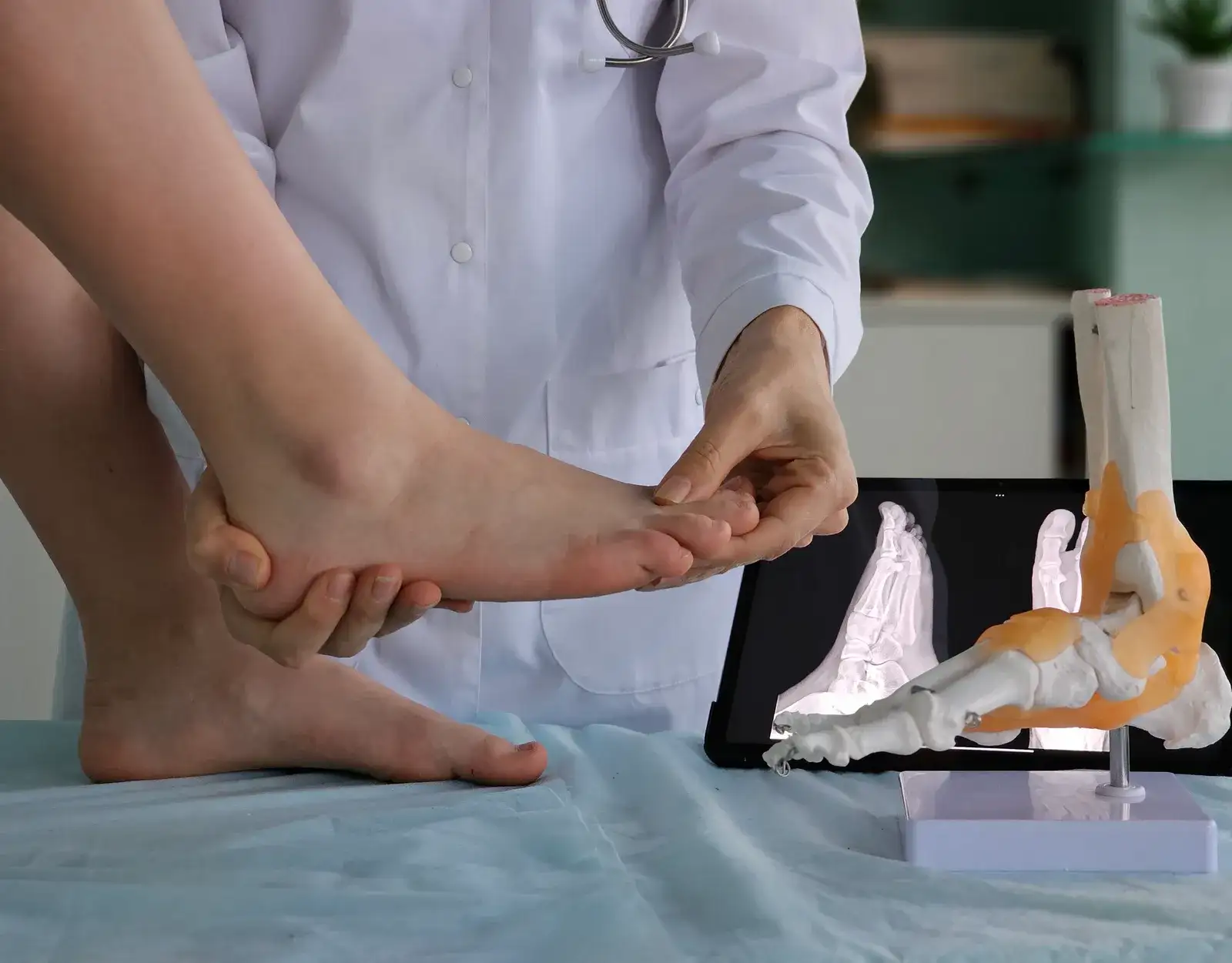
High ankle sprain physical therapy in Carmel, Indiana
A high ankle sprain is an injury to the ligaments that bind the shinbone and the fibula together just above the ankle, called the syndesmosis, and it usually takes longer to recover from than a common rolled ankle. In Carmel, the Indiana-licensed physical therapist you are matched with checks whether the injury is stable enough for rehab without surgery, protects it early, then rebuilds strength, balance and cutting ability in stages. Stable injuries are commonly managed without surgery over several weeks to a few months.
At a glance
Common signs of high ankle sprain
Also called: Syndesmosis sprain, Syndesmotic ankle injury, AITFL sprain, Distal tibiofibular ligament sprain.
How is a high ankle sprain different from a regular rolled ankle?
A high ankle sprain injures the ligaments between the tibia and fibula above the ankle joint, while a common sprain injures the ligaments on the outside of the ankle itself. The usual mechanism is different too: the foot is planted and twisted outward, or the leg rotates inward over a fixed foot, rather than the foot rolling under.
This injury is common in football, soccer, hockey, lacrosse and wrestling, and in skiing. It also happens in pickleball and basketball when a player plants and pivots awkwardly. Because the syndesmosis holds the two leg bones together as the ankle bends and takes weight, every step stresses the injured ligaments, which is part of why recovery is slower.
Many people are surprised that a high ankle sprain can look less swollen than a regular sprain yet hurt more and take longer. That mismatch is a useful clue for both athlete and clinician. The ankle sprain physical therapy page covers the more common lateral sprain.
Which tests check whether the syndesmosis is stable?
Clinicians use tests that stress the joint between the two leg bones, and imaging confirms whether it is stable. The squeeze test compresses the tibia and fibula at mid-calf; pain lower down near the ankle suggests a syndesmosis injury. The external rotation test turns the foot outward while the leg is steady, and pain above the ankle is again a sign.
A physical therapist will also check tenderness along the front of the joint between the bones, measure how far the ankle bends, assess walking and single-leg standing, and check the inside ankle ligament, which can be injured at the same time. Whether you can bear weight and how much pain you have when pushing off help gauge severity.
Weight-bearing X-rays are often ordered by a physician to see whether the gap between the bones widens under load, and MRI may be used to grade the injury. Unstable injuries, where the bones separate, typically need surgical fixation. Stable injuries are usually managed with protection and rehab.
Grading matters for planning. A mild sprain of the front syndesmosis ligament alone behaves very differently from an injury that also involves the interosseous membrane or the deltoid ligament on the inner ankle, and the therapist will ask to see the imaging report so the early limits match what was found.
Expect to be asked how the injury happened in detail, such as whether the foot was planted, which way the body turned and whether there was a pop, because that story often predicts which ligaments were stressed.
If a therapist sees you first, as Indiana’s direct access rule allows, any suspicion of instability or a fracture of the fibula higher up the leg means a prompt referral to a physician before rehab goes further.
How is a stable high ankle sprain rehabbed from boot to sprinting?
Rehab for a stable injury moves from protection to restoring motion and walking, then building strength and finally reintroducing running, cutting and sport. Early on, a physician may prescribe a walking boot and crutches for a period, with weight increased as pain allows.
Once out of the boot, work focuses on regaining ankle bend with gentle mobility, normalizing walking, and strengthening the calf, foot and hip. Balance drills come in early because ankle injuries dull balance reactions. Later stages add heel raises with load, step-ups, single-leg squats, hops, skipping and running.
Cutting and pivoting are introduced last, as they twist the syndesmosis the most. The indoor turf corridor outside the suites lets you practice those movements on a sport-like surface under supervision. Return to sport testing helps make the final decision less of a guess.
- Protected weight bearing in a boot or brace as directed
- Ankle mobility and normal walking
- Calf, foot and hip strength
- Balance and proprioception drills
- Hopping, running and agility progressions
- Cutting, pivoting and sport-specific testing
Why does a high ankle sprain take longer to heal?
High ankle sprains take longer because the injured ligaments are stressed every time the ankle bends and takes weight, and because they help hold the two leg bones together under load. Return to sport after a stable injury commonly takes several weeks to a couple of months, often clearly longer than a common sprain of similar pain.
The range depends on the grade of injury, whether the inside ankle ligament is also hurt, and the demands of your sport. Contact and cutting sports usually need a longer runway than running in a straight line. Injuries that required surgery have their own timeline, often measured in months, set by the surgeon’s protocol.
Your therapist will not promise a date. A good plan instead sets milestones you can see: walking without a limp, single-leg heel raises close to the other side, comfortable hopping, and confident cutting at full speed.
Rushing the final stage is the most common mistake. Lingering pain above the ankle when pushing off or pivoting can drag on for months if sport resumes too early, so the last few weeks of agility work are worth protecting even when daily walking feels normal.
What should I do if a twist left pain above my ankle?
If you twisted your ankle with the foot turned out and now have pain above the joint, difficulty pushing off, or pain when the shin and fibula are squeezed together, have it assessed by a physician or an urgent care clinic with X-ray. The page on physical therapy or urgent care for a sprained ankle helps decide where to start.
While waiting, protect the ankle, use crutches if walking hurts, ice and elevate it, and avoid testing it with running or cutting. Ankle braces designed for common sprains may not control the twisting that stresses a high ankle sprain, so follow the physician’s advice on a boot.
Once a stable injury has been confirmed, complete the ankle and foot questionnaire and list your sport, position and season dates. The matching team proposes a therapist in the network with a sports rehab focus where possible.
When to see a physician or go to the ER first
Physical therapy is the right start for most high ankle sprain. These symptoms are different and need medical attention before, or instead of, a physical therapy visit:
- Inability to put weight on the leg or walk more than a few steps
- Pain or tenderness high on the outer leg below the knee, which can signal a fibula fracture
- Visible deformity or a gap between the shin bones
- Numbness, a cold or pale foot
- Severe swelling with tight, shiny skin
If you think it is an emergency, call 911.
Two-minute assessment
Get your high ankle sprain looked at
Tell us how your high ankle sprain started, how long it has been going on and what it is stopping you from doing. The matching team proposes a therapist in the network who focuses on it, and you hear back, usually within one business day.
- No referral needed to start in Indiana (first 42 days)
- We check which therapists work with your plan before you book
- One-on-one care in a private suite at Carmel City Center
How therapists treat it
Kinds of care used for high ankle sprain
- Sports physical therapyRehab for active adults that goes past pain relief to the strength, power and movement your sport actually demands.
- Return-to-sport testingCriteria-based testing of strength, hopping, movement and confidence, so your return to sport rests on evidence, not the calendar.
- Post-surgical rehabilitationProtocol-led rehab after joint replacement, ligament, tendon and spine surgery, in a quiet private room instead of a crowded gym.
Questions
High ankle sprain: what people ask
Information on this website is general education, not medical advice, a diagnosis or a treatment plan. Only a licensed clinician who examines you can advise on your condition. If you may be having a medical emergency, call 911.
Something we did not cover? Ask the matching team or ring (888) 353-9975.
Do high ankle sprains need surgery?
Most stable high ankle sprains are treated without surgery. Unstable injuries, where the tibia and fibula separate on imaging, usually need surgical fixation.
Why does my ankle hurt more when I push off?
Pushing off bends the ankle and spreads the two leg bones slightly, which stresses the injured syndesmosis ligaments.
Can I wear a regular ankle brace for a high ankle sprain?
Some braces help, but many are designed to stop rolling rather than twisting. A physician may prescribe a boot early on, and a therapist can advise on bracing for return to sport.
Is it normal for a high ankle sprain to have little bruising?
Yes. High ankle sprains often show less swelling and bruising than a common sprain, even though they tend to be more painful and slower to heal.
When can I start running after a high ankle sprain?
Running usually resumes once walking is pain-free, single-leg heel raises are strong and hopping is comfortable. The walk-run plan shows one way to rebuild from there.
Can I do upper-body training in a boot?
Usually yes. Seated upper-body work, core training and work on the uninjured leg are often fine. A therapist can set this up so the injured ankle stays protected.
Google reviews
What guests say about FlexWerk
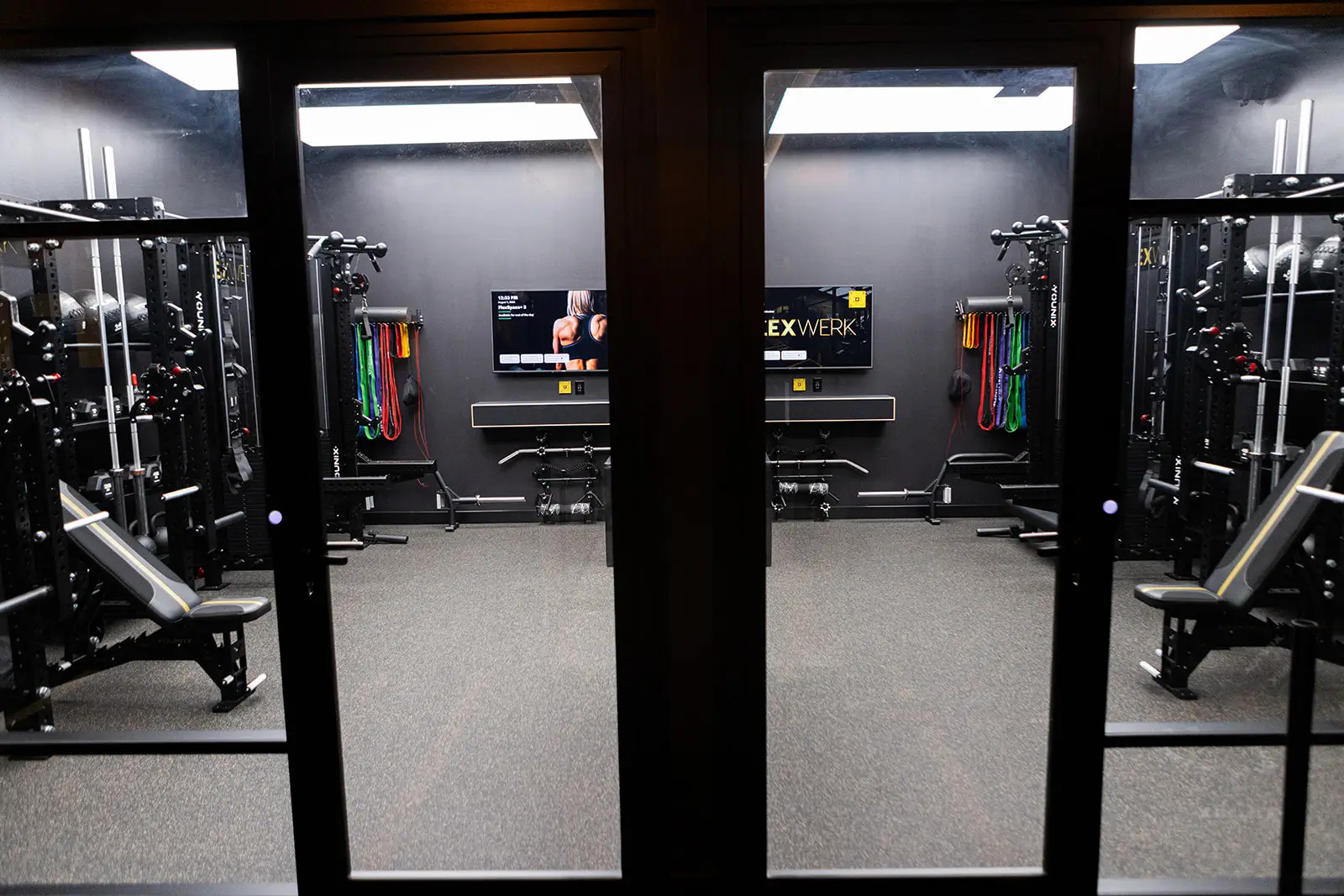
These are live Google reviews of FlexWerk at Carmel City Center, the private-suite facility where therapists in the network practise.
Related
Conditions that travel together
 Ankle sprainRehab for fresh sprains and ankles that keep rolling: strength, balance retraining and a tested return to sport.
 Chronic ankle instabilityFor ankles that keep rolling after an old sprain: balance and reaction training, peroneal strength and sport-ready hop testing.
 Ankle impingementCare for pinching pain at the front or back of the ankle: dorsiflexion testing, mobilization, strength work and technique changes.
Page reviewed By the Monon Therapy Collective editorial team

Carmel City Center · Carmel, Indiana
Start with a conversation
Tell us what hurts and what you want to get back to. We will tell you honestly whether a therapist in the network is likely a good fit for what you describe, and match you with an independent, licensed therapist who is. Only that therapist can assess what will help.
885 Monon Green Blvd, Suite 120, Carmel, IN 46032 · Monday to Friday 5 AM to 9 PM · Saturday and Sunday 7 AM to 4 PM