Peroneal tendonitis physical therapy in Carmel, Indiana
Peroneal tendonitis is overload of the two tendons that run behind the outer ankle bone, and physical therapy that manages load and progressively strengthens them is the main treatment. In Carmel, the Indiana-licensed physical therapist you are matched with checks the tendons for tears or slipping, then builds eversion, calf and balance strength while adjusting running, hiking or court volume. Most people improve over several weeks to a few months, depending on how long the tendons have been sore.
At a glance
Common signs of peroneal tendonitis
Also called: Peroneal tendinopathy, Fibularis tendinopathy, Outer ankle tendon pain, Peroneus brevis tendinitis.
What do the peroneal tendons do, and how do they get overloaded?
The two peroneal tendons run down the outside of the lower leg, curve behind the outer ankle bone and attach to the foot, where they turn the foot outward and steady the ankle against rolling. Peroneal tendonitis, more accurately tendinopathy, develops when the tendons are asked to do more, or more repetitively, than they are conditioned for.
Typical triggers include a jump in running mileage, especially on cambered roads or trails, lots of side-to-side movement in pickleball, tennis and basketball, a high-arched foot that tends to roll outward, and an ankle that has been sprained before. After a sprain the peroneal muscles often work overtime to protect a loose ankle, which can overload them.
Hikers on uneven terrain and dancers who spend time on the outside edge of the foot can also develop it. Long hikes on rocky trails during a vacation, after months of flat walking on Carmel’s paved paths, are a common trigger. Because the tendons sit right next to the ligaments injured in an ankle sprain, the two problems are often mistaken for each other, and sometimes they coexist.
There are two tendons with slightly different jobs. The peroneus brevis attaches at the base of the fifth metatarsal on the outer edge of the foot, while the peroneus longus wraps under the foot to the inner side of the midfoot and helps support the arch. Where the pain sits along that path gives the therapist useful clues about which one is involved.
How does a therapist check the peroneal tendons for a tear or subluxation?
A therapist checks for tears and slipping by watching and feeling the tendons as you turn your foot outward against resistance, and by circling the ankle to see whether the tendons pop forward over the ankle bone. Pain with resisted eversion and tenderness along the tendon path points to tendinopathy, while a visible or felt snap suggests the retaining band, called the retinaculum, is loose.
The examination also includes ligament tests for chronic ankle instability, single-leg balance and heel raise testing, foot posture from behind to spot a high arch or a heel that tips outward, and a look at the base of the fifth metatarsal, where the peroneus brevis attaches and where fractures can occur.
Tendon tears, particularly splits in the peroneus brevis, may need ultrasound or MRI to confirm. Pain that does not respond to rehab, persistent swelling or obvious snapping usually leads to a referral to a foot and ankle specialist.
Your training history completes the picture. A therapist will ask about recent changes in mileage, routes and surfaces, new shoes, a new sport or a recent sprain, because the cause of the overload shapes the plan as much as the findings on the table.
How is eversion strength rebuilt without flaring the tendon?
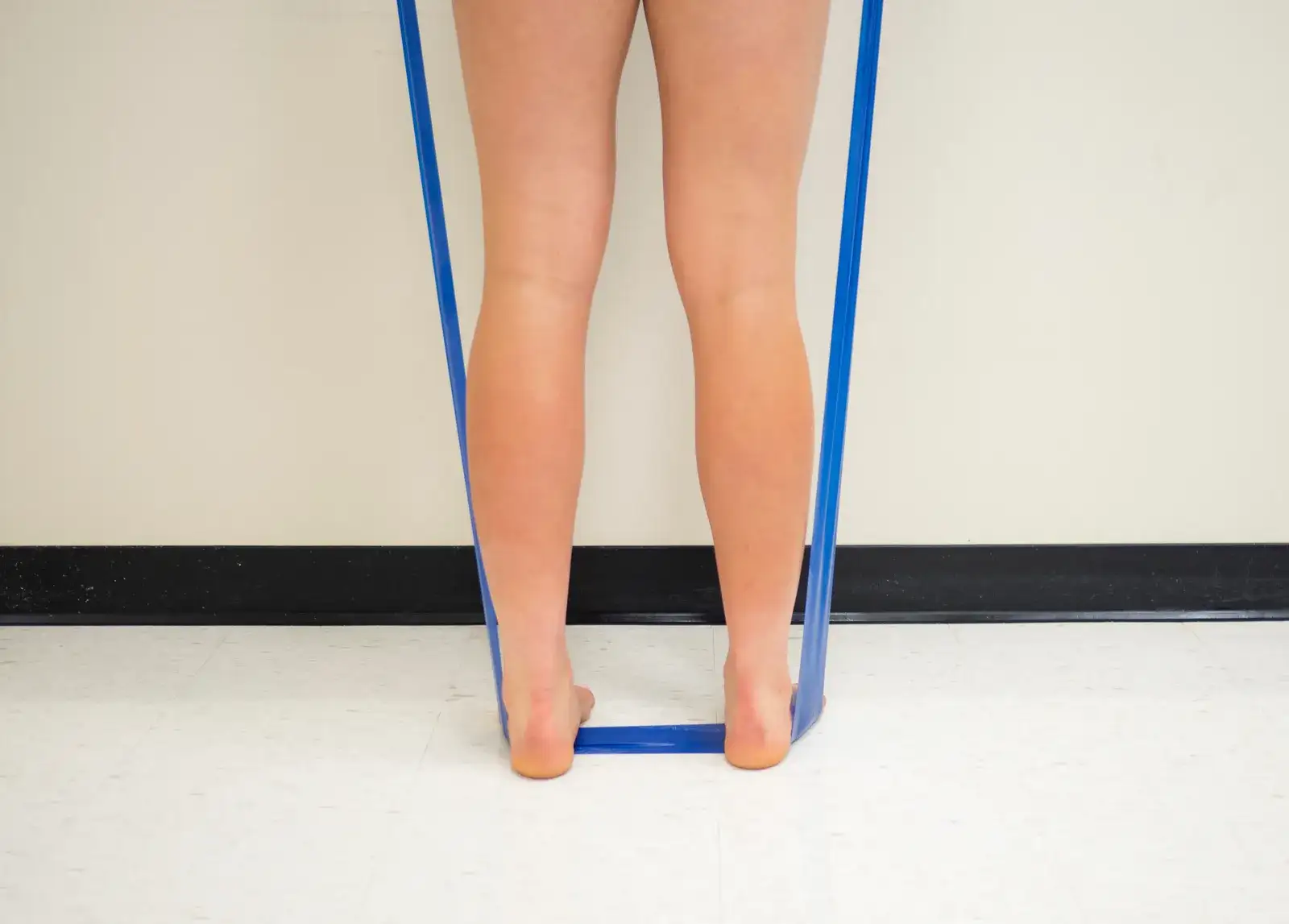
Eversion strength is rebuilt gradually, starting with exercises the tendon tolerates and adding load every week or two as pain allows. Early work often uses isometric holds, pushing the foot outward against a fixed object without movement, which tends to calm tendon pain while maintaining strength.
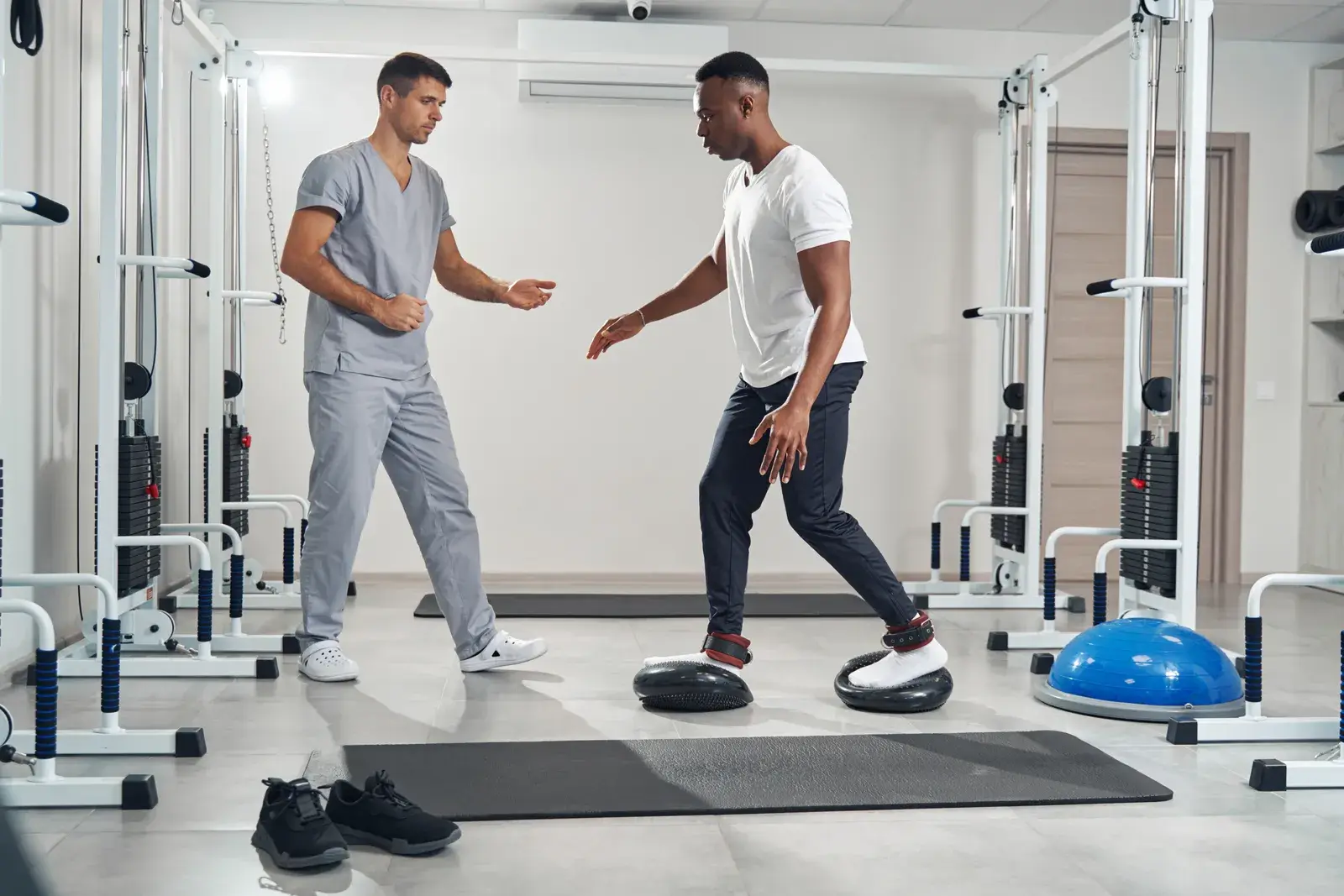
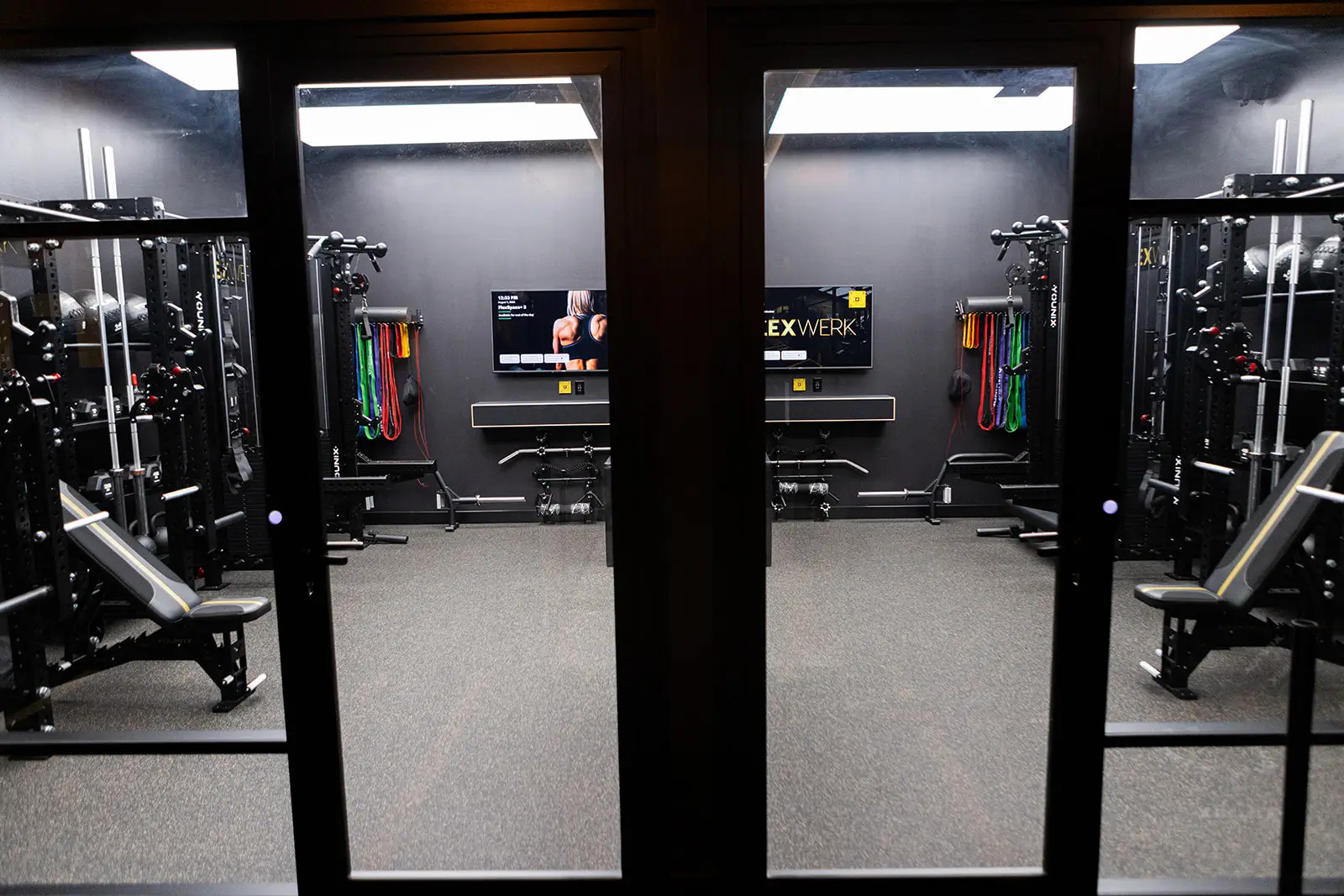
From there the program progresses to banded eversion through range, heel raises with a slight outward roll, single-leg balance with reaching, lateral step-ups and side hops. In a private suite, cable machines allow precise eversion loading, and the rack and dumbbells support heavier calf and hip work. Balance and agility drills on the indoor turf corridor bring in the side-to-side demands of court and field sports.
Load management runs alongside. That might mean flatter routes rather than cambered roads, fewer trail miles for a few weeks, shorter pickleball sessions, or a temporary lateral wedge or brace if a physician or podiatrist suggests one.
- Isometric eversion holds to settle pain
- Banded and cable eversion strengthening
- Calf and hip abductor strength
- Single-leg balance and reaction drills
- Lateral hops and change of direction work in later stages
- Training surface and volume changes
How long does peroneal tendon pain take to settle with rehab?
Recent peroneal tendinopathy often improves noticeably within several weeks, while longer-standing cases usually need months of consistent loading. Tendons adapt slowly, so pain may ease well before the tendon is strong enough for full running or court play.
Expect the plan to step up in stages: walking without pain, comfortable single-leg heel raises and hops, then a graded return to running or sport. A therapist cannot promise a date, but clear milestones let you see progress between visits.
If a tear, a slipping tendon or a structural foot problem is found, recovery depends on the specialist’s plan, and surgical repair has a longer rehab measured in months. Prehab before surgery still helps keep the calf and hip strong.
The step most often skipped is the last one: rebuilding enough tendon capacity for the hardest thing you do. A tendon that tolerates a 5K on a flat path may still flare on a steep trail or in a tournament weekend, so later sessions rehearse that specific demand before the plan is finished.
What should runners and court players change this week for outer ankle pain?
Reduce the activity that provokes the pain rather than stopping everything. Runners can cut mileage, avoid cambered road shoulders and trails for a while, and keep to flat paths such as the paved Monon Trail. Court players can shorten sessions and skip drills with repeated hard lateral cuts until the tendon calms.
Simple isometric eversion holds, pressing the outside of the foot against a wall for a comfortable half minute or so, a few times, are low risk and often ease pain. Ice may help after activity. If the ankle snaps, gives way or swells heavily, or you notice pain at the base of the fifth toe bone after a roll, see a physician to rule out a tear or fracture.
If the pain has lasted more than two or three weeks, complete the two-minute assessment and mention your sport. The matching team proposes a therapist in the network with a sports physical therapy focus where that fits.
When to see a physician or go to the ER first
Physical therapy is the right start for most peroneal tendonitis. These symptoms are different and need medical attention before, or instead of, a physical therapy visit:
- A sudden pop with a visible snapping tendon over the outer ankle bone
- Bone tenderness at the base of the fifth metatarsal after a roll
- Inability to bear weight after an ankle injury
- Hot, red, swollen ankle with fever
- Numbness or tingling on the top or outside of the foot
If you think it is an emergency, call 911.
Two-minute assessment
Get your peroneal tendonitis looked at
Tell us how your peroneal tendonitis started, how long it has been going on and what it is stopping you from doing. The matching team proposes a therapist in the network who focuses on it, and you hear back, usually within one business day.
- No referral needed to start in Indiana (first 42 days)
- We check which therapists work with your plan before you book
- One-on-one care in a private suite at Carmel City Center
How therapists treat it
Kinds of care used for peroneal tendonitis
- Sports physical therapyRehab for active adults that goes past pain relief to the strength, power and movement your sport actually demands.
- Running injury physical therapyFor Monon Trail regulars and race trainees: load management, strength and gait observation that keep you running while you heal.
- Orthopedic physical therapyExercise-led care for back, neck, shoulder, hip, knee and ankle problems, delivered one-on-one in a private suite.
Questions
Peroneal tendonitis: what people ask
Information on this website is general education, not medical advice, a diagnosis or a treatment plan. Only a licensed clinician who examines you can advise on your condition. If you may be having a medical emergency, call 911.
Something we did not cover? Ask the matching team or ring (888) 353-9975.
Is peroneal tendonitis the same as an ankle sprain?
No. A sprain injures ligaments, while peroneal tendonitis affects tendons. They sit close together and often occur in the same ankle, so a therapist examines both.
Should I wear an ankle brace?
A brace may help for sport while you rebuild strength, especially if the ankle also feels unstable. It supports, but it does not replace, eversion and balance training.
Do high arches cause peroneal tendon problems?
A high-arched foot that tips outward places more demand on the peroneal tendons and is a known risk factor. A therapist may suggest footwear or insoles alongside exercise.
Why does my ankle snap on the outside?
Snapping can mean the peroneal tendons are slipping over the ankle bone, which may need a specialist’s assessment. Painless snapping that has always been there is less concerning.
Can I hike with peroneal tendon pain?
Shorter hikes on even ground are often fine once walking is comfortable. Steep, rocky or cambered trails are usually reintroduced later in rehab.
Does kinesiology tape help peroneal tendonitis?
Tape may give some people a feeling of support or comfort during activity. It is a short-term aid rather than a treatment in itself; read whether kinesiology tape works for a balanced view.
Google reviews
What guests say about FlexWerk
These are live Google reviews of FlexWerk at Carmel City Center, the private-suite facility where therapists in the network practise.
Related
Conditions that travel together
 Chronic ankle instabilityFor ankles that keep rolling after an old sprain: balance and reaction training, peroneal strength and sport-ready hop testing.
 Ankle sprainRehab for fresh sprains and ankles that keep rolling: strength, balance retraining and a tested return to sport.
 Posterior tibial tendonitisCare for inner-ankle tendon pain and a flattening arch: support where needed, progressive tendon loading and heel-raise testing.
Page reviewed By the Monon Therapy Collective editorial team

Carmel City Center · Carmel, Indiana
Start with a conversation
Tell us what hurts and what you want to get back to. We will tell you honestly whether a therapist in the network is likely a good fit for what you describe, and match you with an independent, licensed therapist who is. Only that therapist can assess what will help.
885 Monon Green Blvd, Suite 120, Carmel, IN 46032 · Monday to Friday 5 AM to 9 PM · Saturday and Sunday 7 AM to 4 PM