Shoulder pain when reaching overhead most often comes from the rotator cuff tendons, either irritated (rotator cuff tendinopathy, often called impingement) or partly torn. A typical sign is a painful arc: the arm hurts through the middle of the lift and eases near the top or bottom. AAOS OrthoInfo notes that initial treatment is nonsurgical in most cases and that complete recovery may take several weeks to months.
Last reviewed By the Monon Therapy Collective editorial team
- Most common source
- Rotator cuff tendons
- Typical first treatment
- Nonsurgical: exercise and activity changes
- Typical time to recover
- Several weeks to months with nonsurgical care (OrthoInfo)
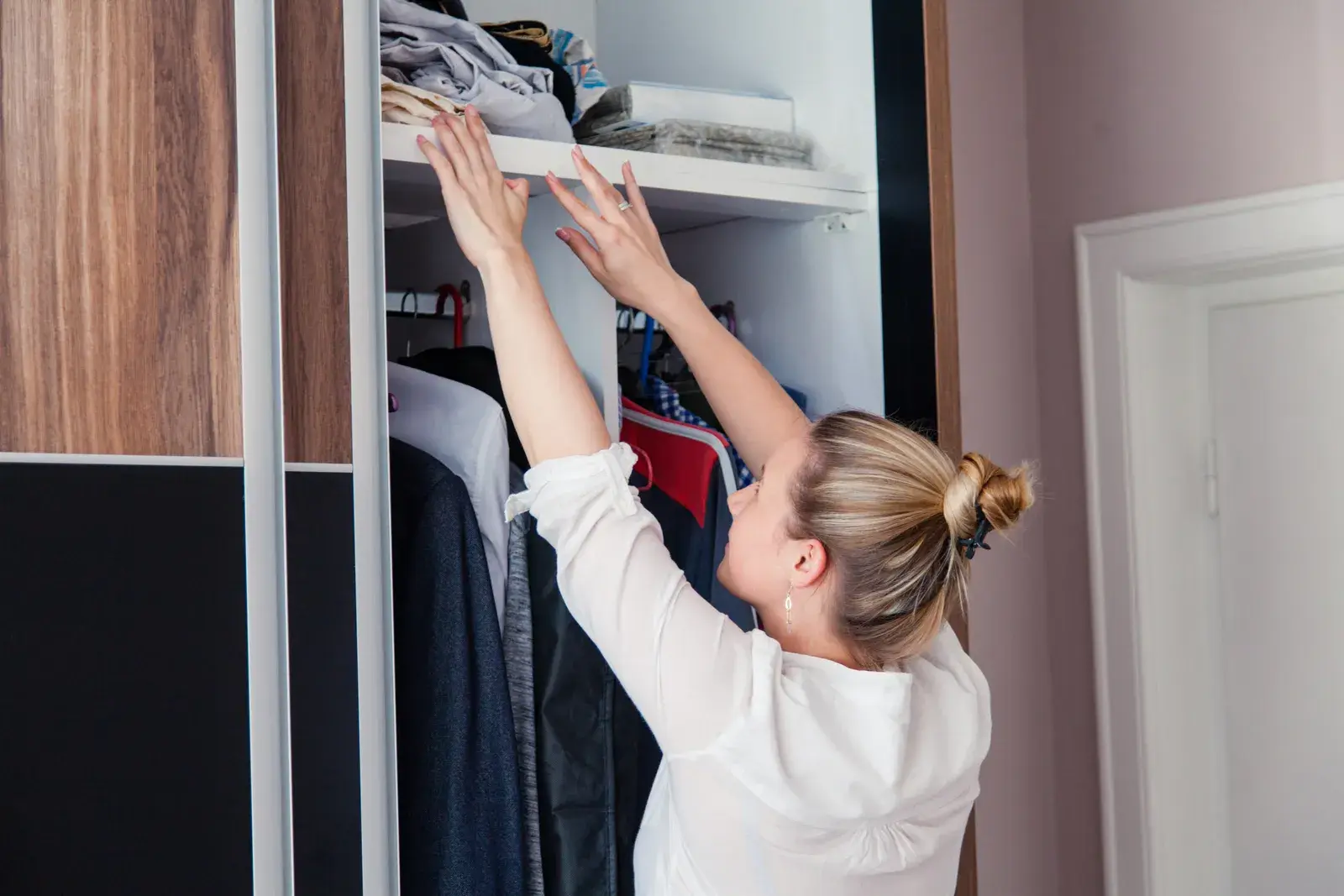
What does a painful arc in the shoulder mean?
A painful arc is pain that appears part way through lifting the arm out to the side, usually somewhere between waist and head height, and eases as the arm goes higher or comes back down. It suggests the rotator cuff tendons are being squeezed or loaded in that range.
Pain only at the very top of the reach, or at the top of the shoulder over the collarbone, points more toward the AC joint. A shoulder that will not lift past a certain point at all, even with help from your other hand, behaves differently and raises the possibility of frozen shoulder.
| Likely cause | What it tends to feel like | Where to read more |
|---|---|---|
| Rotator cuff tendinopathy (impingement) | Ache at the side of the upper arm in the middle of the lift | Shoulder impingement |
| Rotator cuff tear | Pain plus weakness lifting, sometimes a crackling sensation | Rotator cuff injury |
| Biceps tendinitis | Pain at the front of the shoulder, worse lifting with the palm up | Biceps tendinitis |
| AC joint problem | Pain on top of the shoulder at the end of the reach or across the chest | AC joint sprain |
| Frozen shoulder | Stiffness that blocks the arm even when you help it up | Frozen shoulder |
Which everyday reaches tend to provoke it?
Reaching to a high kitchen shelf, putting on a coat, washing your hair and lifting a carry-on into an overhead bin are the usual complaints. OrthoInfo notes that people who repeatedly work overhead, and athletes in swimming, baseball, tennis and volleyball, are particularly at risk.
Around Carmel the pickleball overhead and serve, the golf follow-through and spring jobs like painting a ceiling or hanging lights often bring it on. Keep frequently used items between waist and shoulder height for a few weeks and step on a stool rather than stretching for the top shelf.
Is it weakness or pain stopping your arm going up?
This difference matters. If the arm can be lifted fully with help from the other hand but hurts on its own, the cuff is likely painful but working. If it cannot lift actively, or drops when you try to hold it out to the side, the cuff may be torn and needs prompt examination.
Weakness that appeared suddenly after a fall or a heavy lift, especially over about 40, deserves a physician’s or therapist’s attention within days rather than weeks, because a surgeon may want to assess an acute tear sooner rather than later.
How do physical therapists rebuild an overhead reach?
A therapist tests shoulder range, cuff strength in several directions, shoulder blade movement and the neck, then builds a progressive loading program for the cuff and the muscles that position the shoulder blade. Movements such as the shoulder wall slide and banded external rotation are common early steps, dosed after the examination.
Overhead work is reintroduced gradually, starting below shoulder height and working up as strength and tolerance improve. For players and golfers, the final stage rehearses the real swing or serve. The shoulder pain physical therapy page explains what a typical course looks like.
How long before I can reach overhead again without pain?
For rotator cuff tendon irritation treated without surgery, OrthoInfo says many people improve gradually, though complete recovery may take several weeks to months. Most people notice everyday reaching getting easier well before the last overhead movements, such as serving or pressing weight, feel normal.
Progress tends to be uneven: good weeks, then a flare after a busy weekend of yard work or a long pickleball session. A therapist adjusts the load rather than starting over. If you want help, choose “shoulder” in the two-minute questionnaire and say which reach bothers you most.
Get your shoulder checked promptly if
- You suddenly cannot lift the arm after a fall or heavy lift.
- The shoulder looks deformed, or you felt it come out of place.
- Shoulder pain comes with chest pain, breathlessness or sweating: call 911.
- The shoulder is red, hot and swollen, or you have a fever.
If you think it is an emergency, call 911.
