
Biceps tendinitis physical therapy in Carmel, Indiana
Biceps tendinitis is irritation of the long head of the biceps tendon where it runs through a groove at the front of the shoulder, and it often travels with rotator cuff or labral problems. A licensed physical therapist matched through the network in Carmel will reduce the provoking load, strengthen the biceps, rotator cuff and shoulder blade muscles in steps, and work on the lifting or overhead mechanics that flared it. Many people improve over several weeks to a few months.
At a glance
Common signs of biceps tendinitis
Also called: Proximal biceps tendinopathy, Bicipital tendinitis, Long head of biceps tendinitis, Biceps tendonitis.
Why does the front of my shoulder hurt when I lift with my palm up?
Lifting palm up asks the biceps to bend the elbow and help raise the arm at the same time, and the long head of the biceps tendon runs through a narrow groove at the front of the shoulder before attaching to the top of the socket. When that tendon is irritated, curls, carrying a heavy box with the palms up or reaching forward to lift tend to provoke it.
Proximal biceps tendinopathy rarely appears completely on its own. It often accompanies rotator cuff tendinopathy, shoulder impingement or a labral tear at the biceps anchor, especially in throwers and lifters. Repetitive overhead work, a sudden jump in pulling volume, and age-related tendon change can all contribute.
It is different from tendon problems at the elbow end of the biceps, which cause pain in the crease of the elbow and are a separate condition.
The people who tend to develop it are a recognizable group: gym-goers who have added a lot of chin-ups, curls or dips in a short time, overhead athletes such as swimmers, pitchers and volleyball players, parents lifting toddlers and car seats all day, and tradespeople who work with their arms raised. Middle age adds some natural tendon change, which lowers the margin for a sudden spike in load.
How is biceps tendinitis separated from a rotator cuff or labrum problem?
A physical therapist uses a cluster of tests rather than one, because the biceps, cuff and labrum sit close together and often hurt together. Tenderness in the groove that moves as the arm rotates, and pain with resisted elbow bending and palm-up turning, point toward the biceps tendon.
The examination also checks range of motion, rotator cuff strength, labral provocation tests and the neck, then looks at the movements that hurt in your training or job. That combination guides how much of the plan targets the biceps versus the cuff or shoulder blade. Imaging is not usually needed at the start, though a physician may use ultrasound or MRI if the picture is unclear or if a tear is suspected.
If there was a pop followed by a bulge in the upper arm, the long head may have ruptured; this is often less disabling than people fear, but it needs a physician’s assessment. The shoulder labral tear page explains tears at the biceps anchor.
What exercises help an irritated biceps tendon recover?
Tendons recover by gradually tolerating more load, so the core of treatment is a progressive exercise program, starting with movements that are comfortable and building toward the lifts you want back. Rest alone eases symptoms but leaves the tendon no better prepared. A few weeks off followed by a sudden return to the same program is one of the most common reasons this pain keeps coming back each season.
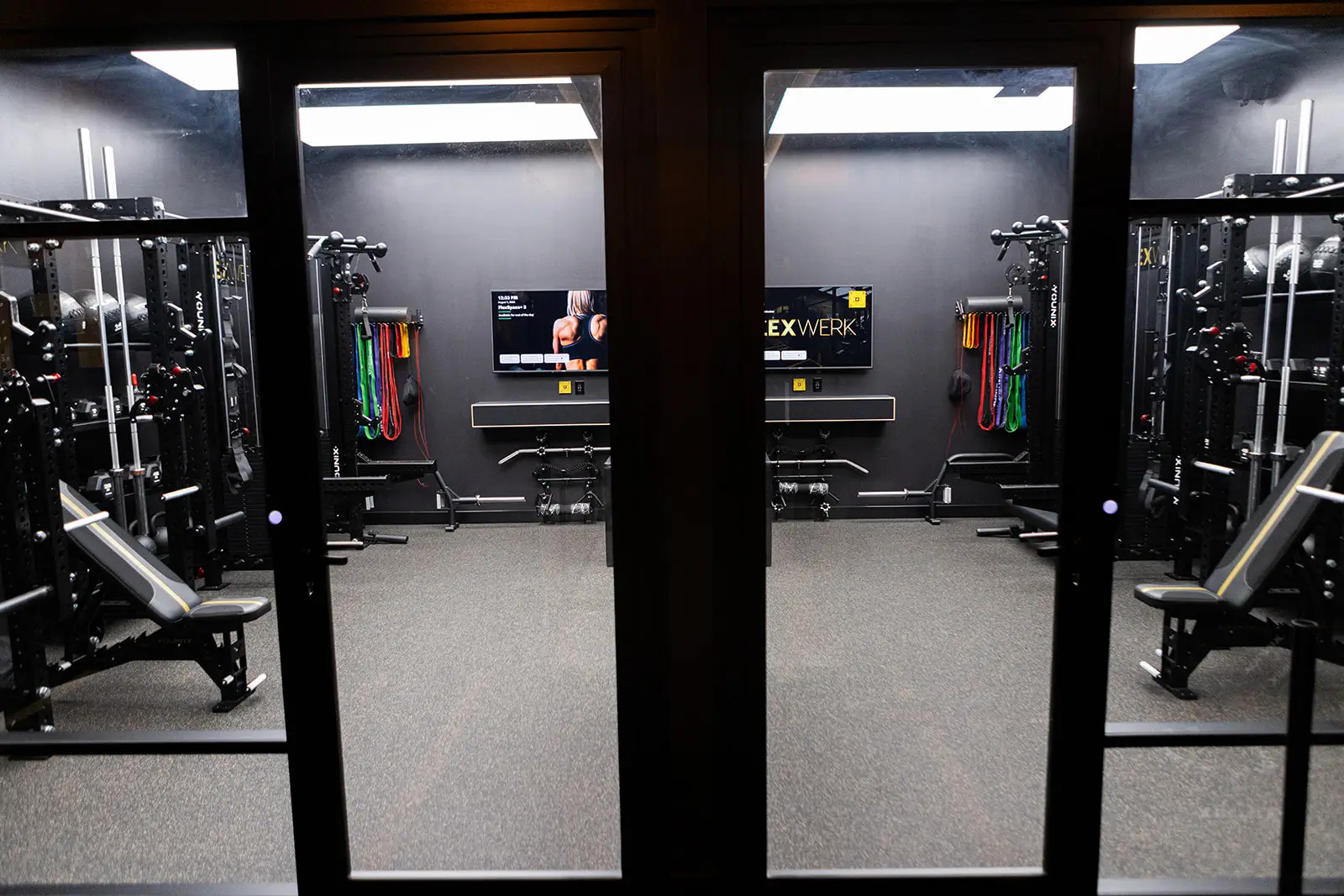
Early on, a therapist in the network may use isometric holds for elbow bending and shoulder rotation, along with rows and shoulder blade work. Over the following weeks, slow curls, hammer curls, cable rotations and, later, presses and pulls are added in a private suite where the cable column allows precise, small load increases.
Work on the rotator cuff and shoulder blade muscles reduces the demand on the biceps as a shoulder stabilizer. Hands-on techniques and taping may help short term. Injections are a physician decision and are usually paired with ongoing exercise rather than used alone.
Lifters often benefit from technique changes: a slightly narrower bench grip, avoiding deep dips, controlling the lowering phase of chin-ups and adjusting volume across the week. The physical therapy for weightlifters page covers how therapists program around gym injuries.
- Isometric elbow bending and rotation holds early on
- Slow, controlled curls and hammer curls
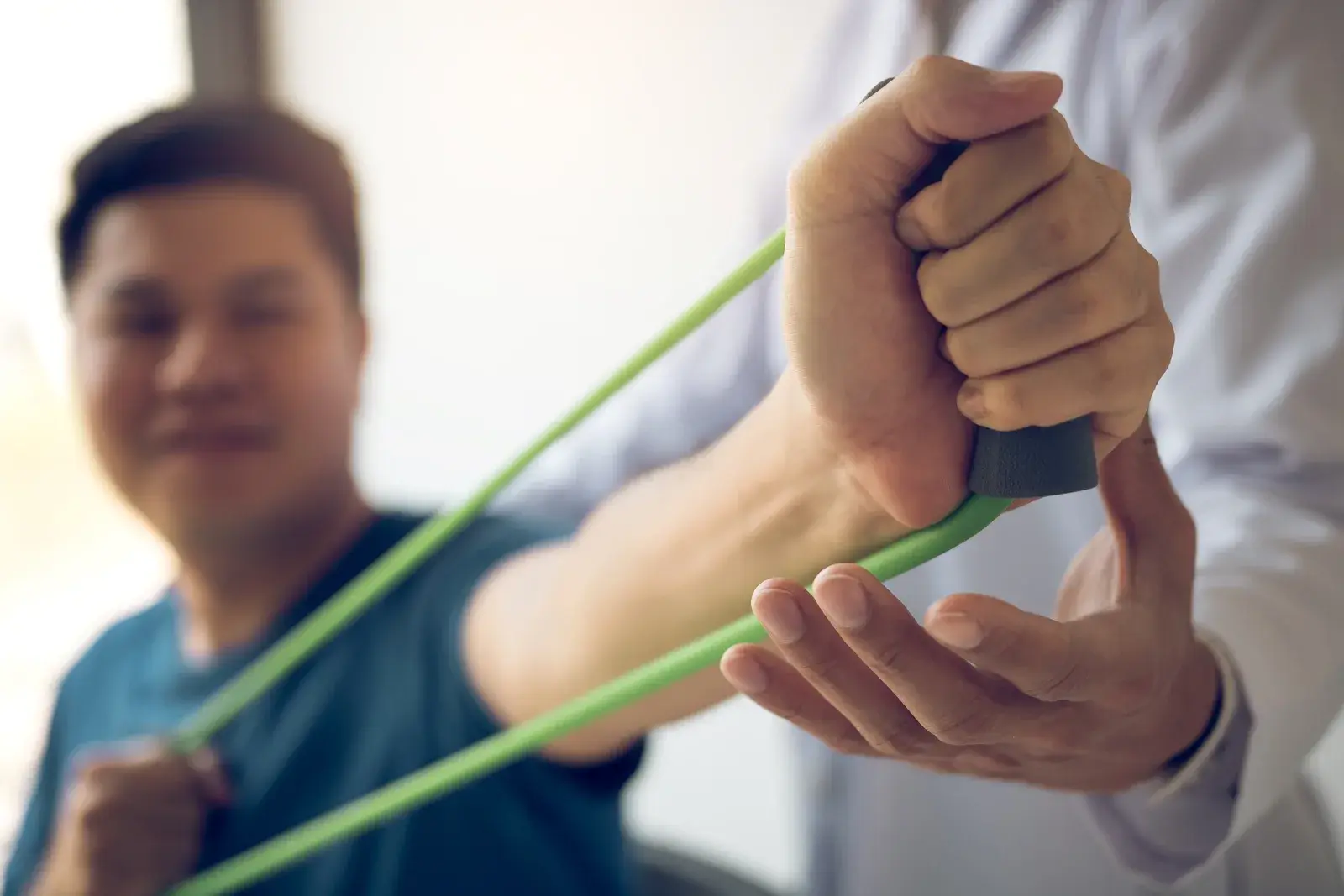
- Rotator cuff strengthening with bands or cables
- Rows and scapular strength
- Gradual return to pull-ups, presses and overhead work
How many weeks until I can curl, press and pull again without pain?
Many people with biceps tendinitis notice a clear improvement over several weeks to a few months of consistent rehab, with heavy pulling and pressing returning toward the end of that period or a little later. Long-standing tendon pain usually takes longer.
A typical course involves visits every week or two, a home or gym program and periodic progression of loads. Pain during exercise that stays mild and settles by the next morning is usually acceptable; pain that builds over days means the load should come down slightly.
If symptoms do not improve after a solid program, a physician may consider imaging, an injection, or in some cases surgery such as a biceps tenodesis, which reattaches the tendon lower on the arm. What the first months after that operation look like is set out on the biceps tenodesis rehab page.
Which gym and work habits keep a sore biceps tendon from flaring?
Lower the volume and range of the exercises that provoke pain rather than stopping training altogether. Keep lower body training, and swap provoking lifts for comfortable variants: neutral-grip rows instead of wide pull-ups, floor press instead of deep bench, and hammer curls instead of heavy barbell curls.
At work, carry boxes close to the body with neutral wrists, keep heavy items between waist and chest height, and break up long periods of overhead work such as drywall, painting or stocking shelves. Ice or heat can help comfort. If you swim laps, shorten sessions and lean on kick sets for a couple of weeks, and if you coach or throw batting practice, share the load with another adult while the tendon settles.
If front-of-shoulder pain has lasted more than a few weeks or keeps returning, fill in the online therapy questionnaire. The matching team proposes a therapist in the network and confirms suite times, which run from 5 AM to 9 PM on weekdays and 7 AM to 4 PM on weekends, with each therapist scheduling inside those hours.
When to see a physician or go to the ER first
Physical therapy is the right start for most biceps tendinitis. These symptoms are different and need medical attention before, or instead of, a physical therapy visit:
- A pop followed by a bulge in the upper arm, which may be a tendon rupture
- Sudden loss of strength in bending the elbow or turning the palm up
- Severe bruising down the arm after an injury
- Fever with a hot, swollen shoulder
- Numbness or tingling down the arm
If you think it is an emergency, call 911.
Two-minute assessment
Get your biceps tendinitis looked at
Tell us how your biceps tendinitis started, how long it has been going on and what it is stopping you from doing. The matching team proposes a therapist in the network who focuses on it, and you hear back, usually within one business day.
- No referral needed to start in Indiana (first 42 days)
- We check which therapists work with your plan before you book
- One-on-one care in a private suite at Carmel City Center
How therapists treat it
Kinds of care used for biceps tendinitis
- Orthopedic physical therapyExercise-led care for back, neck, shoulder, hip, knee and ankle problems, delivered one-on-one in a private suite.
- Sports physical therapyRehab for active adults that goes past pain relief to the strength, power and movement your sport actually demands.
- Post-rehab strength trainingThe bridge from discharge to lasting strength: a written handoff from your therapist to a FlexWerk coach in the same building.
Questions
Biceps tendinitis: what people ask
Information on this website is general education, not medical advice, a diagnosis or a treatment plan. Only a licensed clinician who examines you can advise on your condition. If you may be having a medical emergency, call 911.
Something we did not cover? Ask the matching team or ring (888) 353-9975.
Is biceps tendinitis the same as biceps tendinopathy?
They describe the same problem. Tendinopathy is the more accurate modern term, since the tendon often shows changes in structure rather than true inflammation.
Should I stop lifting with biceps tendinitis?
Usually you do not need to stop completely. Reducing volume and choosing comfortable variations tends to work better than total rest.
What is a Popeye deformity?
It is the bulge in the upper arm that can appear if the long head of the biceps tendon ruptures. It is often more of a cosmetic change than a functional problem, though a physician should assess it.
Can biceps tendinitis cause elbow pain?
Pain from the shoulder end can spread down the front of the upper arm, but true elbow crease pain usually comes from the lower biceps tendon. A therapist will check both ends.
Can I keep doing chin-ups with biceps tendinitis?
Often yes, with fewer reps, a neutral grip and slow lowering, as long as pain stays mild and settles by the next day. If chin-ups keep provoking it, swap them for rows or lat pulldowns for a few weeks and rebuild later.
Does ice help biceps tendinitis?
Ice can reduce pain for a short time. It does not strengthen the tendon, so it works as a comfort measure alongside a loading program; see heat or ice for pain.
Google reviews
What guests say about FlexWerk
These are live Google reviews of FlexWerk at Carmel City Center, the private-suite facility where therapists in the network practise.
Related
Conditions that travel together
 Shoulder impingementGraded rotator cuff and shoulder blade loading for painful overhead reaching, usually tried before any thought of surgery.
 Shoulder labral tearRehab for SLAP and other labral tears in throwers, lifters and overhead athletes, before or instead of surgery.
 Rotator cuff injuryProgressive loading for cuff tendinopathy and tears, plus protocol-led rehab after surgical repair.
Page reviewed By the Monon Therapy Collective editorial team

Carmel City Center · Carmel, Indiana
Start with a conversation
Tell us what hurts and what you want to get back to. We will tell you honestly whether a therapist in the network is likely a good fit for what you describe, and match you with an independent, licensed therapist who is. Only that therapist can assess what will help.
885 Monon Green Blvd, Suite 120, Carmel, IN 46032 · Monday to Friday 5 AM to 9 PM · Saturday and Sunday 7 AM to 4 PM