After a biceps tenodesis, the reattached tendon needs several weeks of protection, so rehab usually starts with passive elbow and shoulder motion in or out of a sling, avoids resisted elbow bending early, and adds strength gradually once motion has returned. The American Academy of Orthopaedic Surgeons says most people regain full range of motion and move the arm without pain; progress is faster if the tenodesis was done alone and slower if it was combined with a rotator cuff repair. Near Carmel, the matching team can propose an independent, licensed physical therapist who follows your surgeon’s shoulder protocol and works with one person at a time.
Last reviewed By the Monon Therapy Collective editorial team
- Sling
- Usually a few weeks (AAOS)
- Resisted elbow bending
- Avoided for the first several weeks, until the surgeon clears it
- Strengthening
- Added gradually after flexibility returns (AAOS)
- Outcome
- Full motion for most people; overhead athletes may need limits (AAOS)
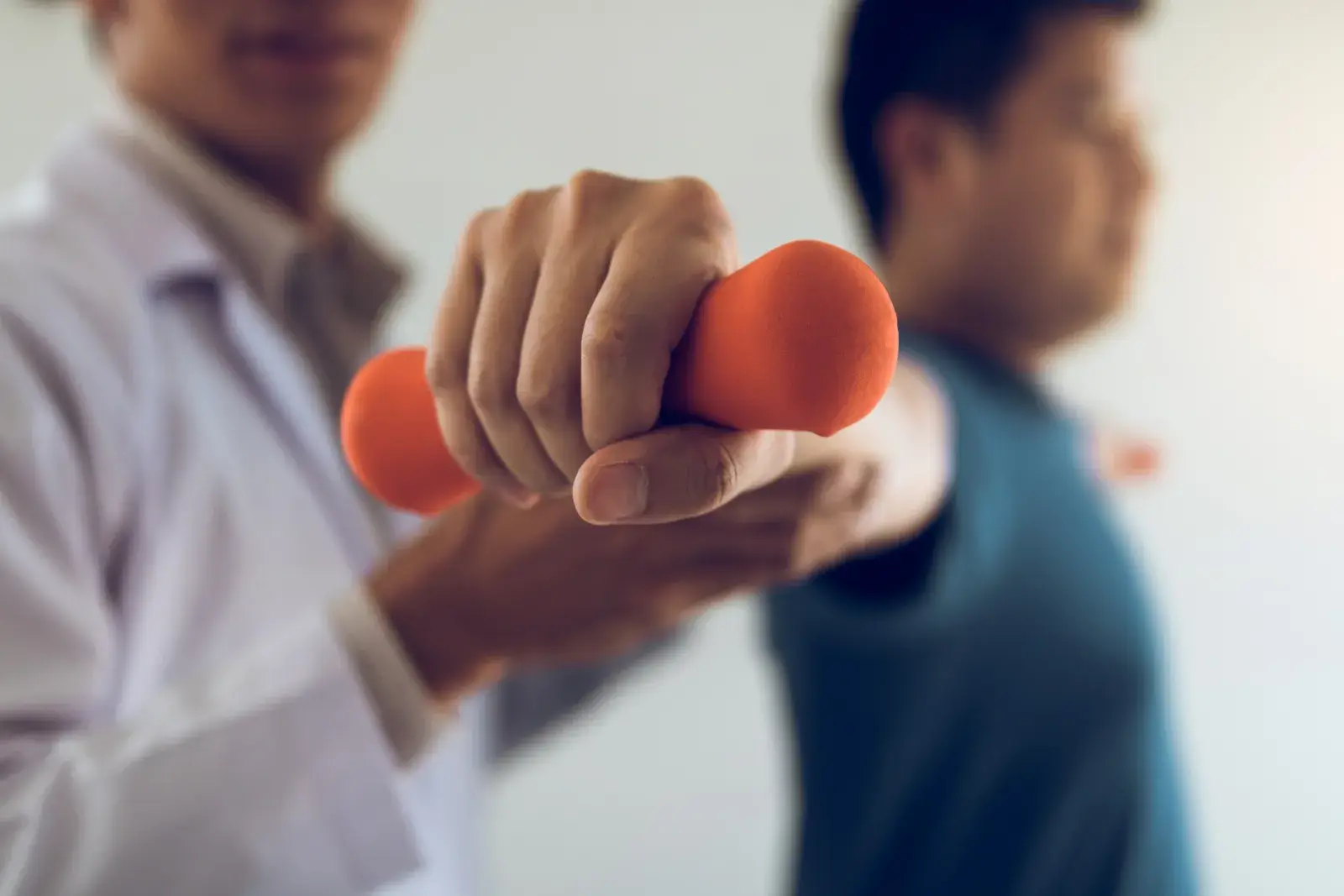
What is a biceps tenodesis protecting while it heals?
It is protecting the new attachment of the long head of the biceps tendon to the upper arm bone. The painful, damaged portion of the tendon near the shoulder joint is removed, and the remaining tendon is fixed lower down with a screw, anchor or sutures. Until that attachment heals, a strong biceps contraction could pull it loose.
OrthoInfo describes tenodesis as a way to relieve pain from a damaged biceps tendon, done through a small incision or arthroscopically, and notes you may wear a sling for a few weeks. It is often performed for long-standing biceps tendon pain, a tear of the labrum where the biceps attaches (a SLAP lesion), or alongside a rotator cuff repair.
That last point matters most for rehab. If your tenodesis was combined with a rotator cuff repair, the cuff protocol usually sets the slower pace. Our pages on rotator cuff repair rehab and biceps tendinitis cover those related situations.
What are the typical phases after a biceps tenodesis on its own?
The typical phases move from protecting the repair, to restoring shoulder and elbow motion, to strengthening and then return to lifting and sport. The order is consistent across published protocols, but the week counts vary with the surgeon and the fixation, so the phases below are described by milestone rather than by date; your surgeon’s protocol governs.
| Phase | Goals | Typical milestones |
|---|---|---|
| Protection (sling phase) | Protect the tendon, keep joints moving | Sling for comfort or as directed; passive elbow bending; hand and wrist work; gentle shoulder motion |
| Motion (after the sling) | Restore active motion | Sling weaned; active shoulder and elbow motion; no resisted elbow bending or forearm turning yet |
| Early strengthening | Begin strengthening | Light biceps work; rotator cuff and shoulder blade strengthening with bands |
| Lifting and sport | Heavier lifting and sport | Progressive weights, push and pull patterns, return to golf, tennis, pickleball and gym training as cleared |
Why can’t you carry groceries in the first weeks after a tenodesis?
Carrying groceries, a laundry basket or a toddler loads the biceps hard, and the new tendon attachment is not strong enough for that in the first weeks. Most protocols avoid lifting anything heavier than a coffee cup with the operated arm early on, and specifically avoid resisted elbow bending and turning the palm up against resistance until the surgeon clears it, commonly several weeks.
That restriction surprises people because the arm can feel fine within days. Early on, your therapist will move the elbow for you or have you use the other hand to assist, so the joint does not stiffen while the biceps rests. Shoulder motion is restored with table slides, pulleys and assisted reaching within the surgeon’s limits.
Cramping or a deep ache in the front of the arm during the early weeks is common as the muscle adjusts to its new attachment. A sudden pop with a new bulge in the upper arm is different and needs a call to the surgeon.
Daily life needs small workarounds for a while. Dress the operated arm first and undress it last, keep frequently used items at waist height, and use the other hand for the car door, the fridge and the dog’s leash. Sleeping propped on pillows or in a recliner is common for the first couple of weeks, because lying flat often pulls on the front of the shoulder.
Which biceps tenodesis rules come from the surgeon?
The surgeon sets how long the sling stays on, how soon active elbow bending is allowed, when strengthening may start and what you may lift. These depend on the fixation method, the tissue quality and anything else repaired at the same time.
Ask for your protocol before your first therapy visit. If it says “isolated tenodesis”, progress tends to be quicker than after a combined cuff repair. The therapist you are matched with follows it, records your motion and strength at each stage, and contacts the surgeon’s office if something does not fit. Our post-surgical rehabilitation page explains how that communication usually works.
How does strength come back after a tenodesis, and what does a session look like?
Strength returns in layers: first the rotator cuff and shoulder blade muscles with light bands, then the biceps with very light weights, then compound pulling and pressing with heavier loads. Most people find the shoulder, not the biceps, limits the program at first.
In a private suite, the cable system makes small load steps easy, which suits early biceps curls and rows. A therapist might combine banded external rotation, cable rows, wall slides and light curls in one session, then add push-ups against a bench and overhead pressing later. Grip and forearm work rebuild the whole chain.
For golfers and pickleball players, the final stage is rehearsing the actual swing or stroke, starting with half swings and short drills before full play. Your therapist uses strength tests and symptom response, not only the calendar, to decide when.
Heavy pulling, such as chin-ups, deadlifts with a mixed grip or rowing heavy dumbbells, usually comes last. Many surgeons hold those back until late in rehab, and lifters often find that a neutral or overhand grip feels kinder than a palm-up grip in the first weeks back under the bar.
- Shoulder blade setting and rows
- Rotator cuff strengthening
- Light biceps curls after clearance
- Push and press patterns, starting against a bench
- Sport rehearsal: swings, serves, strokes
Can prehab help before a planned biceps tenodesis?
Yes, when surgery is scheduled ahead. A few sessions can restore as much shoulder motion as the pain allows, strengthen the shoulder blade muscles and cuff, and teach you the early exercises, one-handed routines and sling setup you will need afterward.
Arrange help for the first weeks with lifting, driving and carrying. When you are ready to plan rehab before or after surgery, the two-minute questionnaire lets the matching team note your surgery date and propose a therapist with suitable hours, including weekend suite time.
Contact your surgeon promptly after a biceps tenodesis if you notice
- A sudden pop with a new bulge in the upper arm or loss of elbow strength
- Wound redness, drainage or fever
- Numbness or weakness in the hand or arm that is new or spreading
- Arm swelling with pain, or chest pain or breathlessness (call 911 for these)
If you think it is an emergency, call 911.
