Pain in the front of the hip usually comes from the hip flexor muscles and tendons, or from the hip joint itself through impingement, a labral tear or osteoarthritis. A sudden pain while sprinting or kicking suggests a strain, while a deep groin pinch with twisting, squatting or long sitting suggests the joint. Most front-of-hip pain is managed first with physical therapy, which an Indiana-licensed therapist near Carmel can start without a referral.
Last reviewed By the Monon Therapy Collective editorial team
Did the pain start with a sprint or kick, or creep in?
A sudden pull at the front of the hip while sprinting, kicking or lunging usually means a muscle strain, most often the iliopsoas or rectus femoris. AAOS OrthoInfo lists pain, tenderness, swelling and pain when using the muscle as typical signs, and says that in most cases you should avoid the activity that caused it for 10 to 14 days, with a severe strain needing longer.
Pain that crept in over weeks, with a deep pinch in the groin when you twist, squat or sit low, points more toward the joint. AAOS describes impingement pain as often felt in the groin, with turning, twisting and squatting causing a sharp, stabbing pain.
Which hip problems cause pain at the front?
Front-of-hip pain has muscle, joint and nearby sources. Age, activity and how the pain started narrow the field.
| Likely cause | What it tends to feel like | Read more |
|---|---|---|
| Hip flexor strain | Sudden pain while sprinting or kicking, sore to lift the knee against resistance | Hip flexor strain |
| Hip impingement (FAI) | Deep groin pinch with deep bending, twisting or squatting; active adults | Hip impingement |
| Hip labral tear | Groin pain with clicking, catching or locking | Hip labral tear |
| Hip osteoarthritis | Groin ache, morning stiffness, lost rotation; usually over 50 | Hip osteoarthritis |
| Snapping iliopsoas tendon | Clunk at the front of the hip when lifting and lowering the leg | Snapping hip |
| Groin strain or sports hernia | Pain lower and more inner, with cutting, kicking or sit-ups | Groin strain |
Which simple checks help describe front-of-hip pain?
A few gentle checks help you describe the pain clearly. They do not diagnose anything, and none should be forced.
- Lying on your back, lift the straight leg a few inches: pain at the front suggests the hip flexor is involved.
- Bring the knee toward the opposite shoulder: a deep groin pinch is more typical of a joint source.
- Notice whether tying a shoe or rising from a chair is hard: AAOS links that difficulty with hip arthritis.
- Listen for a painless clunk versus a painful catch: the first is often a tendon snapping, the second worth checking.
How does a physical therapist work out front-of-hip pain?
A therapist tests resisted hip bending to load the hip flexors, moves the hip into flexion with inward rotation to look for impingement, measures range in all directions and checks hip and trunk strength. They also palpate the groin and screen the lower back, since referred pain can land at the front of the hip.
Strains generally follow staged loading toward sprinting and kicking. Joint-based pain is usually managed by limiting end-range pinching while building strength; the Copenhagen plank and other groin and hip moves may come in later. If arthroscopy is chosen, the hip arthroscopy rehab guide explains recovery.
Expect the plan to change as you improve. Early sessions often focus on finding hip positions that stay calm and on gentle strength work; later ones add single-leg loading, running drills or sport-specific kicking and cutting. Your therapist will also tell you honestly if the picture suggests a referral to a physician for imaging.
Should I stretch my hip flexors if the front of my hip hurts?
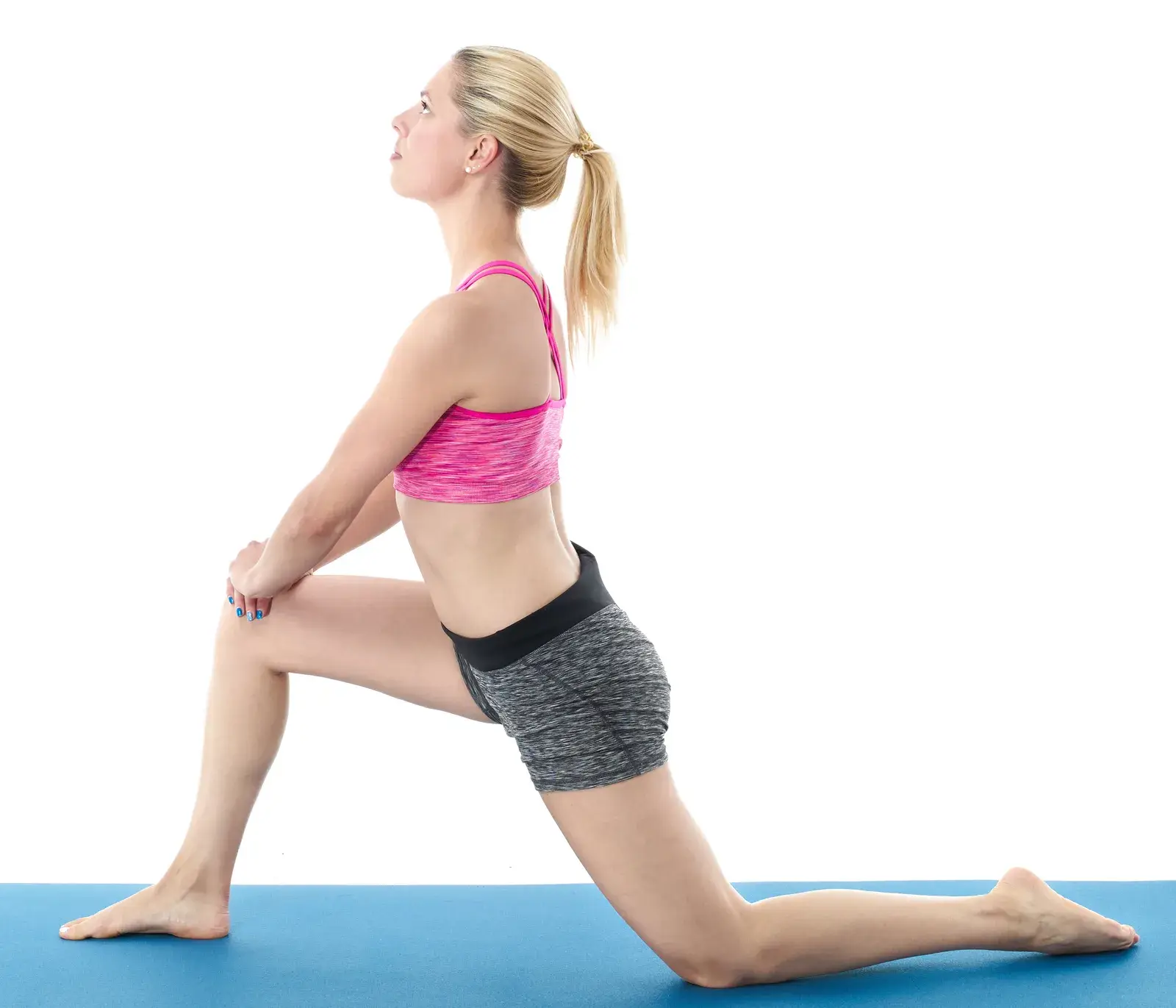
Not always. A half-kneeling hip flexor stretch can ease tightness from long sitting, but if the pain is from impingement or a fresh strain, stretching hard can aggravate it. Stop any stretch that produces a pinch in the groin rather than a pull at the front of the thigh.
Soccer players, hockey players and runners at Grand Park and on the Monon Trail are frequent sufferers, as are desk workers whose hips stay bent for hours. Soccer specifics are covered in physical therapy for soccer players, and the hip questionnaire connects you with the matching team.
Get urgent medical help for front-of-hip pain if
- You cannot bear weight, especially after a fall
- Severe pain started suddenly without injury, or the hip is hot with a fever
- Groin pain comes with a tender bulge that will not go back in
- Deep groin pain keeps getting worse during running and is present at rest or at night
If you think it is an emergency, call 911.
