Groin strain physical therapy in Carmel, Indiana
A groin strain is an injury to the adductor muscles on the inner thigh, most often the adductor longus, and physical therapy built on progressive adductor strengthening is the main treatment. In Carmel, the physical therapist you are matched with tests squeeze strength and pain, then moves you from gentle holds to side planks, lunges and cutting drills. Mild strains often settle in about 10 days to 3 weeks; severe tears can take months.
At a glance
Common signs of groin strain
Also called: Adductor strain, Pulled groin, Adductor longus strain, Inner thigh strain.
What actually tears in a groin strain, and which sports cause it?
In most groin strains the adductor longus, the inner thigh muscle that pulls the leg toward the midline, is overstretched or partially torn near where it joins the pubic bone. It usually happens when the leg is forced outward while the muscle is contracting, such as a long stride to reach a ball or a skating push-off.
Soccer, ice hockey, football and court sports produce the most groin strains. Around Carmel that means youth and adult soccer at Grand Park in Westfield, hockey and figure skating at local rinks, and pickleball, where wide lateral lunges to reach a dink are a frequent trigger for players new to the game. A prior groin strain and weaker adductors relative to the hip abductors are both linked with higher risk.
Longer-standing groin pain that builds with exertion and involves the lower abdomen may be a different problem, described on the sports hernia physical therapy page.
How is a groin strain tested at a first visit, and what else could it be?
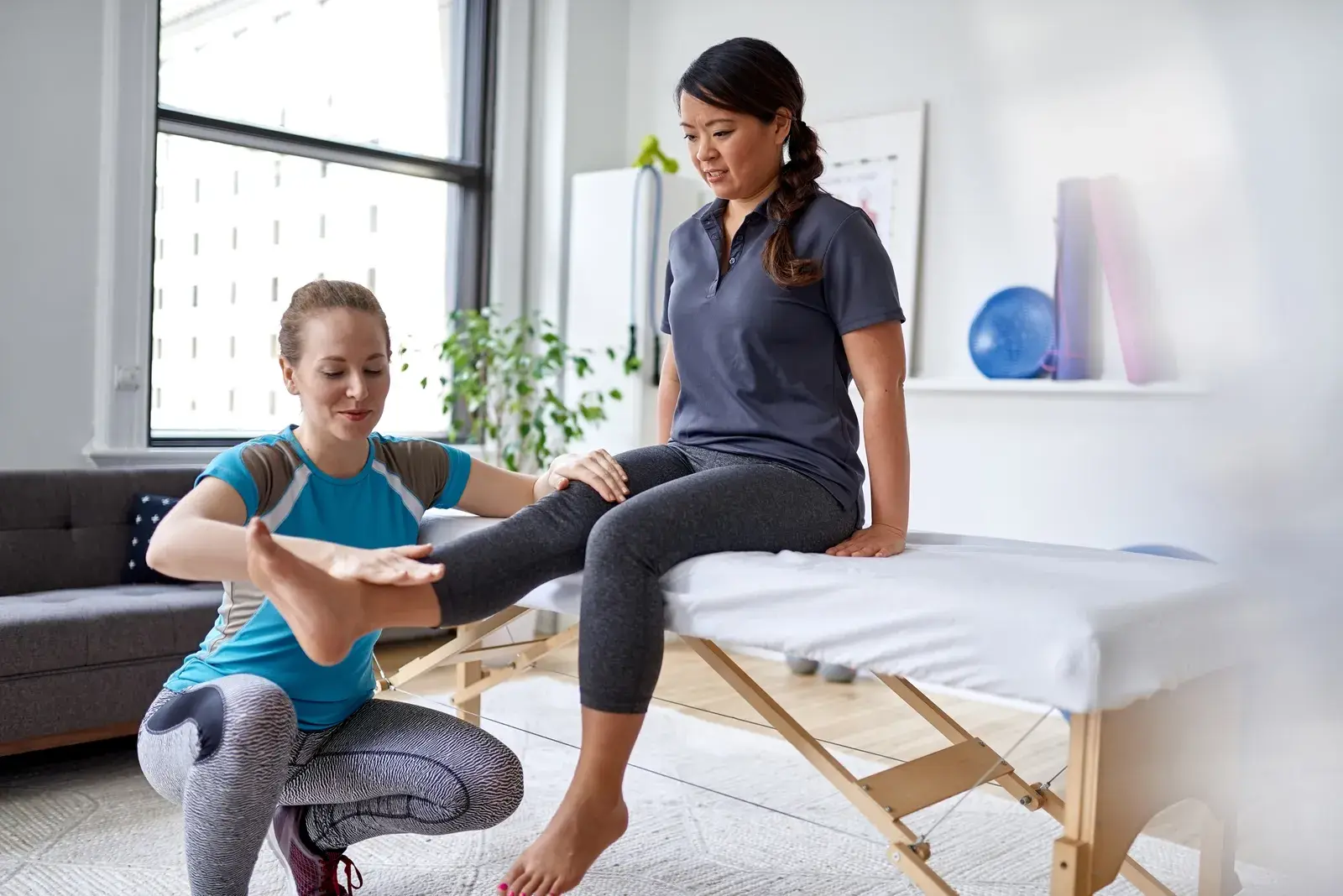
A therapist confirms an adductor strain by reproducing your pain with resisted squeezing and stretching of the inner thigh, and by finding tenderness in the muscle or its tendon. A squeeze test, pressing the knees together against a cuff or the therapist’s fist, is often scored for pain and strength and repeated through rehab.
The therapist also rules out the other sources of groin pain in athletes: the hip joint itself, the hip flexors, the inguinal canal where hernias occur, and the pubic bone. Hip joint problems often show up as pain when the hip is bent and rotated inward, which a strain usually does not provoke as strongly. The hip flexor strain page covers the injury most commonly confused with this one.
Imaging is rarely needed for a straightforward strain. A large bruise, a palpable gap, or pain that is not easing as expected may lead to a physician ordering an ultrasound or MRI.
How does adductor strengthening progress from squeezes to Copenhagen planks?
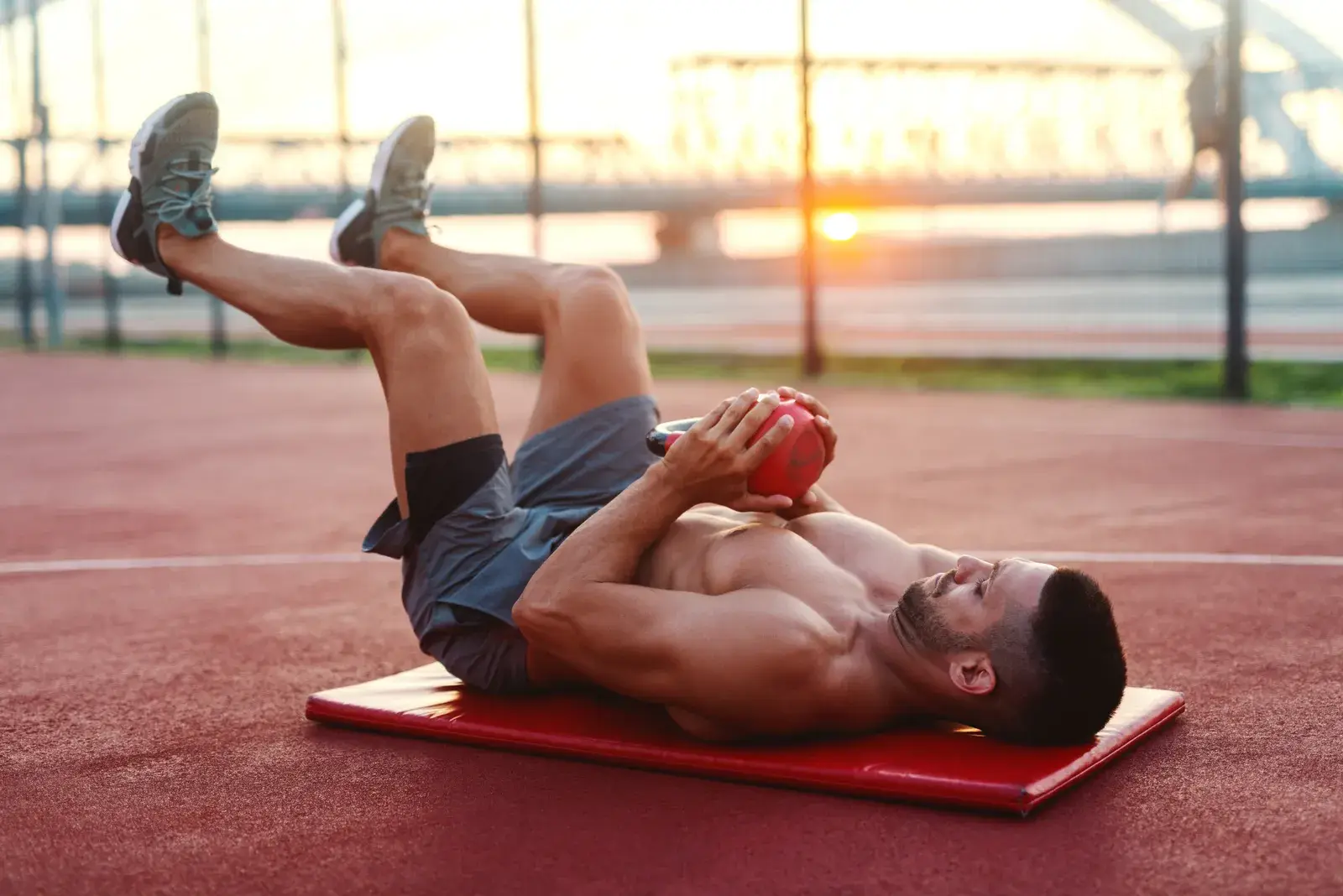
Rehab progresses from pain-free squeezes to long-lever, high-load adductor exercises, then to speed and direction changes. Early work uses isometric squeezes of a ball or pillow between the knees, at intensities that stay comfortable, along with walking and light cycling.
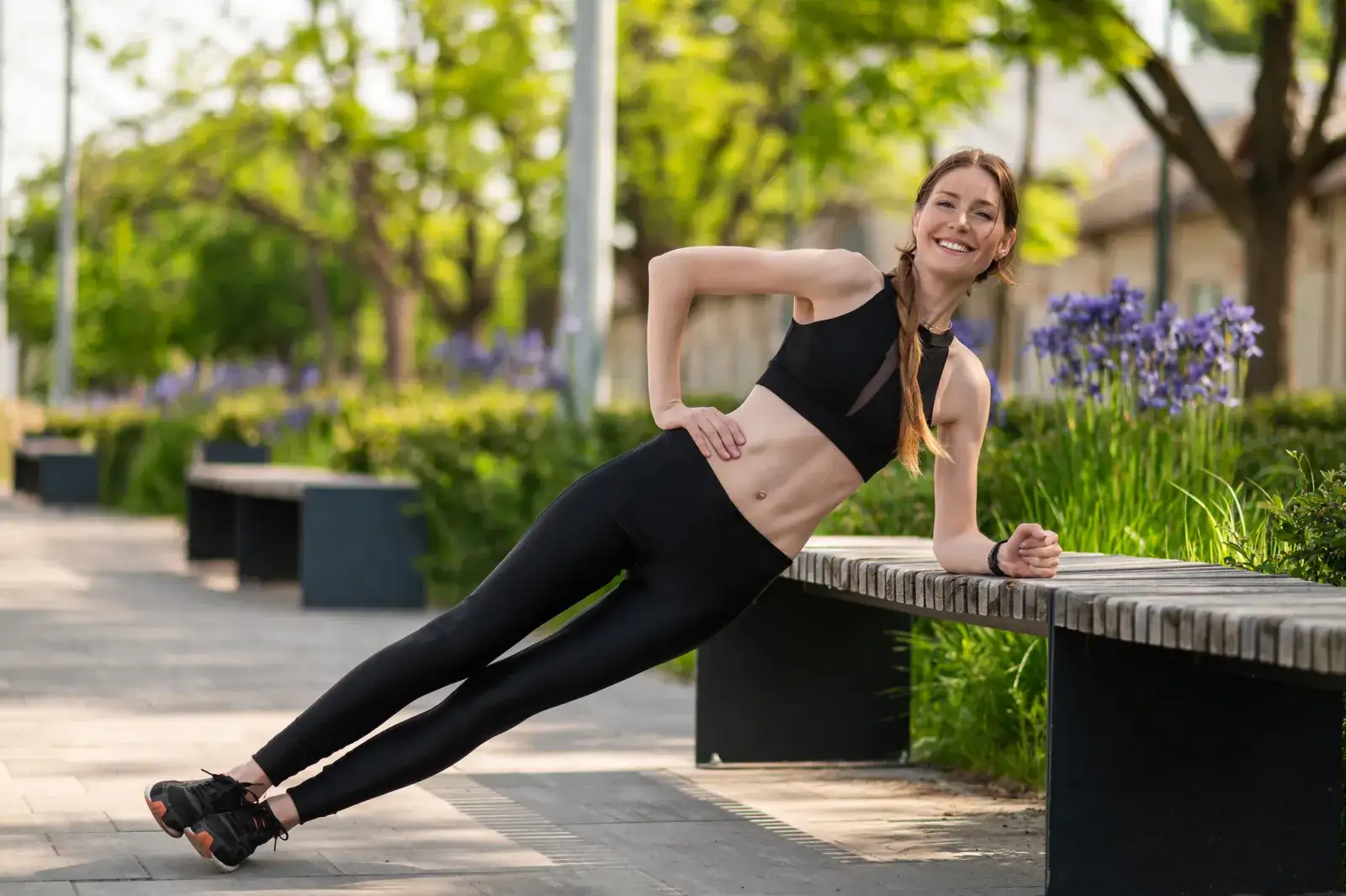
As squeeze pain drops, the therapist adds side-lying adductor lifts, cable adductions, lateral lunges and sumo squats with dumbbells. The Copenhagen plank, a side plank with the top leg supported on a bench, is a widely used adductor exercise that is usually introduced in short-lever form first, with the knee on the bench, then progressed to the ankle.
The final stage uses the turf corridor outside the suites for shuffles, crossover steps, skating strides and cutting, followed by sport-specific kicking or shooting. Core and hip abductor strength are trained throughout, because the groin works as part of a chain.
- Ball squeezes held for time without pain
- Side-lying and cable adductor work
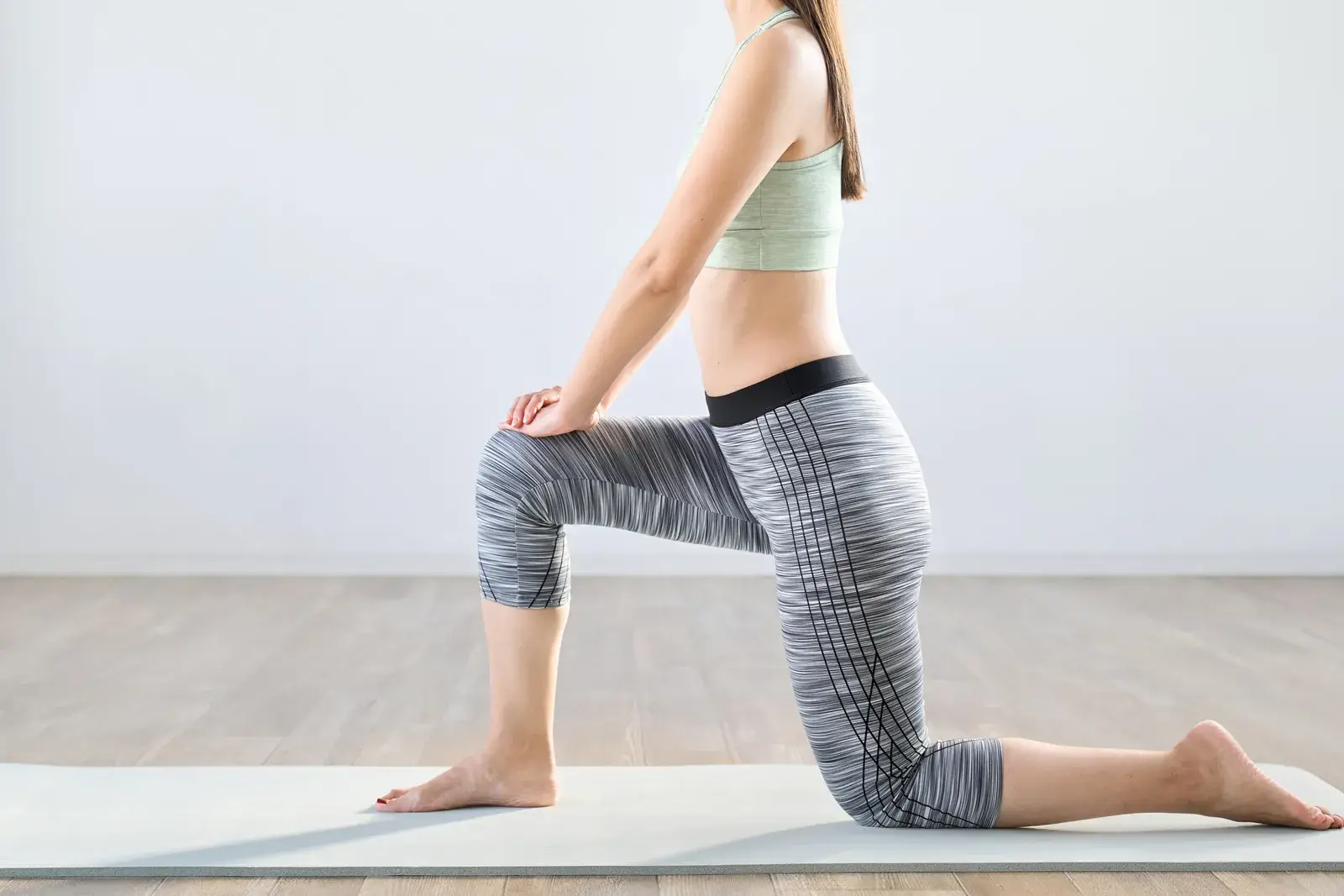
- Lateral lunges and wide-stance squats
- Short-lever, then long-lever Copenhagen planks
- Shuffles, crossovers and cutting at increasing speed
- Kicking, skating or court footwork
When is it safe to return to soccer, hockey or pickleball after a groin strain?
Return is usually considered when the squeeze test is pain-free and close to the other side in strength, and when sprinting, cutting and sport skills feel normal. For a mild strain that may be about 10 days to 3 weeks, while a moderate strain more often takes several weeks, and a severe tear or one near the bone can take months.
Groin strains have a reputation for recurring, especially when a player returns before strength is restored. Keeping a short adductor routine, such as two Copenhagen plank sessions a week, after you are back on the field is a reasonable habit that your therapist can tailor. The return-to-sport testing page explains how readiness is judged.
Players often feel ready long before the adductors are. A practical sequence is to return to full training first, then to partial match minutes, then to full matches, with each step only after the previous one causes no flare the following day. For pickleball, that might mean drilling at the kitchen line before playing competitive games that demand sudden wide lunges across the court.
Season matters too. A masters soccer player returning in early spring after a winter indoors, or a hockey player coming back at the start of the season, faces bigger jumps in load than someone mid-season, and the therapist will usually build in extra time for that.
What should I do this week for a pulled groin?
Stop the sport that caused it, keep walking within comfort, and start gentle squeezes of a pillow between your knees if they do not hurt. Avoid wide stretches and side lunges for the first several days. Getting in and out of a car with both knees together, rather than stepping one leg out wide, also spares the inner thigh while it is sore.
Ice can help with pain early on. If you are limping, cannot squeeze the knees together without sharp pain, or the strain is not improving after a week, the two-minute assessment for hip and groin pain passes your details to the matching team, who propose a therapist who works with athletes. If you play soccer, the physical therapy for soccer players page covers the wider picture.
Resist the urge to test the groin with a hard kick or a sprint to see whether it is better. Those tests rarely tell you much and can re-tear a healing muscle. Instead, check how a pillow squeeze feels each morning: if it is getting easier and less painful day by day, healing is on track and the strengthening can gradually build.
- Skip pickup games and skating until the squeeze is comfortable
- Keep stride length short when walking
- Use pain-free cycling to stay conditioned
- Write down which movements trigger the pain
When to see a physician or go to the ER first
Physical therapy is the right start for most groin strain. These symptoms are different and need medical attention before, or instead of, a physical therapy visit:
- A painful, growing bulge in the groin, especially when coughing
- Groin pain with fever, or a hot, red swollen area
- Testicular pain or swelling
- Inability to walk after the injury
- Deep groin pain after a fall in an older adult, which may signal a hip fracture
If you think it is an emergency, call 911.
Two-minute assessment
Get your groin strain looked at
Tell us how your groin strain started, how long it has been going on and what it is stopping you from doing. The matching team proposes a therapist in the network who focuses on it, and you hear back, usually within one business day.
- No referral needed to start in Indiana (first 42 days)
- We check which therapists work with your plan before you book
- One-on-one care in a private suite at Carmel City Center
How therapists treat it
Kinds of care used for groin strain
- Sports physical therapyRehab for active adults that goes past pain relief to the strength, power and movement your sport actually demands.
- Return-to-sport testingCriteria-based testing of strength, hopping, movement and confidence, so your return to sport rests on evidence, not the calendar.
- Injury prevention screeningA one-on-one movement and strength check that turns side-to-side gaps into a short, targeted training plan before your season.
Questions
Groin strain: what people ask
Information on this website is general education, not medical advice, a diagnosis or a treatment plan. Only a licensed clinician who examines you can advise on your condition. If you may be having a medical emergency, call 911.
Something we did not cover? Ask the matching team or ring (888) 353-9975.
Should I stretch a pulled groin?
Gentle movement is fine, but aggressive stretching in the first week can aggravate the tear. Strength work generally does more for recovery than stretching.
Can I keep playing through a mild groin strain?
Playing through sharp groin pain often turns a short layoff into a long one. A brief, structured break with strengthening is usually faster overall.
Why do hockey players get so many groin strains?
The skating stride pushes the leg outward and back while the adductors contract hard to control it. That combination places heavy load on the inner thigh. Goalies, who drop into wide butterfly positions repeatedly, face a related demand that their rehab needs to rehearse.
Is a groin strain the same as a sports hernia?
No. A groin strain is a muscle injury with a clear moment of onset, while a sports hernia usually builds gradually and involves the lower abdominal wall as well.
Can I prevent another groin strain?
Keeping adductor strength up with exercises such as the Copenhagen plank and warming up before matches are reasonable steps. A therapist can set the dose for your sport. Many soccer programs now include adductor work in the warm-up, and a short screening of squeeze strength at the start of each season can spot a weak side before it becomes an injury. The injury prevention screening page explains what such a check includes.
Google reviews
What guests say about FlexWerk
These are live Google reviews of FlexWerk at Carmel City Center, the private-suite facility where therapists in the network practise.
Related
Conditions that travel together
 Sports herniaCore, hip and adductor rehab for deep groin pain in kicking and twisting sports, with a clear plan for when surgery is worth discussing.
 Hip flexor strainGraded rehab for a pulled muscle at the front of the hip, from gentle holds back to sprinting, kicking and hill running.
 Hamstring strainPulled hamstrings from sprinting or over-stretching, rebuilt with eccentric strength and a staged return to speed.
Page reviewed By the Monon Therapy Collective editorial team

Carmel City Center · Carmel, Indiana
Start with a conversation
Tell us what hurts and what you want to get back to. We will tell you honestly whether a therapist in the network is likely a good fit for what you describe, and match you with an independent, licensed therapist who is. Only that therapist can assess what will help.
885 Monon Green Blvd, Suite 120, Carmel, IN 46032 · Monday to Friday 5 AM to 9 PM · Saturday and Sunday 7 AM to 4 PM