
Injury prevention screening in Carmel, Indiana
An injury prevention screening is a one-on-one session in which a licensed physical therapist tests how you squat, step, land, balance and produce force, then compares left with right and both with what your sport or job demands. It cannot tell you whether you will get hurt, but it can find specific, trainable gaps, such as a weak hip on one side or poor control landing from a hop. In Carmel, Indiana, screens are done in a private suite at Carmel City Center, and the result is a short, targeted exercise plan, not a score.
What does a physical therapist test during a movement screen?
A movement screen tests the handful of qualities that most often break down before an overuse or landing injury: single-leg control, hip and trunk strength, ankle and hip mobility, balance and how you absorb force. Your therapist watches each task from the front and side, counts what can be counted, and compares your two sides. The whole session usually takes about the length of a normal visit.
The single-leg squat is the test people remember. Standing on one leg and lowering slowly shows whether the knee drifts inward, the pelvis drops or the trunk leans to make up for a weak hip. A step-down from a box, a forward reach on one leg and a short series of hops add more information. In the suite, a rack, cable system and dumbbells let your therapist check strength under real load rather than guessing from body-weight movements alone.
- Single-leg squat and step-down: knee, hip and trunk control on each side
- Single-leg balance and multi-direction reach: how far you can reach while staying steady
- Hop and landing tasks, when you have no current pain: force absorption and symmetry
- Ankle dorsiflexion and hip rotation: the mobility that squatting and running borrow from
- Strength tests for the hip, thigh and calf, often with weights or a cable so numbers can be retested
- A short history of past injuries, training load and the demands of your sport or job
Can any screening test predict whether you will get injured?
No single screening test has been shown to predict injury reliably, and an honest therapist will tell you so. A 2017 systematic review in the British Journal of Sports Medicine appraised 24 studies of one popular screening system, the Functional Movement Screen, and concluded that the link between its composite score and later injury does not support using it as an injury prediction tool.
That finding changes what a good screen is for. Instead of labeling you high or low risk, the therapist looks for specific deficits that are worth training anyway: a hip that is clearly weaker on one side, a calf that tires early, a landing that stays stiff and loud. Those are things you can improve in a few weeks of focused work, and improving them makes sense whether or not they would ever have caused an injury.
There is also good support for exercise-based prevention itself. The 2018 clinical practice guideline on exercise-based knee and ACL injury prevention, published by two academies of the American Physical Therapy Association in the Journal of Orthopaedic and Sports Physical Therapy, recommends structured warm-up and strengthening programs for athletes in sports with cutting and landing.
How screening results become a short prevention program
The findings are turned into two to five exercises aimed squarely at what the screen found, with a starting load, a progression rule and a retest date. If the step-down showed the knee collapsing inward, you might work on side-lying hip strength, a controlled step-down exercise and later loaded split squats. If the calf tired early, heel raises progress toward single-leg and then weighted work.
Most prevention plans fit into a warm-up or two short sessions a week, because a program you will not keep doing protects nothing. A retest four to eight weeks later shows whether the gap has closed. Runners who want help with the training side can move on to strength training for runners, and anyone with a past injury can compare the results with return-to-sport testing, which uses stricter pass criteria.
- One to three findings, ranked by how much they matter for your sport or job
- Two to five exercises with a starting load and a clear rule for progressing
- Where the exercises fit: warm-up, gym day or a quick routine at home
- A retest date, usually four to eight weeks out, using the same tests
When is a good time to book a screen around Carmel’s race and sport seasons?
The useful window is six to twelve weeks before your training load climbs, because that leaves time to fix what the screen finds before the miles or matches pile up. For a spring marathon such as the Carmel Marathon in April, that means a winter screen. For the Indy Mini in May, late winter works. Pickleball and golf players who play heavily from spring to fall can screen in late winter, while still indoors.
Parents of teens playing club seasons at Grand Park in Westfield often ask about screening between seasons. A parent or legal guardian completes the questionnaire and attends with anyone under 18, and the matching team confirms whether a therapist in the network currently sees teenagers before anything is booked. Adults returning to sport after years away, such as a first pickleball season, are also a good fit, since the body has not met those demands in a while.
Is a screen covered by insurance, and who should get treatment instead?
A screen for someone with no current complaint is often treated as wellness or performance care rather than medical treatment, so many health plans do not pay for it. The matching team asks about your goal and your plan, and the therapist’s office tells you before the visit whether it would be billed to insurance or paid directly. How pricing works in general is explained on the cost and insurance page.
If something already hurts, you need an evaluation, not a screen. Pain that changes how you run, lift or swing, swelling after activity or a joint that gives way is a reason for a full assessment by a therapist, often under sports physical therapy, and is more likely to fall under medical coverage. Chest pain, fainting or unusual breathlessness with exercise is a reason to see a physician, not to book any movement test.
Who it helps
An injury prevention screen may be worth booking if
- You are building toward a half marathon, marathon or triathlon and have been hurt in a past build
- You play cutting and landing sports, such as soccer, basketball or pickleball, and want a baseline
- You are coming back to sport or heavy lifting after a long break
- You finished rehab some time ago and want to check that the injured side kept up
- Your job involves lifting, climbing or long hours on your feet and you want to stay ahead of it
- You would like a short program built around your own weak links rather than a generic routine
Conditions
Problems this kind of care treats
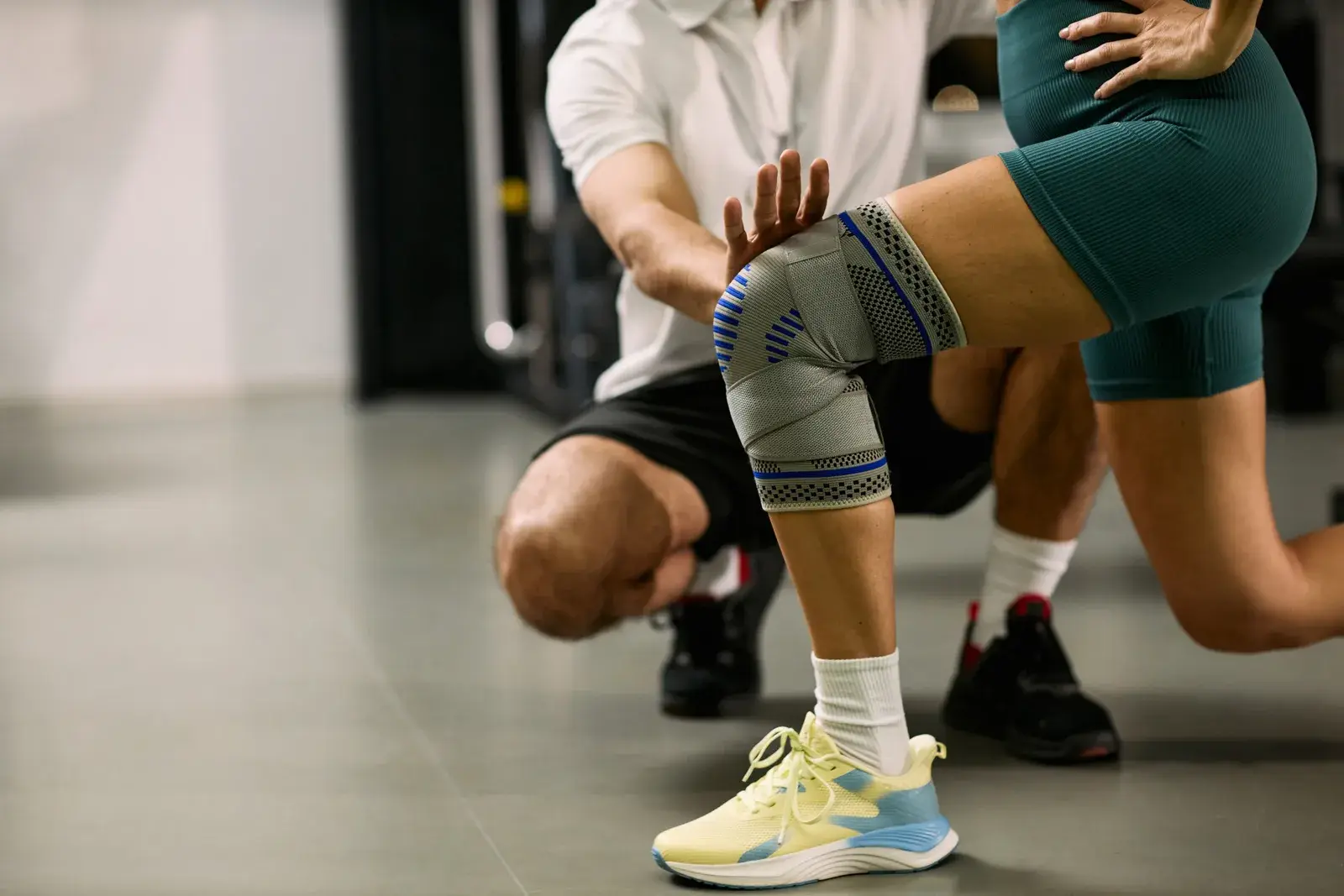 ACL injuryPrehab, post-reconstruction rehab and criteria-based return to sport for ACL injuries, one-on-one in a private suite.
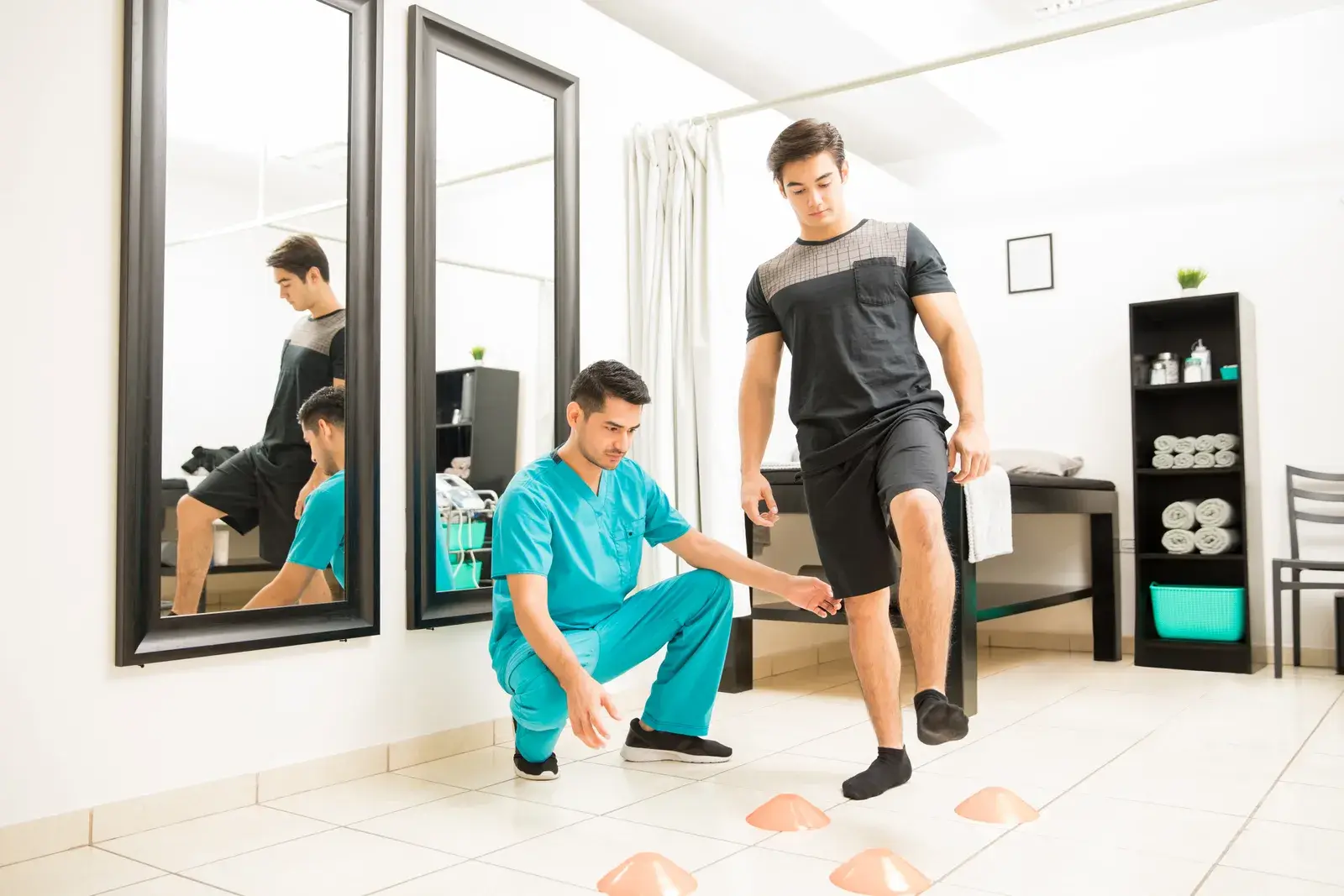 Runner’s kneeHip and quadriceps strengthening plus a smarter mileage plan for an ache around the kneecap that flares on stairs, hills and long sits.
 Ankle sprainRehab for fresh sprains and ankles that keep rolling: strength, balance retraining and a tested return to sport.
Two-minute assessment
Not sure which therapist is right for you?
Answer a few questions about what hurts, how long it has been going on and what you want to get back to. Our matching team reads every answer and proposes a licensed physical therapist in the network whose focus, schedule and coverage fit. Two minutes, no obligation.
- No referral needed to start in Indiana (first 42 days)
- We check which therapists work with your plan before you book
- One-on-one care in a private suite at Carmel City Center
Questions
About injury prevention screening
Information on this website is general education, not medical advice, a diagnosis or a treatment plan. Only a licensed clinician who examines you can advise on your condition. If you may be having a medical emergency, call 911.
Something we did not cover? Ask the matching team or ring (888) 353-9975.
How is a movement screen different from a physical therapy evaluation?
An evaluation starts from a complaint, such as knee pain, and aims to explain and treat it. A screen starts from a goal, such as a marathon or a new sport, and looks for trainable gaps in someone who is currently pain-free.
Do I need a referral for an injury prevention screening in Indiana?
No referral is needed for a screen, and Indiana’s direct access law also lets a physical therapist evaluate and treat without one for a limited period. The details are in do I need a referral for physical therapy in Indiana.
What should I wear for a movement screen?
Wear clothes you can squat and hop in, plus the shoes you usually train in. Shorts make it easier for the therapist to see what your knees and hips are doing.
How often should I repeat a screen?
A retest four to eight weeks after starting the program shows whether it worked. After that, once a year before your main season, or after any injury, is a reasonable rhythm for most active adults.
Will I get a score at the end?
You get measurements, such as how far you reach on each leg or how much you lift on each side, and what they mean for you. A single total score is less useful, because it cannot predict injury and hides which part needs work.
Google reviews
What guests say about FlexWerk
These are live Google reviews of FlexWerk at Carmel City Center, the private-suite facility where therapists in the network practise.
Continue
Related services
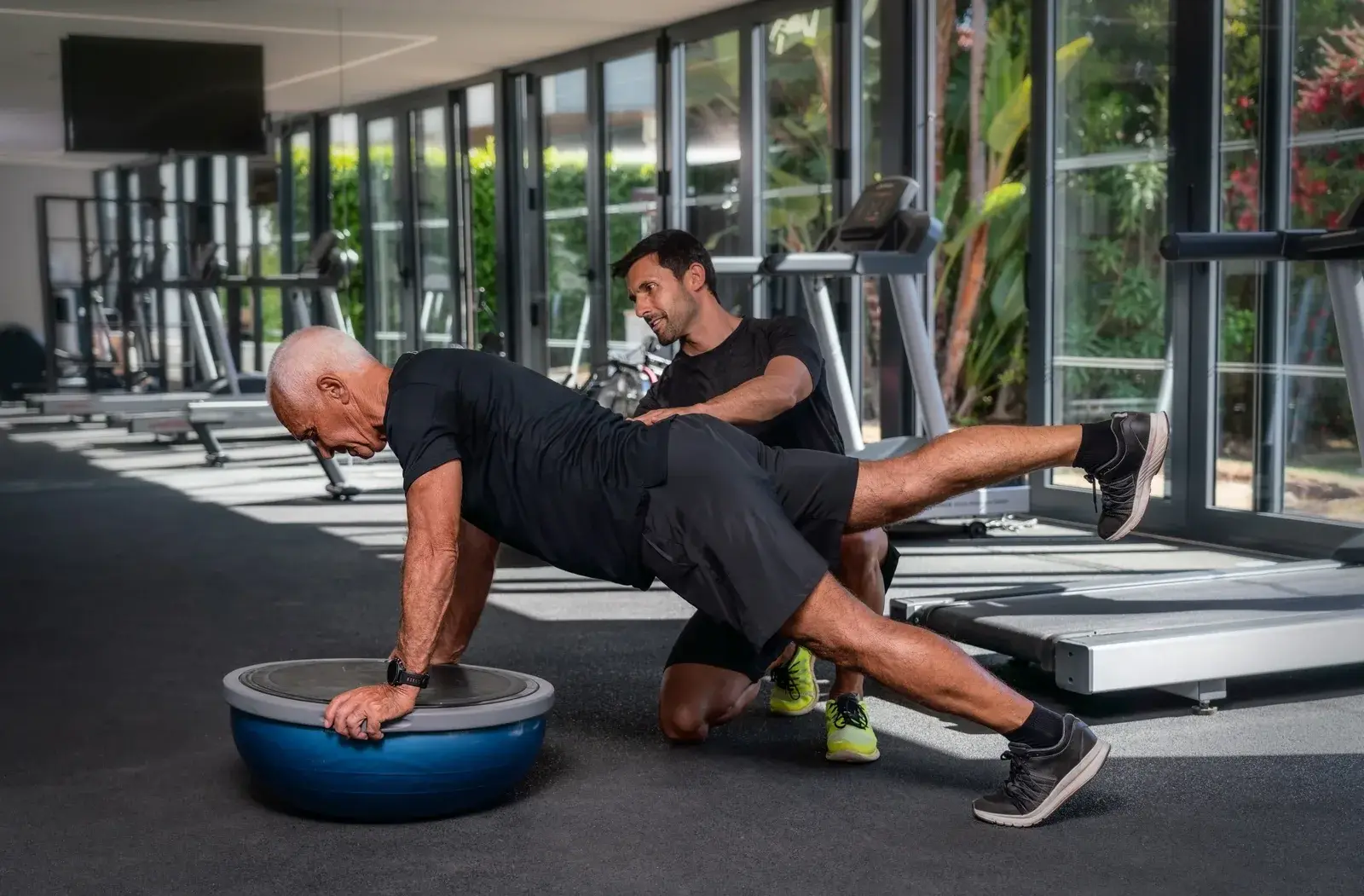 Return-to-sport testingCriteria-based testing of strength, hopping, movement and confidence, so your return to sport rests on evidence, not the calendar.
- Sports physical therapyRehab for active adults that goes past pain relief to the strength, power and movement your sport actually demands.
 Running injury physical therapyFor Monon Trail regulars and race trainees: load management, strength and gait observation that keep you running while you heal.
Page reviewed By the Monon Therapy Collective editorial team

Carmel City Center · Carmel, Indiana
Start with a conversation
Tell us what hurts and what you want to get back to. We will tell you honestly whether a therapist in the network is likely a good fit for what you describe, and match you with an independent, licensed therapist who is. Only that therapist can assess what will help.
885 Monon Green Blvd, Suite 120, Carmel, IN 46032 · Monday to Friday 5 AM to 9 PM · Saturday and Sunday 7 AM to 4 PM