Runner’s knee physical therapy in Carmel, Indiana
Runner’s knee, or patellofemoral pain, is an ache around or behind the kneecap that flares with stairs, squats, hills and long periods of sitting, and it responds well to exercise therapy that strengthens the hips and quadriceps. Clinical practice guidelines for physical therapists recommend combined hip and knee strengthening as a core treatment. In Carmel, the physical therapist you are matched with also adjusts your running load so you can often keep training while the knee settles.
At a glance
Common signs of runner’s knee
Also called: Patellofemoral pain syndrome, Anterior knee pain, Chondromalacia patella (older term), Kneecap pain.
Why does the front of my knee ache on the stairs at the end of a long run?
The kneecap glides in a groove at the end of the thigh bone, and on stairs, hills and squats the force through that joint rises sharply. When those forces climb faster than the tissues can adapt, the joint becomes sensitive, which is the heart of runner’s knee. It is a load problem, not usually a structural one.
Common triggers include a jump in weekly mileage, more downhill running, new speed sessions, a switch in shoes, or a training block for the Carmel Marathon in April or the Indy Mini in May. Weak hip muscles can let the thigh turn inward as you land, and weak quadriceps reduce the knee’s shock absorption, both of which can add to the load on the kneecap.
Despite the name, runner’s knee is common in cyclists, hikers, jumping athletes and people who have just started a squat-heavy gym routine. It is also common in young adults, especially females. For pain on the outer side of the knee rather than the front, see the IT band syndrome physical therapy page.
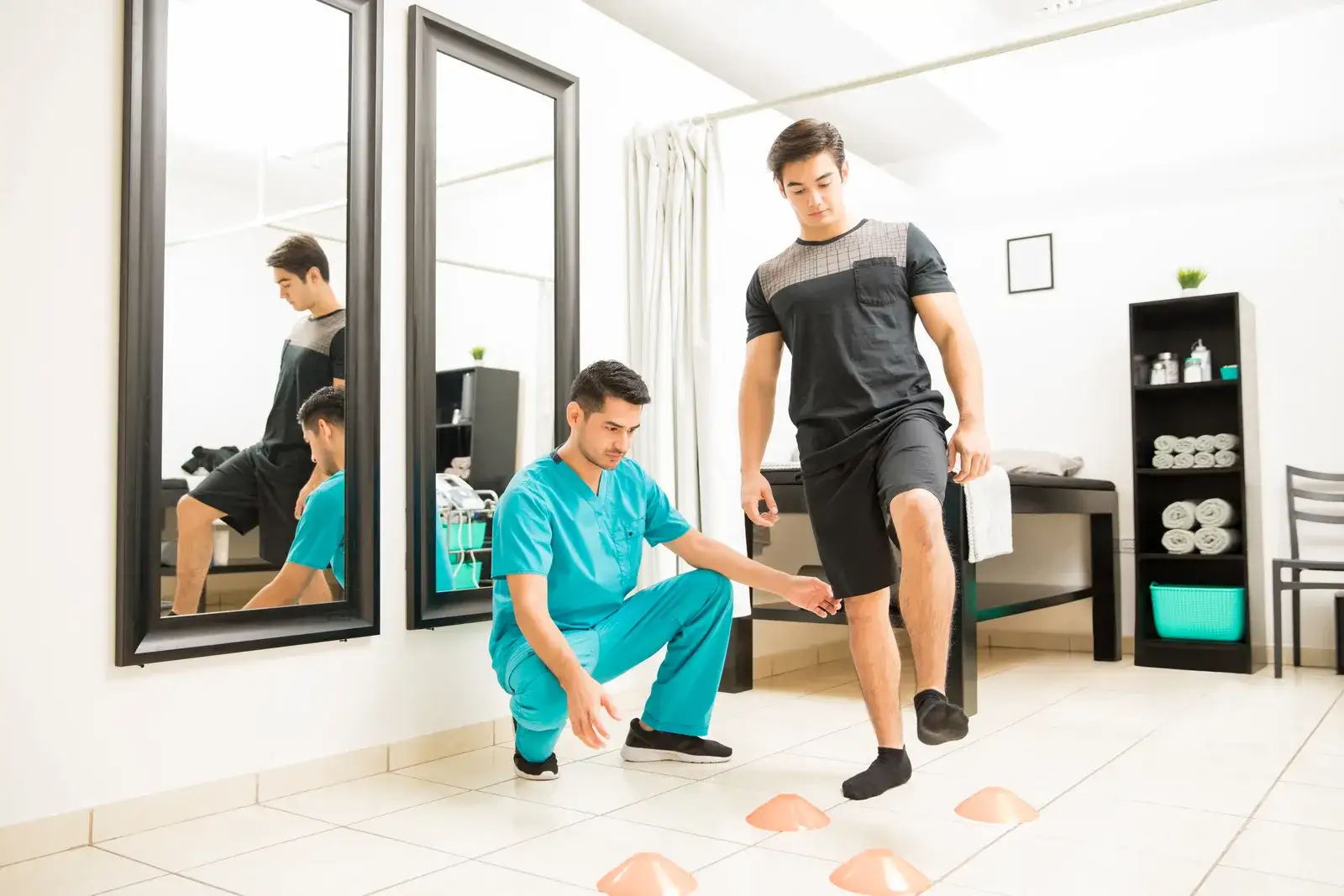
What does a step-down test show a physical therapist about kneecap pain?
A step-down test shows how well your hip and knee control the leg as you lower your body, and whether that movement reproduces the ache. The therapist watches whether the knee drifts inward, the pelvis drops, or the trunk leans, and asks where you feel the pain.
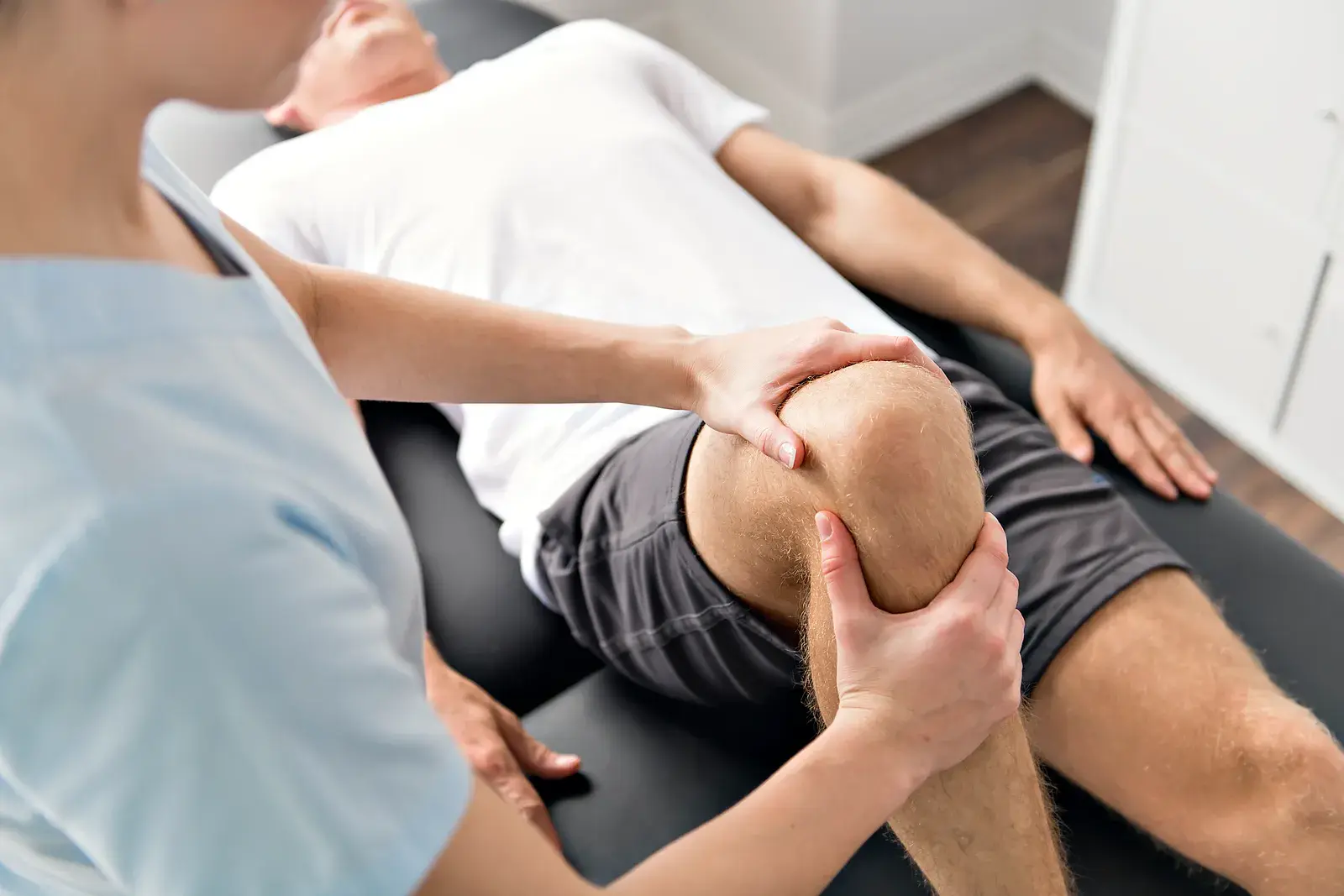
The rest of the exam typically includes squatting, pressing around the edges of the kneecap, checking how freely it moves, measuring hip and quadriceps strength, and looking at flexibility in the calves, hamstrings and quadriceps. If you run, the therapist will ask about your weekly volume, terrain and recent changes, and may watch you run on a treadmill or analyze a video. The running gait analysis page explains what that adds.
Patellofemoral pain is diagnosed from the history and exam, and imaging is rarely needed. Locking, true giving way or significant swelling suggest a different problem, and the therapist will recommend a physician review if those appear.
Which exercises help runner’s knee, and why are the hips involved?
Strengthening the hip abductors and external rotators along with the quadriceps tends to reduce pain and improve function more than quad work alone. OrthoInfo advises strengthening both the quadriceps and the hip muscles because they work together to stabilize the kneecap, and the 2019 patellofemoral pain clinical practice guideline in the Journal of Orthopaedic and Sports Physical Therapy is built around that kind of exercise therapy. The hips help control where the knee travels, so stronger hips usually mean a calmer kneecap.
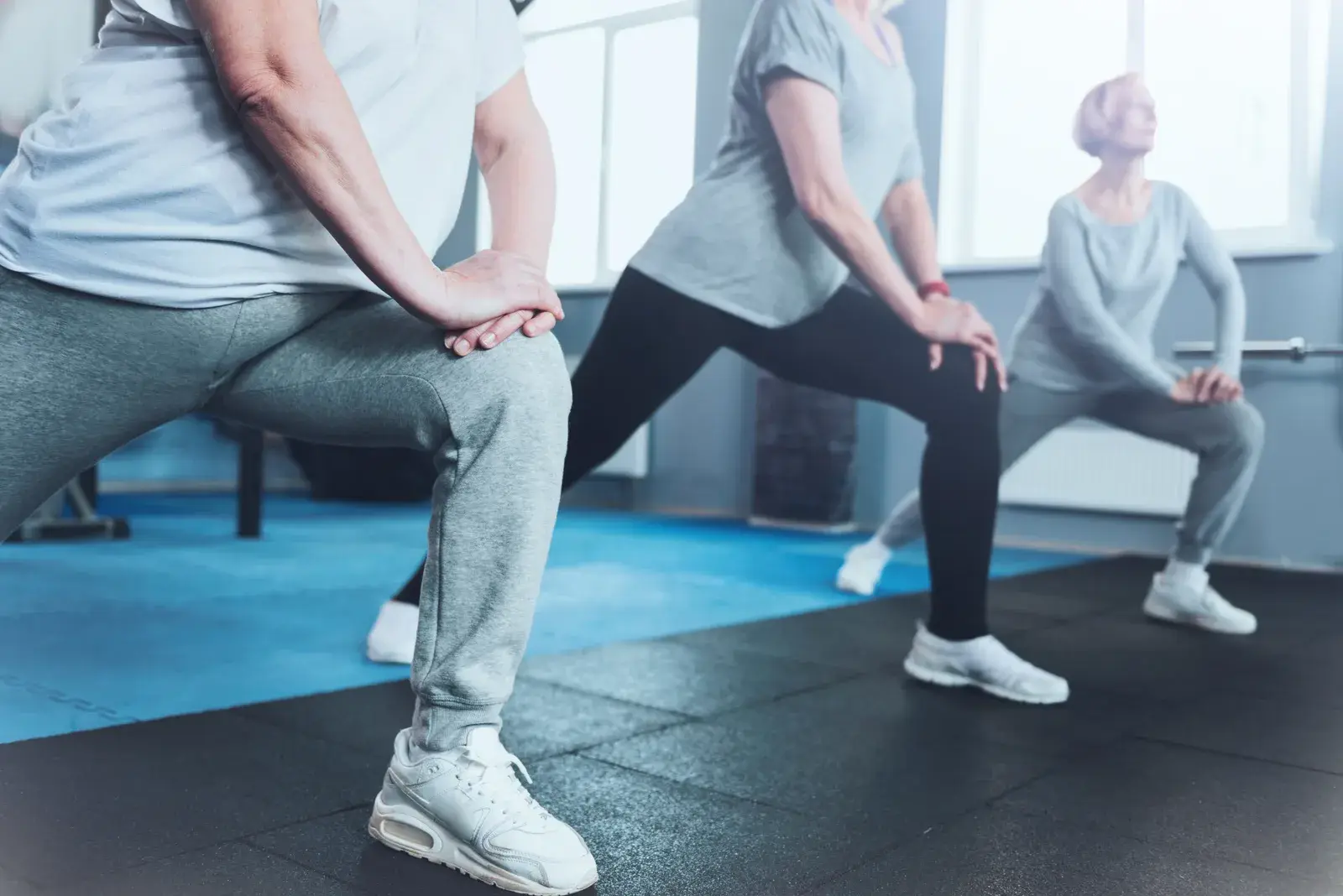
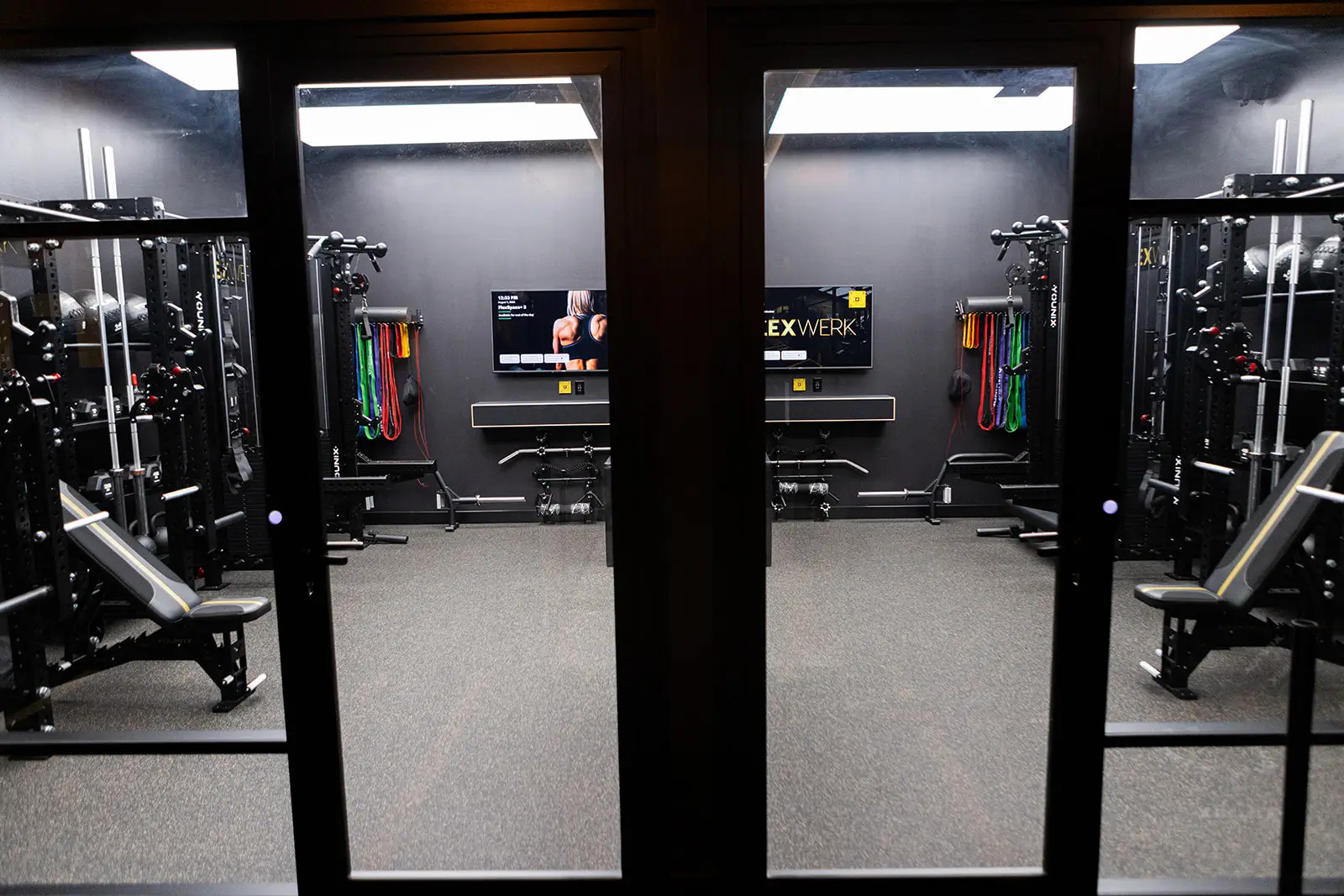
Early sessions often use exercises that load the quads with less pressure on the kneecap, such as leg presses in a limited range, wall sits at a comfortable angle, and Spanish squats, alongside side-lying hip work and banded walks. As pain settles, the plan moves to step-downs, split squats and deeper squats with a barbell or dumbbells in a private suite at FlexWerk, and finally to hopping and running drills.
Taping or a soft brace may be used short term if it reduces pain during exercise, and foot orthoses may be considered for some runners, but they support strengthening rather than replace it. Education about load is just as important: knowing how to adjust mileage and hills rather than stopping entirely.
- Hip abductor and rotator strengthening
- Quadriceps work in pain-tolerant ranges
- Step-downs and single-leg control
- Gradual return to hills and speed work
- Short-term taping if it makes exercise more comfortable
How long does runner’s knee take to settle with physical therapy?
Many people with patellofemoral pain notice improvement within a couple of months of regular strengthening and load changes, but it can be stubborn, and some people have symptoms that come and go for longer. The longer the knee has been sore before treatment, the longer it often takes.
Most runners can keep some running throughout, with distance, pace and hills adjusted so pain stays mild and settles by the next day. The therapist will usually rebuild mileage gradually, often adding hills and speed last, and may suggest a slightly shorter stride or higher cadence if that reduces symptoms.
If you are aiming for a spring race, plan backward from race day with your therapist. Having strength work in place by the start of a training block helps the knee handle the rising load rather than catching up after it flares.
Expect some ups and downs. A long run that includes more hills than usual, or a week of heavy squats in the gym, can bring the ache back for a day or two. That is a signal to trim the load briefly, not evidence that the knee is damaged or that the plan has failed.
How should I adjust my running this week if my kneecap hurts?
Reduce rather than stop: cut weekly mileage, avoid hills and steep descents, slow the pace, and keep pain during a run mild, around 3 out of 10 or below, with no worsening the next morning. Flat stretches of the Monon Trail are useful for this.
Break up long periods of sitting with the knee bent, and choose a seat where you can straighten the leg. Swap some runs for cycling or swimming if they are comfortable. If the ache persists after a few weeks of sensible changes, the two-minute knee questionnaire goes to the matching team, who propose a therapist who works with runners; the knee pain going up and down stairs page covers related causes.
Check your shoes and training log as well. Shoes past their usual lifespan, a new pair with a very different feel, or a week that jumped well above your usual mileage are all clues worth bringing to a first visit.
- Cut mileage and remove hills for now
- Keep pain mild during runs and gone by morning
- Avoid deep squats and lunges that reproduce the ache
- Stand up and straighten the knee during long sits
When to see a physician or go to the ER first
Physical therapy is the right start for most runner’s knee. These symptoms are different and need medical attention before, or instead of, a physical therapy visit:
- The knee locks, catches or gives way
- Rapid swelling after a twist or pop
- A hot, red, swollen knee with fever
- Calf pain and swelling, which can signal a blood clot
- Knee pain in a child with a limp or hip pain, which needs a physician
If you think it is an emergency, call 911.
Two-minute assessment
Get your runner’s knee looked at
Tell us how your runner’s knee started, how long it has been going on and what it is stopping you from doing. The matching team proposes a therapist in the network who focuses on it, and you hear back, usually within one business day.
- No referral needed to start in Indiana (first 42 days)
- We check which therapists work with your plan before you book
- One-on-one care in a private suite at Carmel City Center
How therapists treat it
Kinds of care used for runner’s knee
- Running injury physical therapyFor Monon Trail regulars and race trainees: load management, strength and gait observation that keep you running while you heal.
- Running gait analysisSlow-motion video of your stride, read alongside a physical exam, to explain a running pain that keeps coming back.
- Sports physical therapyRehab for active adults that goes past pain relief to the strength, power and movement your sport actually demands.
Questions
Runner’s knee: what people ask
Information on this website is general education, not medical advice, a diagnosis or a treatment plan. Only a licensed clinician who examines you can advise on your condition. If you may be having a medical emergency, call 911.
Something we did not cover? Ask the matching team or ring (888) 353-9975.
Can I keep running with runner’s knee?
Often yes, at reduced volume and on flat routes, as long as pain stays mild and settles by the next day. The running with knee pain answer explains the rule of thumb in more detail.
Do I need a knee brace for runner’s knee?
A soft sleeve or tape can help some people in the short term. It does not replace strengthening, which drives the lasting change.
Is runner’s knee the same as arthritis?
No. Patellofemoral pain is a sensitivity of the kneecap joint under load and is common in young, healthy people. Arthritis involves structural joint change and is more common later in life.
Should I change my running shoes?
Shoes can affect comfort, but no single shoe type fixes runner’s knee, and a dramatic switch, such as moving to minimal shoes overnight, can shift load in ways the knee or calf is not ready for. If your current pair is worn out or very different from what you used before the pain began, it is worth discussing.
Why does my knee hurt after sitting through a movie?
Keeping the knee bent for a long time increases pressure on the kneecap joint, which a sensitive knee notices. Straightening the leg every so often usually eases it. An aisle seat at the Palladium or on a flight lets you stretch the leg out, and on long drives a stop every hour or so helps.
Google reviews
What guests say about FlexWerk
These are live Google reviews of FlexWerk at Carmel City Center, the private-suite facility where therapists in the network practise.
Related
Conditions that travel together
 Knee painHelp for runner’s knee, meniscus irritation, tendon pain and arthritis flares, built on progressive strength work.
 IT band syndromeHip strength, load management and running or cycling adjustments for sharp pain on the outside of the knee that starts at the same point every run.
 Patellar tendinitisStaged tendon loading for pain just below the kneecap in jumping athletes, from isometric holds to heavy squats and back to landing drills.
Page reviewed By the Monon Therapy Collective editorial team

Carmel City Center · Carmel, Indiana
Start with a conversation
Tell us what hurts and what you want to get back to. We will tell you honestly whether a therapist in the network is likely a good fit for what you describe, and match you with an independent, licensed therapist who is. Only that therapist can assess what will help.
885 Monon Green Blvd, Suite 120, Carmel, IN 46032 · Monday to Friday 5 AM to 9 PM · Saturday and Sunday 7 AM to 4 PM