Knee pain going up and down stairs most often comes from the joint behind the kneecap, called the patellofemoral joint, which is loaded hardest when the knee bends under body weight. Coming down tends to hurt more than going up because the thigh muscle has to brake the movement. Patellofemoral pain, kneecap tendon irritation and knee osteoarthritis are the usual causes, and most respond to strengthening of the thigh and hip rather than surgery.
Last reviewed By the Monon Therapy Collective editorial team
- Most common source
- The joint behind the kneecap
- Usually worse
- Going down, and standing after long sitting
- Usual first treatment
- Quadriceps and hip strengthening
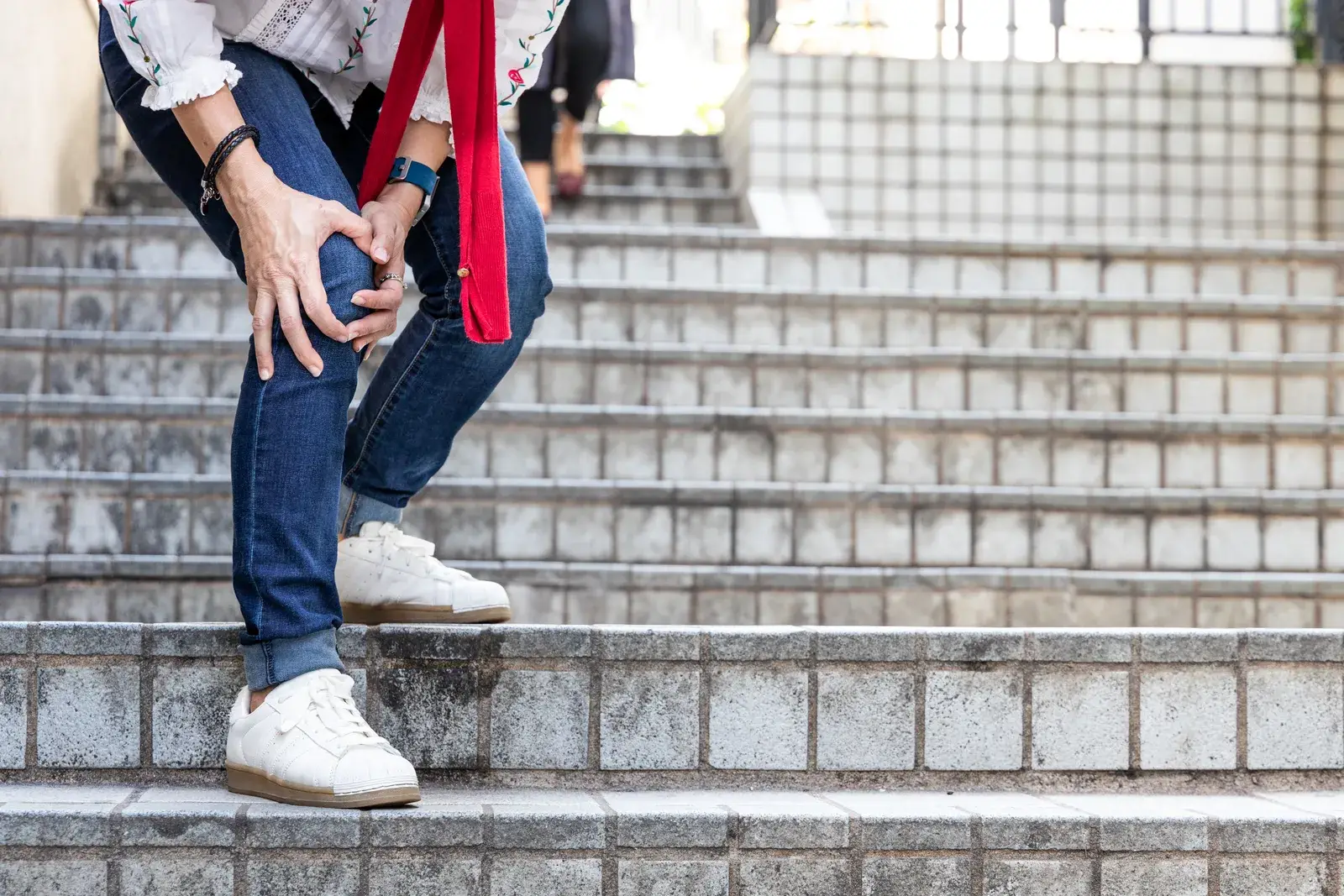
Why does going down the stairs hurt more than going up?
Going down asks the quadriceps to lengthen while it controls your body weight, a braking action called eccentric loading, and that presses the kneecap firmly into its groove on the thigh bone. Going up uses the same muscle but the effort is shared more with the hip and the knee bends under less control demand.
That is why many people can climb the stairs in the Carmel City Center garage without much trouble yet slow down and grab the rail on the way back to the car. If the opposite is true and climbing is the problem, a therapist pays more attention to the hip, the front of the knee tendon and arthritic changes.
What usually causes knee pain on stairs?
In younger, active adults the usual cause is patellofemoral pain, often called runner’s knee; in people over about 50, knee osteoarthritis becomes more likely; and in jumpers and lifters, the patellar tendon just below the kneecap is a common source. A meniscus tear can also hurt on stairs, though it tends to bring catching or swelling as well.
AAOS OrthoInfo describes patellofemoral pain as a dull ache at the front of the knee that flares with stairs, running, jumping, squatting and long periods of sitting with the knees bent, often after a sudden change in how much you train or because the thigh and hip muscles are weak or out of balance. The table below sets the common causes side by side.
| Likely cause | What it tends to feel like | Where to read more |
|---|---|---|
| Patellofemoral pain | Dull ache around or behind the kneecap; worse after sitting through a film | Runner’s knee |
| Knee osteoarthritis | Stiff first thing and after rest; grinding; aches after a busy day | Knee osteoarthritis |
| Patellar tendinopathy | Sharp, pinpoint pain just below the kneecap, worse with jumping | Patellar tendinitis |
| Quadriceps tendinopathy | Pain just above the kneecap when loading a bent knee | Quad tendinitis |
| Meniscus tear | Pain on one side of the joint line, with catching or swelling | Meniscus tear |
Is there a simple stair test I can do at home?
Yes: stand side-on to a mirror on the bottom step and slowly lower the other heel toward the floor, then repeat facing the mirror. Note where the pain sits, how bent the knee is when it starts, and whether your knee drifts inward or your pelvis drops on the standing side.
Pain at the front of the knee that starts part way down, with the knee wandering inward, is the classic patellofemoral picture. Pain only at the end of the movement, or on one side of the joint line, suggests something else is involved. Stop if the test is sharply painful; it is a way to describe your symptom, not a diagnosis. The step-down exercise guide shows the same movement used for training.
What will a physical therapist look at for stair pain?
A therapist watches you step up and down, squat and balance on one leg, then tests quadriceps and hip strength, kneecap movement, hip and ankle mobility and the tendons above and below the kneecap. They also check the knee for swelling and ligament or meniscus signs, which change the plan.
Treatment usually centers on progressive strengthening of the quadriceps and the muscles at the side of the hip, with stair volume adjusted for a few weeks while that strength builds. Wall-supported work such as the Spanish squat is a common early choice because it loads the thigh with less pressure on the kneecap. Taping or a short-term change in footwear is sometimes added.
How can I keep using stairs while my knee settles?
Keep using stairs, but make each one easier: hold the rail, lead with the stronger leg going up and the sore leg going down, and take one step at a time on bad days. Avoiding stairs entirely tends to weaken the very muscle that protects the kneecap.
Elevators are fine for a heavy day, but try to finish each day with a few controlled flights rather than none. If your home in Carmel or Westfield has a basement laundry or a second-floor bedroom, plan trips so you are not doing twenty flights on a flare day. When the stairs still hurt after several weeks, the knee pain physical therapy page explains what a full course of care involves.
When knee pain on stairs needs a physician first
- You cannot put weight on the leg after a fall, twist or blow to the knee.
- The knee is hot, red and swollen, especially with fever.
- The knee locks and will not straighten, or a visible lump or deformity appears.
- The calf is swollen, warm or discolored, which can signal a blood clot.
If you think it is an emergency, call 911.
