Meniscus tear physical therapy in Carmel, Indiana
Many meniscus tears, especially the gradual, degenerative kind common after age 40, can be managed without surgery through a physical therapy program that restores knee motion and builds quadriceps and hip strength. A knee that truly locks or a large traumatic tear in a younger athlete may need a surgeon’s opinion first. In Carmel, the physical therapist you are matched with checks for those signs, then builds a progressive plan around the activities you want back.
At a glance
Common signs of meniscus tear
Also called: Meniscal tear, Torn cartilage in the knee, Degenerative meniscus tear, Bucket-handle tear.
Does a torn meniscus always need surgery?
No. Many meniscus tears do not need surgery, particularly degenerative tears in people over about 40, where exercise therapy is usually the first step and surgery is reserved for knees that keep locking or do not respond. The tear may remain on an MRI, yet the knee can become strong and comfortable again.
The menisci are two C-shaped cartilage cushions between the thigh bone and shin bone that spread load and add stability. A traumatic tear usually happens with a twist on a bent knee, as in pickleball, basketball or soccer. A degenerative tear develops gradually as the tissue ages, sometimes noticed after something as ordinary as squatting in the garden. Meniscus changes on MRI are also common in adults whose knees do not hurt at all.
Surgery is more often discussed for a knee that truly locks and cannot straighten, for some large tears in younger, active people, and for tears that do not respond to a good trial of rehab. The physical therapy vs surgery for a meniscus tear answer walks through that decision.
How does a physical therapist examine a knee with a suspected meniscus tear?
A physical therapist examines the knee by combining your injury story with joint line tenderness, motion testing and specific provocation tests. Pain pressing along the inner or outer joint line and pain or clicking with rotation under load, as in the McMurray or Thessaly tests, point toward the meniscus.
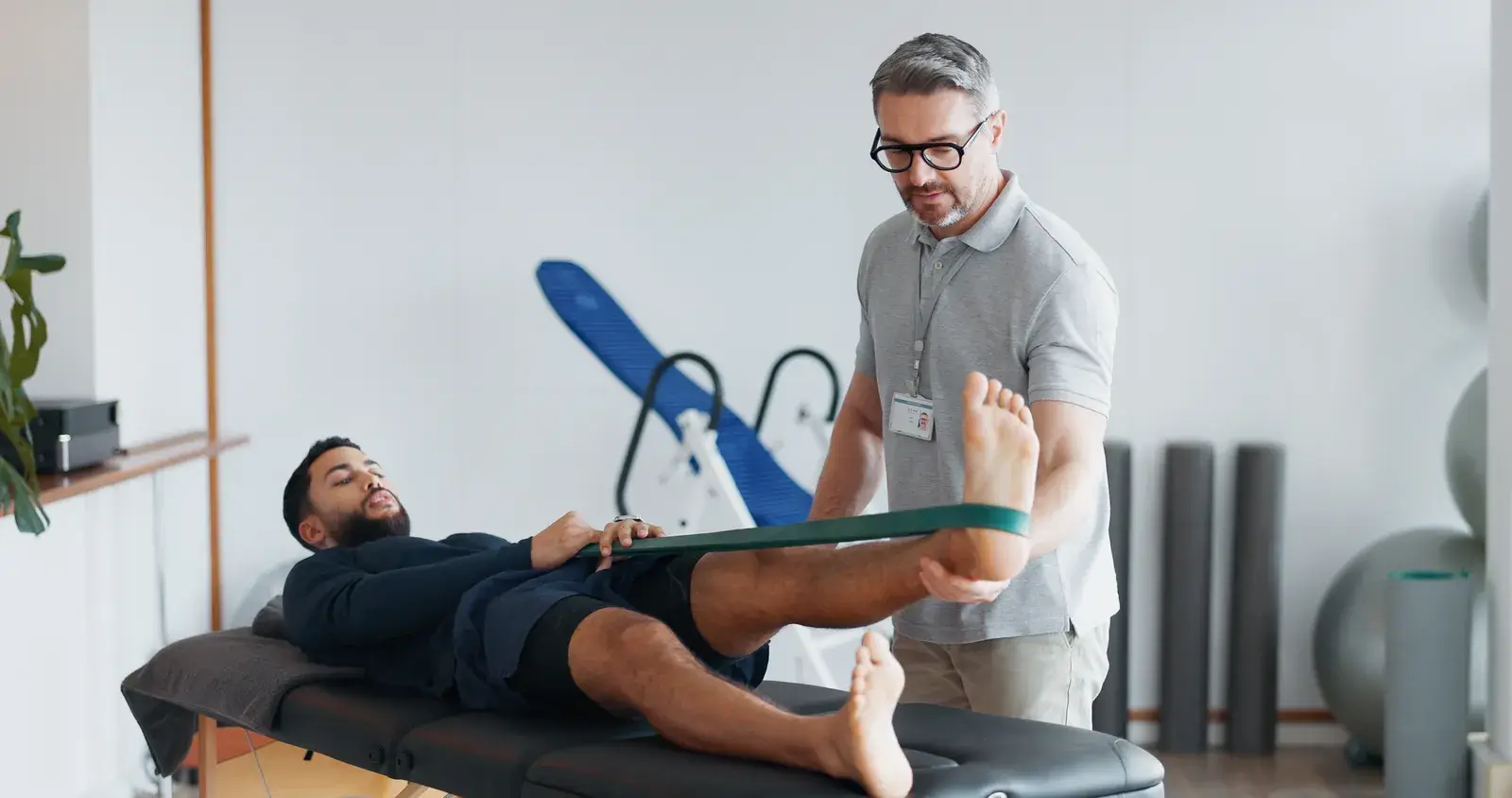
The exam also measures swelling, how far the knee bends and straightens, quadriceps activation and strength, and the stability of the ligaments, because a meniscus tear often travels with an ACL or MCL injury. The MCL sprain physical therapy page covers that frequent companion.
An MRI is not always required. A physician may order one if the knee locks, if a ligament injury is suspected, or if surgery is being considered. The therapist will tell you plainly if anything in the exam needs a physician first.
Expect to be asked exactly how the injury happened, whether you heard or felt a pop, how quickly the knee swelled, and whether it has ever locked. Swelling that develops slowly over a day fits a meniscus tear, while swelling within an hour or two raises suspicion of a ligament injury or bleeding inside the joint.
What does rehab for a meniscus tear include without surgery?
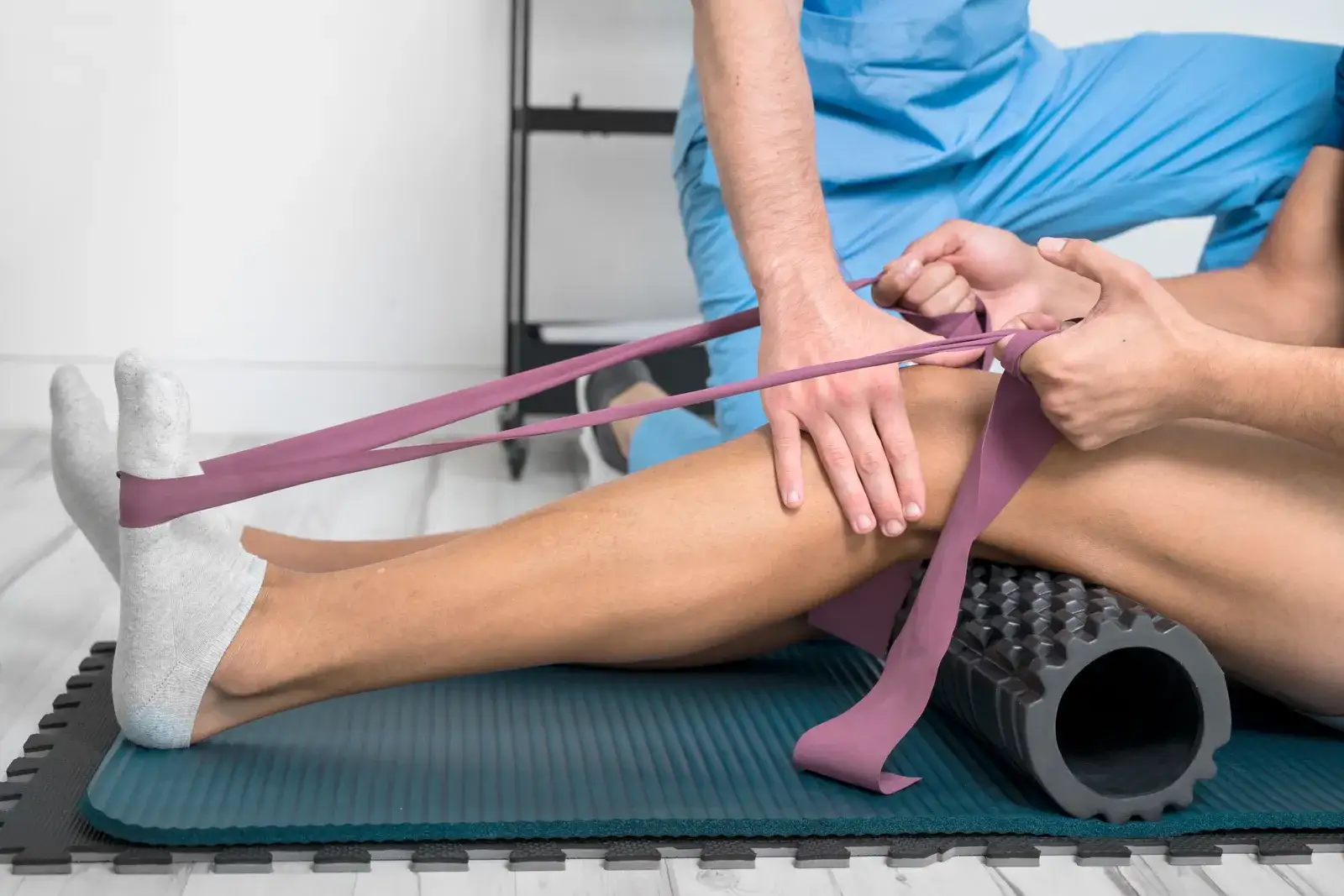
Rehab starts by calming swelling and restoring full knee straightening, then builds strength in the quadriceps, hamstrings and hips, and finishes with the specific movements of your sport or work. Getting the knee fully straight early is a priority, because a bent, swollen knee weakens the quadriceps quickly.
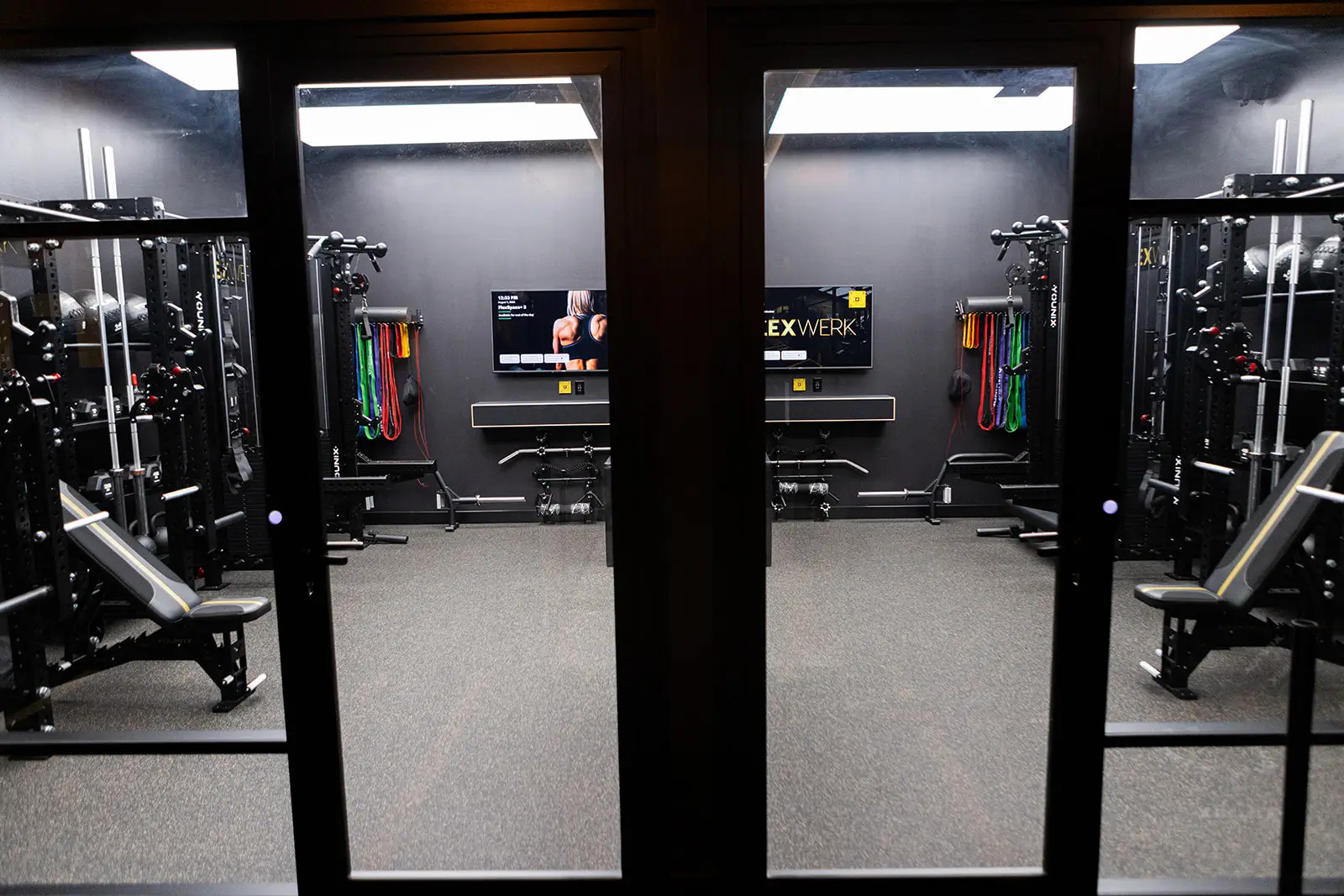
Early exercises often include quad sets, straight leg raises and terminal knee extensions with a band, plus stationary cycling. In a private suite at FlexWerk the work then moves to leg presses, step-ups, split squats and Romanian deadlifts with the rack and dumbbells, increasing range and load as symptoms allow. Deep squats and pivoting are reintroduced later rather than avoided forever.
For athletes and active adults, the final phase adds hopping, cutting and sport drills, while for others it may focus on stairs, kneeling and gardening. The orthopedic physical therapy page outlines how this kind of plan is structured.
- Swelling control and full knee straightening
- Quadriceps activation and straight leg raises
- Progressive leg press, step-up and squat work
- Hip and hamstring strengthening
- Pivoting, hopping and sport-specific drills last
How long does it take a meniscus tear to feel better with exercise therapy?
Many people with a degenerative meniscus tear notice clear improvement within a few months of structured exercise, though some keep improving for several months. Traumatic tears in active people can take longer to tolerate pivoting sports.
Flare-ups along the way, often after a long day on your feet or a deep squat, are common and usually settle within a few days. If the knee is not improving after a good trial, or it starts to lock, your therapist will suggest a review with an orthopedic physician. If you do have surgery, the meniscus surgery rehab page explains what follows, and recovery differs a lot between a trim and a repair.
Strength numbers are a useful marker. When your injured leg’s quadriceps is close to the other side and single-leg tasks feel steady, most people are ready to take on more demanding activity.
Age and the type of tear shape expectations. A 55-year-old with a degenerative tear and some early arthritis is often aiming for comfortable walking, stairs and golf, while a 25-year-old soccer player with a traumatic tear needs a knee that tolerates cutting and landing. The plan, and the honest timeline your therapist gives you, differ accordingly.
What should I do in the first week after twisting my knee?
Protect the knee without immobilizing it: walk as normally as comfort allows, use ice and elevation for swelling, and gently bend and straighten the knee several times a day. Avoid deep squats, kneeling and pivoting until it is assessed.
If the knee locks and will not straighten, swells within a couple of hours, or gives way, see a physician promptly. Otherwise, if pain and swelling persist beyond a week or so, the two-minute questionnaire for knee pain helps the matching team propose a therapist, who can begin under Indiana’s 42-day direct access rule while your insurer’s own requirements are checked.
Pickleball players should hold off on games for now, since the quick pivots at the kitchen line are a common way to aggravate a torn meniscus. Drills in a straight line, cycling and walking can keep you active in the meantime.
Keep a short log of swelling, stiffness and how far you walked each day. Swelling that is shrinking and a knee that straightens a little further each morning are good signs, while a knee that gets bigger and stiffer despite rest needs a physician to look sooner rather than later.
- Ice and elevate for swelling
- Work on fully straightening the knee each day
- Use a cane or crutches briefly if walking is painful
- Avoid deep squats, kneeling and twisting for now
When to see a physician or go to the ER first
Physical therapy is the right start for most meniscus tear. These symptoms are different and need medical attention before, or instead of, a physical therapy visit:
- The knee is locked and cannot straighten
- Large swelling within a few hours of a twist
- Inability to put weight through the leg
- The knee gives way repeatedly
- Calf pain and swelling, or a hot, red knee with fever
If you think it is an emergency, call 911.
Two-minute assessment
Get your meniscus tear looked at
Tell us how your meniscus tear started, how long it has been going on and what it is stopping you from doing. The matching team proposes a therapist in the network who focuses on it, and you hear back, usually within one business day.
- No referral needed to start in Indiana (first 42 days)
- We check which therapists work with your plan before you book
- One-on-one care in a private suite at Carmel City Center
How therapists treat it
Kinds of care used for meniscus tear
- Orthopedic physical therapyExercise-led care for back, neck, shoulder, hip, knee and ankle problems, delivered one-on-one in a private suite.
- Sports physical therapyRehab for active adults that goes past pain relief to the strength, power and movement your sport actually demands.
- Post-surgical rehabilitationProtocol-led rehab after joint replacement, ligament, tendon and spine surgery, in a quiet private room instead of a crowded gym.
Questions
Meniscus tear: what people ask
Information on this website is general education, not medical advice, a diagnosis or a treatment plan. Only a licensed clinician who examines you can advise on your condition. If you may be having a medical emergency, call 911.
Something we did not cover? Ask the matching team or ring (888) 353-9975.
Can a meniscus tear heal on its own?
Tears in the outer edge, which has a blood supply, can heal, while inner tears usually do not, though the knee can still become comfortable and strong. The meniscus healing answer goes deeper.
Is it safe to walk on a torn meniscus?
For most tears, yes, within comfort, and walking helps keep the knee moving and the swelling down. If walking causes locking or giving way, have it checked first, because those signs can mean a piece of the meniscus is catching in the joint.
Should I avoid squatting forever?
Usually not. Deep squats are reintroduced gradually as strength improves, and many people return to them, whether that means squatting in the gym, kneeling to garden or getting down on the floor with grandchildren.
Will I need an MRI before physical therapy?
Not always. Imaging is generally reserved for locking, suspected ligament injury or when surgery is being considered. The MRI before physical therapy answer explains why a scan does not always change the plan.
Can I play pickleball with a meniscus tear?
Many players return once strength and pivoting tolerance are rebuilt. Returning too soon tends to flare the knee, so a staged plan helps.
Google reviews
What guests say about FlexWerk
These are live Google reviews of FlexWerk at Carmel City Center, the private-suite facility where therapists in the network practise.
Related
Conditions that travel together
 Knee painHelp for runner’s knee, meniscus irritation, tendon pain and arthritis flares, built on progressive strength work.
 MCL sprainInner-knee ligament sprains from a blow or awkward twist, rebuilt with brace-aware strength and cutting drills.
 Knee osteoarthritisQuadriceps and hip strengthening, motion work and a walking plan for an arthritic knee, with guidance on braces, flares and surgery questions.
Page reviewed By the Monon Therapy Collective editorial team

Carmel City Center · Carmel, Indiana
Start with a conversation
Tell us what hurts and what you want to get back to. We will tell you honestly whether a therapist in the network is likely a good fit for what you describe, and match you with an independent, licensed therapist who is. Only that therapist can assess what will help.
885 Monon Green Blvd, Suite 120, Carmel, IN 46032 · Monday to Friday 5 AM to 9 PM · Saturday and Sunday 7 AM to 4 PM