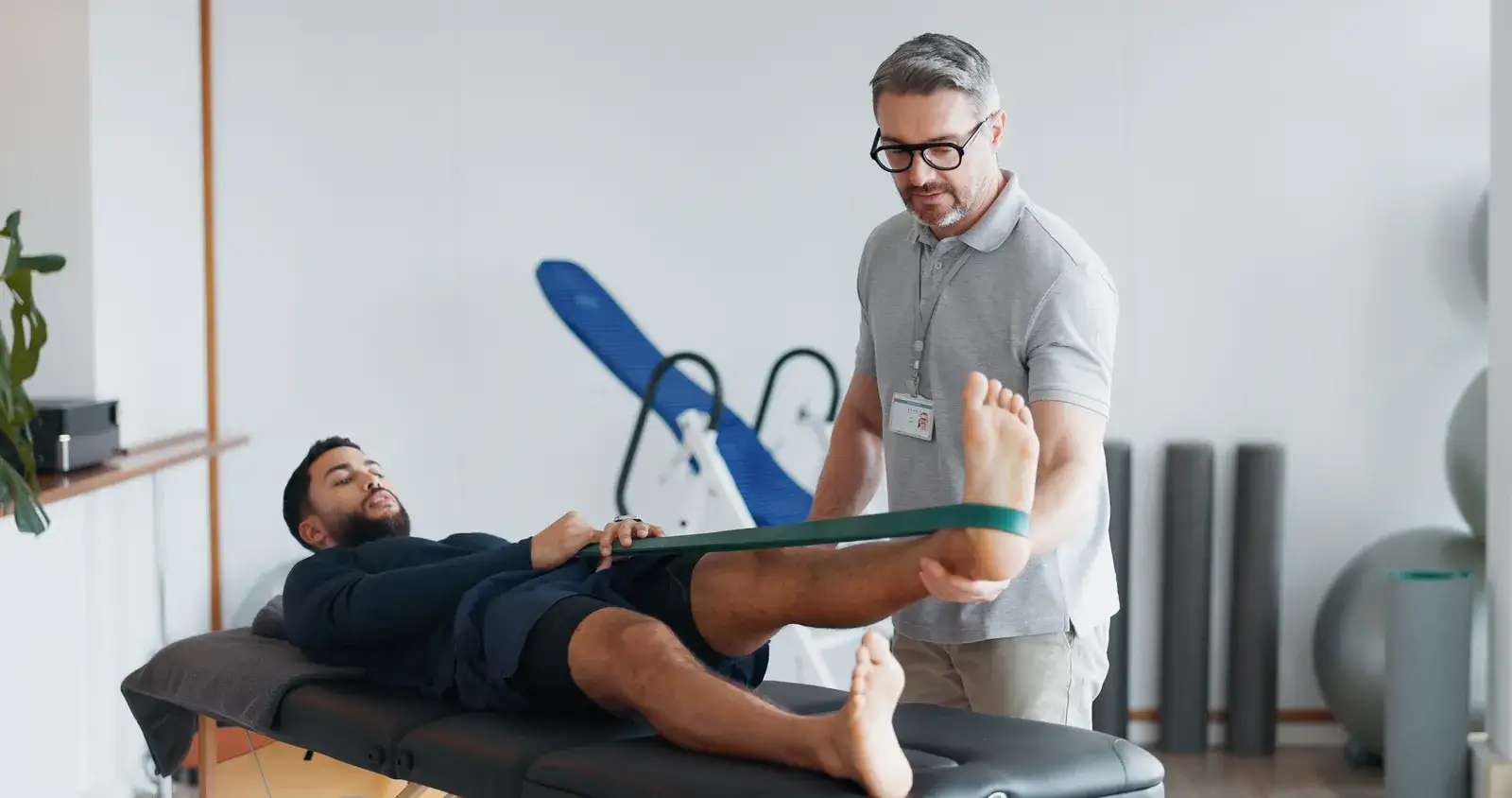
MCL sprain physical therapy in Carmel, Indiana
Most MCL sprains heal without surgery, and physical therapy is the main treatment: restoring knee bend and straightening, rebuilding quadriceps and hip strength, then retraining cutting and pivoting. In Carmel, a licensed physical therapist in the network grades how loose the inner knee is, works alongside any hinged brace your physician has prescribed, and progresses you one-on-one in a private suite at Carmel City Center.
At a glance
Common signs of mcl sprain
Also called: Medial collateral ligament sprain, MCL tear, Tibial collateral ligament injury, Sprained inner knee.
How does an MCL get sprained, and what do the grades 1, 2 and 3 mean?
The medial collateral ligament (MCL) is a broad band on the inside of the knee that resists the joint being pushed into a knock-kneed position. It is usually sprained by a blow to the outside of the knee, such as a tackle in soccer, or by a planted foot with the knee collapsing inward during a cut. Skiers catching an inside edge and pickleball players lunging wide to the side are other familiar mechanisms.
Clinicians grade the injury by how much the ligament has been stretched or torn. The grade guides bracing, crutch use and how quickly you can be progressed, though the exact plan comes from your physician and the therapist who examines you.
Because the MCL sits outside the joint capsule and has a good blood supply, it tends to heal well on its own when protected and gradually loaded. That is different from the ACL, a ligament inside the joint that rarely heals once fully torn. An MCL injury that happens together with an ACL or meniscus tear is managed differently, which is why the first examination matters.
- Grade 1: the ligament is stretched but still holds the knee steady. Tender and sore, little or no looseness.
- Grade 2: a partial tear. The inner knee opens more than the other side when tested, but there is a firm end point.
- Grade 3: a complete tear. The knee gaps open on testing and often feels wobbly side to side; other structures may be involved.
What tests does a physical therapist use to check a sprained MCL?
The key test is the valgus stress test: the therapist supports your thigh, holds the knee bent about 30 degrees, and gently pushes the lower leg outward to feel how far the inner knee opens compared with your other knee. Repeating it with the knee straight tells them whether deeper structures might also be involved. It is uncomfortable but brief.
They will also check the ligaments that commonly get hurt alongside the MCL. A Lachman test looks at the ACL, joint-line pressure and gentle rotation screen the meniscus, and the kneecap is checked because some knee-buckling injuries are actually a kneecap slipping out of place. Swelling, how far the knee bends and straightens, and whether you can do a straight-leg raise without the knee sagging are all recorded.
If anything suggests a complete tear with other damage, an inability to bear weight, or a possible fracture near a growth plate in a teenager, the therapist refers you to a physician for imaging before going further. Pain on the inside of the knee without a clear injury is a different problem; the inner knee pain guide covers the other common causes.
How is an MCL sprain rehabbed when you are wearing a hinged brace?
Rehab works with the brace, not around it. A hinged brace protects the healing ligament from sideways stress while still letting the knee bend and straighten, so early sessions focus on getting full straightening back, regaining bend gradually, and waking up the quadriceps, which switch off quickly after a knee injury. Your physician decides how long the brace stays on and whether it can come off for exercise.
In a private suite at FlexWerk the progression is easy to see. Early work might be quad sets, heel slides, stationary cycling and the terminal knee extension exercise with a band. Next come leg presses, step-ups, split squats and hip strengthening, with the knee tracking straight over the foot. Late-stage work adds lateral shuffles, deceleration, cutting at controlled angles and single-leg hops, because the movement that hurt the ligament is the one it must learn to tolerate again.
Many people want to know whether they should keep using a brace for sport once healed. The research-informed answer is that braces can reduce sideways load but do not replace strength and control. The knee brace question is worth reading before you buy one, and your therapist can talk through your sport.
- Restore full knee straightening first, then work on bend
- Retrain the quadriceps until a straight-leg raise holds without a lag
- Build hip abductor and rotator strength so the knee stops collapsing inward
- Progress from straight-line work to side-to-side and rotational loading
- Finish with sport-specific cutting and hop testing before full return
How long until I can return to sport after an MCL sprain?
Return time follows the grade, and the outline below is typical rather than promised. Grade 1 sprains often allow sport within a few weeks, grade 2 sprains commonly take several weeks, and isolated grade 3 tears managed without surgery often need a couple of months or more, sometimes considerably longer. A combined injury with the ACL changes the whole timeline.
Time is only half of it. Before cleared for cutting sports, most therapists look for a quiet knee with no swelling, full motion, quadriceps strength close to the other side, and hop and agility tests performed without hesitation. Formal return to sport testing puts numbers on that decision.
- Days 1 to 10: calm swelling, restore straightening, quad activation, walking in the brace if prescribed.
- Weeks 2 to 4: full bend returning, stationary bike, leg press, step-ups, balance work.
- Weeks 4 to 8: heavier strength, jogging, lateral movement, early cutting for grade 2 and 3 injuries.
- After that: sport-specific drills and testing; grade 1 sprains often finish much sooner.
What should I do in the first week after spraining my inner knee?
In the first week, protect the knee from sideways stress, keep it moving gently, and get it examined if you cannot walk normally or it feels unstable. Ice and elevation help with swelling, and crutches are reasonable if limping is unavoidable. Avoid twisting, pivoting and deep squats, but do not keep the leg rigidly still for days, because a stiff knee is harder to rehab than a sore one.
Indiana law lets a physical therapist evaluate and treat you without a referral for up to 42 calendar days, so you can start quickly after an inner knee sprain from a weekend game at Grand Park or an icy step in January. If anything in the red flag list applies, see a physician first. Otherwise the two-minute knee questionnaire tells the matching team what happened, and they propose a therapist in the network whose schedule fits.
Players returning to fields and courts may also find the soccer players page useful, since contact and cutting are exactly where MCL injuries happen.
When to see a physician or go to the ER first
Physical therapy is the right start for most mcl sprain. These symptoms are different and need medical attention before, or instead of, a physical therapy visit:
- You cannot take four steps on the leg after the injury
- The knee looks deformed or the kneecap sits out of place
- Swelling balloons within an hour or two, which suggests bleeding inside the joint
- Numbness, coldness or color change in the foot
- The knee gives way repeatedly with simple walking
- Calf swelling and tenderness in the days after, which can signal a blood clot
If you think it is an emergency, call 911.
Two-minute assessment
Get your mcl sprain looked at
Tell us how your mcl sprain started, how long it has been going on and what it is stopping you from doing. The matching team proposes a therapist in the network who focuses on it, and you hear back, usually within one business day.
- No referral needed to start in Indiana (first 42 days)
- We check which therapists work with your plan before you book
- One-on-one care in a private suite at Carmel City Center
How therapists treat it
Kinds of care used for mcl sprain
- Sports physical therapyRehab for active adults that goes past pain relief to the strength, power and movement your sport actually demands.
- Orthopedic physical therapyExercise-led care for back, neck, shoulder, hip, knee and ankle problems, delivered one-on-one in a private suite.
- Return-to-sport testingCriteria-based testing of strength, hopping, movement and confidence, so your return to sport rests on evidence, not the calendar.
Questions
MCL sprain: what people ask
Information on this website is general education, not medical advice, a diagnosis or a treatment plan. Only a licensed clinician who examines you can advise on your condition. If you may be having a medical emergency, call 911.
Something we did not cover? Ask the matching team or ring (888) 353-9975.
Can I walk on a sprained MCL?
Many people with grade 1 and 2 sprains can walk, sometimes with a brace or crutches for a few days. If you cannot bear weight at all, or the knee buckles, get it checked by a physician before starting rehab.
Does an MCL tear need surgery?
Isolated MCL tears, even complete ones, are usually managed without surgery. Surgery is more often considered when the ligament is torn from the bone or other ligaments are torn too, and an orthopedic surgeon makes that call.
Should I see an orthopedic doctor or a physical therapist first?
For a sprain where you can walk and the knee is not deformed, a physical therapist is a reasonable first stop and will refer you if testing suggests a bigger injury. A knee that cannot bear weight belongs with a physician or urgent care first.
Is it normal for an MCL sprain to still ache months later?
Some tenderness at the ligament’s attachment above the knee can linger for a few months, especially after a grade 2 or 3 sprain. Ongoing instability or swelling is not normal and deserves a recheck.
Can I ride a bike with an MCL sprain?
Stationary cycling is often one of the first activities allowed, because it bends the knee without sideways stress. Riding outdoors adds balance and clipping-out twists, so ask your therapist before heading onto the Monon.
Google reviews
What guests say about FlexWerk
These are live Google reviews of FlexWerk at Carmel City Center, the private-suite facility where therapists in the network practise.
Related
Conditions that travel together
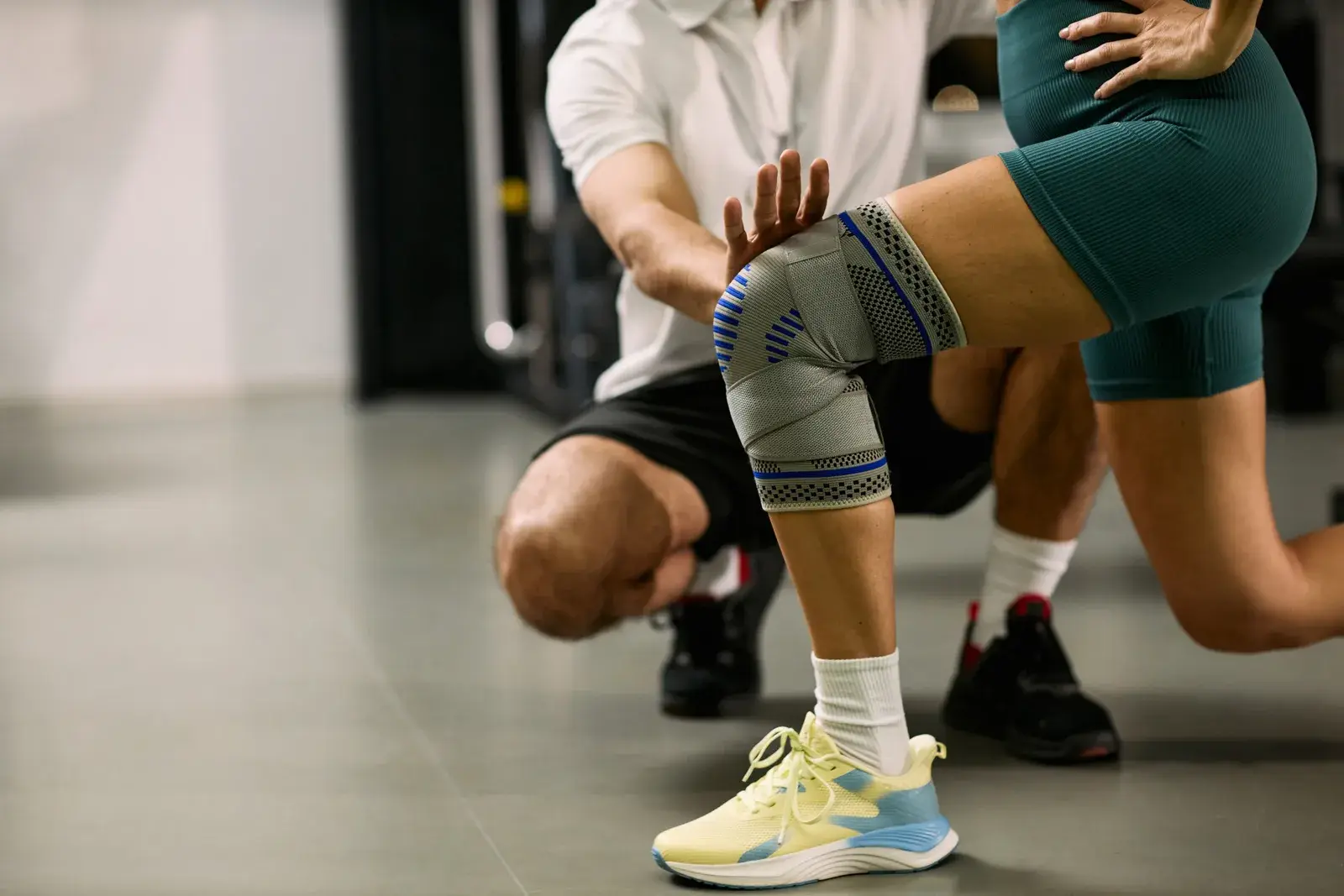 ACL injuryPrehab, post-reconstruction rehab and criteria-based return to sport for ACL injuries, one-on-one in a private suite.
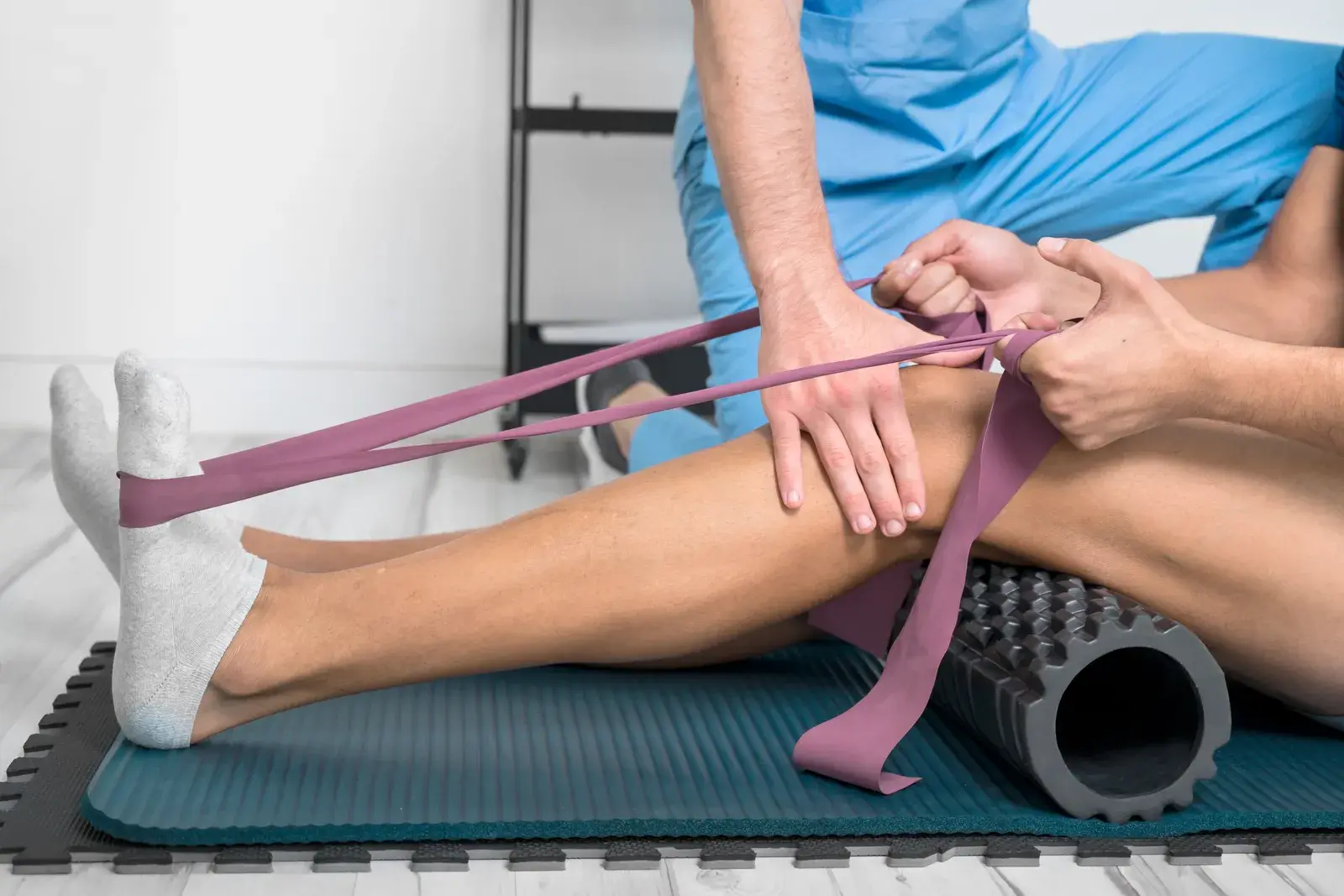 Meniscus tearExercise-based care for a torn meniscus, with clear signs for when locking or instability means a surgeon should look first.
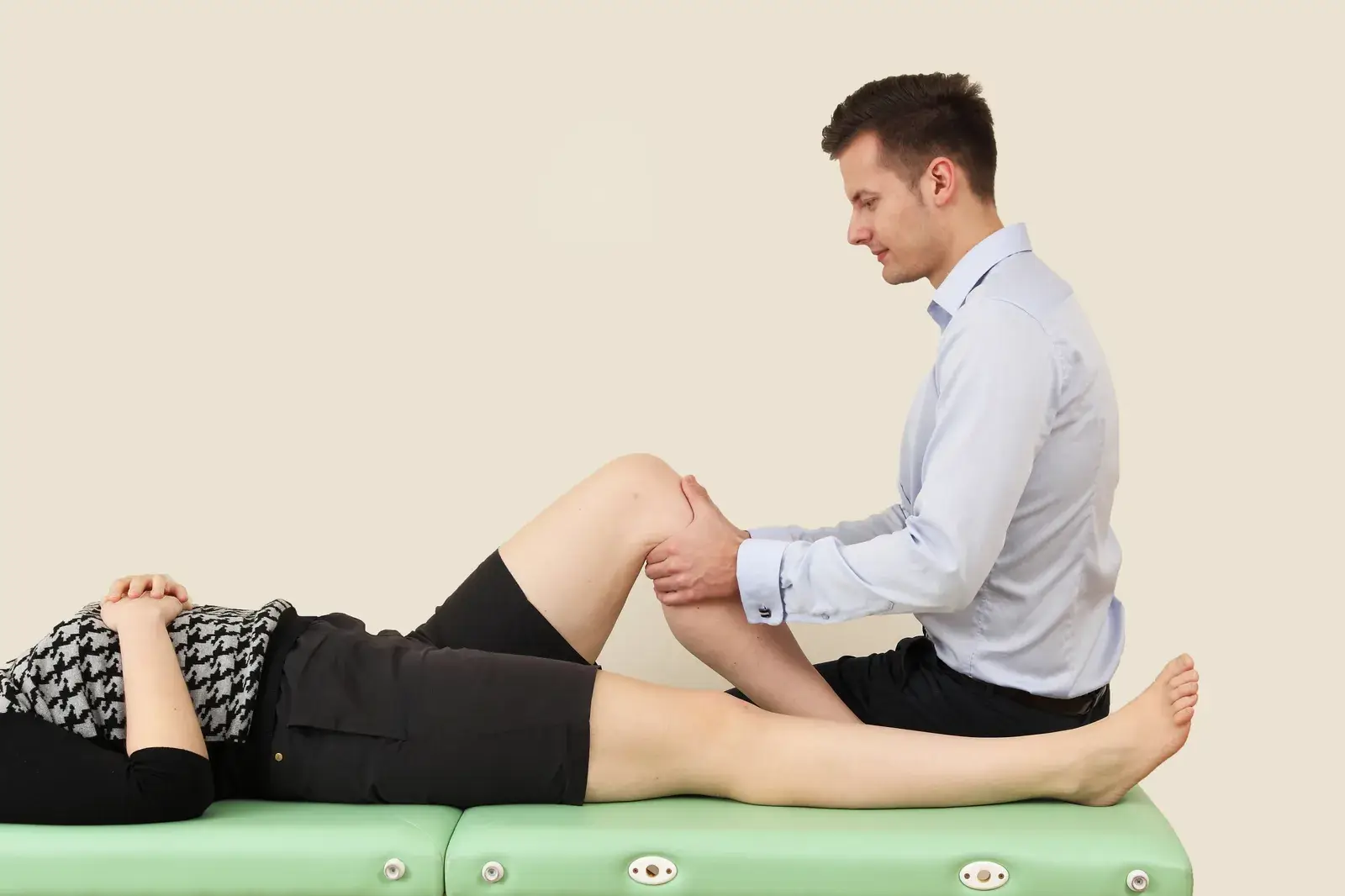 LCL sprainOuter-knee ligament sprains from a blow to the inside of the knee, with careful screening of neighboring structures.
Page reviewed By the Monon Therapy Collective editorial team

Carmel City Center · Carmel, Indiana
Start with a conversation
Tell us what hurts and what you want to get back to. We will tell you honestly whether a therapist in the network is likely a good fit for what you describe, and match you with an independent, licensed therapist who is. Only that therapist can assess what will help.
885 Monon Green Blvd, Suite 120, Carmel, IN 46032 · Monday to Friday 5 AM to 9 PM · Saturday and Sunday 7 AM to 4 PM