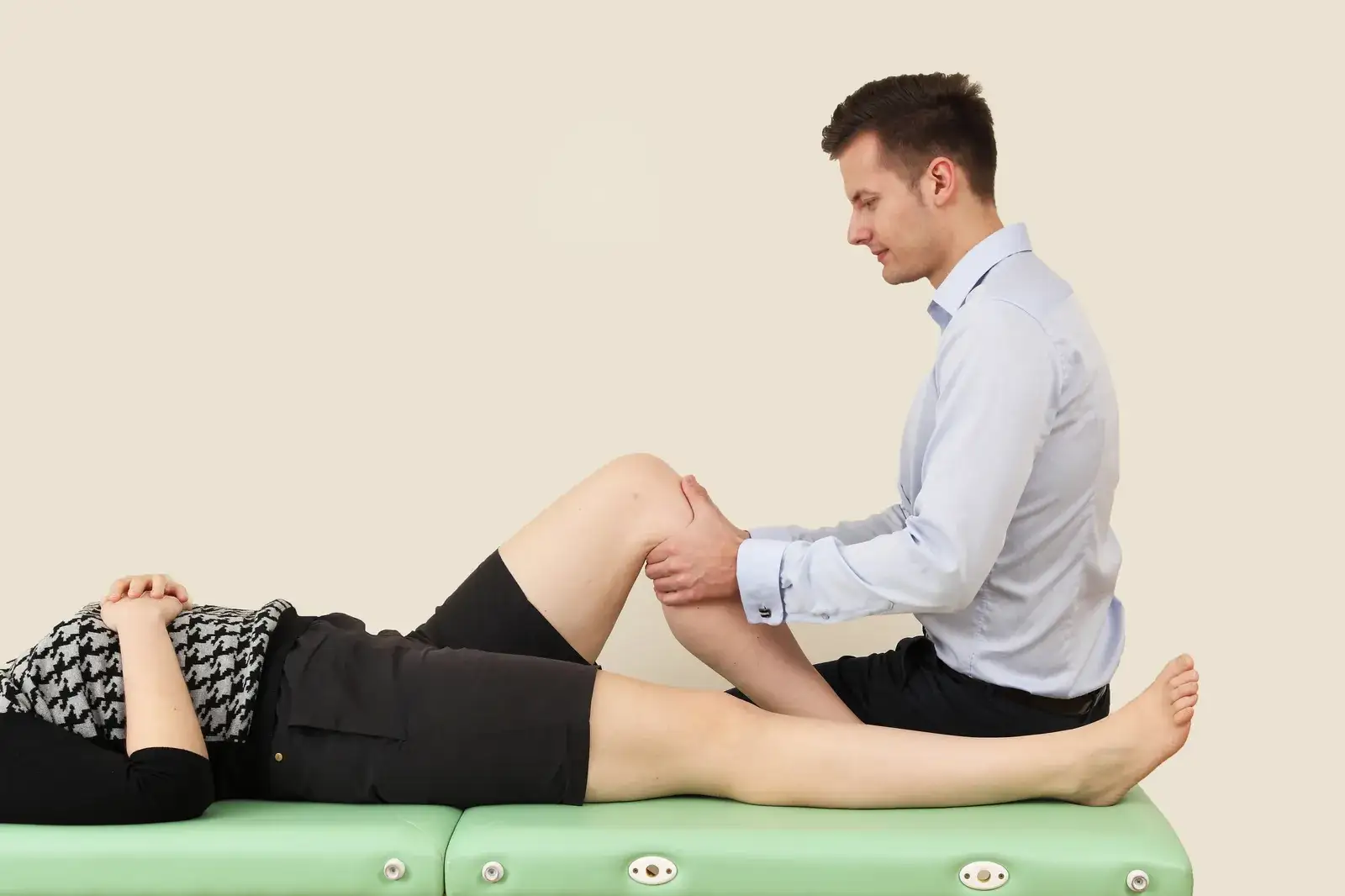
LCL sprain physical therapy in Carmel, Indiana
Grade 1 and 2 LCL sprains, which stretch or partly tear the ligament on the outer side of the knee, are usually treated with physical therapy rather than surgery. Rehab restores motion, then builds quadriceps, hamstring and hip strength and the control needed for side-to-side movement. In Carmel, a licensed physical therapist in the network also screens for injury to the nearby structures at the back and outside of the knee, which change the plan when they are involved.
At a glance
Common signs of lcl sprain
Also called: Lateral collateral ligament sprain, Fibular collateral ligament injury, LCL tear, Outer knee ligament sprain.
Why are LCL sprains less common than MCL sprains, and how do they happen?
The lateral collateral ligament (LCL) is a cord-like band on the outer side of the knee that connects the thigh bone to the top of the fibula, the thin bone beside the shin. It resists the knee being pushed into a bow-legged position. That takes force from the inside of the knee outward, and because the other leg usually shields the inner knee, direct blows that cause it are less frequent than blows that injure the MCL.
LCL sprains happen in contact sports such as football, soccer and wrestling, with a hit to the inner knee, and in non-contact twisting or hyperextension injuries. A fall on ice that forces the knee outward or straight back can do it too, and Carmel winters provide plenty of those opportunities.
AAOS uses the same three grades for both collateral ligaments: stretched (grade 1), partly torn and loose (grade 2), and completely torn or pulled off the bone (grade 3). The difference is that an LCL injury, especially a higher-grade one, is more likely to come with damage to neighboring structures, which is why it is checked carefully.
What is the posterolateral corner, and why does a therapist check it with an LCL sprain?
The posterolateral corner is a group of tendons and ligaments at the back and outside of the knee, including the LCL, the popliteus tendon and the popliteofibular ligament. Together they resist the shin rotating outward and the knee bowing open. Injuries to this corner are easy to miss, and when they are untreated they can leave a knee that feels unstable and puts extra strain on the ACL or PCL.
A therapist checks it with the varus stress test, which gently pushes the knee open from the inside at 0 and 30 degrees, plus rotation tests such as the dial test, which compares how far each foot turns out with the knees bent. They also watch how you walk, looking for the knee snapping outward as you take weight, a pattern called a varus thrust.
Nerve function is checked too. The common peroneal nerve wraps around the top of the fibula, right beside the LCL, and can be stretched in the same injury. Weakness lifting the foot or toes, or numbness on the top of the foot, needs prompt physician attention.
What does rehab look like for a grade 1 or 2 LCL sprain?
Rehab follows a protect-restore-rebuild sequence. AAOS notes that people with LCL injuries may be advised to limit weight bearing for about the first week, often with a hinged brace that blocks the knee from bowing outward. Early work restores full straightening and bend, wakes up the quadriceps, and keeps the hip and ankle moving.
Strength then builds steadily: leg presses, split squats, step-ups, bridges and hamstring work, with special attention to hip abductor and rotator strength. Single-leg balance on stable then unstable surfaces trains the outer knee to react. Lateral movement such as side shuffles, crossover steps and carioca drills is introduced carefully, since side-to-side load is exactly what the ligament resists.
The suites at FlexWerk have a cable system and room to move laterally, so resisted side steps and cable-loaded rotation drills fit into a session. Your therapist progresses only as the outer knee stays quiet the next day.
Footwear and surfaces get a mention too. Shoes with a firm heel counter and a stable base help in the early walking phase, and uneven ground, such as wet grass on a soccer field or a snowy driveway, is reintroduced only once single-leg balance is solid on the injured side. Small details like these keep a healing ligament from being surprised by a sideways jolt.
- Brace and weight-bearing as your physician prescribes
- Full straightening first, then bend, with quad activation
- Hip abductor, glute and hamstring strengthening
- Balance progressions from stable floor to foam pad
- Lateral shuffles, crossover steps and cutting drills late in rehab
How long does an LCL sprain take to heal?
Grade 1 LCL sprains often settle within a few weeks, and grade 2 sprains commonly take several weeks to a couple of months to return to full activity. Complete tears, tears where the ligament has pulled off the bone, and injuries involving the posterolateral corner are often treated surgically and follow a much longer timeline set by the surgeon. These are typical ranges rather than promises.
Return to sport depends on regaining full motion and strength and then passing functional tests, as AAOS describes. Therapists look for no swelling, quad and hamstring strength close to the other side, single-leg hop tests performed with confidence, and cutting at full speed without the knee feeling like it opens up.
- Week 1: brace, limited weight bearing if advised, swelling control, gentle range.
- Weeks 2 to 4: full weight bearing, cycling, leg press, hip strength, balance.
- Weeks 4 to 8: heavier strength, jogging, lateral drills, early cutting for grade 2.
- Surgical cases: the surgeon’s protocol leads, often over several months.
Should I see a surgeon or start therapy after an outer knee sprain?
See a physician first if the knee feels grossly unstable, you cannot bear weight, the knee bows open when you walk, or you notice foot weakness or numbness. Those signs suggest a higher-grade injury or nerve involvement that needs imaging and possibly a surgical opinion, ideally within the first few weeks, when repair options are broader.
For a sprain where you can walk and the knee feels only mildly unsteady, a physical therapist can examine you directly and refer you if testing raises concerns. Indiana allows a therapist to evaluate and treat without a referral for up to 42 calendar days. The knee questionnaire takes two minutes, and the matching team then proposes a therapist in the network.
Pain on the outside of the knee without a clear injury is more often the IT band or a tendon problem. The outer knee pain guide and the IT band syndrome page cover those patterns.
When to see a physician or go to the ER first
Physical therapy is the right start for most lcl sprain. These symptoms are different and need medical attention before, or instead of, a physical therapy visit:
- Numbness on the top of the foot or weakness lifting the foot or toes
- The knee bows outward or feels grossly unstable when you walk
- Inability to bear weight after the injury
- Severe swelling within a few hours of the injury
- A deformed knee or suspected dislocation
- Calf swelling and tenderness in the days that follow
If you think it is an emergency, call 911.
Two-minute assessment
Get your lcl sprain looked at
Tell us how your lcl sprain started, how long it has been going on and what it is stopping you from doing. The matching team proposes a therapist in the network who focuses on it, and you hear back, usually within one business day.
- No referral needed to start in Indiana (first 42 days)
- We check which therapists work with your plan before you book
- One-on-one care in a private suite at Carmel City Center
How therapists treat it
Kinds of care used for lcl sprain
- Sports physical therapyRehab for active adults that goes past pain relief to the strength, power and movement your sport actually demands.
- Orthopedic physical therapyExercise-led care for back, neck, shoulder, hip, knee and ankle problems, delivered one-on-one in a private suite.
- Post-surgical rehabilitationProtocol-led rehab after joint replacement, ligament, tendon and spine surgery, in a quiet private room instead of a crowded gym.
Questions
LCL sprain: what people ask
Information on this website is general education, not medical advice, a diagnosis or a treatment plan. Only a licensed clinician who examines you can advise on your condition. If you may be having a medical emergency, call 911.
Something we did not cover? Ask the matching team or ring (888) 353-9975.
Is an LCL sprain worse than an MCL sprain?
Not necessarily, but higher-grade LCL injuries are more likely to involve nearby structures and are more often treated surgically than MCL injuries. A careful exam sorts that out.
Can I walk on a sprained LCL?
Many people with grade 1 sprains can, and some physicians limit weight bearing for about a week for higher grades. Follow your physician’s advice and use a brace if prescribed.
What sports cause LCL sprains?
Contact sports such as football, soccer, wrestling and hockey, plus sports with sudden direction changes like basketball and tennis.
Why does my foot feel numb after an outer knee injury?
The peroneal nerve runs right beside the LCL and can be stretched in the same injury. Numbness or foot weakness needs a physician promptly.
Do I need an MRI for an LCL sprain?
Mild sprains usually do not. A physician typically orders imaging when a higher-grade tear, posterolateral corner injury or other ligament damage is suspected.
Can I lift weights while my LCL heals?
Usually yes. Upper body, the other leg and core work continue normally, and the injured leg is loaded at a level your therapist sets.
Google reviews
What guests say about FlexWerk
These are live Google reviews of FlexWerk at Carmel City Center, the private-suite facility where therapists in the network practise.
Related
Conditions that travel together
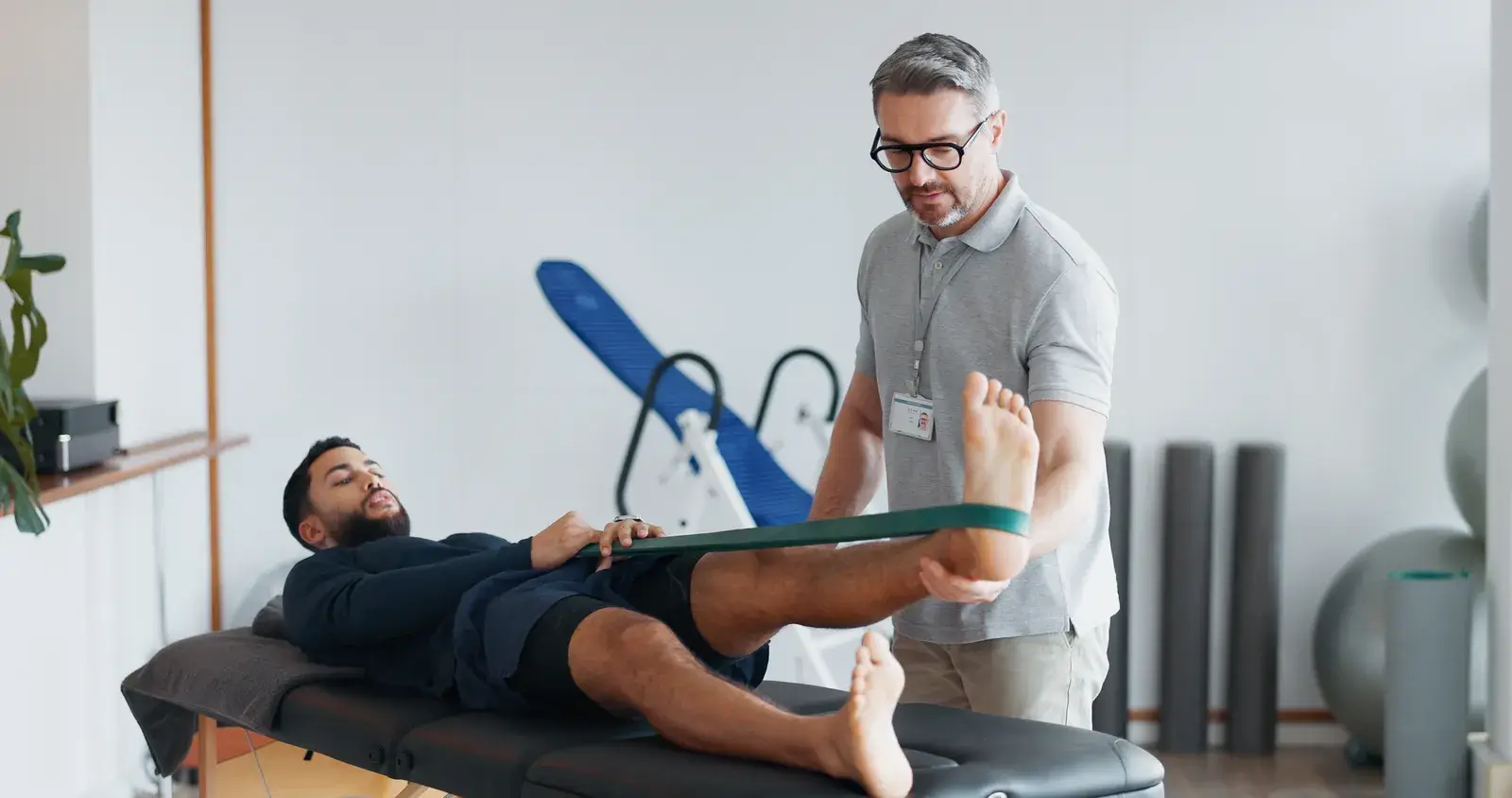 MCL sprainInner-knee ligament sprains from a blow or awkward twist, rebuilt with brace-aware strength and cutting drills.
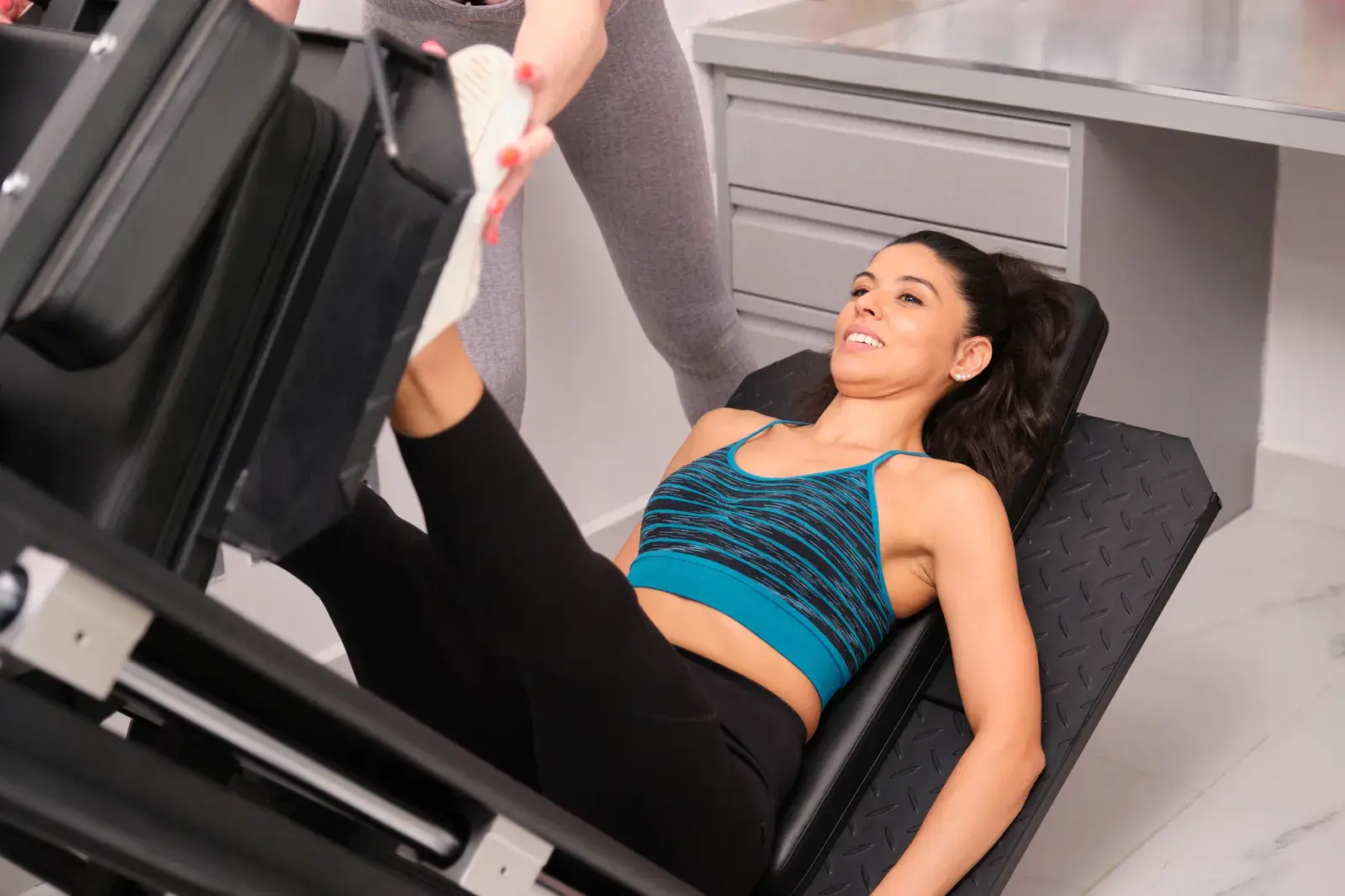 PCL injuryPosterior cruciate ligament tears from dashboard impacts and falls on a bent knee, rehabbed with quad-dominant strength.
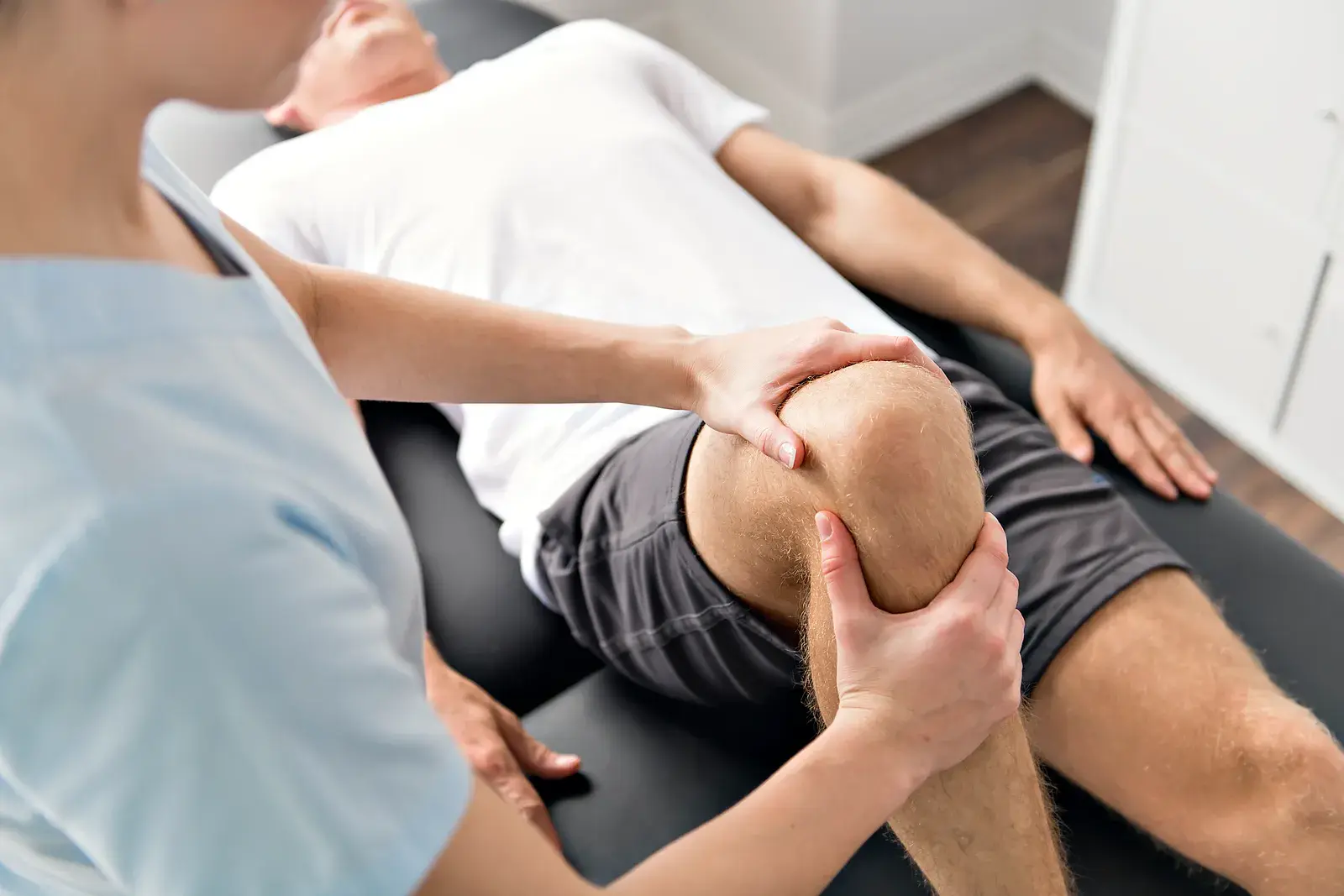 IT band syndromeHip strength, load management and running or cycling adjustments for sharp pain on the outside of the knee that starts at the same point every run.
Page reviewed By the Monon Therapy Collective editorial team

Carmel City Center · Carmel, Indiana
Start with a conversation
Tell us what hurts and what you want to get back to. We will tell you honestly whether a therapist in the network is likely a good fit for what you describe, and match you with an independent, licensed therapist who is. Only that therapist can assess what will help.
885 Monon Green Blvd, Suite 120, Carmel, IN 46032 · Monday to Friday 5 AM to 9 PM · Saturday and Sunday 7 AM to 4 PM