Inner knee pain usually comes from one of four places: the medial collateral ligament (MCL), the inner meniscus, the pes anserine bursa a little below the joint line, or wear in the inner part of the joint from osteoarthritis. How it started is the biggest clue: a sideways blow or twist points to the MCL or meniscus, while a slow build-up with stairs points to the bursa or arthritis. An independent physical therapist near Carmel can pin down the source and plan the strength work.
Last reviewed By the Monon Therapy Collective editorial team
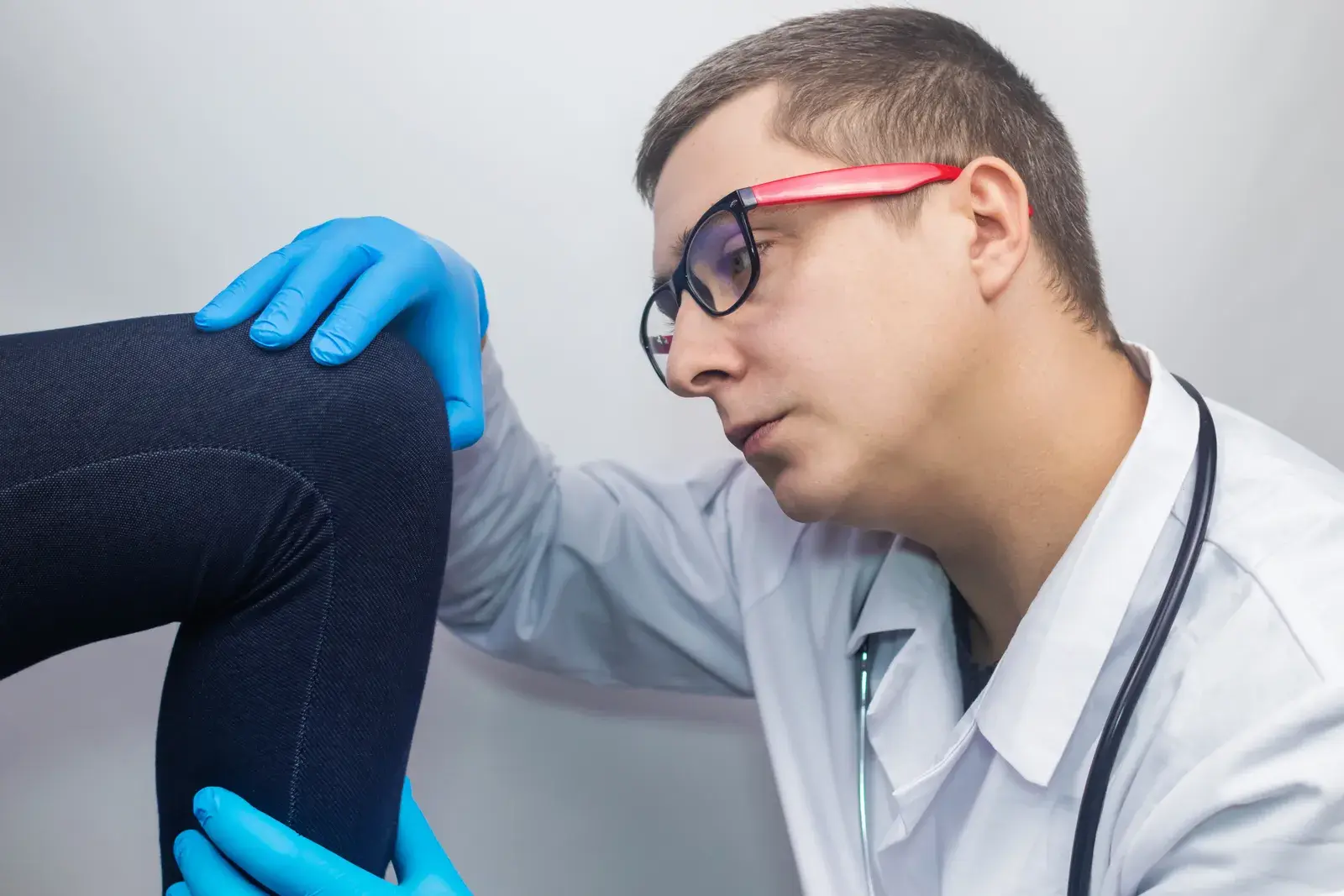
Where exactly on the inside of the knee does it hurt?
Put one finger on the sorest point, because the exact spot is unusually informative on the inner knee. Pain right on the joint line, the soft gap between thigh bone and shin bone, suggests the meniscus or arthritis. Pain a little above or along the line, running up and down, fits the MCL. Pain two to three inches below the joint on the inner shin is where Cleveland Clinic places pes anserine bursitis.
Pain that wraps around the kneecap edge is different again and often belongs to the front of the knee, covered under runner’s knee. Write down where it is before you see anyone; swelling can blur the picture later.
What are the likely causes of pain on the inside of the knee?
The table sets out the common sources with the way each one usually behaves. Overlap is common: an arthritic knee can also have an irritated bursa.
| Possible cause | What it tends to feel like | Read more |
|---|---|---|
| MCL sprain | Pain after the knee was pushed inward, as in a soccer tackle or ski fall; tender along the inner side | MCL sprain |
| Medial meniscus tear | Joint-line pain with twisting or deep squats, swelling, catching | Meniscus tear |
| Pes anserine bursitis | Tender spot below the joint on the inner shin, worse on stairs and at night side-lying | Knee bursitis |
| Knee osteoarthritis | Gradual ache and stiffness, worse after rest and with long walks | Knee osteoarthritis |
| Bone bruise | Deep, dull ache after a hard impact or twist, slow to fade | Bone bruise |
Who tends to get pes anserine bursitis?
Cleveland Clinic says it is most common in women aged 40 to 60, particularly with knee osteoarthritis, diabetes or extra body weight, and that most people heal in about six to eight weeks. The hallmark is pain with activity and stair climbing that eases with rest.
Pickleball players and walkers who add a lot of mileage at once can also irritate the tendons that attach there, the so-called goose-foot group from the inner thigh and hamstring. Strengthening the hip and thigh, rather than resting forever, is the usual direction. The pickleball injury prevention guide covers ramping up court time sensibly.
Which simple checks help before an inner knee assessment?
Use these to describe the problem, not to diagnose it. Skip any that cause sharp pain.
- Can you fully straighten and fully bend the knee compared with the other side?
- Did the knee swell within hours of an injury? Fast swelling suggests bleeding inside the joint.
- Does it catch, lock or give way when you turn?
- Is the sore point on the joint line or a few inches below it?
- Does a slow stair climb hurt more going up or coming down?
How does a physical therapist test the inside of the knee?
A therapist applies gentle inward stress to the knee at two angles to grade the MCL, runs meniscus tests that combine bending and rotation, presses along the joint line and the bursa, and checks strength in the quadriceps and hip. They also watch a squat and a step-down, because a knee that collapses inward loads the inner structures more.
Plans usually include quadriceps and hip strengthening, a graded return to pivoting, and short-term changes such as avoiding deep squats. Most MCL sprains are managed without surgery. If tests suggest a locked meniscus or a complete ligament tear, the therapist refers you to an orthopedic physician. Start with the knee questionnaire.
See a doctor promptly for inner knee pain if
- The knee is locked and will not straighten.
- It swelled up within a few hours of an injury.
- You cannot put weight on the leg or take four steps.
- The knee is hot, red and swollen with a fever.
- The calf below is swollen and tender.
If you think it is an emergency, call 911.
