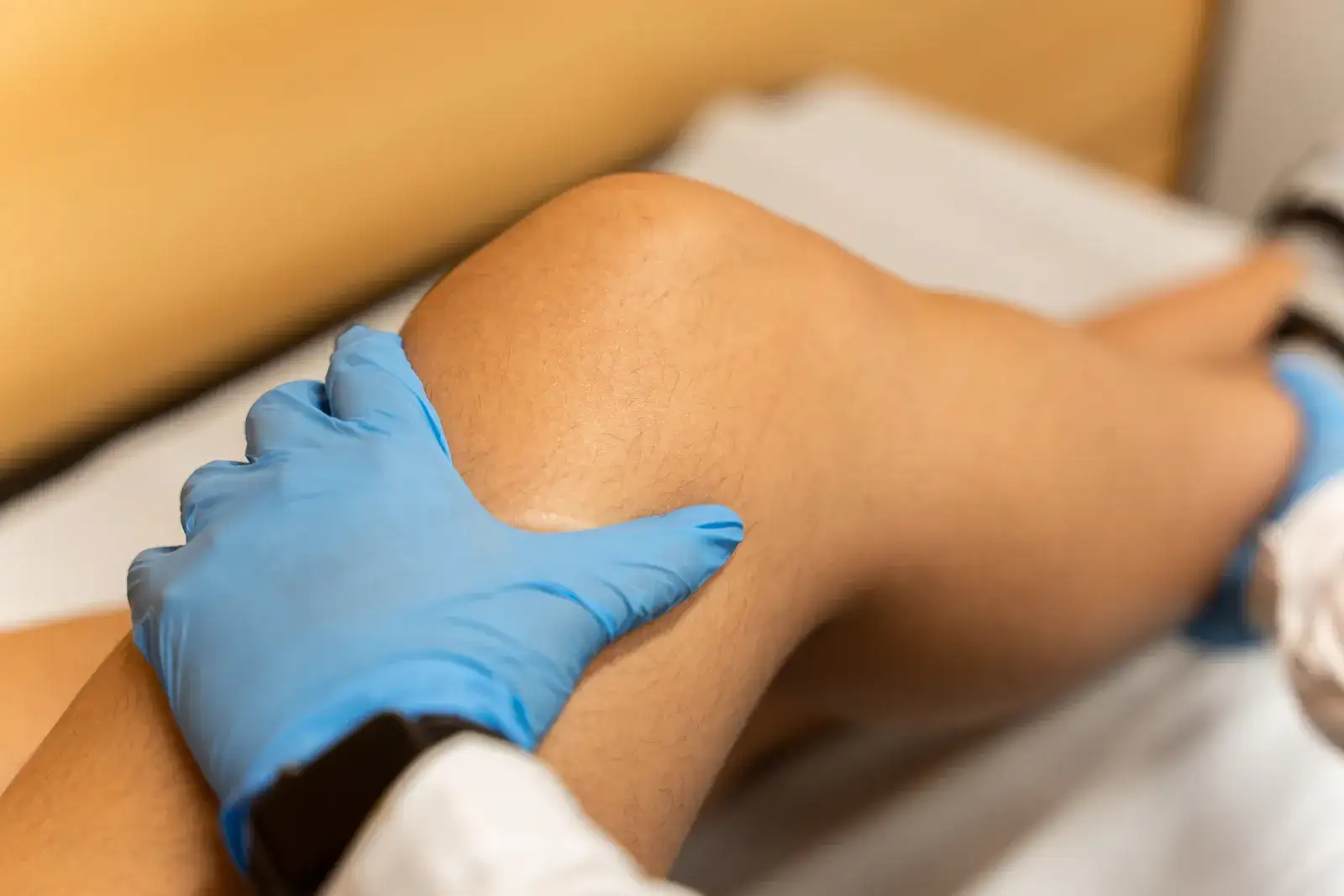
Knee bursitis physical therapy in Carmel, Indiana
Knee bursitis is irritation of one of the small fluid sacs that cushion tendons around the knee, most often the pes anserine bursa on the inner knee just below the joint, or the prepatellar bursa in front of the kneecap. Physical therapy helps by reducing the friction and pressure that keep the bursa irritated and by strengthening the thigh and hip muscles. In Carmel, a licensed physical therapist in the network builds that plan one-on-one at Carmel City Center.
At a glance
Common signs of knee bursitis
Also called: Pes anserine bursitis, Pes anserinus syndrome, Prepatellar bursitis, Housemaid’s knee, Infrapatellar bursitis.
Which bursa is causing my knee pain: pes anserine or prepatellar?
Location usually gives it away. Pes anserine bursitis causes pain on the inner side of the shin a couple of inches below the knee joint line, where three tendons from the thigh (the sartorius, gracilis and semitendinosus) fan out and attach. Their combined insertion looks a little like a goose’s foot, which is what “pes anserine” means. Prepatellar bursitis sits right over the front of the kneecap and often looks like a soft, puffy swelling.
Pes anserine pain is common in people with knee osteoarthritis, in runners who have added hills or distance, and in people with tight hamstrings or knock-kneed alignment. It often appears alongside arthritis rather than as a separate problem, which is why treatment usually addresses both. Prepatellar bursitis is more of a kneeling problem: flooring installers, gardeners, plumbers, wrestlers and parents who spend hours on the floor with small children.
A third site, the infrapatellar bursa just below the kneecap, is irritated by kneeling upright, such as when praying or scrubbing. Pain on the inner knee joint line itself, rather than below it, more often points to the meniscus or arthritis; the inner knee pain guide helps tell those patterns apart.
Could a swollen, hot kneecap be an infected bursa?
Yes, and it needs a physician rather than a physical therapist first. The prepatellar bursa sits just under the skin, so a cut, scrape or insect bite over the kneecap can let bacteria in. An infected bursa is usually red, hot and tender, and may come with fever or feeling generally unwell. It often needs antibiotics and sometimes drainage.
Gout and other inflammatory conditions can also cause a hot, swollen bursa. Your physician may draw fluid with a needle to check for infection or crystals. Once infection and inflammatory disease are excluded, physical therapy becomes useful for the mechanical side of the problem.
Pes anserine bursitis is rarely infected, but other problems can sit in the same area, including a stress fracture of the upper shin in runners and, rarely, a bone lesion. A therapist who finds tenderness on the bone itself, pain at night unrelated to position, or pain that does not change with movement will refer you for imaging.
What does a physical therapist do for pes anserine bursitis?
Treatment reduces the repeated compression and friction over the bursa while making the muscles around the knee and hip stronger, so the tendons that cross the bursa are under less strain. Quadriceps and hip abductor strength often get the most attention, because weak hips let the knee drift inward and increase tension on the inner knee. If knee arthritis is present, the knee osteoarthritis page describes the strength program that usually runs alongside.
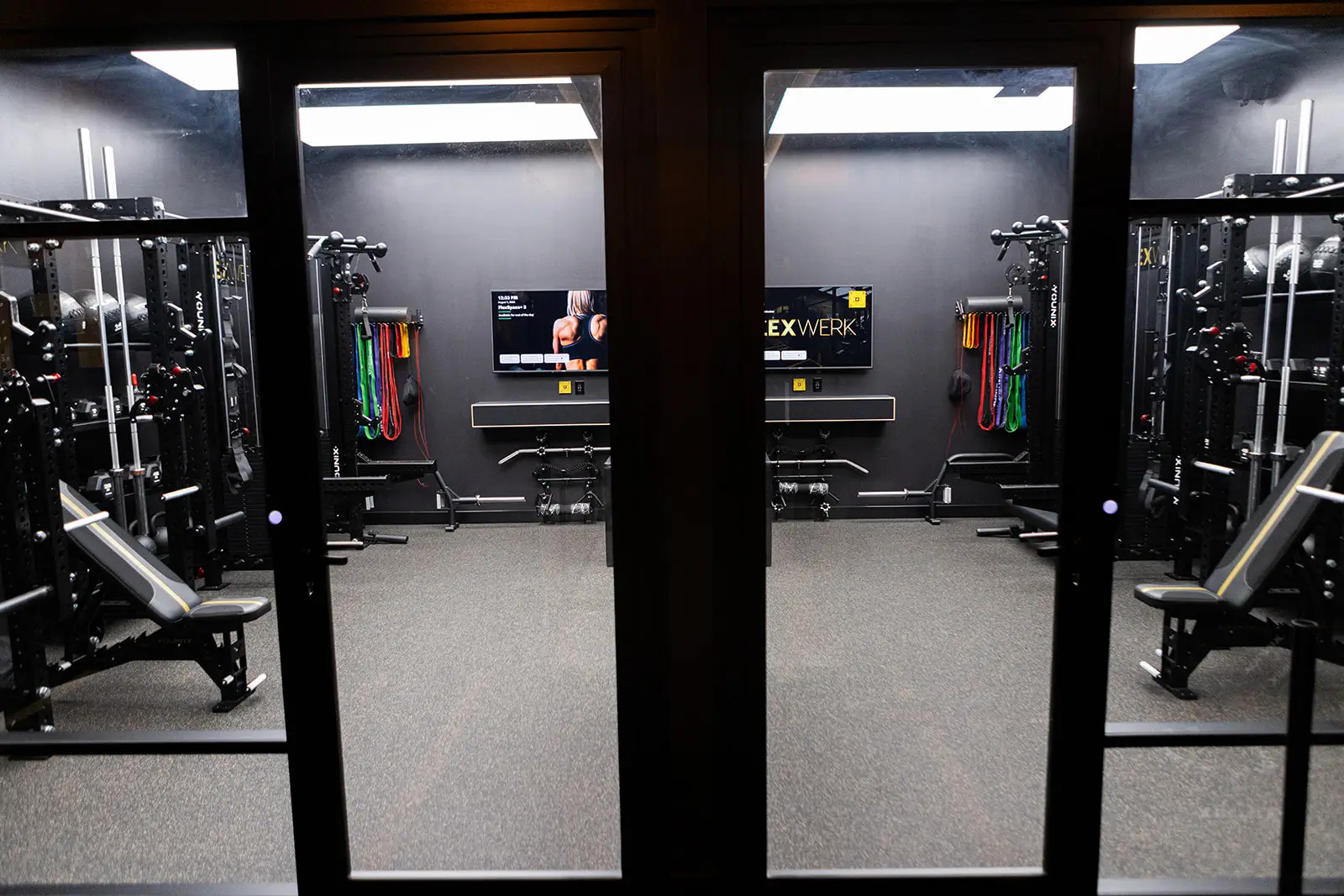
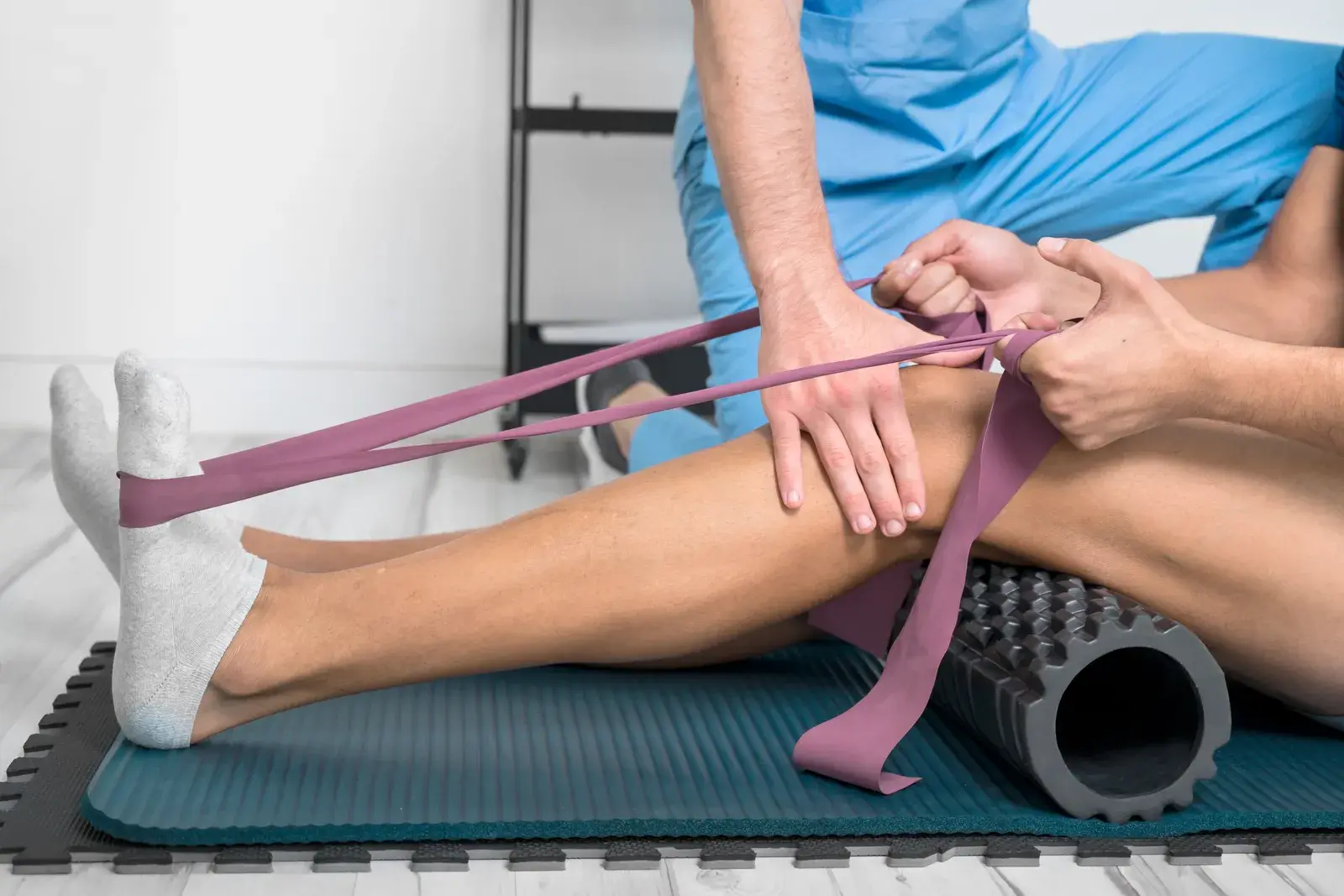
In a private suite at FlexWerk that might mean box squats to a comfortable height, leg presses, step-ups, banded side steps such as the monster walk, single-leg balance, and bridges. Tight hamstrings and adductors may be stretched gently. Your therapist will also review stair technique, running cadence and hill volume if those provoke pain.
For sleep, a pillow between the knees often eases night pain by keeping the knees from pressing together. Ice after activity can help some people. A corticosteroid injection is sometimes offered by a physician for stubborn cases; physical therapy continues either way, since an injection calms symptoms without changing strength or loading.
- Pillow between the knees for side sleeping
- Quad strengthening in a comfortable range
- Hip abductor and rotator work to keep the knee from drifting inward
- Gentle hamstring and adductor mobility
- Pacing stairs, hills and long walks while symptoms settle
How long does knee bursitis take to settle?
Many cases of pes anserine bursitis improve over several weeks of reduced aggravation and consistent strengthening, though pain linked to knee arthritis can fluctuate for longer. Kneeling-related prepatellar bursitis often settles within a few weeks once pressure on the kneecap is removed. These are typical ranges; your therapist will tell you if progress stalls.
Progress is usually measured by function. Stairs that no longer catch the inner knee, a full night’s sleep, a return to your usual walking distance and kneeling without swelling are the markers that matter. Tenderness to firm pressure over the bursa can linger well after daily pain has gone, and on its own it is not a reason to keep resting. Prodding the spot every morning to check on it tends to keep it sore, so most therapists suggest judging progress by what you can do instead.
- Weeks 1 to 2: avoid kneeling and long stair sessions, start gentle strength, use a knee pillow at night.
- Weeks 2 to 6: progress leg press, step-ups and hip strength, adjust running or walking volume.
- After that: heavier loads, hills and longer distances reintroduced, kneeling with padding.
Can I keep kneeling at work or in the garden with knee bursitis?
Reduce it while the bursa is irritated, and protect the knee when you return to it. Thick gel kneepads or a gardening kneeler spread the pressure, and alternating knees or switching to a low stool or half-kneeling position on the other leg breaks up the time. Short, frequent breaks help more than one long rest at the end.
For pes anserine pain, the issue is more often stairs, hills and long walks than kneeling. Spreading activity through the day, using a handrail on stairs for a few weeks, and keeping walks on the flat sections of the Monon Trail let the bursa settle while you stay active.
If the pain has lasted more than a couple of weeks, the knee questionnaire is the quickest way to tell the matching team what is happening. They propose a therapist in the network and the therapist’s office confirms benefits. Indiana allows evaluation without a referral for up to 42 calendar days.
When to see a physician or go to the ER first
Physical therapy is the right start for most knee bursitis. These symptoms are different and need medical attention before, or instead of, a physical therapy visit:
- A red, hot, swollen kneecap, especially with fever or a recent cut over the knee
- Swelling that spreads up or down the leg
- Pain at night that does not change with position
- Tenderness directly on the shin bone in a runner, which can mean a stress fracture
- A knee that locks or gives way
- Calf swelling and warmth, which can signal a blood clot
If you think it is an emergency, call 911.
Two-minute assessment
Get your knee bursitis looked at
Tell us how your knee bursitis started, how long it has been going on and what it is stopping you from doing. The matching team proposes a therapist in the network who focuses on it, and you hear back, usually within one business day.
- No referral needed to start in Indiana (first 42 days)
- We check which therapists work with your plan before you book
- One-on-one care in a private suite at Carmel City Center
How therapists treat it
Kinds of care used for knee bursitis
- Orthopedic physical therapyExercise-led care for back, neck, shoulder, hip, knee and ankle problems, delivered one-on-one in a private suite.
- Running injury physical therapyFor Monon Trail regulars and race trainees: load management, strength and gait observation that keep you running while you heal.
Questions
Knee bursitis: what people ask
Information on this website is general education, not medical advice, a diagnosis or a treatment plan. Only a licensed clinician who examines you can advise on your condition. If you may be having a medical emergency, call 911.
Something we did not cover? Ask the matching team or ring (888) 353-9975.
Is knee bursitis the same as knee arthritis?
No, though they often occur together. Bursitis is irritation of a fluid sac outside the joint; arthritis involves the joint surfaces. Pes anserine bursitis is common in people who also have knee arthritis.
Should I use heat or ice for knee bursitis?
Ice after activity often eases a sore bursa, while some people like heat for stiffness. Use whichever feels better; the heat or ice answer explains both.
Can a cortisone shot fix knee bursitis?
An injection can ease pain for a period, and a physician decides whether it is appropriate. It does not address the strength and loading factors, so rehab still matters.
Does running make pes anserine bursitis worse?
Hills, sudden mileage increases and long runs often aggravate it. Many runners can keep running at a reduced volume while strength work progresses.
Can a physical therapist drain a swollen bursa?
No. Draining fluid with a needle is a medical procedure done by a physician, usually when infection or gout needs to be ruled out or a large swelling is not settling. A therapist works on the pressure and loading that keep the bursa irritated.
Why does my inner knee hurt more at night?
Lying on your side lets the knees press together right over the pes anserine bursa. A pillow between the knees usually helps.
Google reviews
What guests say about FlexWerk
These are live Google reviews of FlexWerk at Carmel City Center, the private-suite facility where therapists in the network practise.
Related
Conditions that travel together
 Knee osteoarthritisQuadriceps and hip strengthening, motion work and a walking plan for an arthritic knee, with guidance on braces, flares and surgery questions.
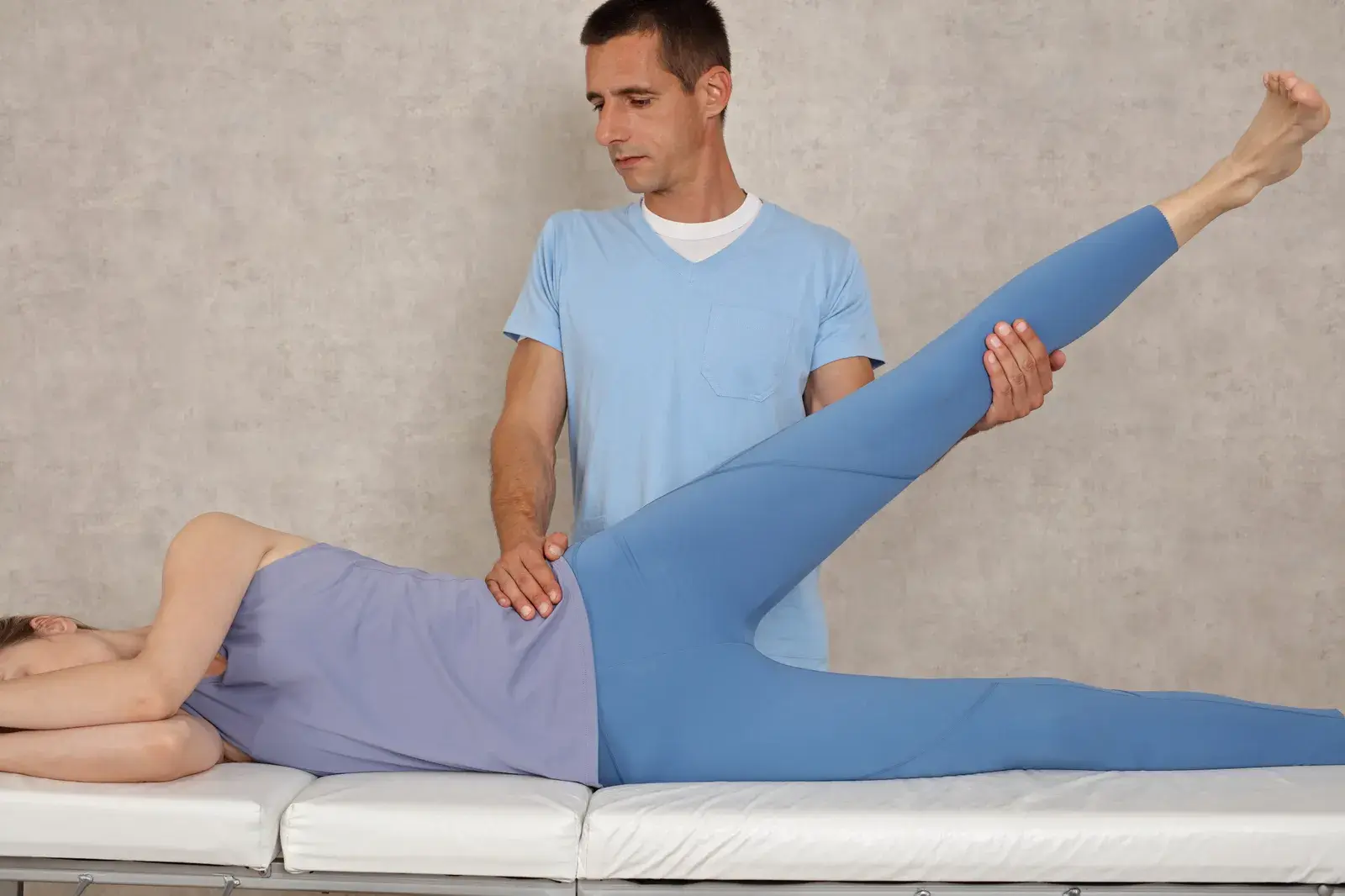 Hip bursitisOuter hip pain treated with tendon-friendly habits and progressive gluteal strengthening.
 Meniscus tearExercise-based care for a torn meniscus, with clear signs for when locking or instability means a surgeon should look first.
Page reviewed By the Monon Therapy Collective editorial team

Carmel City Center · Carmel, Indiana
Start with a conversation
Tell us what hurts and what you want to get back to. We will tell you honestly whether a therapist in the network is likely a good fit for what you describe, and match you with an independent, licensed therapist who is. Only that therapist can assess what will help.
885 Monon Green Blvd, Suite 120, Carmel, IN 46032 · Monday to Friday 5 AM to 9 PM · Saturday and Sunday 7 AM to 4 PM