Rehab after meniscus surgery depends on whether the torn piece was trimmed or stitched. A partial meniscectomy, which removes the torn edge, usually needs about three to six weeks of rehab, while a meniscus repair, which sews the tear so it can heal, typically takes three to six months with weeks of limited weight bearing and bending. Near Carmel, the matching team proposes an independent, Indiana-licensed physical therapist who reads your operative note and works one-on-one with you in a private suite.
Last reviewed By the Monon Therapy Collective editorial team
- Partial meniscectomy
- About 3 to 6 weeks of rehab
- Meniscus repair
- About 3 to 6 months of rehab
- Repair limits
- Often a brace, crutches and a bend limit early on
- First goal for both
- Quadriceps control and a straight knee
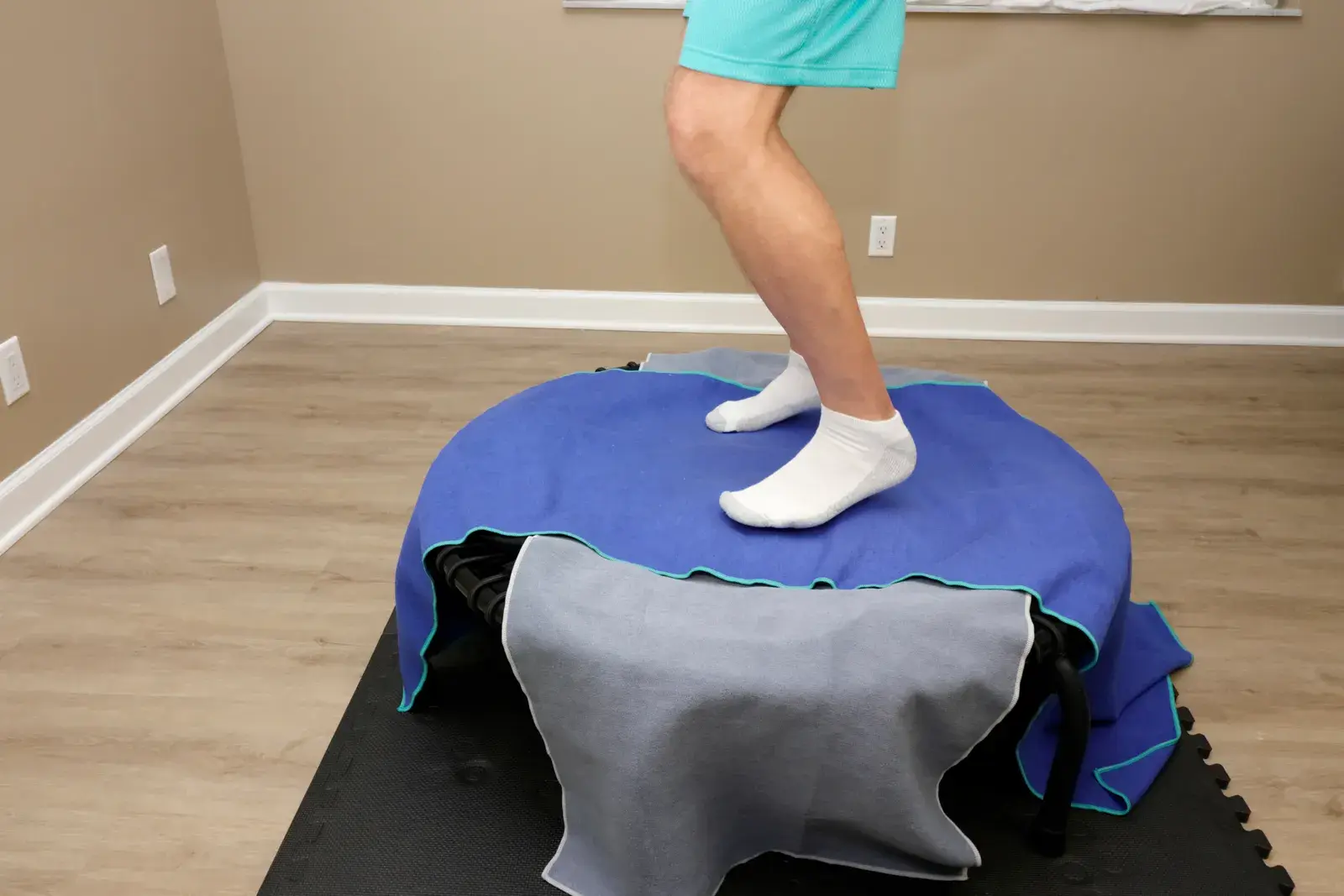
Was my meniscus trimmed or repaired, and how do I find out?
Your operative report says which, and if it is unclear, your surgeon’s office can tell you in one phone call. The words to look for are “partial meniscectomy” (the torn part was removed) and “meniscus repair” or “meniscal root repair” (the tear was stitched to heal).
People are often surprised to learn which they had, because the decision is frequently made during the arthroscopy once the surgeon sees the tear. A repair is more likely in younger knees with tears in the outer, better-supplied part of the meniscus; trimming is more common for degenerative tears. The meniscus tear page explains tear types, and physical therapy vs surgery for a meniscus tear covers the choice before surgery.
How do the meniscectomy and meniscus repair timelines compare?
OrthoInfo gives roughly three to six weeks of rehab for a partial meniscectomy and three to six months for a repair. The table sets them side by side; your surgeon’s protocol, and any other work done at the same operation, can change the details.
| Time after surgery | Partial meniscectomy (trim) | Meniscus repair (stitched) |
|---|---|---|
| Weeks 0 to 2 | Weight as tolerated, swelling down, full straightening, quad sets | Crutches and often a brace, limited weight, bend limited per protocol |
| Weeks 2 to 6 | Normal walking, bike, strength through comfortable range | Protected motion increases; weight bearing progresses as allowed |
| Weeks 6 to 12 | Return to most sport and gym work for many | Off crutches, strength work, deep loaded bending still limited |
| Months 3 to 6 | Ongoing strength if needed | Running, then jumping and pivoting once criteria and the surgeon allow |
Why does a meniscus repair protocol limit deep bending and squatting?
Deep bending under load squeezes and shears the back of the meniscus, exactly where many repairs sit, so protocols often limit loaded knee bend for the first several weeks and delay deep squats for months. A root repair, where the meniscus is reattached to the bone, usually carries the strictest limits.
Your surgeon sets these numbers. Your therapist works out how to strengthen the leg without breaking them, using straight-leg work, squats through a limited arc, hip and calf strengthening, and the bike once the bend allows a full pedal stroke. Squatting deeply to pick something up from the floor is the everyday movement to watch.
Repairs done alongside an ACL reconstruction follow a blend of both protocols, usually the stricter of the two for bending and weight. If your surgeon used an all-inside technique or added a biologic treatment, the protocol may differ again, which is another reason the therapist reads your operative note rather than a generic meniscus handout.
Which exercises come first after meniscus surgery?
Quadriceps activation and a fully straight knee come first after both operations. A rolled towel under the knee, pressing down to tighten the thigh, is the classic starting point, followed by straight-leg raises without the knee bending.
From there the plan diverges. After a trim, most people progress within days to walking normally, cycling, and the terminal knee extension and step-ups. After a repair, those same exercises come in slowly, within the bend and weight limits. In the suites, the rack and cable system make it possible to load the leg precisely through the arc your protocol allows.
Hip and calf strength get attention from day one after either operation, because they can be trained hard without stressing the meniscus at all. Side-lying hip work, calf raises and upper-body sessions keep you training while the knee itself is protected, which helps many active people stay patient through the slower weeks of a repair.
- Quad sets with a towel under the knee
- Straight-leg raises and heel slides within limits
- Stationary bike once bend allows
- Step-ups, split squats and single-leg balance as permitted
What swelling after knee arthroscopy is normal, and what is not?
Some swelling for the first few weeks after a trim, and longer after a repair, is expected, and it usually rises a little after a busy day and falls overnight. Swelling that keeps building, a hot red knee or fever is not normal and needs the surgeon.
Ice, elevation and short, frequent walks usually help more than long rests or one long outing. Persistent swelling tells your therapist to slow down. A puffy knee switches off the quadriceps, which is why reducing it is part of the session rather than an afterthought. The knee swelling after exercise page explains how to read the pattern, and the broader knee arthroscopy rehab guide covers other scope procedures.
Can I keep playing pickleball or running on the Monon after a meniscus repair?
Not soon. After a repair, running and court sports usually wait until at least three to four months, and pivoting sport often longer, because the stitched tissue needs time to heal before it is twisted under load. After a trim, many people return to running and pickleball within weeks, once swelling has settled and strength is back.
Plan the return in steps: walking, then a walk-run on flat ground, then short games before full sessions. If you were hoping to be back for a Carmel Marathon in April or an Indy Mini in May, share that date with your therapist early so the plan is honest about whether it is realistic, and whether a later race makes more sense.
Warning signs after meniscus surgery
- Calf pain, tenderness or swelling, which can mean a blood clot
- Chest pain or breathlessness: call 911
- Fever, or redness and drainage at the small incisions
- The knee locking or catching in a way that stops it straightening
- A sudden increase in swelling and pain after a twist
If you think it is an emergency, call 911.
