It depends mainly on what the surgeon did to the meniscus. AAOS OrthoInfo puts recovery from a partial meniscectomy, where the torn piece is trimmed away, at about 3 to 6 weeks, and rehabilitation after a meniscus repair, where the tear is stitched, at about 3 to 6 months. Ask your surgeon which one you had, because the two follow very different rules for weight bearing, bending and return to sport.
Last reviewed By the Monon Therapy Collective editorial team
Why does a trimmed meniscus recover so much faster than a stitched one?
A trim removes the damaged tissue, so there is nothing left that has to knit back together. A repair sews torn edges so they can heal, and that healing tissue needs protection from twisting and deep bending while it matures. OrthoInfo notes that after a partial meniscectomy many people can bear weight right away and regain full motion soon after surgery.
Surgeons repair a meniscus when the tear pattern and its blood supply give it a fair chance of healing, which is more likely in the outer part of the cartilage and in younger knees. Trimming is more common for degenerative tears. You may not know which you will have until the surgeon sees the tear through the arthroscope, so ask before surgery what each outcome would mean for your plans.
What do the first two weeks after a partial meniscectomy feel like?
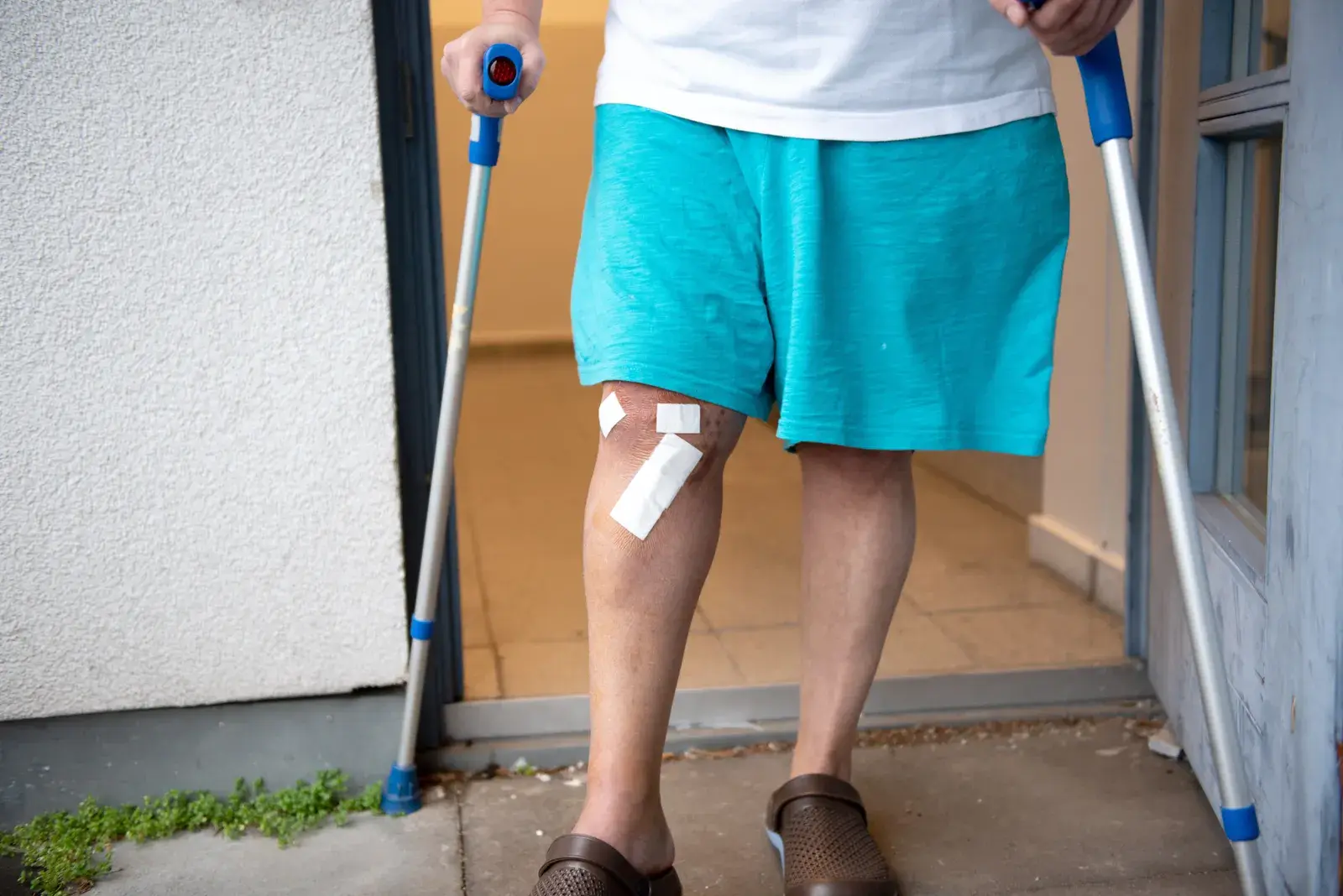
Expect a swollen, stiff knee that improves week by week rather than day by day. Many people walk with crutches or a cane for a few days and drop them as their gait normalizes. The early goals are to get the knee fully straight, bend it comfortably, and wake up the quadriceps, the thigh muscle that tends to switch off after any knee surgery.
Short walks on flat ground, such as an easy stretch of the Monon Trail, are often fine once your surgeon allows them. Stairs come back gradually, leading up with the stronger leg and down with the operated one. Swelling that increases after a busy day is a signal to scale back for a day, not a reason to stop moving.
- Full knee straightening, checked daily
- Quadriceps tightening and straight-leg raises without a sag at the knee
- Bending a little further each day within comfort
- A normal heel-to-toe walking pattern without a limp
Why do meniscus repair protocols limit weight and deep bending?
Because deep squatting and twisting under load put shear forces through the meniscus right where the stitches are. Protocols vary between surgeons and tear types, but many restrict weight bearing, use a brace locked in a set range, or cap knee bending for the first several weeks. Your therapist follows those limits precisely, even when the knee feels ready to do more.
Strength work does not wait for the restrictions to lift. Hip and calf strengthening, straight-leg work and stationary cycling within the allowed range keep the leg from wasting. Deep squats, lunges, jumping and pivoting come later, usually in the second half of the 3 to 6 month window, once the surgeon is satisfied and your strength tests support it.
When can you squat, run or play pivoting sports again?
After a simple trim, light jogging is often discussed within the 3 to 6 week recovery window once swelling has settled and the knee straightens fully, and pivoting sports follow once strength and hop tests look even. After a repair, running usually waits until the middle of the recovery window and cutting sports until near its end. Timelines are typical ranges, not promises, and swelling after each step is the guide.
Objective testing helps decide when you are ready. A therapist compares single-leg strength and hop distance between legs and watches how the knee handles quick changes of direction. If you play pickleball or youth soccer at Grand Park, the test should look like your sport. Return-to-sport testing explains what those checks measure.
Is it normal for the knee to swell again months after meniscus surgery?
Mild swelling after a jump in activity is common in the first few months and usually settles within a day or two. It tells you the knee was asked to do more than it was ready for. Back off to the previous level, then build again more gradually.
Swelling that appears with locking, catching or the knee giving way deserves a call to your surgeon, because it can mean a problem with the repaired or remaining meniscus. If you never had surgery and are weighing the options, read whether a meniscus tear can heal without surgery and the meniscus tear physical therapy page.
What slows recovery after meniscus surgery, and what can you control?
The biggest brakes on recovery are a knee that never fully straightens, a quadriceps that stays weak, and swelling that keeps getting stirred up by doing too much too soon. All three are within reach of daily effort. Arthritis elsewhere in the knee, which is common when the tear was degenerative, can also make the trim recovery feel slower than friends describe.
What you control is consistency. Short daily exercise sessions beat one long session a week, and walking volume should climb in steps rather than jumps. If your job keeps you on a ladder or kneeling, tell your therapist early so the plan builds toward those positions. The knee arthroscopy rehab page lists the milestones many people track, and the matching team can propose a therapist in the network through the short assessment.
Related questions
How long will I need crutches after meniscus surgery?
After a trim, often only a few days. After a repair, your surgeon may limit weight on the leg for several weeks, so crutches can be needed considerably longer.
When can I drive after knee arthroscopy for a meniscus tear?
You should not drive while taking opioid pain medication or while you cannot brake hard and fast. For the right knee, that usually means waiting longer than for the left; your surgeon gives the final answer.
Can I ride a stationary bike after meniscus surgery?
Often yes, with the seat set high and resistance low, once you can bend the knee far enough to pedal. After a repair, check the bending limit in your protocol first.
Do I need formal physical therapy after a partial meniscectomy?
Many people benefit from a short course to restore full straightening, quadriceps strength and normal walking. People with a repair almost always need a supervised program because the restrictions change at set points.
Keep reading
- Can a meniscus tear heal without surgery?
- Physical therapy vs surgery for a meniscus tear
- How soon after surgery should I start physical therapy?
- Rehab after meniscus surgery in Carmel
- Meniscus tear physical therapy
- Knee arthroscopy rehab
This page is general education, not medical advice. A physical therapist can only advise on your situation after an examination.
