Patellar tendinitis physical therapy in Carmel, Indiana
Patellar tendinitis, more accurately called patellar tendinopathy or jumper’s knee, is pain in the tendon just below the kneecap that flares with jumping, landing and heavy squats. Physical therapy built on staged tendon loading, from isometric holds to heavy slow resistance to jumping again, is the main treatment and commonly takes several months. In Carmel, the physical therapist you are matched with sets that progression and helps you keep as much of your sport as possible along the way.
At a glance
Common signs of patellar tendinitis
Also called: Patellar tendinopathy, Jumper’s knee, Patellar tendonitis, Infrapatellar tendon pain.
Why does the spot just below my kneecap hurt after volleyball or basketball?
The patellar tendon connects the kneecap to the shin and absorbs large forces with every jump and landing. When jumping volume rises faster than the tendon can adapt, its structure and sensitivity change, producing a pinpoint pain just below the kneecap. It is a load-related tendon problem rather than a classic inflammation, which is why tendinopathy is now the preferred term.
It is especially common in volleyball, basketball and track jumping events, which are all popular in central Indiana from school gyms to club tournaments, and it also appears in runners, lifters doing heavy squats, and people who suddenly add plyometrics. Season starts and tournament weekends with many games packed together are common flashpoints.
Teenagers with pain at the bump on the shin below the tendon may instead have Osgood-Schlatter disease, covered on the Osgood-Schlatter disease physical therapy page. Pain at the top of the kneecap points toward the quad tendinitis page.
How is jumper’s knee assessed, and why does a decline squat matter?
A therapist assesses it by finding the exact tender spot at the lower edge of the kneecap and loading the tendon in increasing amounts to see how it responds. A single-leg decline squat on a slanted board, which places extra load on the patellar tendon, is a common test and is often scored and repeated throughout rehab to track progress.
The exam also covers quadriceps and hip strength, ankle mobility, landing mechanics and jumping history. Stiff ankles and a landing style that keeps the knee doing most of the work can increase tendon load, so the therapist looks at the whole leg. A questionnaire designed for patellar tendinopathy, the VISA-P, may be used to measure symptoms and function.
Imaging is not required to start rehab. An ultrasound or MRI may be ordered by a physician if a tear is suspected or the diagnosis is unclear.
Be ready to describe a typical week of training: how many practices and games, how much jumping, what you do in the weight room and when the pain began relative to any change. Those details let the therapist judge how much load the tendon is currently handling and where to start.
What does a staged tendon loading program for the patellar tendon look like?
A staged program moves through four broad steps: isometric holds to calm pain, slow heavy strengthening to rebuild capacity, faster loading to restore spring, and finally sport-specific jumping and landing. Each step depends on how the tendon responds over 24 hours rather than on a fixed date.
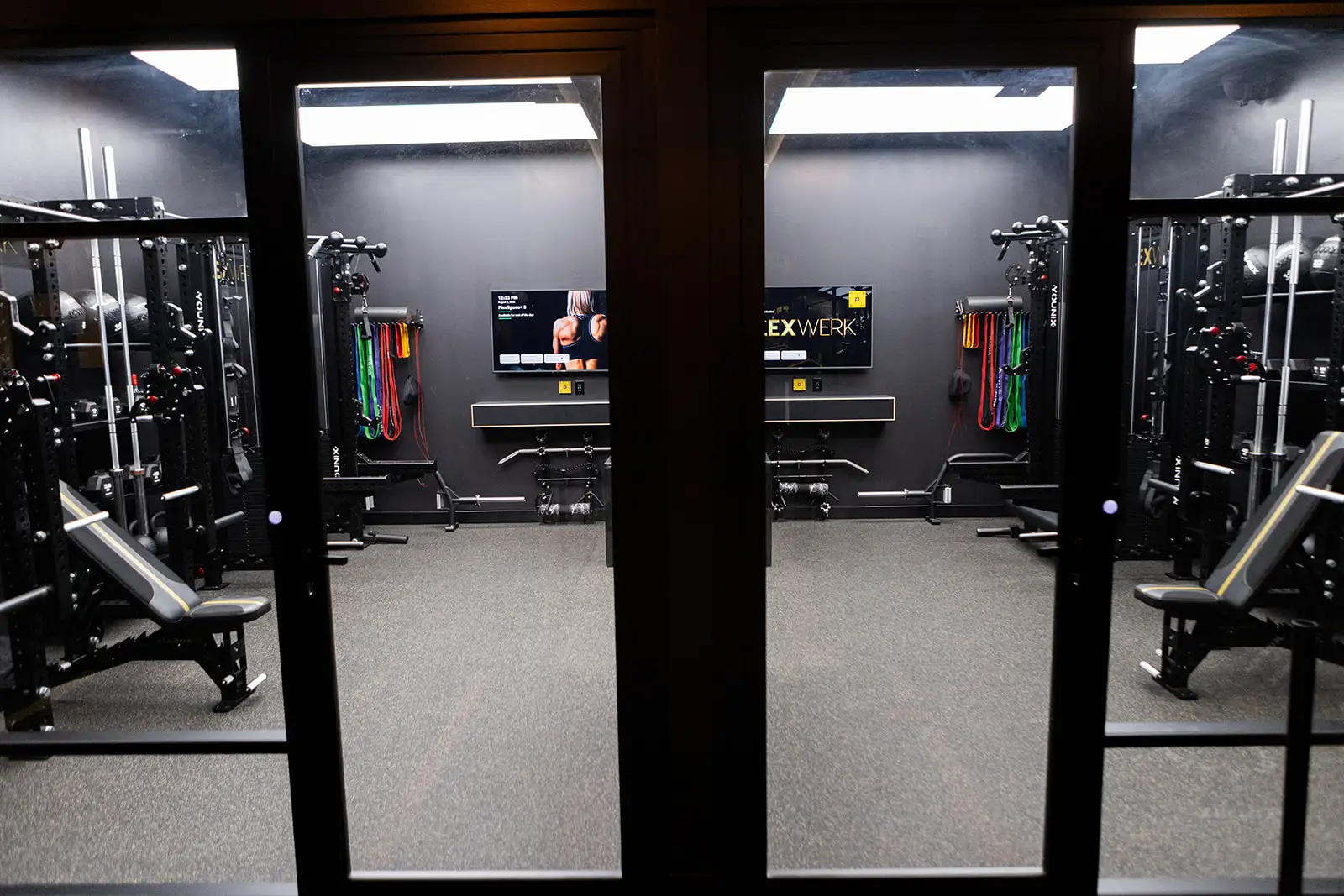
Early isometrics may be wall sits or Spanish squats, held for a sustained count that your therapist sets. The heavy slow resistance phase in a private suite at FlexWerk typically uses leg presses, barbell or dumbbell squats, split squats and decline-board squats, moved slowly, a few times a week. Plyometric work on a box, hops and finally sport drills follow once heavy loading is comfortable.
Training can often continue in a reduced form. A volleyball player may skip jump-heavy drills while keeping skills work, and a runner may keep easy mileage. Your therapist will help you plan around game days and tournaments.
Landing technique is trained in the later stages: landing softly with the hips and ankles sharing the work, rather than catching the body on a stiff knee. Video on the wall screen in the suite can help you see the difference between a landing that loads the tendon heavily and one that spreads the force.
- Isometric holds for pain relief
- Slow, heavy squats and leg presses
- Decline-board single-leg squats
- Box jumps, hops and landing drills
- Gradual return to full jumping volume
Why does patellar tendinopathy usually take months rather than weeks?
Tendons adapt slowly, and most loading programs for patellar tendinopathy run for several months before full jumping. Long-standing cases in athletes who have kept competing through pain can take considerably longer.
Pain often eases well before the tendon has fully rebuilt its capacity, which is why stopping strength work when the knee feels better is a common cause of relapse. A physician may discuss injections or shockwave therapy for stubborn cases, which are generally used alongside loading rather than instead of it, and the shockwave therapy page explains that option in general terms.
Keeping a weekly decline squat score and a simple jump test gives you and your therapist an objective way to tell whether the tendon is moving in the right direction.
Season timing matters. An athlete diagnosed in the middle of a high school or club season often aims to manage symptoms until the season ends, then uses the off-season for the heavy loading block. Planning that with your therapist is more realistic than trying to fix the tendon completely between tournaments.
Can I keep playing with jumper’s knee while it improves?
Often yes, with reduced jumping volume and pain kept mild, generally around 3 out of 10 or below, and settling by the next day. Complete rest tends to make the tendon weaker and is rarely needed.
Count jumps where you can, skip extra plyometrics and back-to-back hard days, and keep a strength session in the week. If the pain has lasted more than a few weeks or keeps flaring during the season, the two-minute questionnaire lets the matching team suggest a therapist who works with jumping athletes; the physical therapy for volleyball players and basketball players pages cover sport-specific issues.
Watch for the weekly pattern. If the knee is worst the day after games and better by midweek, the tendon is responding to load spikes, and spacing hard days further apart is often the quickest fix while the strength work catches up.
- Reduce jumping volume and avoid extra plyometrics
- Keep pain mild and gone by the next morning
- Do isometric holds before practice if they ease pain
- Keep strength training in your weekly schedule
When to see a physician or go to the ER first
Physical therapy is the right start for most patellar tendinitis. These symptoms are different and need medical attention before, or instead of, a physical therapy visit:
- A pop below the kneecap with inability to straighten the leg
- The kneecap sits noticeably higher than on the other side after an injury
- Rapid swelling of the knee after a landing
- A hot, red, swollen knee with fever
- Pain in a growing child at the shin bump that limits walking
- Night pain below the kneecap that does not ease with rest
If you think it is an emergency, call 911.
Two-minute assessment
Get your patellar tendinitis looked at
Tell us how your patellar tendinitis started, how long it has been going on and what it is stopping you from doing. The matching team proposes a therapist in the network who focuses on it, and you hear back, usually within one business day.
- No referral needed to start in Indiana (first 42 days)
- We check which therapists work with your plan before you book
- One-on-one care in a private suite at Carmel City Center
How therapists treat it
Kinds of care used for patellar tendinitis
- Sports physical therapyRehab for active adults that goes past pain relief to the strength, power and movement your sport actually demands.
- Return-to-sport testingCriteria-based testing of strength, hopping, movement and confidence, so your return to sport rests on evidence, not the calendar.
- Post-rehab strength trainingThe bridge from discharge to lasting strength: a written handoff from your therapist to a FlexWerk coach in the same building.
Questions
Patellar tendinitis: what people ask
Information on this website is general education, not medical advice, a diagnosis or a treatment plan. Only a licensed clinician who examines you can advise on your condition. If you may be having a medical emergency, call 911.
Something we did not cover? Ask the matching team or ring (888) 353-9975.
Should I rest completely with patellar tendinitis?
Complete rest usually helps pain briefly but weakens the tendon, so symptoms return when you go back. Modified activity with progressive loading is generally more effective.
Does a patellar strap help?
Some athletes find a strap below the kneecap eases pain during play. It can help you stay active through a season but does not replace the loading program, and it is worth testing in practice before relying on it in a game.
Is tendinitis the same as tendinopathy?
They are used interchangeably, but tendinopathy is more accurate because long-lasting tendon pain usually involves changes in tendon structure rather than ongoing inflammation.
Are cortisone shots used for jumper’s knee?
Physicians are generally cautious with cortisone injections directly into the patellar tendon, because of concern about weakening it, and the decision rests with them. The PRP or physical therapy answer discusses injection options.
Why does it hurt at the start of practice and then ease?
Tendons often warm up during activity, then become more sensitive afterward. How the knee feels the next morning is a better guide to whether you did too much. A quick single-leg decline squat each morning, scored out of 10, gives a consistent reading you can share with your therapist.
Google reviews
What guests say about FlexWerk
These are live Google reviews of FlexWerk at Carmel City Center, the private-suite facility where therapists in the network practise.
Related
Conditions that travel together
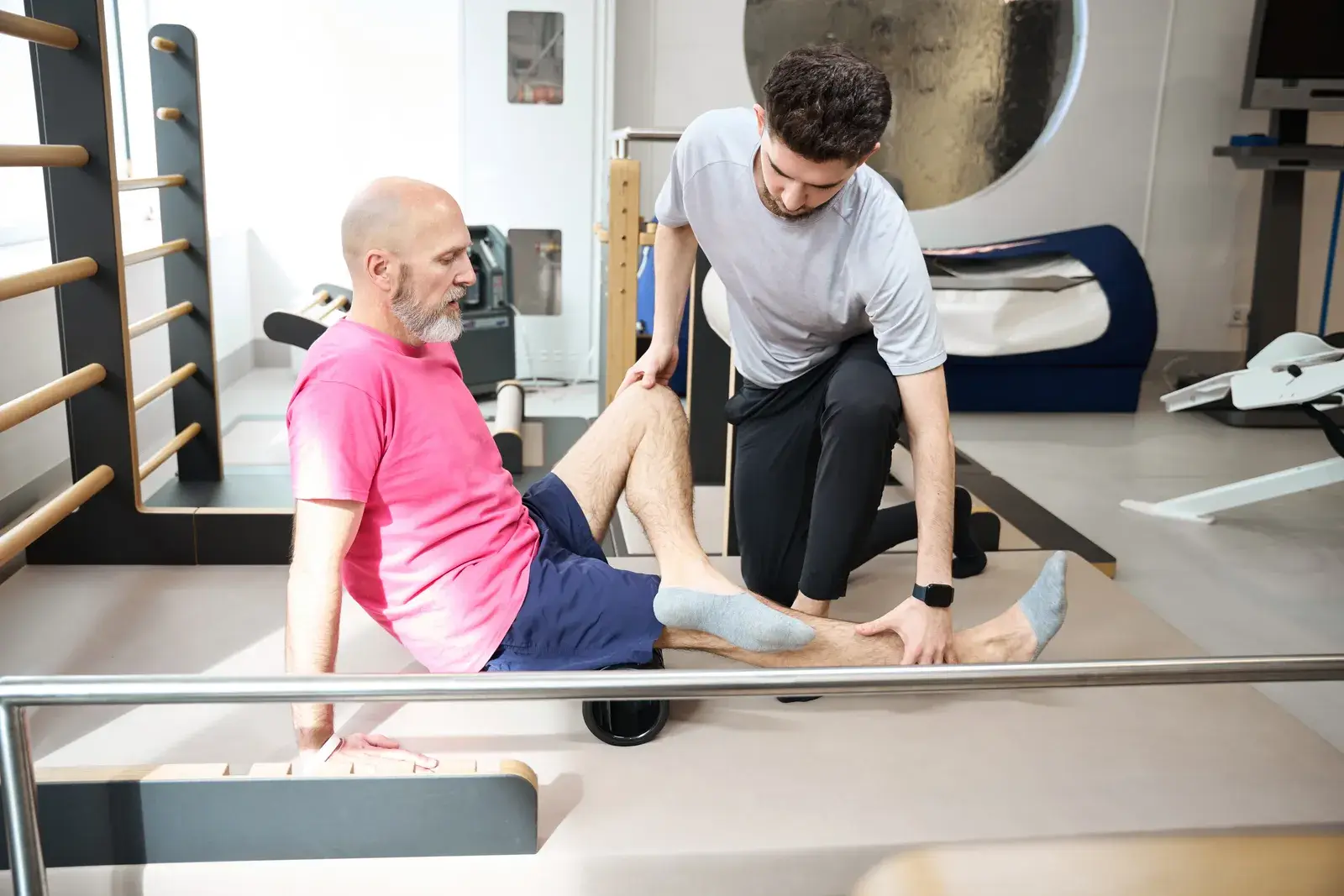 Quad tendinitisPain just above the kneecap from squatting, lunging and jumping, treated with patient, progressive tendon loading.
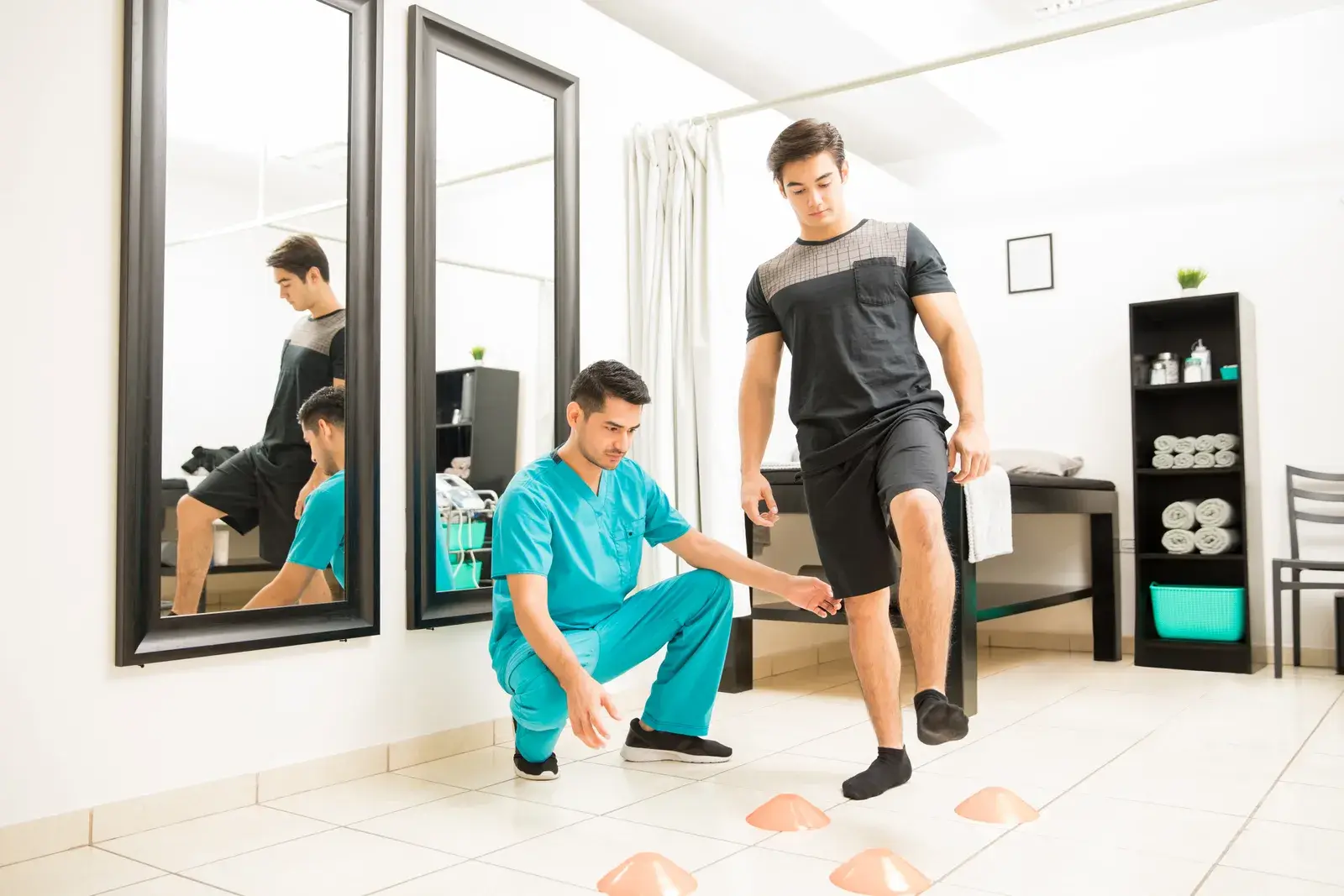 Runner’s kneeHip and quadriceps strengthening plus a smarter mileage plan for an ache around the kneecap that flares on stairs, hills and long sits.
 Osgood-Schlatter diseaseA painful bump below the kneecap in growing athletes, managed with load changes and strength while growth finishes.
Page reviewed By the Monon Therapy Collective editorial team

Carmel City Center · Carmel, Indiana
Start with a conversation
Tell us what hurts and what you want to get back to. We will tell you honestly whether a therapist in the network is likely a good fit for what you describe, and match you with an independent, licensed therapist who is. Only that therapist can assess what will help.
885 Monon Green Blvd, Suite 120, Carmel, IN 46032 · Monday to Friday 5 AM to 9 PM · Saturday and Sunday 7 AM to 4 PM