Physical therapy for basketball players treats the injuries that come from jumping, landing and cutting on a hard court: ankle sprains, patellar tendon pain (jumper’s knee), ACL and meniscus injuries, and Achilles problems in older players. In Carmel, the matching team proposes an independent, licensed therapist from the network, and every session is one-on-one in a private suite at Carmel City Center, a short walk from garage parking. Rehab usually ends with landing, cutting and conditioning work that matches full-court play.
Last reviewed By the Monon Therapy Collective editorial team
- Most common problems
- Ankle sprains, jumper’s knee, ACL, Achilles
- Rehab focus
- Landing, deceleration and repeated jumping
- Indiana season
- High school basketball runs through the winter
- Players under 18
- A parent or guardian completes the questionnaire
Which basketball injuries do physical therapists see most?
Ankle sprains lead the list, usually from landing on another player’s foot under the basket, followed by knee pain from repeated jumping and the less common but serious ligament and tendon ruptures. AAOS OrthoInfo says basketball injuries most often affect the foot, ankle and knee, and lists sprained ankles, jumper’s knee, ACL tears and Achilles tendon rupture among the common ones.
Each link below goes to a full page on that problem. A therapist decides what applies after an examination.
- Ankle sprain, and chronic ankle instability when sprains keep recurring
- Patellar tendinitis, the classic jumper’s knee
- ACL injury from a cut or a one-leg landing
- Meniscus tear from twisting on a planted foot
- Achilles rupture, less common but serious, usually a sudden pop during a push-off
- Osgood-Schlatter disease in growing players
Why is landing the center of basketball rehab?
Landing is where many basketball injuries happen, so rebuilding how you absorb force is the core of rehab, not an extra. A player who lands stiff-kneed, with the knee collapsing inward or with all the weight on one leg, puts more load through the ACL, patellar tendon and ankle ligaments than one who bends hips and knees together.
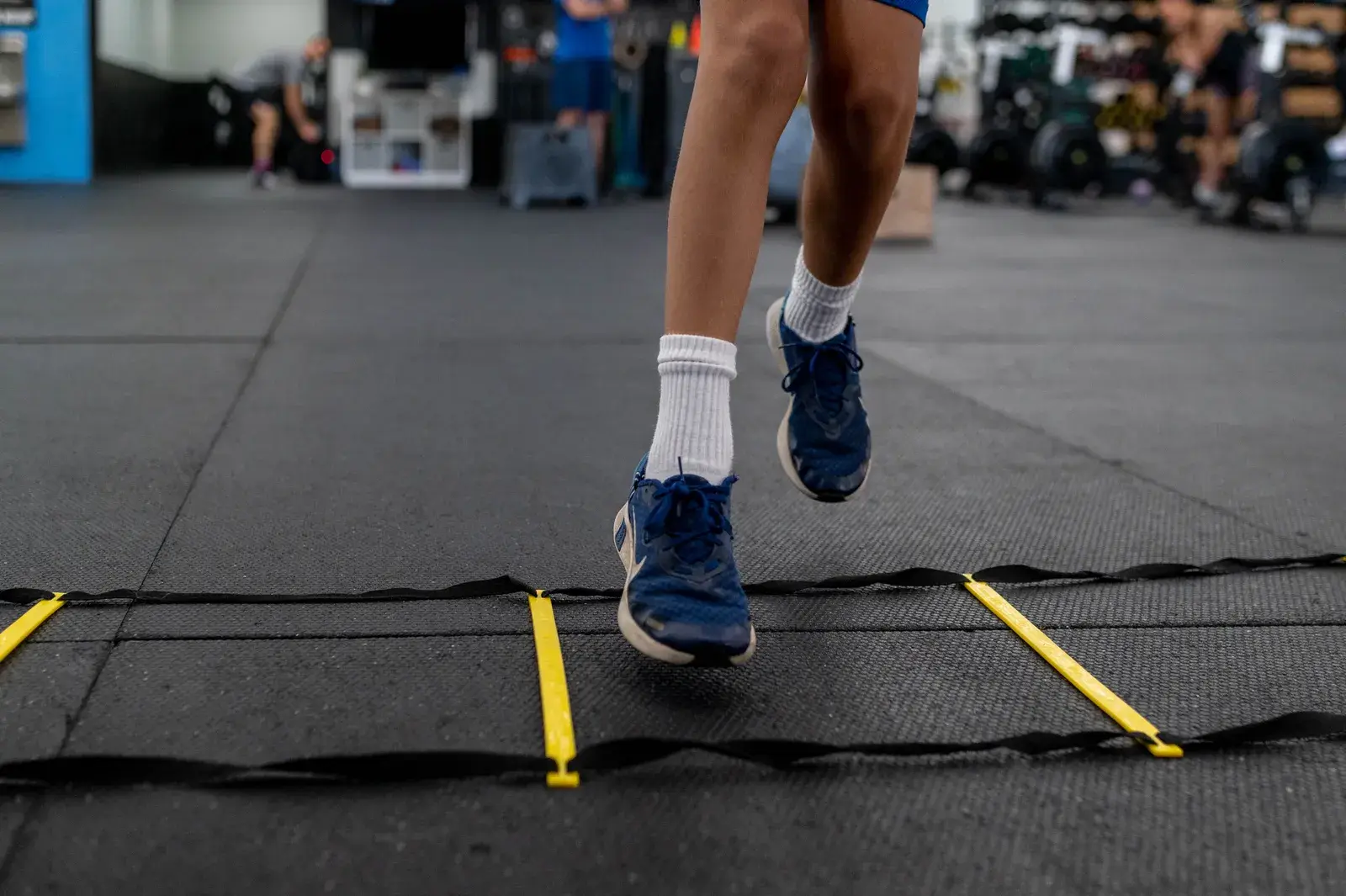
A therapist usually starts with slow squats and step-downs, moves to two-leg then one-leg landings from a low box, then adds rebounding, reaching and contact. Ankle work runs alongside it: balance on one leg, hops in different directions and the banded ankle inversion for the muscles that protect a sprained ankle.
Jumper’s knee needs a different emphasis. Patellar tendons respond to heavy, slow loading and a gradual return of jump volume, so the program often includes holds such as the Spanish squat and careful counts of how many jumps a practice involves.
Conditioning is the last piece. Basketball asks for repeated sprints, stops and jumps with short recoveries, so a player who has only done strength work often tires quickly and lands poorly late in a game. Therapists often finish rehab with intervals that mimic a possession: a sprint, a defensive slide, a jump and a short rest, repeated until fatigue no longer changes how the player lands.
What does a typical path back to games look like after a basketball ankle sprain?
After a common lateral ankle sprain, many players return to practice within a few weeks once they can hop, cut and land without pain or giving way, although more severe sprains take longer. AAOS OrthoInfo puts the treatment program at about 2 weeks for a minor sprain and up to 6 to 12 weeks for a severe one, and a high ankle sprain is a different injury with its own page.
The table shows a usual sequence. Your therapist adjusts it, and an ACL or Achilles injury follows a much longer, surgeon-guided path.
| Stage | What the player does | Usually needed to move on |
|---|---|---|
| Protect | Walking as tolerated, swelling control, ankle range of motion | Normal walking without a limp |
| Strengthen | Calf raises, band work, single-leg balance | Balance close to the other side |
| Hop and cut | Hops in several directions, defensive slides, planned cuts | No pain or giving way |
| Basketball | Shooting, layups, non-contact drills, then contact practice | Full practice without a setback |
| Games | Limited minutes, then full games | Agreed with the therapist and coach |
How do Carmel players fit rehab around a winter season?
Indiana high school basketball runs through the winter, so many injuries arrive when roads are icy and practice ends late. Suites at Carmel City Center open at 5 AM on weekdays and 7 AM on weekends, and the garage is a short walk from the door, which makes early sessions realistic for students and adult league players alike.
For a player under 18, a parent or legal guardian completes the physical therapy questionnaire and comes to visits, and the matching team tells you honestly whether a therapist in the network sees adolescents. Pediatric availability depends on who is in the network at the time.
What do adult pickup and rec league players need to know about the Achilles?
AAOS OrthoInfo lists Achilles tendon rupture among the common basketball injuries: it takes a strong force, usually the calf being stretched too quickly when landing from a jump or cutting, and many people hear a pop at the back of the ankle. If that happens, see a physician right away, because early decisions about surgery or a boot shape the whole recovery.
Short of a rupture, calf strength and gradual exposure to jumping before joining full-court games reduce strain on the tendon. A therapist can build a few weeks of Achilles-friendly calf loading and court work before you return, and post-rehab strength training with a coach can continue it after discharge.
Get medical care promptly if a basketball injury involves
- A sudden pop at the back of the ankle with difficulty pushing off.
- A knee pop with rapid swelling or a knee that gives way.
- Being unable to take four steps on the injured leg, or tenderness on the ankle bones.
- A head knock with confusion, vomiting or worsening headache: call 911.
If you think it is an emergency, call 911.
