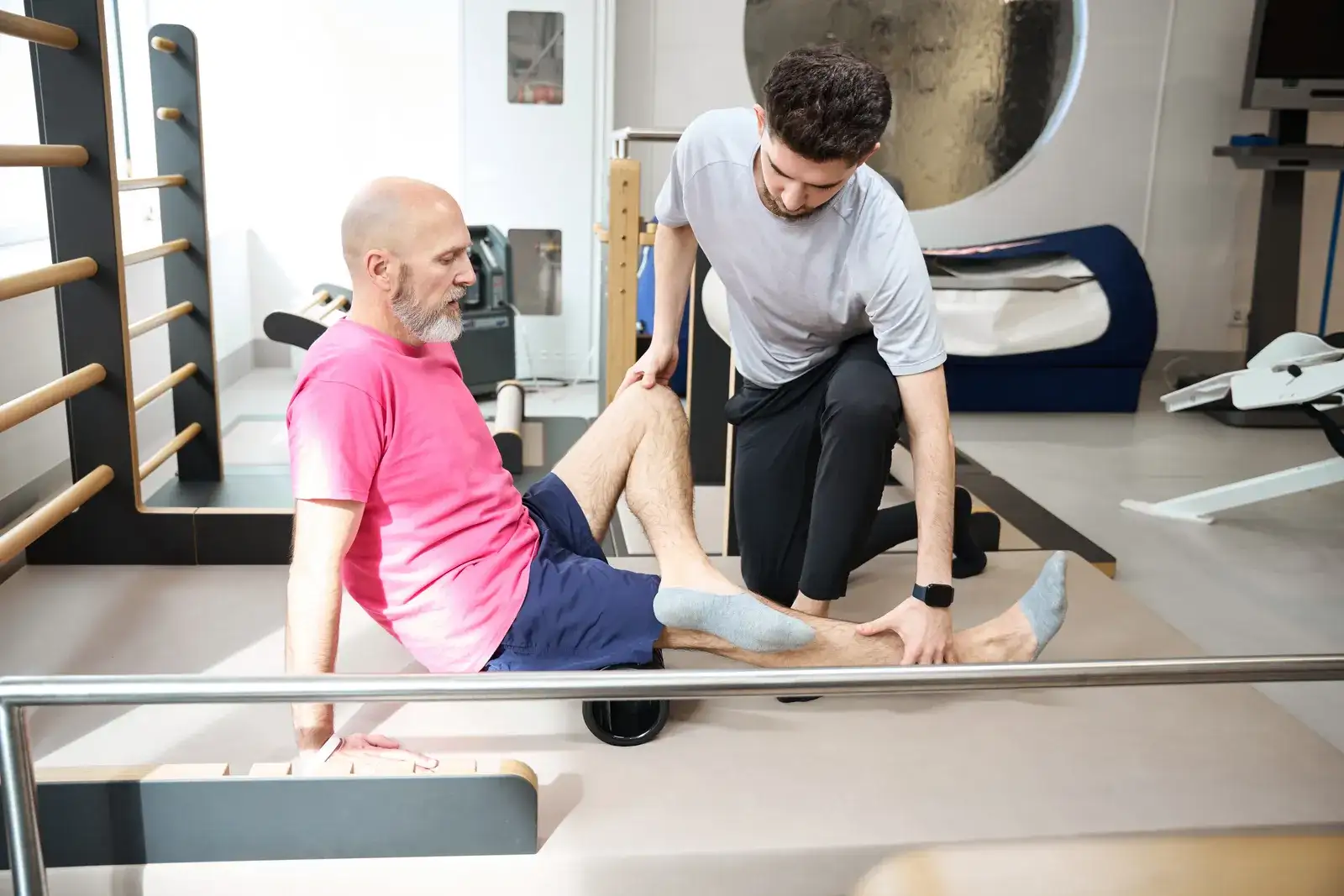
Quad tendinitis physical therapy in Carmel, Indiana
Quad tendinitis, more accurately called quadriceps tendinopathy, is pain in the tendon just above the kneecap, usually from more squatting, jumping or lunging than the tendon is ready for. Physical therapy is the main treatment, and it centers on gradually heavier, controlled loading that helps the tendon adapt, rather than rest alone. In Carmel, a licensed physical therapist in the network designs and progresses that loading one-on-one in a private suite.
At a glance
Common signs of quad tendinitis
Also called: Quadriceps tendinopathy, Quadriceps tendonitis, Suprapatellar tendinopathy, Jumper’s knee above the kneecap.
What causes pain just above the kneecap?
Pain at the top edge of the kneecap is most often the quadriceps tendon reacting to a change in load. The tendon connects the large thigh muscles to the kneecap and handles enormous force when you squat, lunge, land or decelerate. When that force rises faster than the tendon can adapt, its structure and sensitivity change, producing the familiar warm-up pattern: sore to start, better mid-session, sore again later.
Common triggers include a new strength program with heavy squats or lunges, a jump in volleyball or basketball practice, CrossFit-style training with high-rep box jumps and wall balls, and a return to stairs-heavy work. It is less common than patellar tendinopathy, which sits below the kneecap, and tends to show up in slightly older athletes and lifters.
Clinicians now prefer “tendinopathy” to “tendinitis,” because long-standing tendon pain usually involves changes in the tendon’s structure rather than ongoing inflammation. That matters for treatment: anti-inflammatory approaches alone rarely solve it, while gradually loading the tendon often does. Pain below the kneecap is covered on the patellar tendinitis page.
How does a physical therapist confirm quadriceps tendinopathy?
Diagnosis is mostly clinical. The therapist presses along the tendon to find the tender spot, then uses loading tests such as a decline squat, a single-leg squat or a slow step-down to see whether pain sits at the tendon and changes with load. Pain that rises as the knee bends deeper under load, and stays at the top edge of the kneecap, fits the pattern.
Ultrasound or MRI is not routinely needed, and tendon changes on a scan do not always match how painful the tendon is. They will rule out patellofemoral pain behind the kneecap, a quad muscle strain higher in the thigh, and bursitis in front of the kneecap. Hip and ankle mobility, quad strength and how you land and squat are checked because they influence how much load the tendon carries.
A sudden pop above the kneecap followed by an inability to straighten the leg is not tendinopathy; it may be a quadriceps tendon rupture, which needs a surgeon promptly. People who have had a rupture repaired follow a quad tendon repair rehab plan instead.
What is slow, heavy loading for the quadriceps tendon?
It is a structured program of strength exercises done slowly with gradually heavier weights, which helps the tendon remodel and become less sensitive. Early on, isometrics such as holding a wall sit or a leg extension against resistance for a sustained, steady hold often ease pain and keep the tendon loaded. Next come slow leg extensions, leg presses, split squats and Spanish squats with a controlled tempo, several seconds down and several seconds up.
The load increases week by week as long as the tendon settles within 24 hours. Therapists often use a pain monitoring rule: pain during exercise up to a moderate level is acceptable if it returns to baseline by the next morning. Deep knee bending under load is progressed carefully, since that is where the tendon is compressed most.
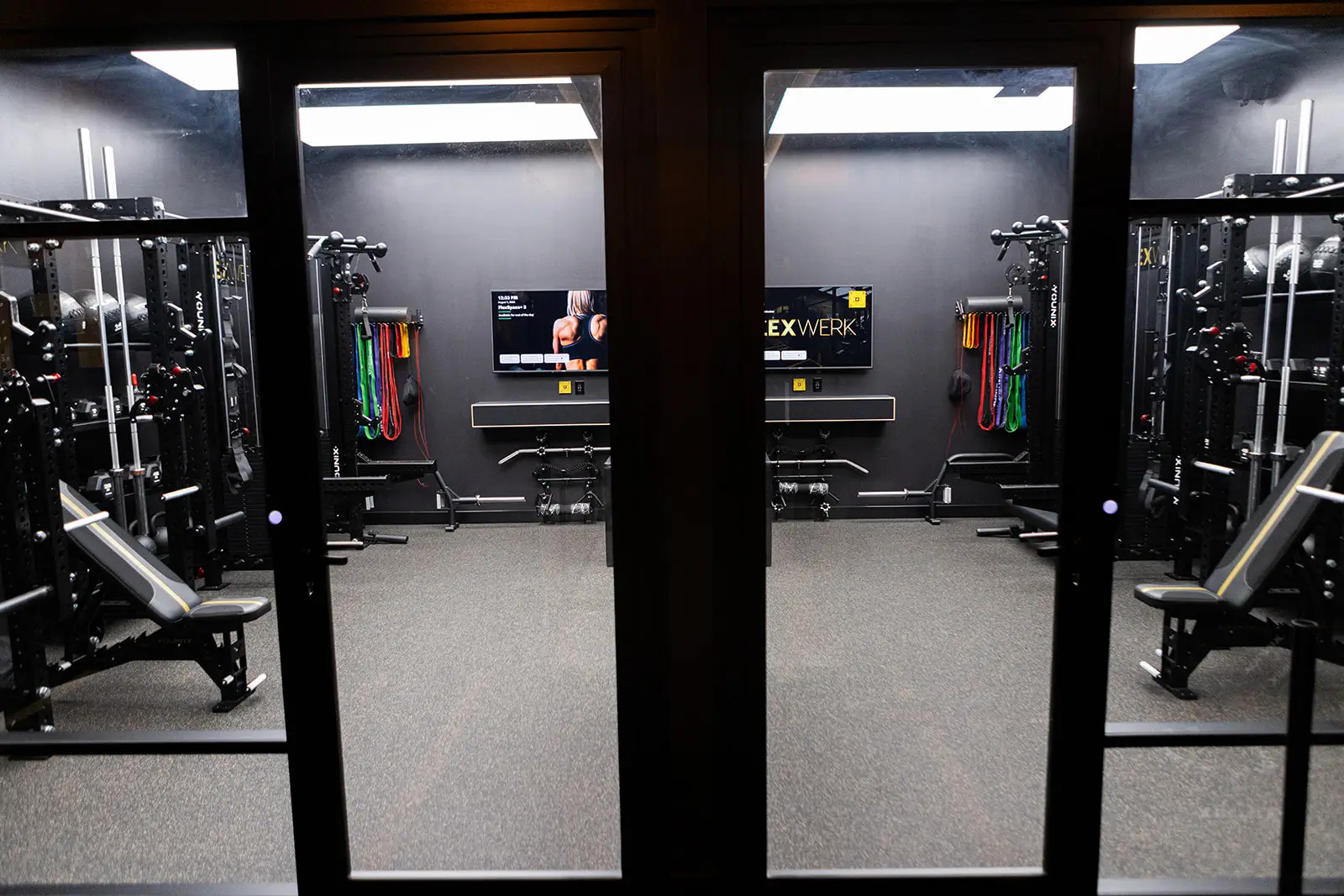
Later stages reintroduce energy storage, the spring-like work of jumping, landing and sprinting, starting with low hops and progressing to jumps and sport movements. The rack and dumbbells in the FlexWerk suites make it straightforward to progress load precisely.
- Isometric holds such as wall sits or leg extension holds
- Slow, heavy leg extensions, leg presses and split squats
- Deeper ranges added as the tendon tolerates them
- Low hops and skipping, then box jumps and landings
- Sport-specific jumping, cutting or lifting volume
How long does quadriceps tendinopathy take to improve?
Tendons adapt slowly: the loading programs studied for knee tendon pain run for about 12 weeks, meaningful improvement often takes that long, and long-standing cases can take longer. Many people notice less morning stiffness and better tolerance for stairs within the first several weeks, while full return to heavy squatting or jumping comes later. These ranges are typical, not promised.
Flare-ups along the way usually reflect a load spike, such as an extra practice, a long hike, or a heavy leg day. Your therapist will adjust volume rather than stop loading, because complete rest tends to weaken the tendon further and makes the next return harder.
- Weeks 1 to 2: isometrics, load adjusted in training, pain monitoring started.
- Weeks 2 to 8: slow, heavy strength progressed weekly; deeper ranges added.
- Weeks 8 to 12: hops and jumps introduced, training volume rebuilt.
- Beyond 12 weeks: full sport or lifting, with tendon strength work kept twice a week.
Should I stop squatting or jumping with pain above the kneecap?
Usually you modify rather than stop. Cutting the depth, load and volume of squats, swapping box jumps for low-impact conditioning, and spacing heavy leg days further apart often lets you keep training while the tendon calms. Pain that stays mild during exercise and settles by the next morning is generally acceptable.
Avoid repeatedly testing the tendon with the most painful movement, and avoid cortisone injections into the tendon unless a physician has specifically recommended one, since injections into tendons carry their own risks. Stretching the quadriceps hard rarely helps tendon pain.
Look at the whole week, not just the gym. A heavy leg day followed by a volleyball match and a weekend of yard work can add up to more load than the tendon handles, even if each session felt fine on its own. A simple training log that notes knee pain the morning after each session often reveals the pattern quickly.
If you are a lifter, a volleyball or basketball player, or someone whose job involves many stairs, the knee assessment questionnaire gives the matching team the details they need to propose a therapist in the network. The post-rehab strength training page explains how FlexWerk’s independent coaches can help you keep that strength after discharge.
When to see a physician or go to the ER first
Physical therapy is the right start for most quad tendinitis. These symptoms are different and need medical attention before, or instead of, a physical therapy visit:
- A pop above the kneecap and inability to straighten the knee
- A gap you can feel above the kneecap
- Significant swelling after an injury
- A hot, red knee with fever
- Pain at night that does not ease with rest or position change
- Calf swelling, warmth and tenderness
If you think it is an emergency, call 911.
Two-minute assessment
Get your quad tendinitis looked at
Tell us how your quad tendinitis started, how long it has been going on and what it is stopping you from doing. The matching team proposes a therapist in the network who focuses on it, and you hear back, usually within one business day.
- No referral needed to start in Indiana (first 42 days)
- We check which therapists work with your plan before you book
- One-on-one care in a private suite at Carmel City Center
How therapists treat it
Kinds of care used for quad tendinitis
- Sports physical therapyRehab for active adults that goes past pain relief to the strength, power and movement your sport actually demands.
- Orthopedic physical therapyExercise-led care for back, neck, shoulder, hip, knee and ankle problems, delivered one-on-one in a private suite.
- Post-rehab strength trainingThe bridge from discharge to lasting strength: a written handoff from your therapist to a FlexWerk coach in the same building.
Questions
Quad tendinitis: what people ask
Information on this website is general education, not medical advice, a diagnosis or a treatment plan. Only a licensed clinician who examines you can advise on your condition. If you may be having a medical emergency, call 911.
Something we did not cover? Ask the matching team or ring (888) 353-9975.
Is quad tendinitis the same as jumper’s knee?
Jumper’s knee usually refers to patellar tendinopathy below the kneecap. Quadriceps tendinopathy is the same type of problem in the tendon above it.
How is quad tendinopathy different from a quad strain?
A strain is a sudden tear in the muscle belly, usually during a sprint or kick. Tendinopathy builds gradually in the tendon above the kneecap and follows a warm-up pattern of pain.
Should I ice quad tendinitis?
Ice can ease pain for a short while, and that is fine if it helps. It does not fix the tendon; progressive loading does.
Can I keep lifting with quadriceps tendinopathy?
Usually yes, with adjustments to depth, load and frequency. Many lifters keep training upper body and hips normally while the knee work is modified.
Do patellar straps help pain above the kneecap?
Straps are designed for the tendon below the kneecap and may not help quadriceps tendon pain. Some people find a sleeve comfortable.
Will shockwave therapy help quad tendinopathy?
Shockwave is sometimes used for stubborn tendinopathies, but evidence varies and availability depends on the therapists in the network. The shockwave therapy page explains what to ask.
Is cycling okay with quadriceps tendinopathy?
Usually, at a moderate resistance with the seat high enough to avoid deep knee bending. Hard climbs and big gears load the tendon heavily, so build those back gradually.
Why does my knee feel better once I warm up?
Tendons often become less sensitive as they are loaded during a session, then react afterward. That warm-up effect is a classic sign of tendinopathy.
Google reviews
What guests say about FlexWerk
These are live Google reviews of FlexWerk at Carmel City Center, the private-suite facility where therapists in the network practise.
Related
Conditions that travel together
 Patellar tendinitisStaged tendon loading for pain just below the kneecap in jumping athletes, from isometric holds to heavy squats and back to landing drills.
- Quad strainFront-of-thigh strains from kicking and sprinting, rebuilt in stages from isometrics to full-power kicks.
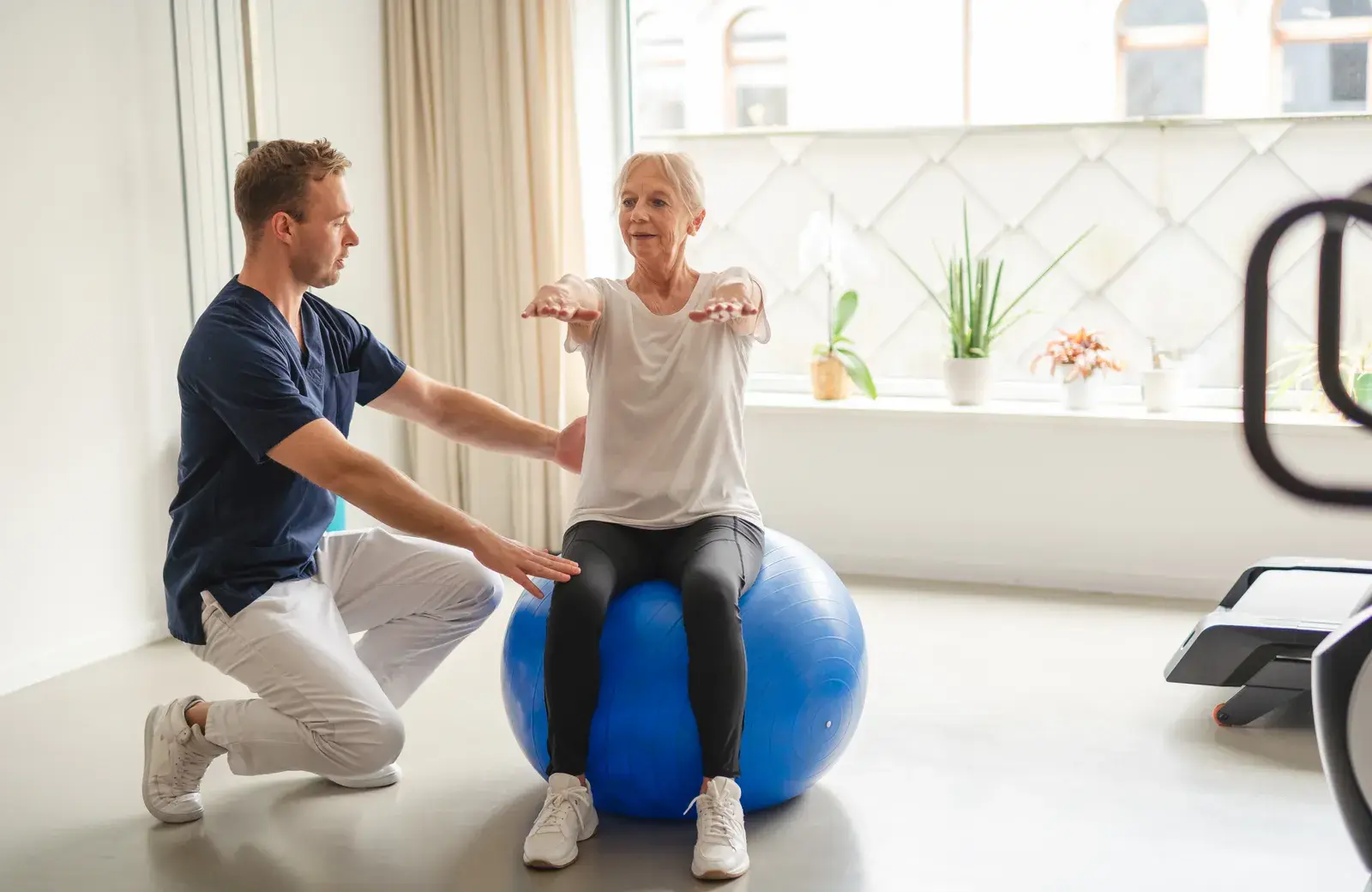 TendinitisProgressive tendon loading, from calming isometrics to heavy strength and sport-speed work.
Page reviewed By the Monon Therapy Collective editorial team

Carmel City Center · Carmel, Indiana
Start with a conversation
Tell us what hurts and what you want to get back to. We will tell you honestly whether a therapist in the network is likely a good fit for what you describe, and match you with an independent, licensed therapist who is. Only that therapist can assess what will help.
885 Monon Green Blvd, Suite 120, Carmel, IN 46032 · Monday to Friday 5 AM to 9 PM · Saturday and Sunday 7 AM to 4 PM