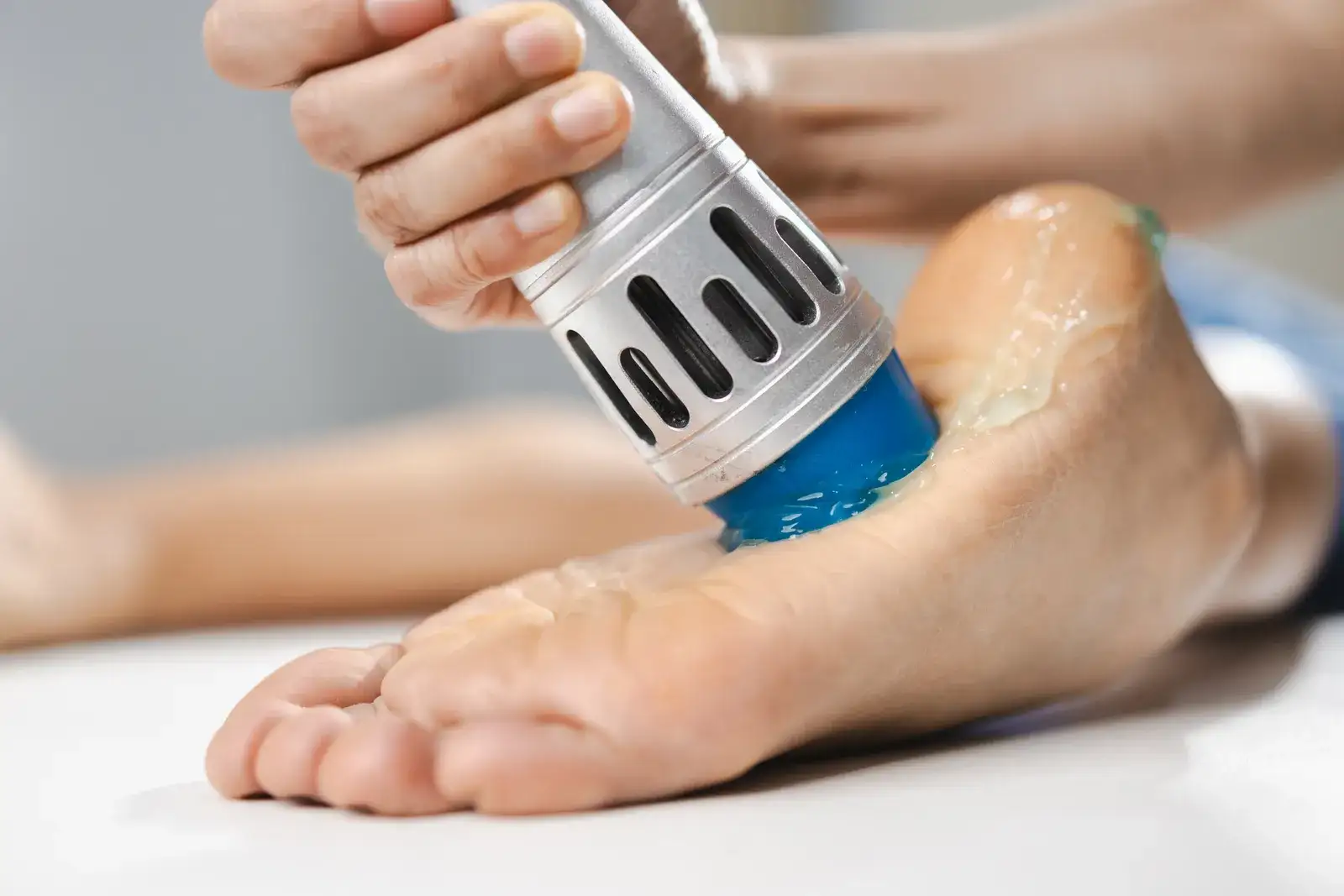
Shockwave therapy in Carmel, Indiana
Shockwave therapy, or extracorporeal shockwave therapy (ESWT), sends pulses of acoustic energy through the skin into a painful tendon or the plantar fascia, and is mostly used for long-standing heel and tendon pain that has not settled with exercise. The FDA approved the first device for chronic plantar fasciitis in 2000, but recent research is mixed and many insurers treat it as unproven for most uses. Whether a therapist in the network near Carmel, Indiana offers shockwave depends on who is practising at the time, and the matching team confirms that honestly before booking.
How does shockwave therapy work, and what does it feel like?
A shockwave session uses a handheld applicator, pressed against the skin over a layer of gel, to deliver rapid pulses of acoustic pressure into the painful area. Focused devices concentrate energy at a set depth, while radial devices spread it from the skin surface outward. Both aim to change how the tissue and its nerve endings respond to load.
Most people describe the sensation as a fast, hard tapping that is uncomfortable over the sorest spot, with the intensity adjusted to tolerance. Each session is short, and a course usually involves several sessions spaced about a week apart. The area may feel sore or look red for a day or two afterward.
Radial devices are the type most often seen in physical therapy settings, partly because they are practical and less costly than focused machines. The research does not settle which type works better for which problem, so the device matters less than whether shockwave is combined with a sensible loading plan.
Which conditions has shockwave therapy been studied for?
Shockwave therapy has been studied mostly for chronic plantar fasciitis and for tendon problems. On October 12, 2000, the FDA approved the OssaTron device for chronic proximal plantar fasciitis that had failed to respond to conservative treatment, and researchers have since tested shockwave for calcific shoulder tendinopathy, tennis elbow, Achilles and patellar tendon pain, and pain on the outside of the hip.
The results are mixed. A meta-analysis of 15 randomized trials with 1,123 patients, published online in late 2024 in Foot and Ankle Surgery, found shockwave relieved plantar fasciitis pain better than a placebo, but platelet-rich plasma injections did better still and custom orthotics improved foot function more. A 2026 review of 14 trials of radial shockwave for plantar fasciitis found it was not superior to other electrophysical treatments such as laser or ultrasound for pain or function, and rated most of the trials at high risk of bias. That makes it a reasonable option to discuss for stubborn cases, not a first-line fix.
For most heel and tendon problems, people start with several months of a consistent, progressive exercise program before shockwave is raised at all. The FDA approval itself was framed around patients whose plantar fasciitis had not responded to conservative care, which matches how clinicians typically position it today.
Why loading exercise still comes first with stubborn tendon and heel pain
Tendons and the plantar fascia adapt to load, so progressive strengthening remains the backbone of treatment even when shockwave is added. A typical plan builds calf and foot strength with slow heel raises, adjusts running or walking volume, and reviews footwear and time on your feet.
If you try shockwave without changing the load that irritated the tissue, any relief may not last. For heel pain, plantar fasciitis physical therapy explains the exercise-led approach, and how long plantar fasciitis lasts sets realistic expectations. For tendon pain elsewhere, PRP injection or physical therapy for tendon pain compares another add-on people often ask about.
What a sensible shockwave course looks like if you try it
A sensible shockwave course starts with a clear diagnosis and a plan with an end point. Before the first session, the clinician should confirm what is causing the pain, record a baseline such as morning heel pain on a 0 to 10 scale or how many single-leg heel raises you can do, and tell you how many sessions are planned and what it will cost in total.
During the course, your exercises should continue, with walking and running volume adjusted rather than stopped. Some clinicians suggest easing off hard training for a day or two after each session while the area is sore, then returning to the planned load once it settles.
At the end, the same measures are repeated. If there is no meaningful change after the planned course, adding more sessions is rarely the answer, and it is reasonable to step back and review the diagnosis, the loading program or a referral to a physician such as a foot and ankle specialist.
Does insurance pay for shockwave therapy?
Often it does not. Aetna’s published clinical policy bulletin on ESWT, for example, covers it only for calcific tendinopathy of the shoulder lasting at least six months, with a calcium deposit of 1 cm or more, after conservative treatment has failed, and treats it as experimental for plantar fasciitis, tennis elbow, golfer’s elbow, Achilles tendinopathy and most other soft tissue problems.
Other plans have their own policies, so check yours rather than assuming. Where shockwave is not covered, it is usually paid out of pocket, and you are entitled to ask for the price of the full course in writing before you start. Your rights to a written estimate are covered in what is a good faith estimate for physical therapy.
Referral rules are a separate question from payment. Indiana lets a physical therapist evaluate and treat without a referral for up to 42 calendar days, and shockwave is not singled out in that law the way spinal manipulation is, though a plan that covers shockwave may set its own requirements.
How the matching team answers a request for shockwave
Shockwave needs both the device and a clinician trained to use it, and the network cannot promise either is available, because that depends on the therapists practising in the suites at the time. If you ask for it in the questionnaire, the matching team will say honestly, before anything is booked, whether a therapist in the network offers it, and point you elsewhere if not.
Before any shockwave session, the clinician should review your medical history, including pregnancy, blood-thinning medicines, bleeding problems and any cancer or infection near the area. To start with an exercise-led assessment of heel or tendon pain, use the foot and ankle questionnaire.
Who it helps
Shockwave may be worth discussing if
- Heel pain has lasted many months despite a consistent exercise program
- A tendon problem keeps flaring even though you have adjusted training load
- You have been told you have calcific shoulder tendinopathy
- You want to understand an add-on option before considering injections or surgery
Conditions
Problems this kind of care treats
 Plantar fasciitisHeel pain and first-step morning pain treated with calf and foot loading, footwear advice and load management.
 Achilles tendinitisMid-portion and insertional Achilles pain in runners and walkers, treated with progressive calf and tendon loading.
 Tennis elbowTendon loading rehab for outer elbow pain from pickleball, tennis, golf, tools and desk work.
- Patellar tendinitisStaged tendon loading for pain just below the kneecap in jumping athletes, from isometric holds to heavy squats and back to landing drills.
Two-minute assessment
Not sure which therapist is right for you?
Answer a few questions about what hurts, how long it has been going on and what you want to get back to. Our matching team reads every answer and proposes a licensed physical therapist in the network whose focus, schedule and coverage fit. Two minutes, no obligation.
- No referral needed to start in Indiana (first 42 days)
- We check which therapists work with your plan before you book
- One-on-one care in a private suite at Carmel City Center
Questions
About shockwave therapy
Information on this website is general education, not medical advice, a diagnosis or a treatment plan. Only a licensed clinician who examines you can advise on your condition. If you may be having a medical emergency, call 911.
Something we did not cover? Ask the matching team or ring (888) 353-9975.
How many shockwave sessions are usually needed?
Courses commonly involve several sessions spaced about a week apart, though protocols vary by device and condition. Ask for the planned number and total price before starting.
Is shockwave therapy painful?
It is usually uncomfortable over the sorest spot, and the intensity is adjusted to what you can tolerate. Soreness for a day or two afterward is common.
Can shockwave replace my exercises for plantar fasciitis?
It is more accurately seen as an add-on. Strengthening and load changes remain central, and a therapist can help you combine the two if shockwave is used.
Is shockwave the same as ultrasound therapy?
No. Both use sound energy, but shockwave delivers short, high-pressure pulses, while therapeutic ultrasound uses continuous or pulsed waves at much lower pressures.
Is shockwave the same as dry needling?
No. Dry needling uses thin needles inserted into muscle, while shockwave works from the skin surface. The dry needling page explains that technique.
Can I keep running on the Monon Trail during a shockwave course?
Often yes, with volume adjusted to symptoms, but follow the advice of the clinician treating you. Pain that makes you limp or is worse each morning is a sign to cut back and get it reassessed before your next session.
Google reviews
What guests say about FlexWerk
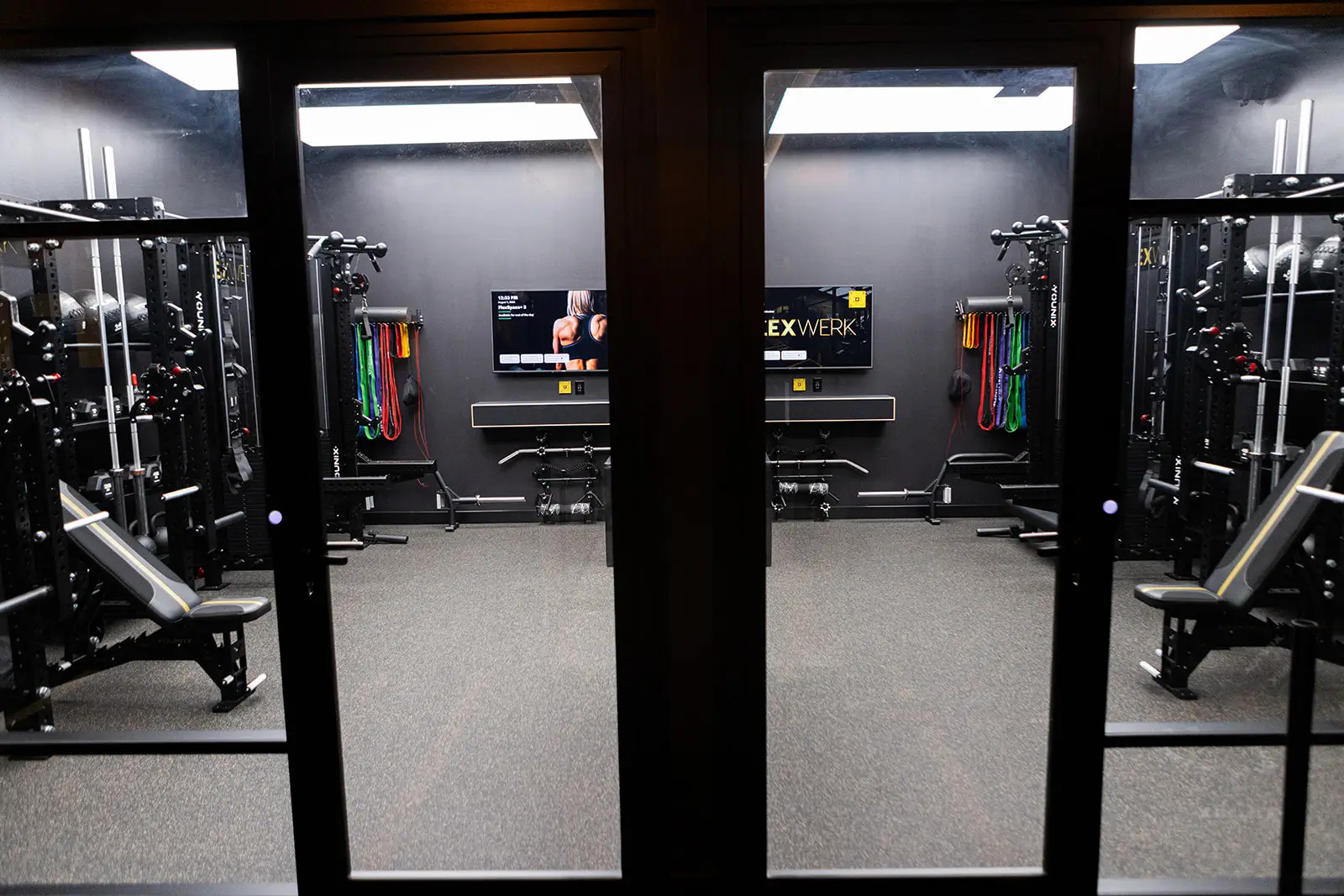
These are live Google reviews of FlexWerk at Carmel City Center, the private-suite facility where therapists in the network practise.
Continue
Related services
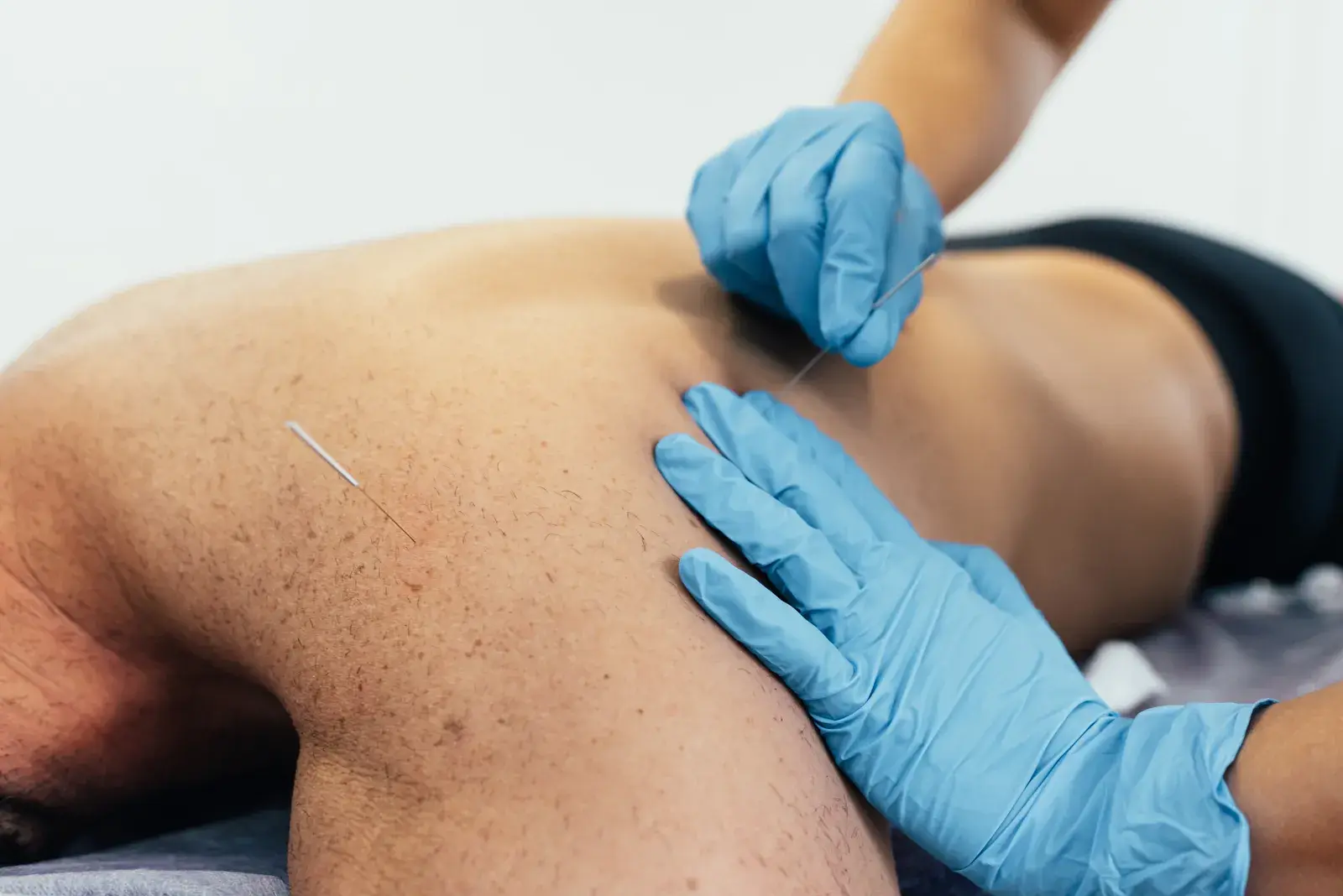 Dry needlingWhat dry needling involves, the training Indiana requires, who should skip it, and how to tell if it is being used well.
 Running injury physical therapyFor Monon Trail regulars and race trainees: load management, strength and gait observation that keep you running while you heal.
 Manual therapyHands-on joint and soft-tissue treatment that eases stiffness so the exercise part of your plan can do its job.
Page reviewed By the Monon Therapy Collective editorial team

Carmel City Center · Carmel, Indiana
Start with a conversation
Tell us what hurts and what you want to get back to. We will tell you honestly whether a therapist in the network is likely a good fit for what you describe, and match you with an independent, licensed therapist who is. Only that therapist can assess what will help.
885 Monon Green Blvd, Suite 120, Carmel, IN 46032 · Monday to Friday 5 AM to 9 PM · Saturday and Sunday 7 AM to 4 PM