Dry needling in Carmel, Indiana
Dry needling is a technique in which a trained physical therapist inserts thin, solid needles into tight, tender areas of muscle to reduce pain and help you move, always as one part of a wider exercise-based plan. In Indiana a physical therapist must complete at least 50 hours of dry needling education, 40 of them in person, before using it, and cannot hand the treatment to an assistant. Whether a therapist in the network near Carmel offers it depends on who is practising in the suites at the time, and the matching team will confirm that before you book.
What happens during a dry needling treatment?
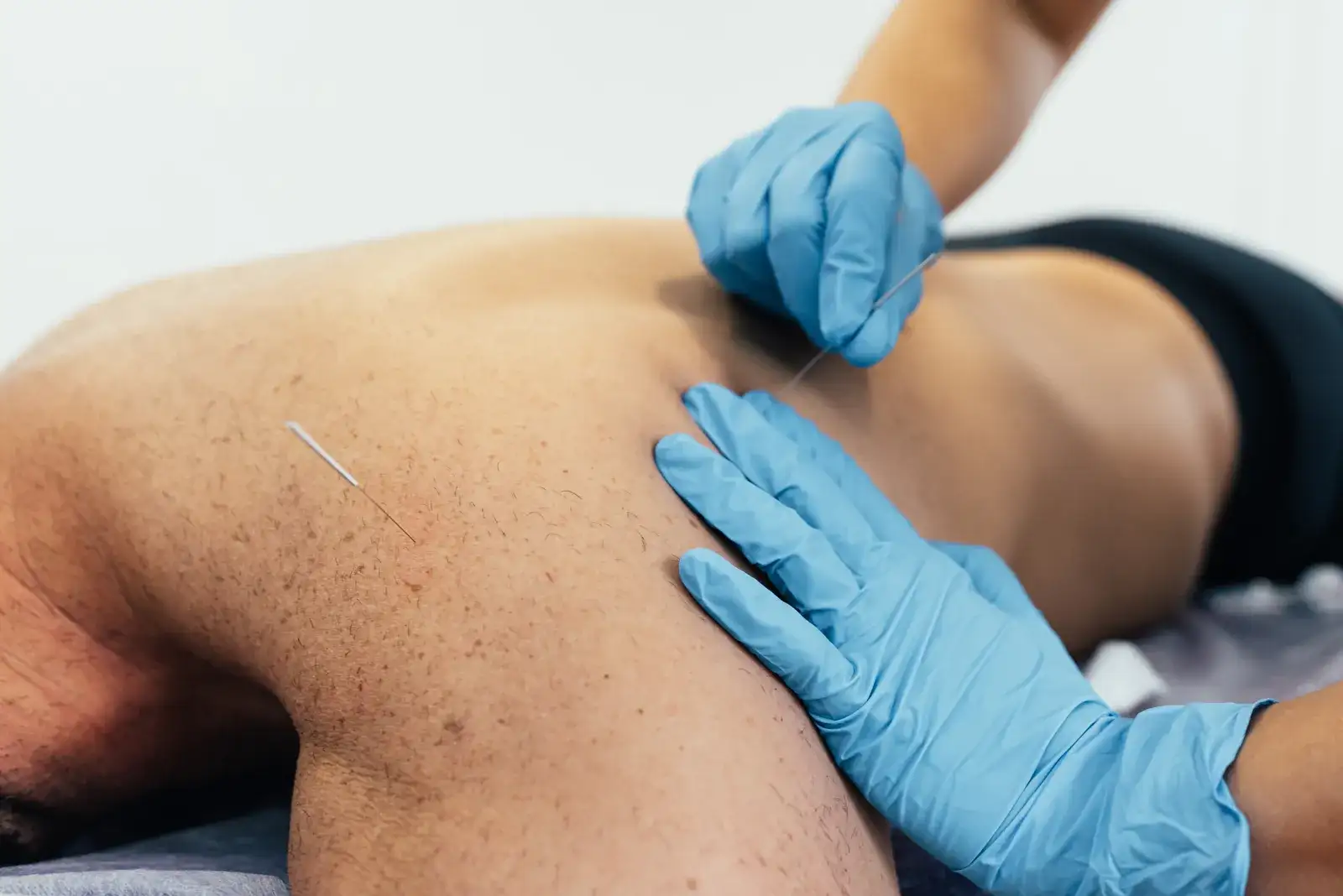
During dry needling, the therapist finds a tender, taut band in a muscle by touch, cleans the skin, and inserts a thin, sterile, single-use needle through a small guide tube. The needle may stay still for a short time or be moved gently in and out. Nothing is injected, which is where the word “dry” comes from.
You may feel very little as the needle goes in. When it reaches the sensitive spot, many people feel a deep ache or a quick twitch of the muscle that lasts a moment. The therapist then usually rechecks the movement that bothered you, such as turning the head or lifting the arm, and follows the needling with exercise while the area feels freer. What the sensation is like, and how long soreness lasts, is covered in does dry needling hurt.
Needling normally takes up only part of a visit. The rest goes to the same things any good session includes: reassessing how you move, exercise loaded to your current level, and agreeing on what to practise at home. The number of needles, and how many areas are treated, depends on what the examination found, and a first session is often deliberately light so you can see how your body responds before anything more is done.
What training must an Indiana physical therapist have to dry needle?
Under the Indiana Board of Physical Therapy’s rule, 842 IAC 1-6-2, a physical therapist must complete at least 50 hours of education in dry needling theory, practice and technique, with at least 40 of those hours in person, before being considered competent to practise it. The requirement applies to dry needling performed after June 30, 2024, and the therapist must provide written proof of the training if the board asks; under the rule, failing to do so is treated as evidence that the therapist is not competent and may not dry needle.
The same rule adds a point that matters to patients: dry needling must be performed directly by the physical therapist and cannot be delegated. That rules out a physical therapist assistant placing the needles, and because competence is tied to the 50-hour training, a therapist who has not completed it should not be needling you either.
- Ask where and when the therapist completed dry needling education, and whether it met Indiana’s 50-hour standard
- Ask how many hours were hands-on, since Indiana requires 40 in person
- Expect the therapist, not an assistant, to place every needle
- Expect written or clearly recorded consent before the first treatment
Which problems is dry needling used for, and what does it not do?
Physical therapists use dry needling mainly for muscle-related pain that limits movement, as an add-on to exercise, education and other hands-on care. Common examples include neck pain with tight upper trapezius muscles, cervicogenic headaches that start in the neck, buttock and hip pain around the gluteal muscles, calf tightness in runners, and some forms of tennis elbow.
It does not repair a torn tendon, strengthen a weak muscle or change arthritis in a joint. Its job is to make pain and stiffness quieter for long enough that you can do the strengthening and movement work that drives lasting change. A plan built mostly on repeated needling with little exercise is a reason to ask questions. Your therapist may equally decide that manual therapy or exercise alone suits you better.
Local routines often explain why muscles get cranky in the first place. Long hours at a desk off Meridian Street can load the neck and shoulders, a spring of hill repeats before the Carmel Marathon can tighten the calves, and the first warm weekends of golf season can stir up the upper back and hips. In each case, needling may quiet the area for a few days, but changing the load and building capacity is what keeps it quiet.
Who should check with a doctor first or avoid dry needling?
Some people should talk to their physician before dry needling, and some should not have it at all. Cleveland Clinic lists pregnancy, a weakened immune system, recent surgery, taking blood thinners, a strong fear of needles and being unable to understand the treatment among the reasons to consult a physician first, and it does not recommend dry needling for children under 12.
Side effects are usually minor: soreness for a day or so, bruising, tiredness and, occasionally, feeling faint. Rare but serious complications include a collapsed lung (pneumothorax) when needling over the chest wall, which is why training and anatomy knowledge matter so much. Get urgent care if you develop sudden shortness of breath or chest pain after treatment of the upper back, shoulder or chest area.
- Pregnancy, or trying to conceive and unsure
- Blood thinners or a bleeding disorder
- A weakened immune system
- Recent surgery
- Fear of needles strong enough that you would rather not
- Difficulty understanding what the treatment involves or giving consent
How to ask for dry needling through the network
If you would like dry needling to be part of your care, say so on the two-minute questionnaire, along with the area that hurts. The matching team looks at which therapists in the network currently have the Indiana-required training, and if none does, you will hear that clearly, with the suggestion to look for a trained provider elsewhere rather than a vague promise.
Even when a trained therapist is available, needling is a clinical decision made after an examination, not a menu item you book in advance. You can always decline it and still receive a full plan. The suites at Carmel City Center are private rooms with a door that closes, which many people prefer for a treatment that involves undressing the area being needled.
Who it helps
Dry needling may be worth asking about if
- Muscle tightness and tender spots are limiting how you move despite stretching and massage
- You have neck or shoulder pain with headaches that seem to start in tight muscles
- You are already doing an exercise plan and want something to calm pain enough to progress it
- You are comfortable with needles and have none of the medical reasons to avoid them
- You want treatment from a therapist who can show Indiana-compliant training
Conditions
Problems this kind of care treats
 Neck painHelp for stiff, aching necks, neck-related headaches and arm symptoms that start at the neck.
 Cervicogenic headachePhysical therapy for one-sided headaches that start in the upper neck and flare with posture or movement.
 Tennis elbowTendon loading rehab for outer elbow pain from pickleball, tennis, golf, tools and desk work.
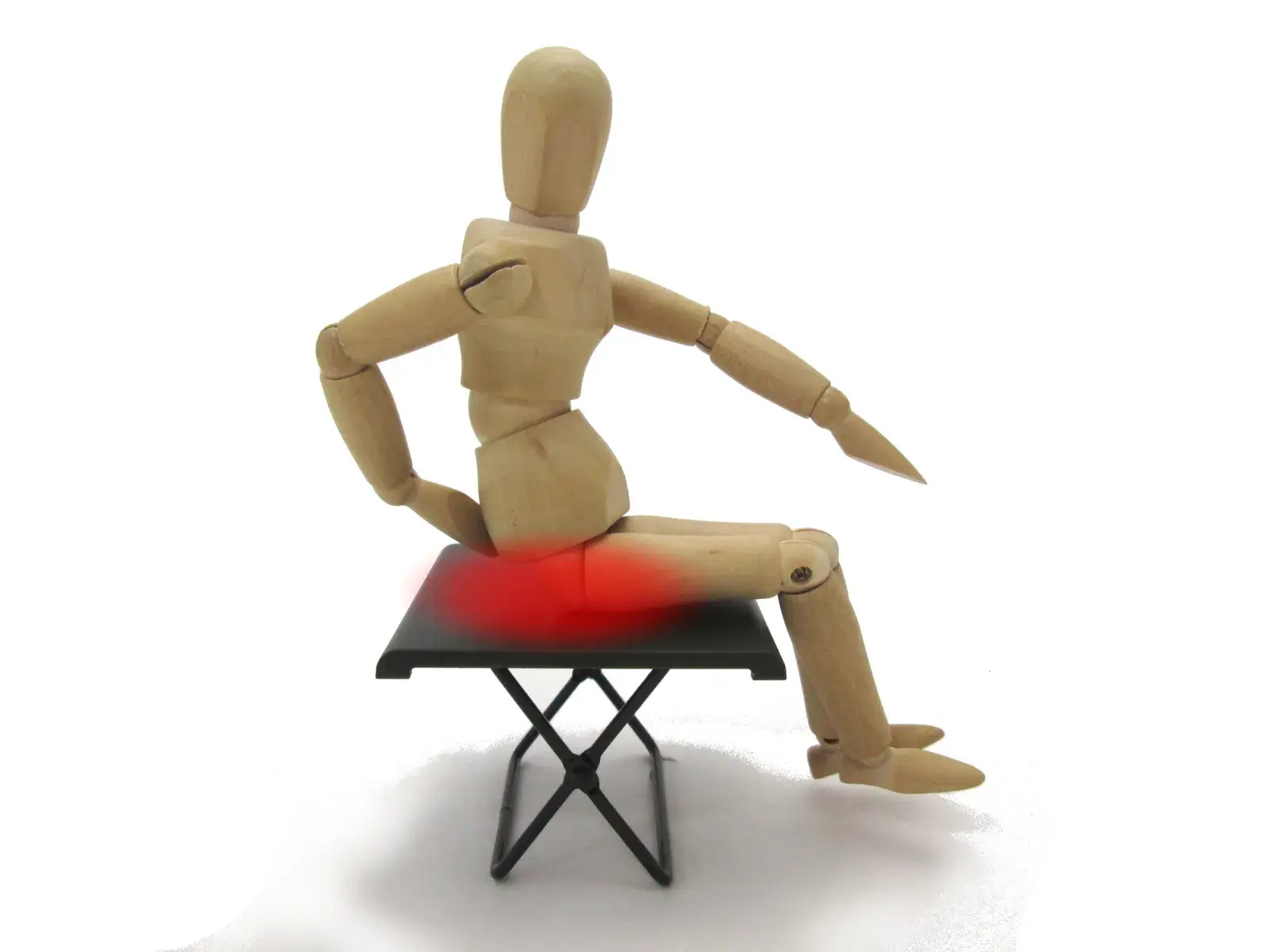 Piriformis syndromeDeep buttock pain that worsens with sitting, assessed carefully against back-related sciatica and treated with hip strength and nerve mobility work.
Two-minute assessment
Not sure which therapist is right for you?
Answer a few questions about what hurts, how long it has been going on and what you want to get back to. Our matching team reads every answer and proposes a licensed physical therapist in the network whose focus, schedule and coverage fit. Two minutes, no obligation.
- No referral needed to start in Indiana (first 42 days)
- We check which therapists work with your plan before you book
- One-on-one care in a private suite at Carmel City Center
Questions
About dry needling
Information on this website is general education, not medical advice, a diagnosis or a treatment plan. Only a licensed clinician who examines you can advise on your condition. If you may be having a medical emergency, call 911.
Something we did not cover? Ask the matching team or ring (888) 353-9975.
Is dry needling the same thing as acupuncture?
No. Both use thin needles, but acupuncture is practised by licensed acupuncturists on the basis of traditional Chinese medicine, while dry needling is a physical therapy technique aimed at muscle and movement problems found on examination.
Can a physical therapist assistant do dry needling in Indiana?
No. The Indiana rule states that dry needling must be performed directly by the physical therapist and may not be delegated, so an assistant cannot place the needles, and only a therapist with the required 50 hours of training is considered competent to do so.
How soon might I notice a difference?
Some people move more easily right after a session, while others need a few sessions before they notice change. Your therapist should recheck a specific movement each time so you can both see whether it is helping.
What should I wear to a session that might include dry needling?
Wear loose clothing that lets the therapist reach the area easily, such as shorts for the calf or hip, or a tank top for the neck and shoulders. A gown or towel can be used for areas that are harder to reach.
Can I exercise after dry needling?
Usually yes, and most therapists follow needling with exercise in the same session. Expect some soreness and avoid very hard training on the treated muscle until it settles.
Does insurance pay for dry needling?
Coverage varies, and many plans treat it differently from other physical therapy, so it may be billed separately or not covered. The therapist’s office explains this before treatment, and the cost and insurance page describes how pricing works.
Google reviews
What guests say about FlexWerk
These are live Google reviews of FlexWerk at Carmel City Center, the private-suite facility where therapists in the network practise.
Continue
Related services
 Manual therapyHands-on joint and soft-tissue treatment that eases stiffness so the exercise part of your plan can do its job.
 Orthopedic physical therapyExercise-led care for back, neck, shoulder, hip, knee and ankle problems, delivered one-on-one in a private suite.
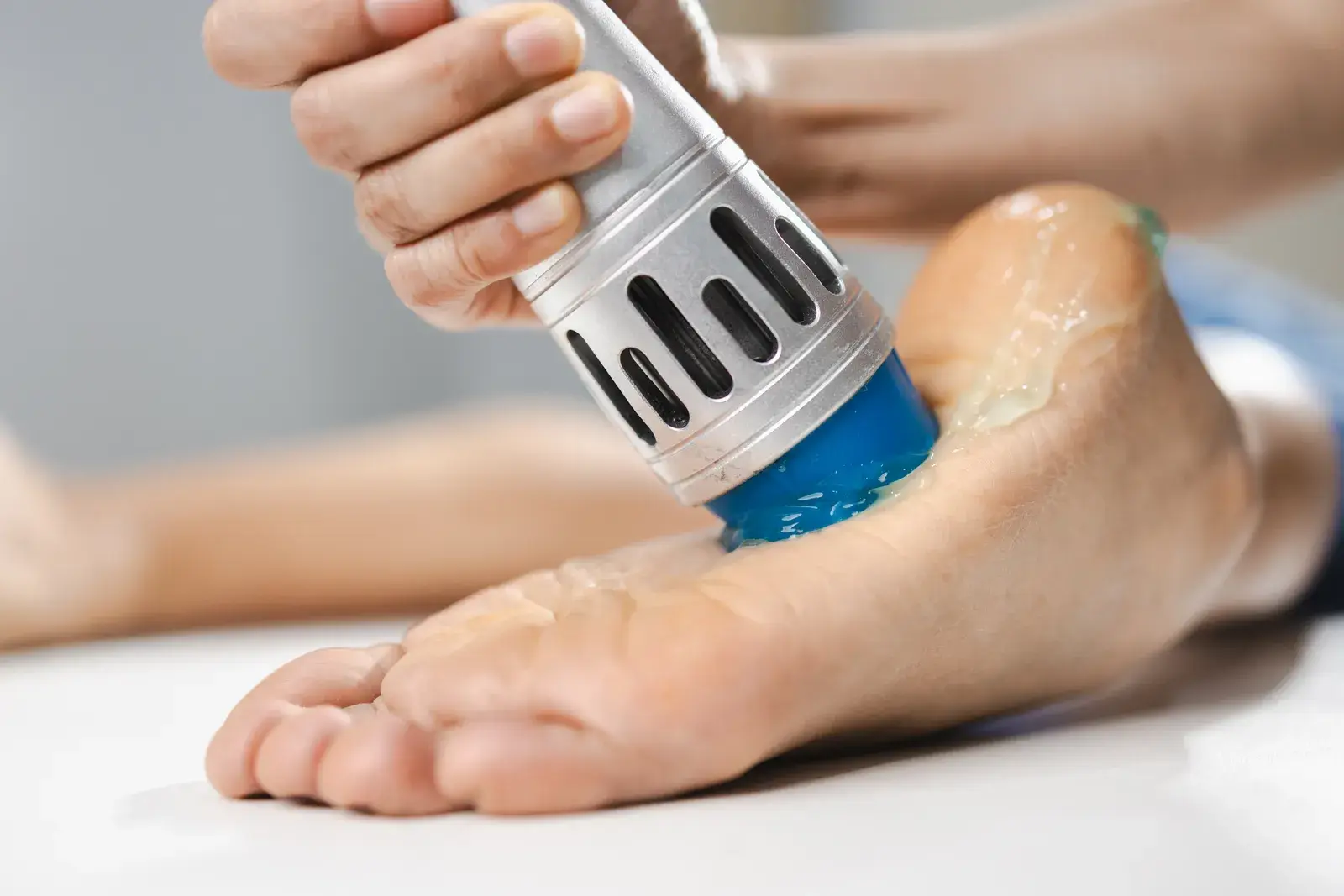 Shockwave therapyAn add-on treatment for stubborn heel and tendon pain, with mixed evidence and patchy insurance coverage.
Page reviewed By the Monon Therapy Collective editorial team

Carmel City Center · Carmel, Indiana
Start with a conversation
Tell us what hurts and what you want to get back to. We will tell you honestly whether a therapist in the network is likely a good fit for what you describe, and match you with an independent, licensed therapist who is. Only that therapist can assess what will help.
885 Monon Green Blvd, Suite 120, Carmel, IN 46032 · Monday to Friday 5 AM to 9 PM · Saturday and Sunday 7 AM to 4 PM