Piriformis syndrome physical therapy in Carmel, Indiana
Piriformis syndrome, now often called deep gluteal syndrome, is buttock pain, sometimes with symptoms down the back of the leg, thought to come from irritation of the sciatic nerve as it passes the deep hip muscles. A physical therapist in Carmel first checks that the lower back is not the real source, then uses graded hip strengthening, nerve mobility work and changes to sitting habits. Many people improve over a couple of months of consistent care.
At a glance
Common signs of piriformis syndrome
Also called: Deep gluteal syndrome, Piriformis muscle syndrome, Wallet sciatica, Buttock pain from the piriformis.
Is it really my piriformis, or is the pain coming from my back?
More often than not, buttock pain with leg symptoms comes from the lower back rather than the piriformis, which is why a careful examination matters before anyone names the muscle as the culprit. Piriformis syndrome is a diagnosis of exclusion: the clinician has to look at the spine, the sacroiliac joint and the hip joint first.
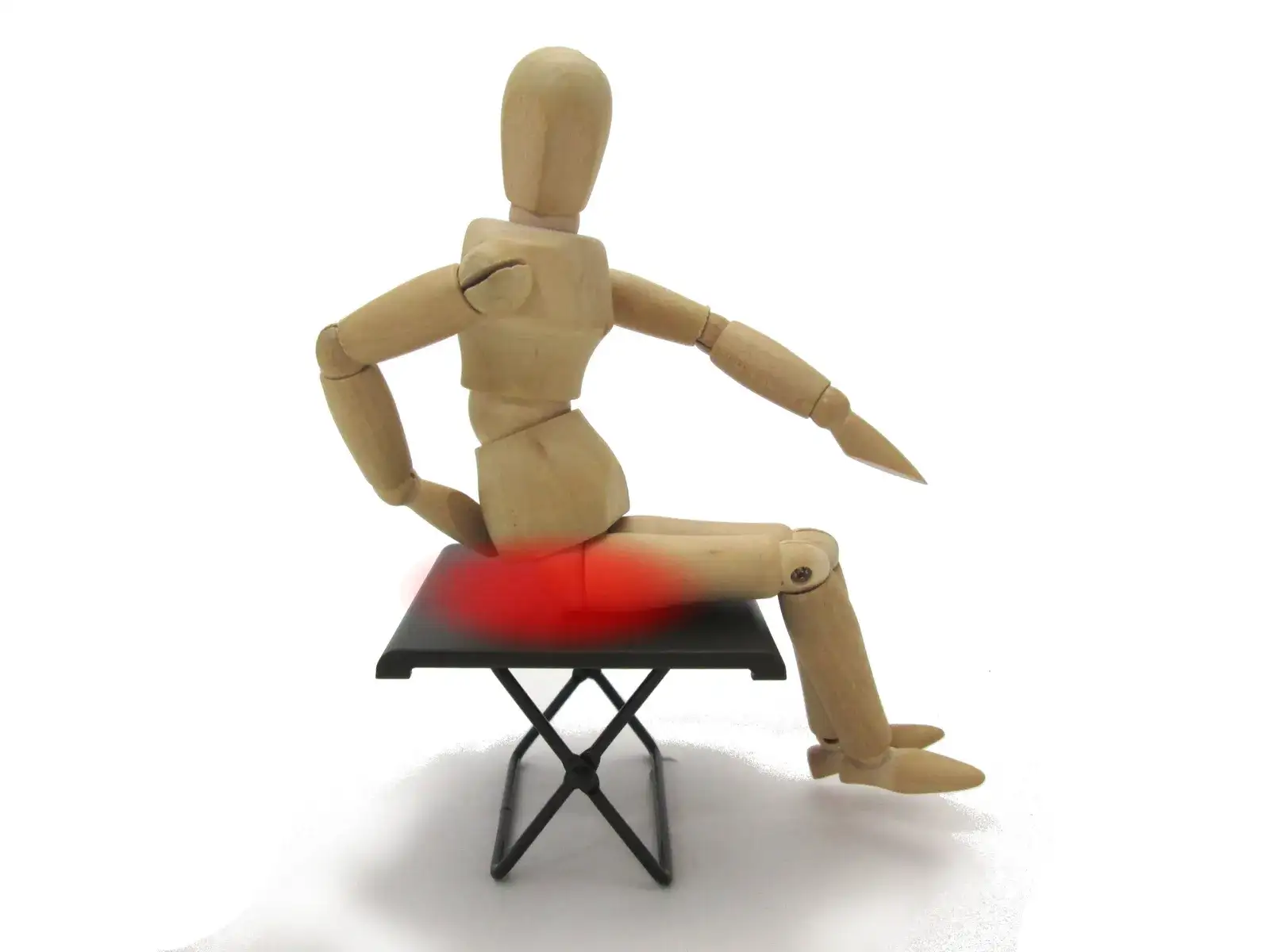
The piriformis is a small rotator muscle that runs from the base of the spine to the top of the thigh bone, and the sciatic nerve passes just beneath it, or occasionally through it. When the nerve is irritated in this deep space, people describe a buttock ache that builds with sitting, sometimes tingling down the back of the thigh, and usually no strong back pain. Long sits in a car seat on US-31 or Keystone Parkway, a wallet in the back pocket, and hours on a bike saddle along the Monon Trail are frequently mentioned triggers.
If your symptoms run below the knee into the foot, come with back pain, or include numbness and weakness, the sciatica physical therapy page is likely more relevant.
Which tests help a physical therapist separate deep gluteal pain from sciatica?
A therapist separates the two by checking whether back movements reproduce your symptoms, then testing the hip and the nerve directly. Repeated bending and arching of the lower back, a straight-leg raise and a slump test show how the spine and nerve respond. A spine that is quiet under those tests shifts suspicion toward the buttock.
Hip-focused tests follow. The therapist may press on the deep buttock, stretch the piriformis into flexion, adduction and internal rotation, and ask you to push the leg outward against resistance while seated to see whether it reproduces the familiar ache. Hip rotation range, glute strength on each side, and a sitting tolerance history round out the picture.
No single test confirms piriformis syndrome, and imaging is not routinely needed. If the findings are mixed, or you have numbness, weakness or bowel and bladder changes, the therapist will refer you to a physician rather than guess.
Why does piriformis treatment focus on strength more than endless stretching?
Treatment leans on strength because a hip that tolerates load usually calms down more reliably than one that is only stretched. Stretching and soft tissue work can bring short-term relief, but the lasting changes tend to come from graded glute and hip rotator strengthening that makes everyday positions less provocative.
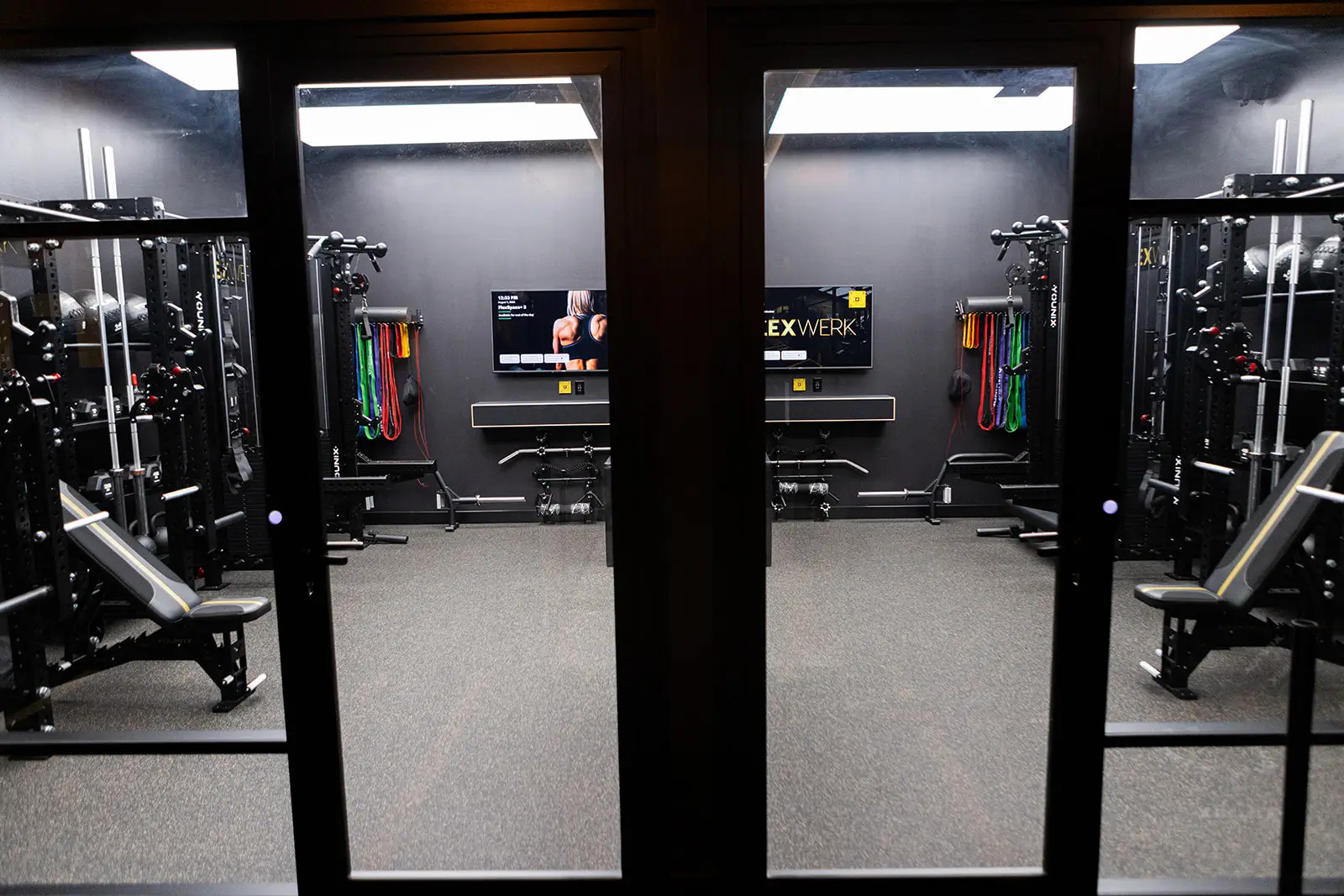
A typical plan in a private suite at FlexWerk starts with gentle, comfortable strengthening such as side-lying clamshells and bridges, then progresses to banded side steps, single-leg deadlifts and step-ups with a lifting rack and dumbbells. Nerve gliding exercises, which move the sciatic nerve gently through its path without stretching it hard, are often added when there are leg symptoms.
Manual therapy may be used to ease deep buttock tenderness in the short term, as described on the manual therapy page. Your therapist will also look at how you sit, drive and cycle, because small changes there can cut the daily irritation substantially.
- Glute and deep rotator strengthening, progressed weekly
- Sciatic nerve glides when leg symptoms are present
- Comfortable hip mobility work rather than forceful stretching
- Sitting, driving and saddle adjustments
- A walking or running plan that stays within tolerance
How long does piriformis syndrome usually take to settle?
Many people with deep gluteal pain notice clear improvement within a couple of months of regular exercise and sitting changes, though symptoms that have lasted many months can take longer. Sitting tolerance is often the first thing to improve, followed by running or cycling comfort.
Recovery is rarely a straight line. A long road trip or a day of meetings can bring a flare that settles again within a day or two, and that is not a sign of damage. If symptoms are not changing after roughly two months of consistent work, your therapist should reconsider the diagnosis and discuss a medical review, which may include injections or imaging decided by a physician.
Expect the therapist to track a few simple markers so progress is visible: how many minutes you can sit before the ache starts, whether you can cross your legs, and how far you can walk or ride before symptoms appear. When those markers move in the right direction, the plan shifts from calming the area down to building the capacity you need for longer drives, full workdays and your usual training on the trail.
What can I change today if sitting makes my buttock ache?
The quickest win is breaking up sitting: stand and walk for a minute or two every half hour or so, and take the wallet out of your back pocket. Sitting on a softer surface, or one that avoids direct pressure on the sore side, often helps on long drives too.
Keep walking, because gentle movement usually eases nerve-related buttock pain better than rest. If cycling aggravates it, raise or level the saddle and shorten rides for a while. When the ache has lasted more than a few weeks, the hip physical therapy questionnaire takes about two minutes and lets the matching team suggest a therapist whose focus fits. The page on hip pain when sitting covers related causes.
Be wary of long, aggressive stretching sessions that leave the buttock throbbing afterward, and of sitting on a tennis ball for half an hour at a time. Both can feel productive yet keep a sensitive nerve irritated. A short, steady routine of walking and gentle strength work, with any stretching kept comfortable, tends to serve an irritated deep hip far better than intense sessions done occasionally.
- Use a timer to stand up during desk work
- Remove a wallet or phone from the back pocket
- Stop for a short walk on drives longer than an hour
- Avoid sitting with the sore leg crossed over the other
When to see a physician or go to the ER first
Physical therapy is the right start for most piriformis syndrome. These symptoms are different and need medical attention before, or instead of, a physical therapy visit:
- Numbness in the groin, inner thighs or saddle area
- New difficulty controlling the bladder or bowels
- Progressive weakness in the leg or a foot that drops or slaps when you walk
- Buttock or leg pain with fever, weight loss or a history of cancer
- Severe pain that is constant and not changed by any position
If you think it is an emergency, call 911.
Two-minute assessment
Get your piriformis syndrome looked at
Tell us how your piriformis syndrome started, how long it has been going on and what it is stopping you from doing. The matching team proposes a therapist in the network who focuses on it, and you hear back, usually within one business day.
- No referral needed to start in Indiana (first 42 days)
- We check which therapists work with your plan before you book
- One-on-one care in a private suite at Carmel City Center
How therapists treat it
Kinds of care used for piriformis syndrome
- Orthopedic physical therapyExercise-led care for back, neck, shoulder, hip, knee and ankle problems, delivered one-on-one in a private suite.
- Manual therapyHands-on joint and soft-tissue treatment that eases stiffness so the exercise part of your plan can do its job.
- Running injury physical therapyFor Monon Trail regulars and race trainees: load management, strength and gait observation that keep you running while you heal.
Questions
Piriformis syndrome: what people ask
Information on this website is general education, not medical advice, a diagnosis or a treatment plan. Only a licensed clinician who examines you can advise on your condition. If you may be having a medical emergency, call 911.
Something we did not cover? Ask the matching team or ring (888) 353-9975.
Is piriformis syndrome the same as sciatica?
Not quite. Sciatica is a general term for pain along the sciatic nerve, usually from the lower back, while piriformis syndrome describes irritation of that nerve deep in the buttock.
Should I foam roll or use a massage ball on my piriformis?
Many people find it gives short-term relief, which is fine if it does not leave you sorer. It earns its place as an add-on to strengthening, and pressing hard directly on a nerve-sensitive spot can aggravate it.
Can running cause piriformis syndrome?
Running can aggravate deep buttock pain, especially with a quick increase in hills or mileage. Most runners can keep some running while strength work builds, with the volume set by symptoms.
Will I need an injection or surgery?
Most people improve with exercise and activity changes. A physician may consider an injection when progress stalls, sometimes guided by ultrasound, and surgery for this condition is uncommon. Your therapist will tell you if your progress suggests a medical opinion is worth getting, and can share findings with your physician.
Why does my buttock hurt more in the car than at my desk?
Car seats often tilt you back with the hips low, which can increase pressure in the deep buttock, and you cannot easily shift position. A cushion and regular stops usually help.
Google reviews
What guests say about FlexWerk
These are live Google reviews of FlexWerk at Carmel City Center, the private-suite facility where therapists in the network practise.
Related
Conditions that travel together
 SciaticaCare for nerve-related leg pain: find what calms it, restore movement, then rebuild strength.
 SI joint painTesting and strengthening for one-sided pain below the belt line from the sacroiliac joint.
 High hamstring tendinopathyStaged tendon loading for a deep ache at the sit bone that flares with sitting, hills and long strides.
Page reviewed By the Monon Therapy Collective editorial team

Carmel City Center · Carmel, Indiana
Start with a conversation
Tell us what hurts and what you want to get back to. We will tell you honestly whether a therapist in the network is likely a good fit for what you describe, and match you with an independent, licensed therapist who is. Only that therapist can assess what will help.
885 Monon Green Blvd, Suite 120, Carmel, IN 46032 · Monday to Friday 5 AM to 9 PM · Saturday and Sunday 7 AM to 4 PM