Knee pain when squatting is most often patellofemoral pain, an ache around or behind the kneecap that AAOS OrthoInfo links to repeated knee bending and to weak or imbalanced quadriceps and hip muscles. Pain just below the kneecap suggests a tendon problem, and sharp pain on the inner or outer joint line with twisting suggests the meniscus. Most people can keep squatting in a modified form while a physical therapist rebuilds strength, and in Indiana you can see one without a referral.
Last reviewed By the Monon Therapy Collective editorial team
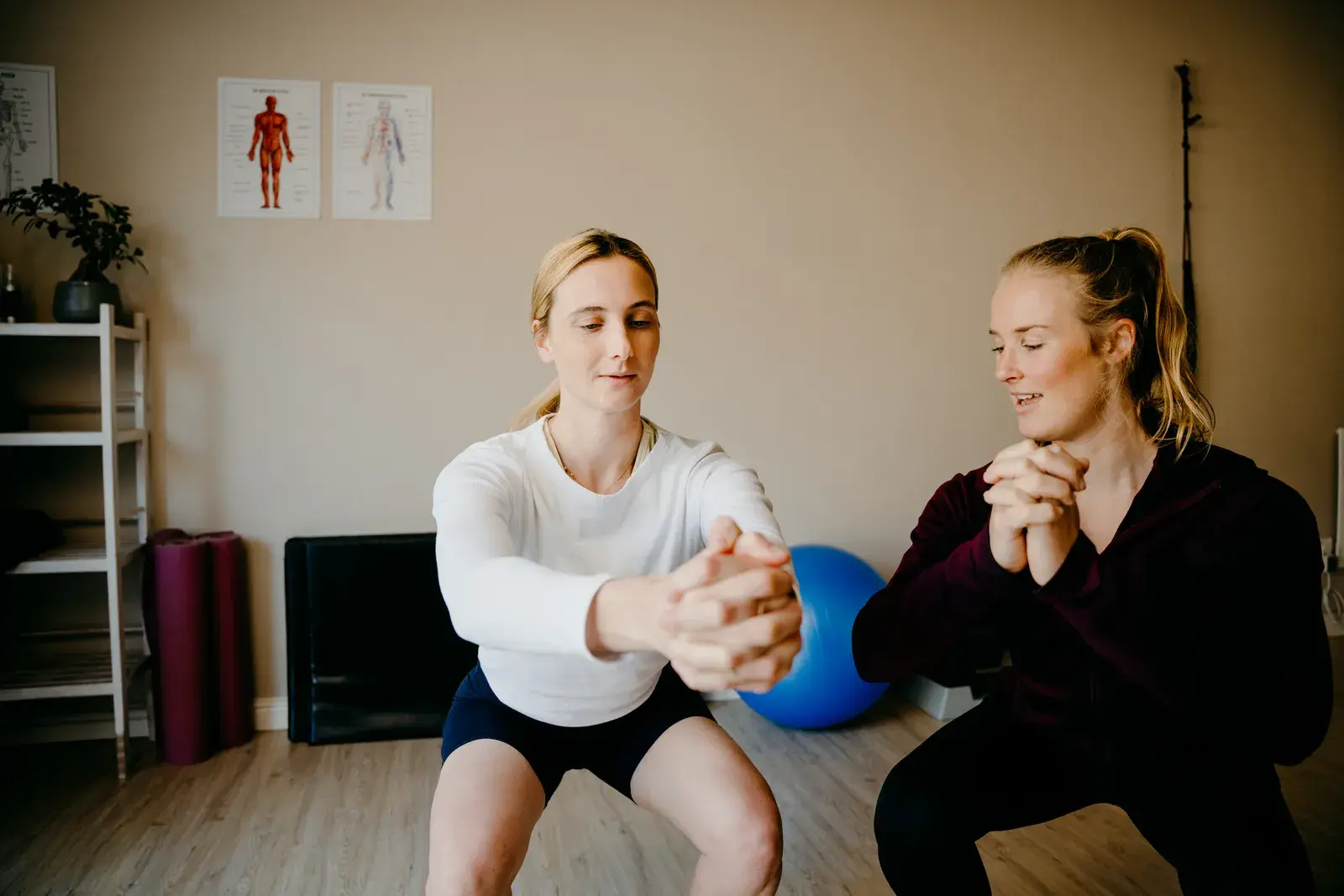
Where in the squat does it hurt, and what does that suggest?
The depth at which pain appears and the spot you can point to are the two most useful clues. Kneecap pain typically builds as you sink past a quarter squat, tendon pain bites at the bottom or as you drive up, and meniscus pain is sharpest when you twist or sit deep into a full squat.
| Likely cause | What it tends to feel like | Read more |
|---|---|---|
| Patellofemoral pain | Dull ache around or behind the kneecap, also on stairs and after sitting; sometimes crackling | Runner’s knee |
| Patellar tendinopathy | Pinpoint pain just below the kneecap, worst when jumping or loading heavily | Patellar tendinitis |
| Quadriceps tendinopathy | Pain just above the kneecap in deep, heavy squats | Quad tendinitis |
| Meniscus tear | Sharp joint-line pain in deep or twisting squats, possible catching or swelling | Meniscus tear |
| Knee osteoarthritis | Stiff, achy knee that grinds and swells after a heavy session; usually over 50 | Knee osteoarthritis |
Is it my form, or is my knee just not ready for the load?
It is usually load first and form second. A knee becomes sore in a squat when the total weight, depth, volume or frequency rises faster than the tissue can adapt, and a technique flaw only matters if it shifts even more load onto the sore structure. Plenty of people squat with knees past their toes without trouble.
That said, a few patterns are worth filming from the front and side: knees collapsing inward as you rise, the heels lifting, or the hips shooting up first so the knees take the strain. AAOS notes that weak hip muscles can let the kneecap track poorly, which is one reason hip strength work sits in most rehab plans.
How should I change my squat while my knee settles?
Keep squatting, but to a depth and weight that leaves the knee no worse the next morning. A box or bench set at the depth where pain starts gives you a reliable target; a slow three-second lowering and a pause before standing tend to be kinder to kneecap and tendon pain than bouncing out of the bottom.
Other short-term swaps include holding a goblet weight instead of a barbell, using a wider stance, or doing wall sits and Spanish squats for the quadriceps with less kneecap compression. Many lifters keep training their hips, back and upper body at full intensity while the knee is rebuilt.
- Many therapists accept mild pain during a set, provided it settles within a day
- Pain that climbs set to set, or a knee that swells, means the load was too much
- Reduce one variable at a time: depth, weight, sets or days per week
What does a physical therapist look at in a painful squat?
A therapist watches you squat, step down from a box and land from a small hop, then presses on the kneecap edges, the tendon and the joint line to find the source. They test quadriceps and hip strength side to side, measure knee and ankle range, and check the meniscus and ligaments when the story suggests a twist or swelling.
Because the suites in FlexWerk at Carmel City Center have a lifting rack, cables and dumbbells, rehab can include loaded squats and split squats as soon as your knee tolerates them, instead of stopping at band work. Lifters will find more on getting back under the bar on the physical therapy for weightlifters page.
How long does squat-related knee pain take to improve?
Many people with kneecap pain notice useful progress after several weeks of steady strengthening, while tendon problems often need a few months or longer because tendons adapt slowly. Meniscus and arthritis-related pain vary widely with the knee’s history.
If the pain has lasted more than a couple of weeks despite trimming load, the knee questionnaire gets you to the matching team, who propose a therapist in the network suited to strength-based rehab. Once you are discharged, post-rehab strength training is one way to keep building.
Stop squatting and get checked if
- The knee locks and will not straighten, or catches repeatedly
- It swelled within hours of a twist or a pop
- It gives way under you when you stand up from the squat
- It is hot, red and swollen and you feel unwell
If you think it is an emergency, call 911.
