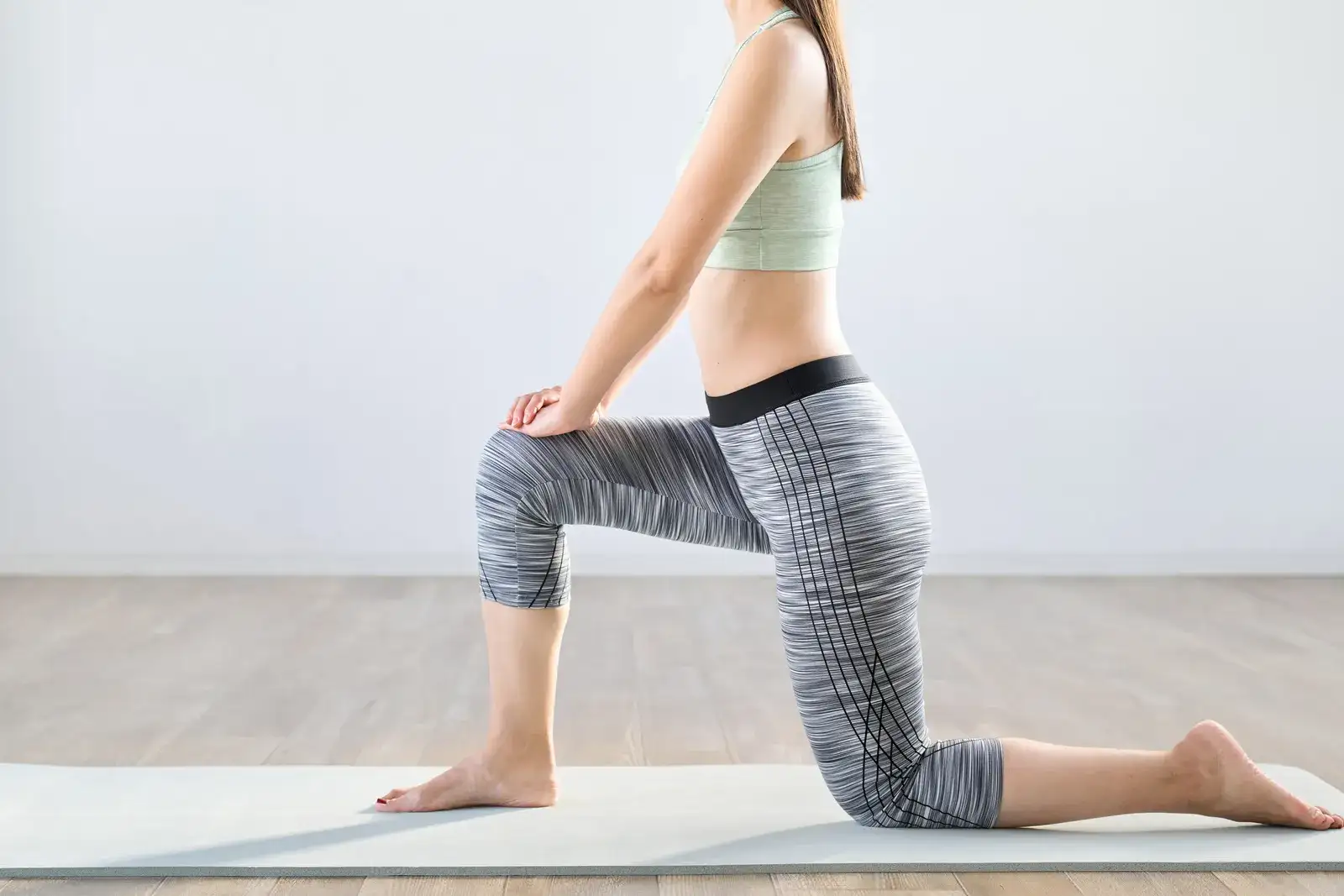
Hip flexor strain physical therapy in Carmel, Indiana
A hip flexor strain is a pulled muscle at the front of the hip, usually the iliopsoas or the rectus femoris, and most mild to moderate strains recover well with a graded physical therapy plan. In Carmel, the Indiana-licensed physical therapist you are matched with grades the strain, then rebuilds the muscle with progressive loading until sprinting, kicking and stairs feel normal. Mild strains often settle in a few weeks; severe tears can take months.
At a glance
Common signs of hip flexor strain
Also called: Iliopsoas strain, Pulled hip flexor, Rectus femoris strain, Strained hip flexor.
Which muscle did I pull when the front of my hip suddenly hurt mid-sprint?
Most often it is the iliopsoas, the deep hip flexor that runs from the lower spine and inner pelvis to the top of the thigh bone, or the rectus femoris, the one quadriceps muscle that crosses both the hip and the knee. Both work hardest when the leg swings forward fast, which is why the injury tends to happen during an acceleration, a long kick or a high knee drive.
Strains are usually described in three grades. A grade 1 strain is an overstretch with minimal fiber damage, a grade 2 is a partial tear with clear weakness, and a grade 3 is a complete or near-complete tear. Soccer players at Grand Park, sprinters, martial artists and anyone doing hill repeats before the Carmel Marathon in April are common candidates, as are people who suddenly add a lot of cycling or running.
A gradual ache at the front of the hip without a moment of injury is a different picture. That pattern can come from the hip joint itself, as described on the hip impingement physical therapy page, so the story of how it started matters.
How does a therapist grade a hip flexor strain and rule out a hip joint problem?
A physical therapist grades the strain by testing how strong and how painful the hip flexors are against resistance, how far the hip extends, and exactly where the tender spot sits. Pain and weakness when you lift the knee against the therapist’s hand, with tenderness in the muscle rather than deep in the joint, points toward a strain.
The examination also screens nearby structures. The therapist checks the hip joint’s rotation for the pinching typical of a labral problem, the groin muscles on the inner thigh, the lower back, and the hernia region. A teenager whose pain sits right on the bony point at the front of the pelvis may have pulled a small piece of bone away with the tendon, which needs an X-ray before rehab, so age and the exact spot both count.
Most strains do not need imaging. An MRI or ultrasound is usually reserved for a suspected grade 3 tear, a large bruise with a palpable gap, or a strain that is not following the expected course, and a physician orders it.
What does hip flexor rehab look like from the first week to full sprints?
Rehab moves from protecting the muscle to loading it in longer, faster positions, in that order. The first days focus on walking without a limp and gentle pain-free contractions, such as pressing the knee up into your hands while lying down and holding. Heavy stretching of a freshly strained hip flexor is usually avoided early, because it can irritate the healing fibers.
From there the work in a private suite at FlexWerk progresses through cable-resisted marching, split squats with the injured leg behind, and step-ups, then to exercises that load the hip flexor while it is lengthened, which is the position where it was injured. Core and glute strength are trained alongside, because a pelvis that tips forward under load puts extra demand on the front of the hip. The glute bridge is a common early building block.
The last stage reintroduces speed: A-skips, bounding, gradual sprint build-ups on the indoor turf corridor outside the suites, and sport-specific kicking for soccer and football players. Return is judged on strength compared with the other side and confident sprinting, not only on the calendar.
- Pain-free isometric holds and normal walking
- Resisted knee drives with a cable or band
- Split squats and step-ups with control
- Strength work with the hip in an extended, lengthened position
- Running drills, then graded sprints
- Kicking or cutting drills for field sports
How long until I can run or kick again after a pulled hip flexor?
A grade 1 hip flexor strain often allows a return to running within about 10 days to 3 weeks, while a grade 2 strain more commonly takes several weeks to a couple of months before full sprinting and kicking. A grade 3 tear, or a bony avulsion in a teenager, can take months and is managed with a physician involved. These are typical ranges consistent with OrthoInfo, the patient site of the American Academy of Orthopaedic Surgeons, not promises.
The single biggest risk is going back too soon. A strain that feels fine for easy jogging can still be weak at top speed, and re-injury tends to set recovery back further than the first strain did. That is why the final weeks are spent rebuilding speed and side-to-side strength rather than waiting for pain to vanish. The return-to-sport testing page explains what those checks involve.
What should I do in the first few days after straining my hip flexor?
In the first few days, keep walking as normally as comfort allows, stop sprinting and kicking, and avoid forcing a deep stretch into the front of the hip. Ice or heat can be used for comfort, and short, frequent walks usually help more than lying still on the couch.
If you limp badly, see a large bruise spreading down the thigh, or felt a distinct pop, get it looked at before trying to run. Otherwise, if the pain is still interfering after a week or so, a short hip physical therapy questionnaire lets the matching team propose a therapist, and Indiana law allows that therapist to evaluate and treat you for up to 42 calendar days without a referral. Insurance plans set their own rules, which the therapist’s office checks with you.
- Shorten your stride and skip hills for now
- Swap sprint sessions for easy cycling only if it is pain-free
- Avoid aggressive lunging stretches in the first week
- Note which movements hurt so you can describe them clearly
When to see a physician or go to the ER first
Physical therapy is the right start for most hip flexor strain. These symptoms are different and need medical attention before, or instead of, a physical therapy visit:
- A pop at the front of the hip followed by inability to lift the leg
- Severe pain on the bony point of the pelvis in a teenager after a kick or sprint
- Groin or hip pain with fever, chills or feeling unwell
- A tender bulge in the groin that grows with coughing or straining
- Hip pain after a fall in someone over 60, especially if walking is hard
If you think it is an emergency, call 911.
Two-minute assessment
Get your hip flexor strain looked at
Tell us how your hip flexor strain started, how long it has been going on and what it is stopping you from doing. The matching team proposes a therapist in the network who focuses on it, and you hear back, usually within one business day.
- No referral needed to start in Indiana (first 42 days)
- We check which therapists work with your plan before you book
- One-on-one care in a private suite at Carmel City Center
How therapists treat it
Kinds of care used for hip flexor strain
- Sports physical therapyRehab for active adults that goes past pain relief to the strength, power and movement your sport actually demands.
- Return-to-sport testingCriteria-based testing of strength, hopping, movement and confidence, so your return to sport rests on evidence, not the calendar.
- Running injury physical therapyFor Monon Trail regulars and race trainees: load management, strength and gait observation that keep you running while you heal.
Questions
Hip flexor strain: what people ask
Information on this website is general education, not medical advice, a diagnosis or a treatment plan. Only a licensed clinician who examines you can advise on your condition. If you may be having a medical emergency, call 911.
Something we did not cover? Ask the matching team or ring (888) 353-9975.
Should I stretch a strained hip flexor?
Not hard in the first week or so. Gentle movement is fine, but forceful lunging stretches can aggravate a fresh strain, and stretching is usually reintroduced once loading is comfortable.
Can I cycle with a hip flexor strain?
Often yes, once walking is comfortable, because cycling loads the hip flexor lightly. If pedaling or standing out of the saddle reproduces the sharp pain, hold off and let your therapist set the progression.
Why does my hip flexor keep getting re-injured?
Repeat strains usually mean the muscle was not strong enough at speed and length when you went back. A plan that ends with sprinting and kicking drills, rather than only easy exercise, reduces that risk.
Is a hip flexor strain the same as tight hip flexors?
No. A strain is an injury with damaged muscle fibers and a clear moment of onset, while the feeling of tight hip flexors from sitting is a different, usually harmless sensation.
Do I need a doctor’s note to see a physical therapist for this?
Not under Indiana’s direct access law for the first 42 calendar days, although some insurance plans ask for one. The Indiana referral answer explains the details.
Google reviews
What guests say about FlexWerk
These are live Google reviews of FlexWerk at Carmel City Center, the private-suite facility where therapists in the network practise.
Related
Conditions that travel together
 Groin strainAdductor strengthening and cutting progressions for a pulled groin, with squeeze testing to judge when you are ready to play again.
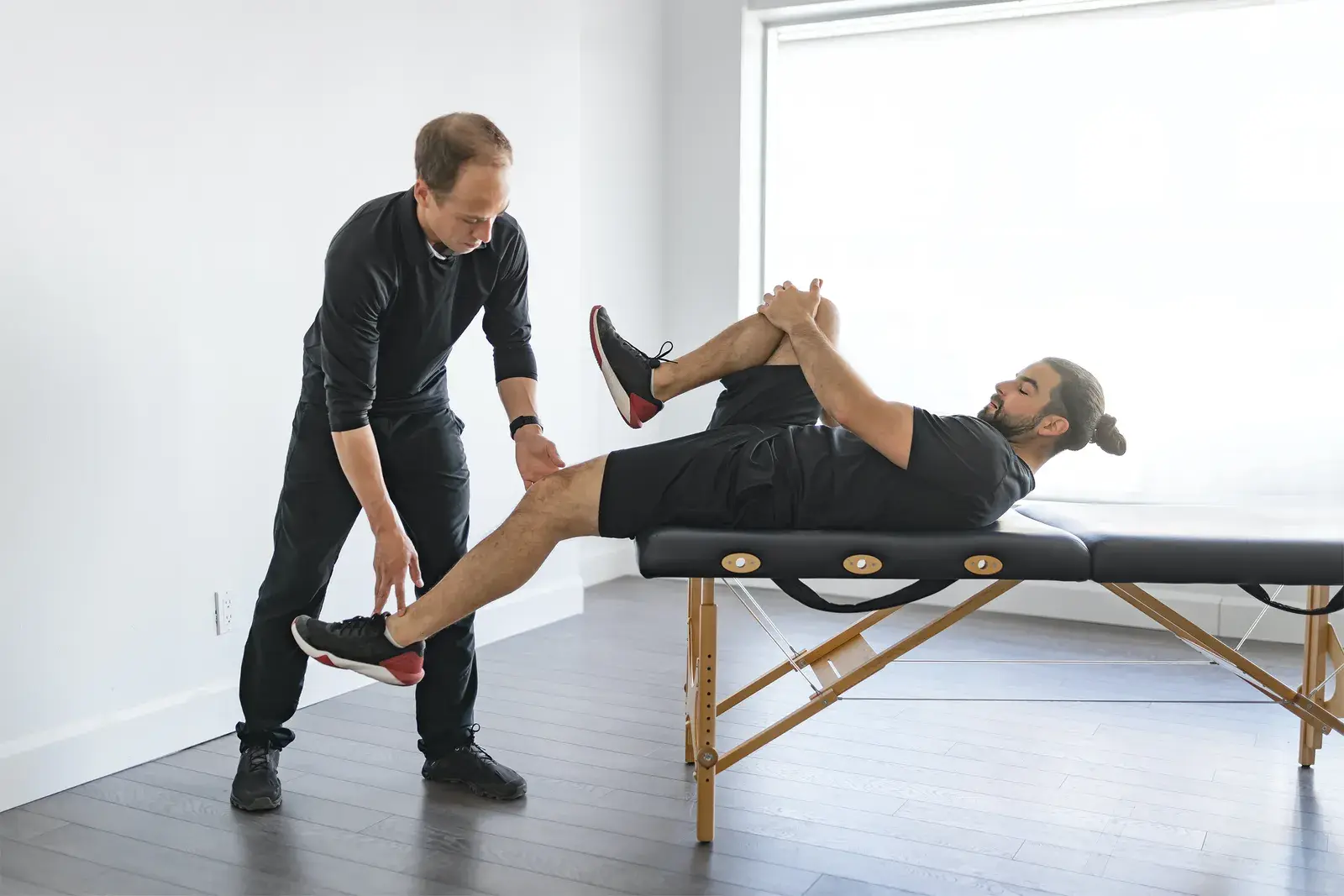 Hip impingementStrength, movement and activity changes for groin pain caused by the shape of the hip joint.
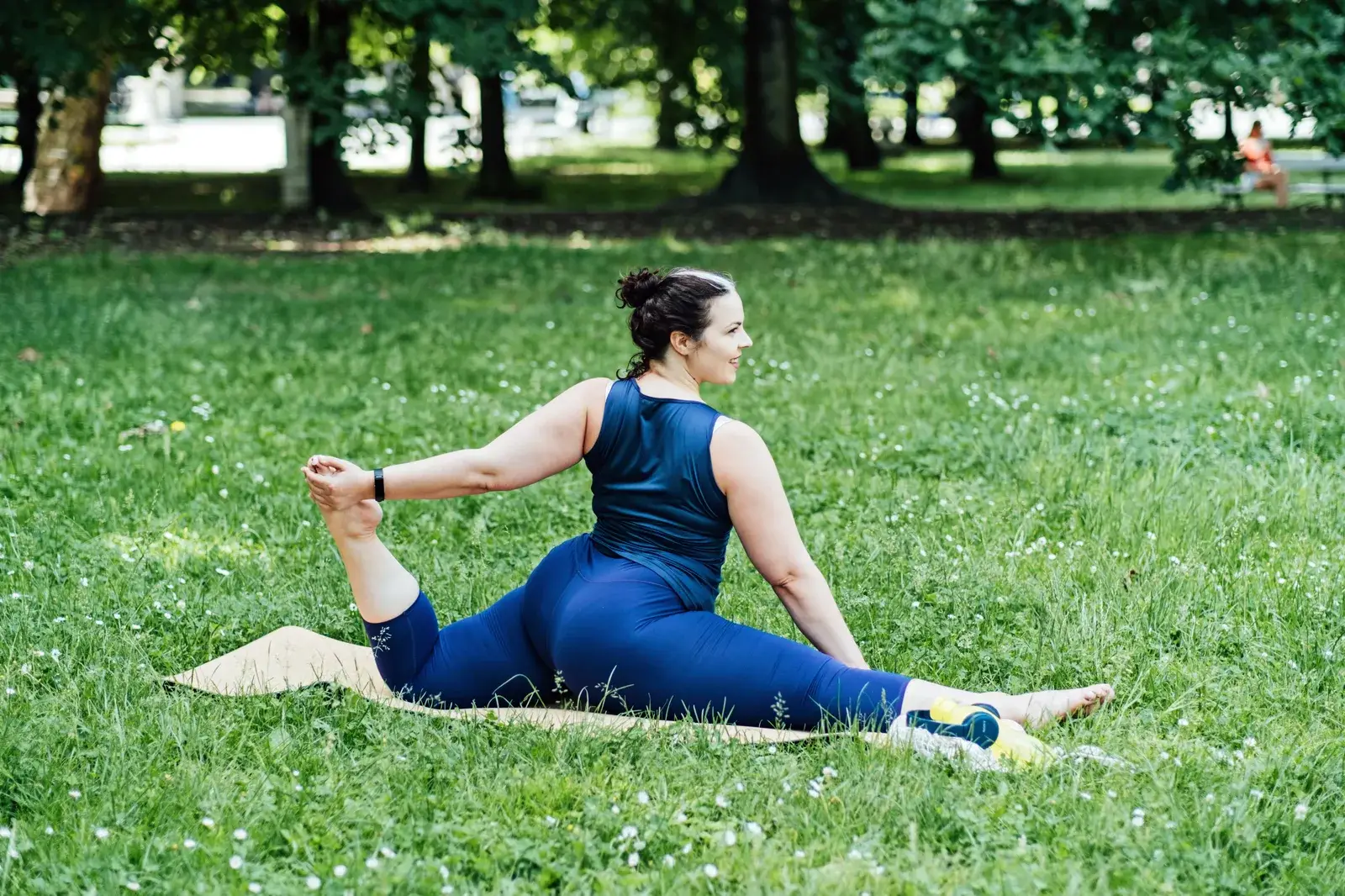 Hip painCare for outer hip pain often called bursitis, hip impingement, hip osteoarthritis and hip flexor strains.
Page reviewed By the Monon Therapy Collective editorial team

Carmel City Center · Carmel, Indiana
Start with a conversation
Tell us what hurts and what you want to get back to. We will tell you honestly whether a therapist in the network is likely a good fit for what you describe, and match you with an independent, licensed therapist who is. Only that therapist can assess what will help.
885 Monon Green Blvd, Suite 120, Carmel, IN 46032 · Monday to Friday 5 AM to 9 PM · Saturday and Sunday 7 AM to 4 PM