Hip impingement physical therapy in Carmel, Indiana
Hip impingement, or femoroacetabular impingement (FAI) syndrome, is groin or front-of-hip pain caused when an extra bony shape on the ball or socket of the hip pinches the joint rim in deep bending and rotation. Physical therapy is a standard first treatment: it teaches you which positions pinch, strengthens the hip and trunk, and adjusts training so the hip moves within comfortable ranges. A licensed therapist in the network can assess your hip in Carmel and help you decide, with a surgeon if needed, whether rehab is enough.
At a glance
Common signs of hip impingement
Also called: Femoroacetabular impingement syndrome, FAI, Cam impingement, Pincer impingement.
What are cam and pincer hip shapes, and do they always hurt?
A cam shape is extra bone where the ball of the hip meets the neck of the thigh bone; a pincer shape is a socket that covers the ball more than usual. Either can cause the rim of the socket and the cartilage seal around it (the labrum) to be pinched when the hip bends deeply and turns in. Many people have a mix of both.
These shapes are common, and many people with them on X-ray have no pain at all. The international Warwick Agreement on FAI syndrome describes it as the combination of symptoms, clinical signs and imaging findings, not the bone shape alone. That is why the diagnosis depends on the whole picture.
The shapes form during the childhood and teenage growing years, and cam shapes are reported more often in people who played high-impact sports like hockey, soccer and basketball while the hip bones were still growing. Many people with either shape never develop symptoms.
Symptoms usually build gradually. People often notice the hip first in a long car journey, during the bottom of a squat at the gym, when pulling a knee to the chest, or in the hockey stance and the long soccer kick. The pain is often described as deep and hard to point to, with a hand cupped around the side of the hip in a C shape.
Which hip tests and X-ray views help diagnose FAI syndrome?
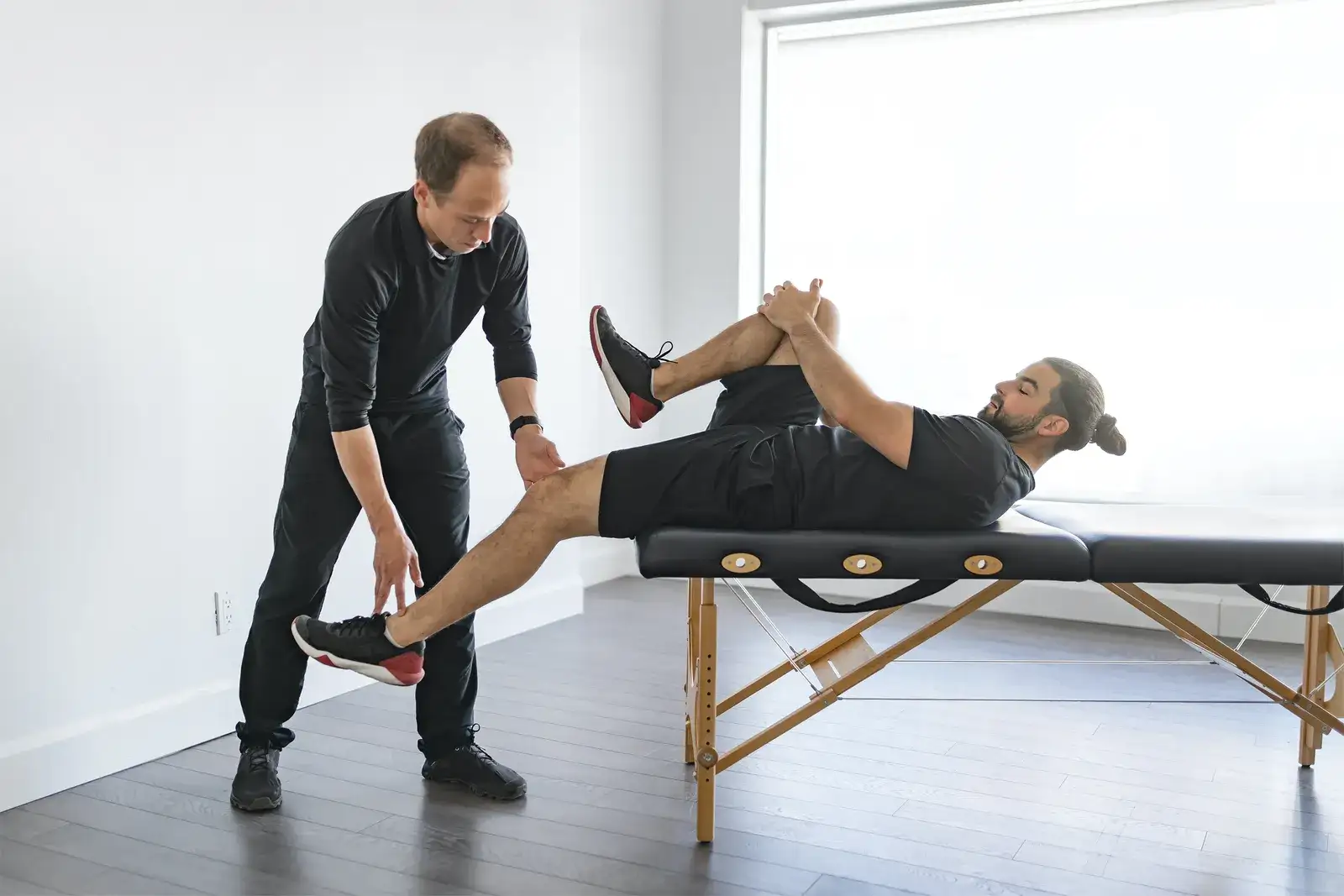
The most common examination test is FADIR (flexion, adduction, internal rotation): the therapist bends your hip to 90 degrees, brings the knee across and turns the leg in. Pain in the groin supports impingement, though the test is better at ruling it out when negative than proving it when positive.
Your therapist will also measure hip rotation, test the strength of the hip flexors, gluteals and adductors, and watch you squat, step and lunge. They will screen the low back, the pubic area and the groin muscles, since a groin strain or a sports hernia can cause similar pain.
X-rays, ordered by a physician, show the shape of the ball and socket using specific views. MRI or MR arthrography can show the labrum and cartilage. They are usually ordered when symptoms persist or surgery is being considered.
How does physical therapy manage hip impingement without surgery?
Physical therapy manages hip impingement by reducing time spent in positions that pinch the joint and building strength and control so the hip handles load better. Most programs run for around three months before results are judged.
Early work often includes avoiding very deep squats and long sitting in low seats for a while, adjusting stance width and toe angle in the gym, and choosing positions that let the hip bend without pinching. Strength work targets the gluteals, deep hip rotators, hip flexors and trunk, progressing from bridges and side planks to split squats, step-ups and deadlifts with a comfortable range.
Manual therapy may help short-term stiffness, but exercise drives change. In a private suite your therapist can adjust squat depth on a box, find a stance on the rack that works for your hip, and progress load safely. Climbers, dancers and martial artists may need sport-specific range work.
Trunk strength is a quiet but important part of the plan. When the pelvis tips forward or rotates too much during a lunge or a run, the front of the hip socket meets the thigh bone sooner. Planks, carries and anti-rotation work on the cable column help you hold the pelvis steadier, which can give the hip a little more room before it pinches.
- Squat and lunge depth guided by a box or bench
- Wider stance and turned-out toes where it helps
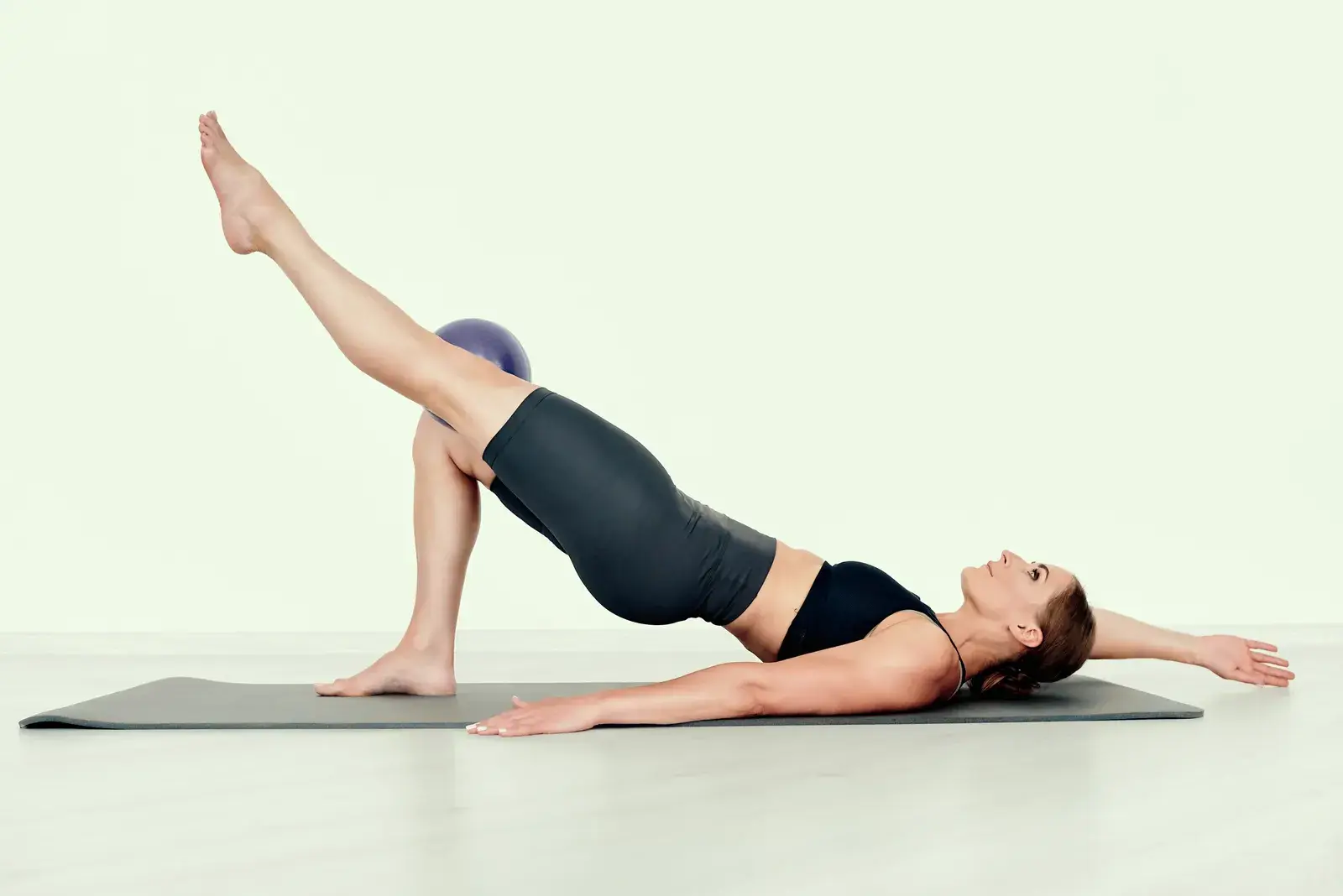
- Glute bridges, side planks and Copenhagen variations
- Hip flexor and rotator strengthening
- Running, cutting or kicking drills for sport
How long should I do rehab for FAI before considering hip arthroscopy?
A common approach is to give a structured physical therapy program around three months before deciding on surgery, unless there are signs of a large labral tear with locking. Many people improve enough with rehab to avoid surgery, while some go on to hip arthroscopy to reshape the bone and repair the labrum.
If surgery is chosen, rehab after hip arthroscopy usually takes several months, with return to cutting and pivoting sport often near the end of a three to six month window or later; see hip arthroscopy rehab. Prehab before surgery can make the recovery smoother.
Your therapist will track a few markers over those months: how long you can sit before pain starts, how deep you can squat comfortably, hip rotation range, and strength measured with a handheld dynamometer or repeated single-leg tasks. If these improve but sport still hurts, the plan usually changes before surgery is discussed. If they stall, a conversation with an orthopedic surgeon who specializes in hips is reasonable.
Hip impingement and labral tears often occur together; the hip labral tear page explains that overlap.
How can I sit, drive and train with a pinching hip?
Sit in higher chairs, use a wedge cushion so your hips are above your knees, and avoid crossing your legs. In the car, raise the seat and recline slightly; getting in by sitting first and swinging both legs in together avoids a deep pinch.
In the gym, swap deep squats for box squats, try trap-bar deadlifts and split squats, and avoid deep hip flexion under heavy load for now. Keep cardio going with walking, swimming or cycling with the seat raised. Breaststroke kick and deep yoga poses such as pigeon tend to provoke the hip, so freestyle and gentler poses are often more comfortable for now.
If your hip has been pinching for more than a few weeks, the questionnaire for hip problems is the first step; the matching team reads it and calls or texts you about therapists whose focus fits.
When to see a physician or go to the ER first
Physical therapy is the right start for most hip impingement. These symptoms are different and need medical attention before, or instead of, a physical therapy visit:
- Sudden severe hip pain after a fall or collision
- Hip pain with fever or a hot, swollen joint
- Groin pain that does not change with movement or comes with unexplained weight loss
- A hip that locks and will not move
- Groin pain in a runner that worsens with each run, which can be a stress fracture
If you think it is an emergency, call 911.
Two-minute assessment
Get your hip impingement looked at
Tell us how your hip impingement started, how long it has been going on and what it is stopping you from doing. The matching team proposes a therapist in the network who focuses on it, and you hear back, usually within one business day.
- No referral needed to start in Indiana (first 42 days)
- We check which therapists work with your plan before you book
- One-on-one care in a private suite at Carmel City Center
How therapists treat it
Kinds of care used for hip impingement
- Sports physical therapyRehab for active adults that goes past pain relief to the strength, power and movement your sport actually demands.
- Orthopedic physical therapyExercise-led care for back, neck, shoulder, hip, knee and ankle problems, delivered one-on-one in a private suite.
- Return-to-sport testingCriteria-based testing of strength, hopping, movement and confidence, so your return to sport rests on evidence, not the calendar.
Questions
Hip impingement: what people ask
Information on this website is general education, not medical advice, a diagnosis or a treatment plan. Only a licensed clinician who examines you can advise on your condition. If you may be having a medical emergency, call 911.
Something we did not cover? Ask the matching team or ring (888) 353-9975.
Can hip impingement go away with exercise?
The bone shape does not change, but many people become pain-free or nearly so by strengthening the hip and adjusting how deeply it bends under load.
Should I stop squatting with FAI?
Not necessarily. Many people keep squatting with a box to control depth, a wider stance and lighter loads while symptoms settle.
Is cycling okay with hip impingement?
Often yes, especially with the saddle raised so the hip does not bend as far at the top of the pedal stroke.
Does FAI lead to arthritis?
Hip impingement may raise the risk of hip arthritis later in some people. Whether surgery changes that risk is still being studied.
Do I need an MRI before physical therapy for FAI?
Usually not. Imaging is generally ordered by a physician when rehab is not working or surgery is being considered. See whether an MRI is needed first.
Can I keep playing hockey or soccer with FAI?
Many players continue with a reduced load while strength work builds, then return to full training in steps. Your therapist can help you decide which drills to drop for now and which to keep.
Is hip impingement common in young athletes?
Yes, especially in sports with repeated deep hip bending and twisting such as hockey, soccer and dance.
Google reviews
What guests say about FlexWerk
These are live Google reviews of FlexWerk at Carmel City Center, the private-suite facility where therapists in the network practise.
Related
Conditions that travel together
 Hip labral tearRehab for a torn hip labrum that focuses on strength, movement control and a realistic view of the MRI.
 Hip painCare for outer hip pain often called bursitis, hip impingement, hip osteoarthritis and hip flexor strains.
 Groin strainAdductor strengthening and cutting progressions for a pulled groin, with squeeze testing to judge when you are ready to play again.
Page reviewed By the Monon Therapy Collective editorial team

Carmel City Center · Carmel, Indiana
Start with a conversation
Tell us what hurts and what you want to get back to. We will tell you honestly whether a therapist in the network is likely a good fit for what you describe, and match you with an independent, licensed therapist who is. Only that therapist can assess what will help.
885 Monon Green Blvd, Suite 120, Carmel, IN 46032 · Monday to Friday 5 AM to 9 PM · Saturday and Sunday 7 AM to 4 PM