
Sports hernia physical therapy in Carmel, Indiana
A sports hernia, or athletic pubalgia, is a strain or tear of the soft tissues of the lower abdomen and groin near the pubic bone, usually from repeated twisting and kicking, and it does not involve a visible bulge like a true hernia. The American Academy of Orthopaedic Surgeons notes that in many cases 4 to 6 weeks of physical therapy resolves the pain and allows a return to sport. In Carmel, the physical therapist you are matched with builds core, hip and adductor strength before a graded return to cutting.
At a glance
Common signs of sports hernia
Also called: Athletic pubalgia, Core muscle injury, Gilmore’s groin, Inguinal disruption.
How is a sports hernia different from a regular hernia?
A sports hernia is a soft tissue injury, not a hole in the abdominal wall, so there is no bulge you can see or push back in. The term covers strains or tears where the lower abdominal muscles and the adductor tendons attach near the pubic bone, which is why clinicians now prefer names like athletic pubalgia or core muscle injury.
It typically affects athletes in sports with explosive twisting and kicking: ice hockey, soccer, wrestling and football. The deep groin pain often comes on gradually, worsens with sprinting and cutting, and fades with rest only to return when play resumes. That is a familiar pattern for players in the year-round soccer calendar around Grand Park and for hockey players coming off a long season.
A true inguinal hernia, by contrast, usually shows a bulge that grows with coughing or straining. If you can see or feel a lump in the groin, see a physician; the groin strain physical therapy page covers the simpler muscle injury that is often confused with both.
Which exam findings point toward athletic pubalgia?
Pain with a resisted sit-up, pain where the lower abdominal muscles meet the pubic bone, and pain with resisted adductor squeezing together point toward athletic pubalgia. The therapist also checks the hip joint, because hip impingement and labral problems often travel with this injury and change the plan.
Expect questions about your sport, training load and how the pain started, along with a screen of the hernia region and the lower back. A physician may order an MRI to see the abdominal and adductor attachments if symptoms persist, and a hernia or other medical cause has to be ruled out by a physician when the picture is unclear. The hip impingement page explains that related joint problem.
Because several conditions overlap in the groin, an athlete may be seen by both a therapist and a sports medicine physician. A good plan keeps both informed.
Indiana allows a physical therapist to evaluate and treat you without a referral for up to 42 calendar days, so an athlete can start rehab while waiting for a sports medicine appointment. Any finding that suggests a true hernia, a hip fracture or a problem inside the abdomen is passed to a physician first.
What does sports hernia rehab look like week by week?
Rehab moves from rest and gentle activation in the first one to two weeks, through strengthening of the core, hip and adductors, to sport-specific speed and cutting. OrthoInfo describes rest and ice for the first 7 to 10 days, then exercises for abdominal and inner thigh strength starting around two weeks after the injury.
Strength work in a private suite at FlexWerk may include dead bugs, planks and Pallof presses with a cable for the core, adductor squeezes and Copenhagen planks for the inner thigh, and split squats and lateral lunges for the hips. Rotation is reintroduced carefully, with cable chops and lifts, because twisting is where the injury lives.
The final stage takes the athlete onto the turf corridor outside the suites for acceleration, deceleration, cutting and kicking drills, building toward full practice. Each step depends on the previous one causing no flare the next day. Goalkeepers, hockey defenders and tennis players get drills that mirror their own movement demands, such as diving saves, crossover skating patterns or wide forehand lunges, because generic agility work does not fully prepare the groin for those positions.
- Weeks 1 to 2: rest from sport, walking, gentle core activation
- Weeks 2 to 4: progressive core, adductor and hip strengthening
- Weeks 4 to 6: rotational strength, running and agility drills
- After that: cutting, kicking and full practice as tolerated
When is surgery considered for a sports hernia?
Surgery is usually considered when pain returns each time you go back to sport despite a thorough rehab program. OrthoInfo notes that in many cases 4 to 6 weeks of physical therapy resolves the pain, and that surgery to repair the torn tissue may be needed if pain comes back with sport.
A general or orthopedic surgeon makes that call, sometimes after imaging and a trial of injections. If you do have surgery, structured rehab follows, often over several weeks before full return to play, and your therapist can coordinate with the surgeon’s protocol. The post-surgical rehabilitation page describes how that works in general.
Whether or not surgery happens, long-term prevention centers on keeping core and adductor strength high and managing training spikes, particularly at the start of a season.
A preseason routine that includes adductor strength, rotational core work and a gradual build in sprinting volume is a practical safeguard for soccer and hockey players. Your therapist can turn the late stages of rehab into exactly that kind of routine so it continues after discharge.
Can I keep training while my groin and lower abdomen heal?
Usually you can keep training in ways that do not provoke the pain, such as cycling, upper-body strength work and straight-line activity if it is comfortable. What generally has to pause is sprinting, cutting, kicking and heavy sit-up-style core work.
Track how the groin feels the morning after each session: if it is worse, the load was too much. If the pain has lasted beyond a couple of weeks or keeps coming back each time you return to play, the two-minute questionnaire helps the matching team suggest a therapist who works with athletes. The sports physical therapy page explains how that care usually runs.
Be honest with coaches about the injury. Players who hide deep groin pain and keep playing often end up missing more of the season than those who take a structured break early, and a clear plan with dates for each stage makes that conversation easier.
- Pause kicking, sprinting and sharp cutting
- Replace sit-ups with planks and dead bugs
- Use cycling or swimming to stay fit if pain-free
- Return to sport gradually through practice before matches
When to see a physician or go to the ER first
Physical therapy is the right start for most sports hernia. These symptoms are different and need medical attention before, or instead of, a physical therapy visit:
- A visible or palpable bulge in the groin
- Testicular pain, swelling or a lump
- Groin pain that keeps getting worse despite several weeks of complete rest
- Groin pain with fever, nausea or vomiting
- Sudden severe groin pain after a fall or collision
- Blood in the urine or pain with urination
If you think it is an emergency, call 911.
Two-minute assessment
Get your sports hernia looked at
Tell us how your sports hernia started, how long it has been going on and what it is stopping you from doing. The matching team proposes a therapist in the network who focuses on it, and you hear back, usually within one business day.
- No referral needed to start in Indiana (first 42 days)
- We check which therapists work with your plan before you book
- One-on-one care in a private suite at Carmel City Center
How therapists treat it
Kinds of care used for sports hernia
- Sports physical therapyRehab for active adults that goes past pain relief to the strength, power and movement your sport actually demands.
- Return-to-sport testingCriteria-based testing of strength, hopping, movement and confidence, so your return to sport rests on evidence, not the calendar.
- Post-surgical rehabilitationProtocol-led rehab after joint replacement, ligament, tendon and spine surgery, in a quiet private room instead of a crowded gym.
Questions
Sports hernia: what people ask
Information on this website is general education, not medical advice, a diagnosis or a treatment plan. Only a licensed clinician who examines you can advise on your condition. If you may be having a medical emergency, call 911.
Something we did not cover? Ask the matching team or ring (888) 353-9975.
Can a sports hernia heal without surgery?
Many do. OrthoInfo notes that 4 to 6 weeks of physical therapy resolves the pain in many cases, with surgery considered when pain returns with sport.
Is a sports hernia an actual hernia?
No. Despite the name, it is a soft tissue injury without the bulge of a true inguinal hernia. That is why many sports medicine clinicians now prefer the terms athletic pubalgia or core muscle injury.
Can I play through a sports hernia?
Many athletes try, but continuing to sprint and kick usually keeps the pain going. A structured break with targeted strengthening tends to be quicker overall.
Who diagnoses a sports hernia?
A physician, often a sports medicine doctor or surgeon, confirms it, sometimes with an MRI. A physical therapist can identify the pattern and refer when needed, and often starts rehab while that medical workup is underway.
Does hockey or soccer make sports hernias more likely?
Both involve forceful twisting and kicking with the leg extended, which loads the area where the abdominal and adductor tissues meet. Limited hip rotation can add to that load, which is one reason a therapist checks the hip joint as part of the exam. The physical therapy for hockey players page covers related issues.
Google reviews
What guests say about FlexWerk
These are live Google reviews of FlexWerk at Carmel City Center, the private-suite facility where therapists in the network practise.
Related
Conditions that travel together
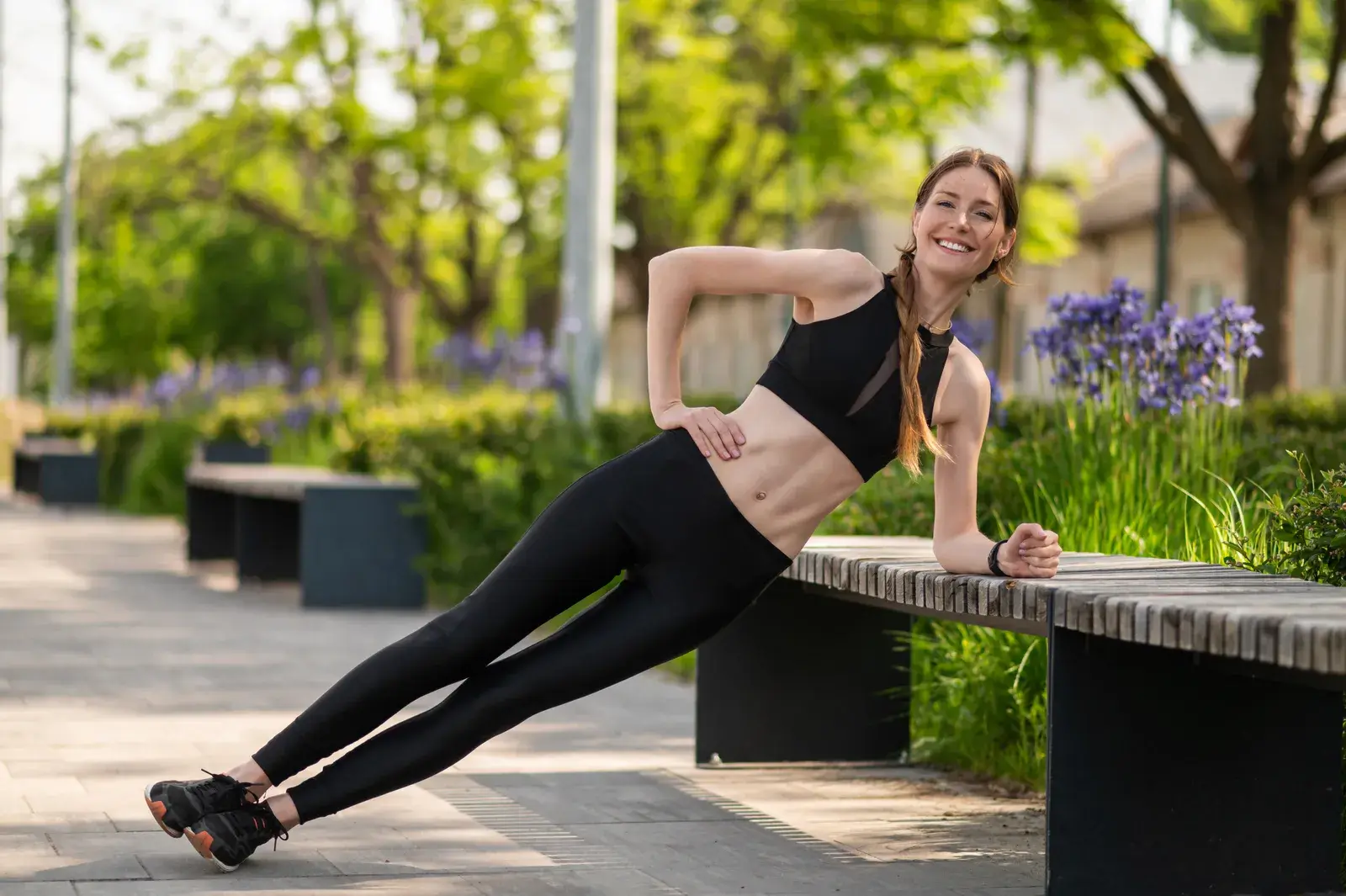 Groin strainAdductor strengthening and cutting progressions for a pulled groin, with squeeze testing to judge when you are ready to play again.
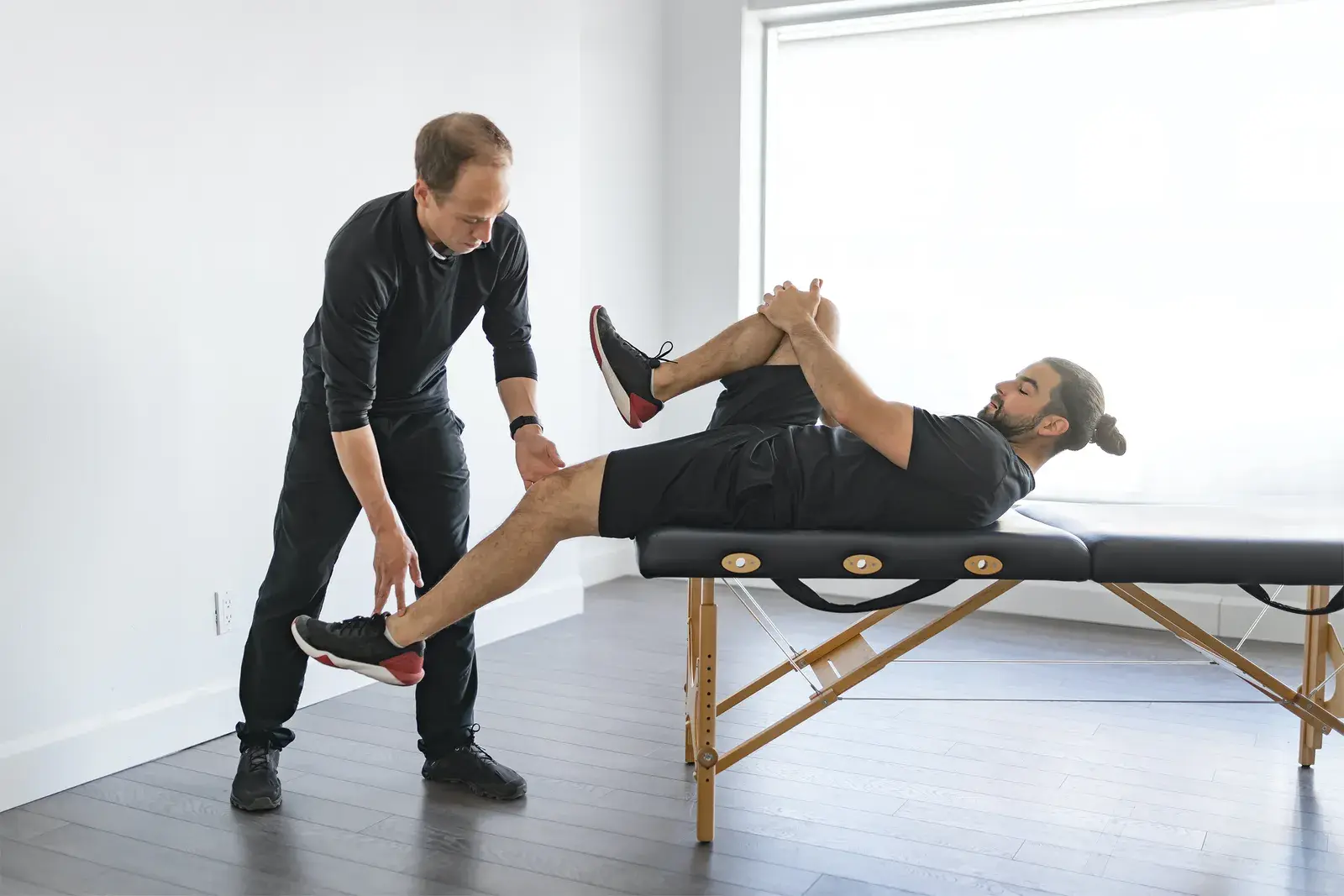 Hip impingementStrength, movement and activity changes for groin pain caused by the shape of the hip joint.
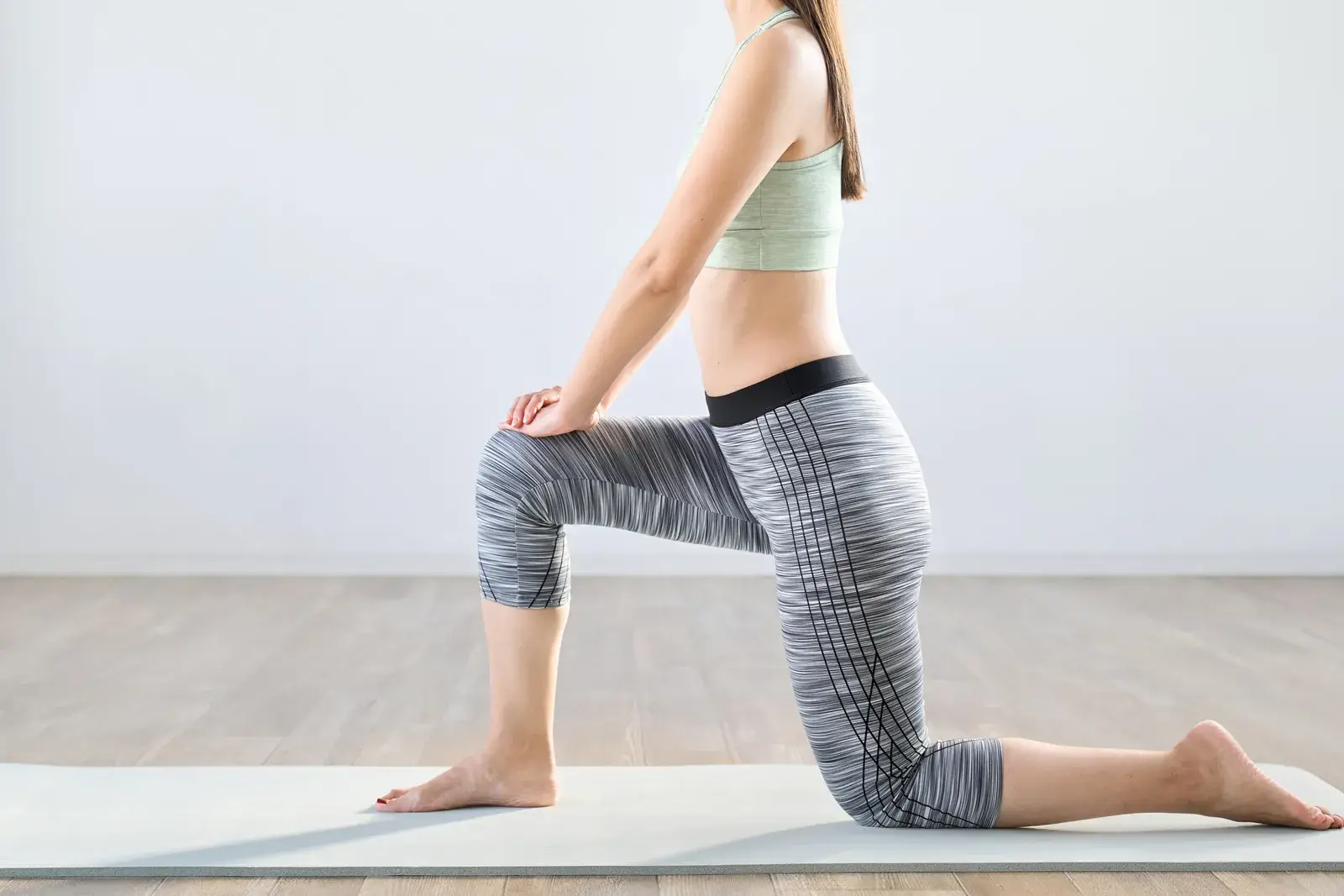 Hip flexor strainGraded rehab for a pulled muscle at the front of the hip, from gentle holds back to sprinting, kicking and hill running.
Page reviewed By the Monon Therapy Collective editorial team

Carmel City Center · Carmel, Indiana
Start with a conversation
Tell us what hurts and what you want to get back to. We will tell you honestly whether a therapist in the network is likely a good fit for what you describe, and match you with an independent, licensed therapist who is. Only that therapist can assess what will help.
885 Monon Green Blvd, Suite 120, Carmel, IN 46032 · Monday to Friday 5 AM to 9 PM · Saturday and Sunday 7 AM to 4 PM