The Copenhagen plank is a side plank with the top leg resting on a bench: the inner thigh muscles of that top leg pull the body up into a straight line while the bottom leg hangs free or lifts. It is one of the few simple exercises that loads the groin muscles heavily, so physical therapists use it for groin strain, some hip flexor strains and kicking and skating sports. This page is general education; a therapist who examines you decides when it is appropriate and how long to hold.
Last updated By the Monon Therapy Collective editorial team
- Main muscles
- Adductors (inner thigh) of the top leg, plus the trunk
- Equipment
- A sturdy bench or low box about knee height
- Two versions
- Short lever (knee on bench) and long lever (ankle on bench)
- Often used for
- Groin strain, hip flexor strain, kicking and skating sports
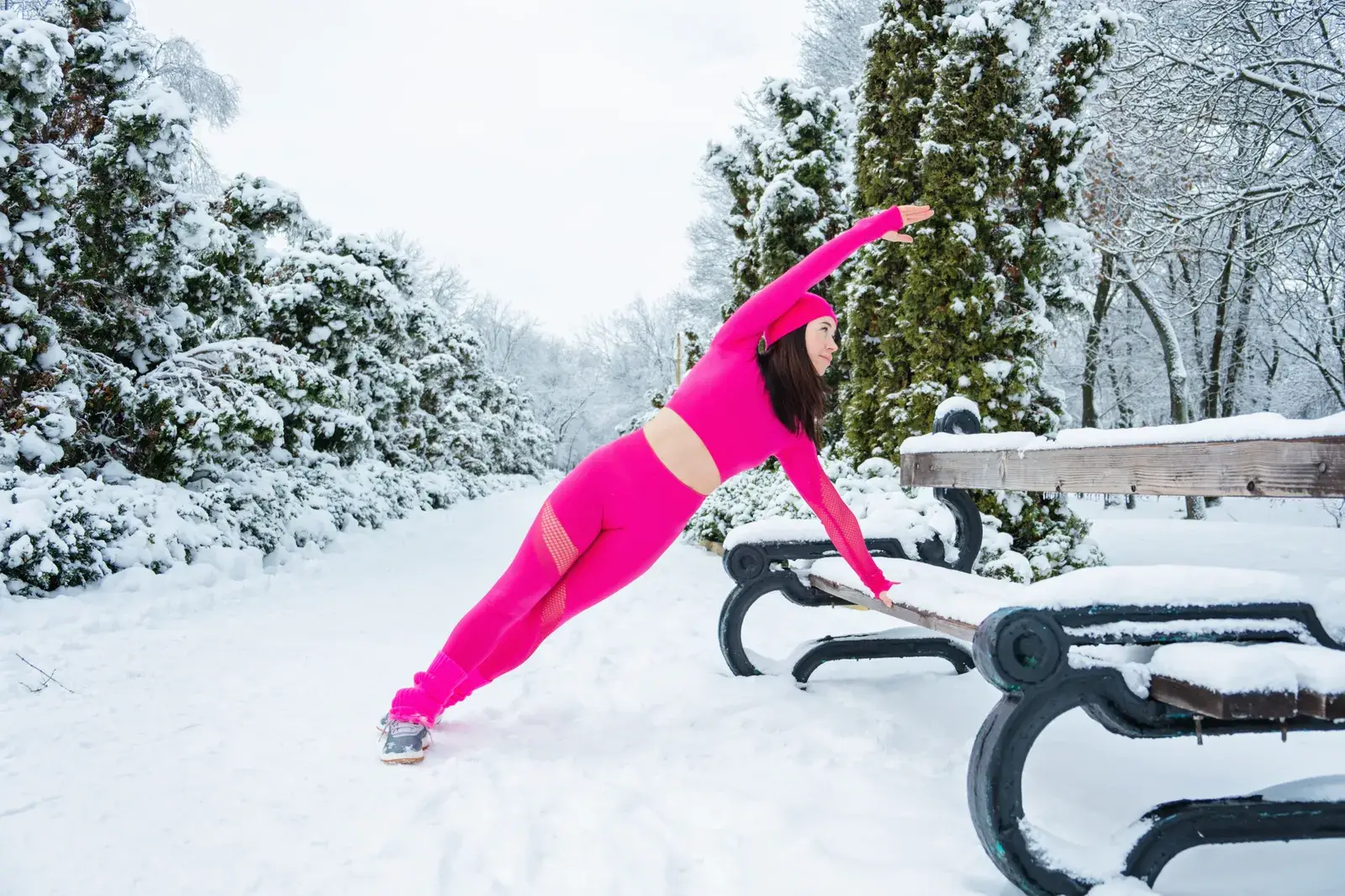
What makes the Copenhagen plank different from an ordinary side plank?
The difference is where the support comes from. In an ordinary side plank the bottom leg holds you up; in the Copenhagen plank the top leg, resting on a bench, does that work, so the adductor muscles on the inside of that thigh carry a large share of your body weight.
The exercise takes its name from Copenhagen, where Danish sports researchers developed and studied it as a groin-strengthening exercise for soccer players. It needs only a bench, which is why it has spread from team training rooms to home programs and gyms.
Short lever or long lever: which Copenhagen version should I start with?
Most people should start with the short lever, knee on the bench, because the shorter distance between the bench and the hip makes the load on the groin much smaller. The long lever, with the ankle on the bench, is a real step up and often comes weeks later.
A bench at about knee height suits most people. A higher bench tilts the body and makes the shoulder work harder, while a very low one shortens the range. The private suites at Carmel City Center have a bench, which makes it easy for a therapist to adjust the setup during a session.
How is the Copenhagen plank used for groin and hip flexor problems?
For a groin strain, the Copenhagen plank is one of the main ways to rebuild adductor strength once simple squeezes no longer hurt. It is common in rehab for soccer, hockey and other sports that kick, cut or skate, where the inner thigh works hard to slow the leg.
Some inner-thigh muscles also help lift the thigh, so the plank can play a supporting role after a hip flexor strain as well. Groin pain in athletes has several causes, including a sports hernia, so a therapist confirms the source before deciding how hard to load it. Skaters can read more on the hockey players page, or ask for a match via the groin and hip questionnaire.
Copenhagen plank mistakes to avoid
The most common mistake is letting the hips sag, which shifts the effort into the shoulder and the bottom leg. If the hips will not stay up, switch to a shorter lever or a shorter hold.
- Hips dropping toward the floor partway through the hold.
- Rolling the chest forward or backward instead of staying stacked.
- Starting with the long lever before the short lever is comfortable.
- Shrugging the support shoulder up toward the ear.
- Holding the breath, which makes the hold feel harder than it is.
Easier and harder Copenhagen variations
Before the plank itself, a lying ball squeeze is the usual starting point; after the long lever, adding leg movement or a light weight increases the load further.
- Easiest: lying on your back, squeeze a ball or pillow between the knees.
- Easier: a side plank from the knees with a ball squeezed between them.
- Short lever hold, knee on the bench.
- Short lever with the bottom leg lifting to the bench.
- Long lever hold, ankle on the bench.
- Harder: long lever with the bottom leg moving, or a light weight held at the hip.
Copenhagen plank, step by step
Start with the short-lever version described here; the long-lever version follows the same steps with the ankle on the bench.
Set up beside the bench
Lie on your side next to a sturdy bench, propped on your forearm with the elbow directly under the shoulder. Rest the inside of your top knee on the bench.
Position the bottom leg
Let the bottom leg lie on the floor under the bench. Stack the hips and shoulders so you are not leaning forward or back.
Lift by pressing down
Press the top leg down into the bench to lift the hips until your body forms a straight line from head to knee. The lift comes from the inner thigh of the top leg.
Hold or move the bottom leg
Hold the position while breathing steadily, or, in harder versions, lift the bottom leg up to meet the bench and lower it again.
Lower gently and switch
Lower the hips to the floor with control, rest, then set up on the other side. How long to hold and how many rounds is for your therapist to decide.
Stop the Copenhagen plank and see someone if...
- A sharp or pulling pain in the groin stops the hold.
- Groin pain comes with a bulge in the groin or pain with coughing.
- Pain spreads into the testicle or lower abdomen.
- The hip clicks or catches with pain at the front of the joint.
- Pain is still worse the next morning after a session.
If you think it is an emergency, call 911.
