Hip osteoarthritis physical therapy in Carmel, Indiana
Exercise-based physical therapy is a first-line treatment for hip osteoarthritis recommended by major clinical guidelines, and it often reduces pain and improves walking even when X-rays show joint narrowing. In Carmel, the licensed physical therapist you are matched with measures how your hip moves and how far you can walk, then builds a strength and mobility plan around daily tasks like stairs, socks and getting out of the car. Many people notice change within the first couple of months.
At a glance
Common signs of hip osteoarthritis
Also called: Hip arthritis, Degenerative joint disease of the hip, Coxarthrosis, Wear and tear arthritis of the hip.
Why does an arthritic hip hurt in the groin and sometimes the knee?
The hip joint sits deep in the front of the pelvis, so pain from it is most often felt in the groin and front of the thigh, and it can spread down to the knee along shared nerves. Pain on the outside of the hip, where people point when they say hip, is more often a tendon problem such as hip bursitis.
Osteoarthritis is a change in the whole joint: the cartilage thins, the bone underneath remodels, and the joint lining can become irritated. It is common with age, after an old injury, or with a hip shape that was slightly unusual from youth. An early hallmark is losing the ability to turn the leg inward and to bring the knee toward the chest, which explains why socks, shoes and climbing into a car get harder before walking does.
Pain and X-ray findings do not track closely. Some people with marked joint narrowing walk the Monon Trail daily with little pain, while others with mild changes struggle, so treatment is guided by what you can do rather than the picture.
What does a physical therapist measure at a first hip arthritis visit?
A therapist measures hip motion in every direction, the strength of the muscles that support the joint, and how you perform the tasks that matter to you. Rotation and flexion range are compared side to side, and the glutes, quadriceps and hip flexors are tested individually.
Expect functional tests as well: how many times you can stand from a chair in 30 seconds, how you climb a step, how you walk and whether a limp appears, and sometimes a timed walk. These numbers give a baseline to compare against after several weeks. The therapist will also ask about other joints, your activity goals, sleep and any surgery you have been told you may need.
If you already have X-rays, bring the report, but you do not need new imaging to start. The therapist will flag anything that suggests a different problem, such as night pain unrelated to movement or a sudden change in the joint, for a physician to review.
Which exercises and treatments help hip osteoarthritis most?
Progressive strengthening of the hip and thigh muscles, combined with mobility work and regular aerobic activity, is the core of treatment. The 2019 American College of Rheumatology and Arthritis Foundation guideline strongly recommends exercise for people with hip osteoarthritis, and manual therapy can be added to ease stiffness and make exercise more comfortable.
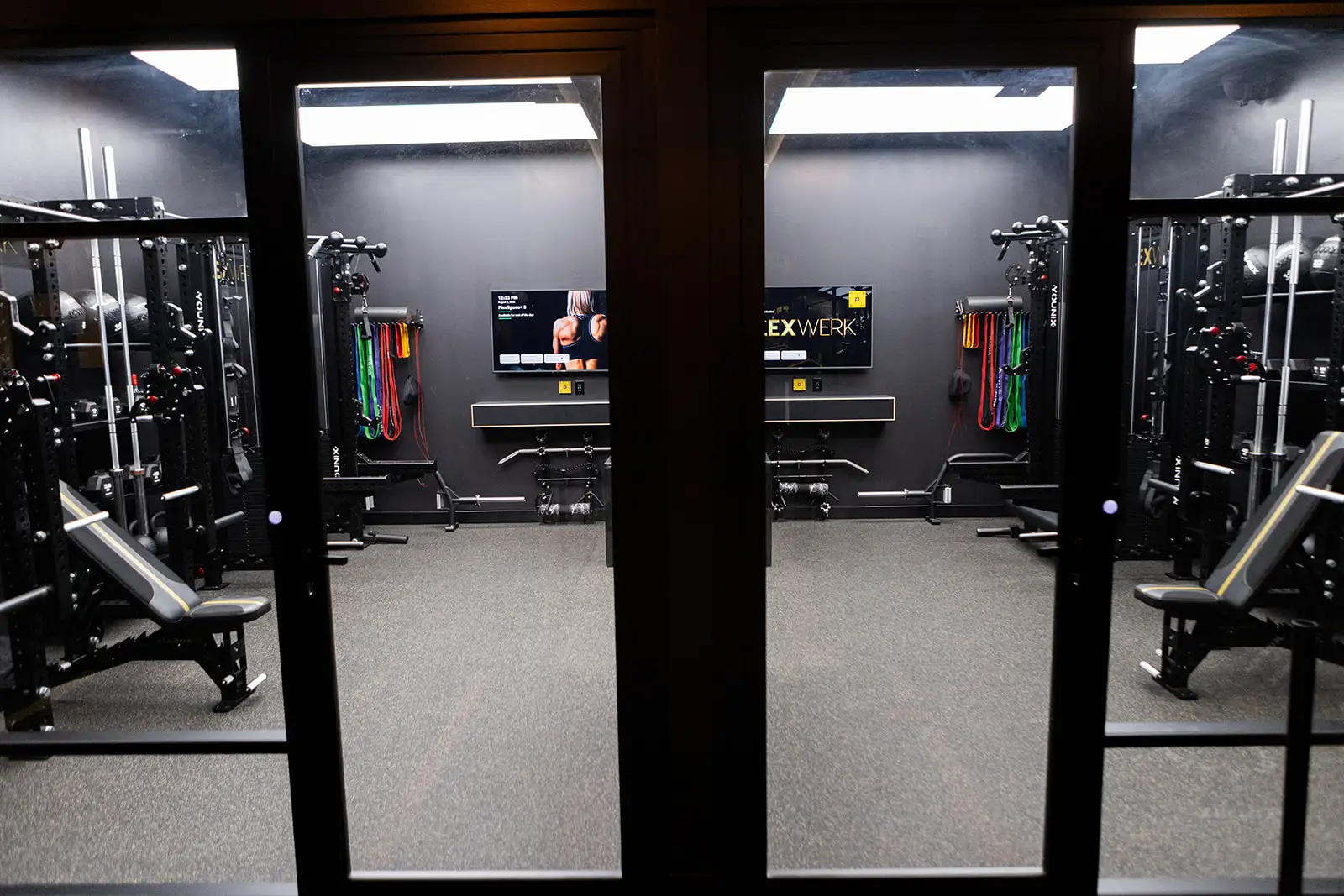
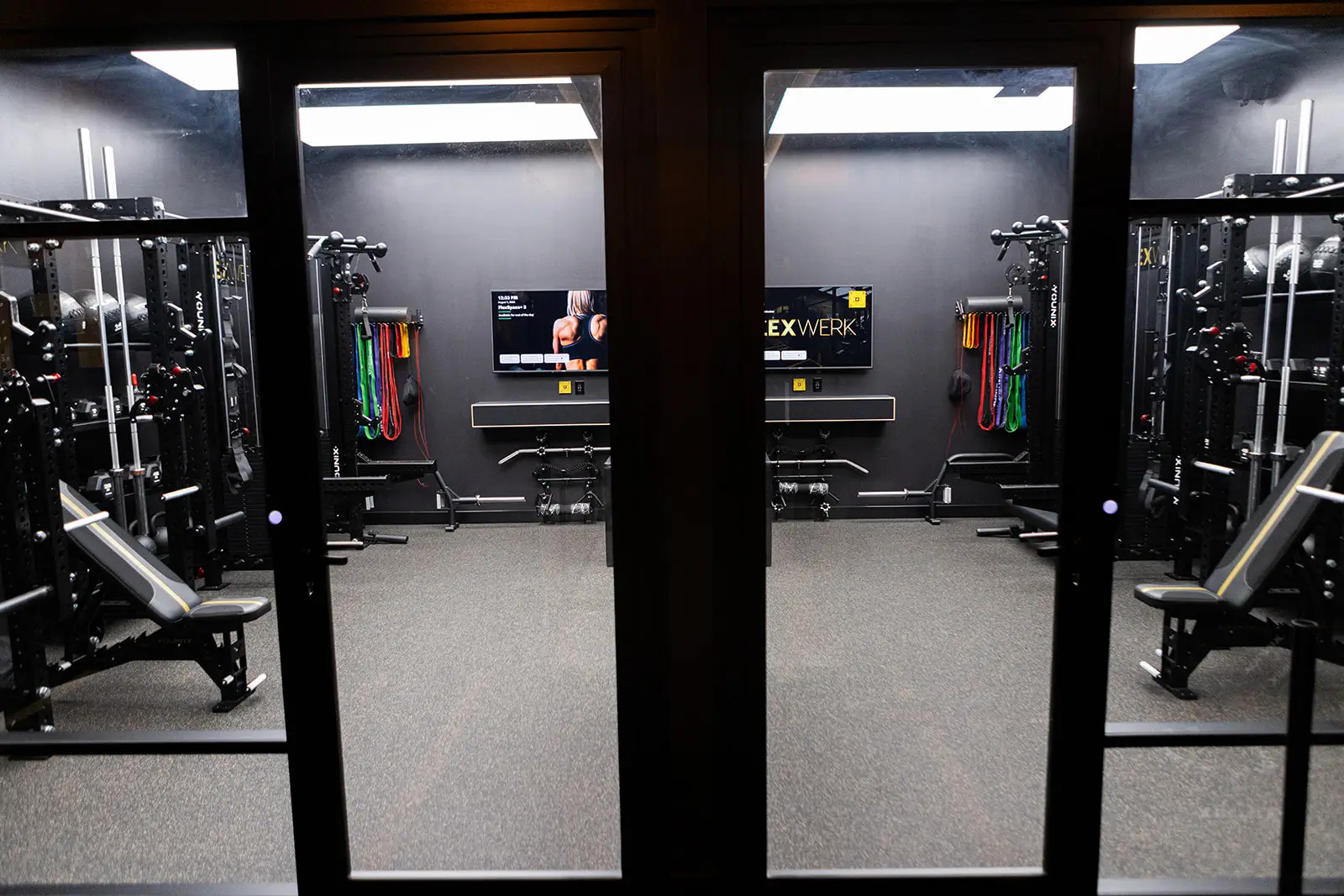
In a private suite at FlexWerk, sessions often build from sit-to-stand practice, bridges and side-lying hip work to step-ups, split squats and loaded carries using the rack, cable system and dumbbells. Weight-bearing exercise is progressed gradually and is safe for arthritic joints when the dose is right. Hands-on joint mobilization, explained on the manual therapy page, may help regain rotation.
Education is a treatment in its own right: understanding that activity does not wear the joint out faster, how to pace a busy day, and how to use a cane on the opposite side during a flare. Weight management, where relevant, also eases load on the joint.
- Glute, quadriceps and hip flexor strengthening
- Rotation and flexion mobility work
- Walking, cycling or pool exercise for endurance
- Practice of chairs, stairs, car transfers and dressing
- A flare plan that adjusts activity without stopping it
How quickly does physical therapy help hip arthritis, and when is a replacement discussed?
Many people with hip osteoarthritis report less pain and easier walking after a couple of months of regular exercise, with gains continuing if the program is kept up. The benefit fades if the exercise stops, so the aim is a routine you can keep, perhaps at FlexWerk with a coach after discharge, or at home.
A hip replacement is usually considered when pain limits daily life and sleep despite a good trial of exercise and other measures, and an orthopedic surgeon makes that decision with you. If surgery is planned, strengthening beforehand often makes the first weeks easier, as described in prehab before joint replacement, and the hip replacement rehab page covers what follows.
Progress is easiest to see in the functional numbers measured at the start. A higher count on the 30-second chair stand, a longer walk before the limp appears, or being able to reach your foot to put on a sock are all meaningful markers. Your therapist will re-test these every few weeks and tell you plainly whether the plan is working or whether a conversation with your physician makes sense.
How can I keep walking and stay active with an arthritic hip?
Keep moving, adjust the dose, and use pain as a guide rather than a stop sign. Mild aching during activity that settles within a day is generally acceptable, while pain that is clearly worse the next morning means the dose was too high.
Break walks into shorter loops, choose flatter routes, and consider cycling or water exercise on bad days. Winter ice in central Indiana adds a fall risk for anyone with a stiff, limping hip, so good footwear and short walks indoors can keep you going. When you are ready for help, the two-minute hip questionnaire goes to the matching team, who propose a therapist and connect you with that therapist’s office to check your plan’s benefits.
Think about the parts of your week that matter most and protect them. If Saturday morning walks with friends or nine holes of golf keep you going, plan lighter days around them rather than giving them up. People who stay socially and physically active with hip arthritis often cope better than those who stop everything while waiting for the pain to disappear, and a therapist can help you find a level you can sustain.
- Use a long-handled shoehorn or sock aid during flares
- Sit on higher chairs and add a cushion to low car seats
- Hold the cane in the hand opposite the sore hip
- Keep a short daily strength routine, even on busy days
When to see a physician or go to the ER first
Physical therapy is the right start for most hip osteoarthritis. These symptoms are different and need medical attention before, or instead of, a physical therapy visit:
- Sudden inability to bear weight, especially after a fall
- A hot, swollen, very painful hip with fever
- Hip pain that wakes you every night regardless of position, with weight loss
- Pain in a hip replacement that was previously comfortable
- A long history of steroid use or heavy drinking with new deep groin pain
If you think it is an emergency, call 911.
Two-minute assessment
Get your hip osteoarthritis looked at
Tell us how your hip osteoarthritis started, how long it has been going on and what it is stopping you from doing. The matching team proposes a therapist in the network who focuses on it, and you hear back, usually within one business day.
- No referral needed to start in Indiana (first 42 days)
- We check which therapists work with your plan before you book
- One-on-one care in a private suite at Carmel City Center
How therapists treat it
Kinds of care used for hip osteoarthritis
- Orthopedic physical therapyExercise-led care for back, neck, shoulder, hip, knee and ankle problems, delivered one-on-one in a private suite.
- Manual therapyHands-on joint and soft-tissue treatment that eases stiffness so the exercise part of your plan can do its job.
- Post-rehab strength trainingThe bridge from discharge to lasting strength: a written handoff from your therapist to a FlexWerk coach in the same building.
Questions
Hip osteoarthritis: what people ask
Information on this website is general education, not medical advice, a diagnosis or a treatment plan. Only a licensed clinician who examines you can advise on your condition. If you may be having a medical emergency, call 911.
Something we did not cover? Ask the matching team or ring (888) 353-9975.
Will exercise wear out my arthritic hip faster?
Appropriately dosed exercise does not speed up hip osteoarthritis and is recommended by clinical guidelines. Sudden large jumps in impact can flare a hip, which is why the dose is built up gradually.
Is walking good for hip arthritis?
Usually yes. Walking at a pace and distance that does not cause a lasting flare keeps the joint moving and the muscles working.
Can physical therapy help if I have been told I am bone on bone?
It can still improve strength, walking and daily tasks, though how much varies. The bone-on-bone answer explains the same principle for knees.
Should I use heat or ice on an arthritic hip?
Heat often eases morning stiffness, and ice can calm a flare after a busy day. Use whichever makes the hip feel better. Neither changes the joint itself, but both can make it easier to get moving, which is what matters more over the long run. Avoid very hot packs directly on the skin, and keep each session to 20 minutes or less.
Can I still play pickleball or golf with hip arthritis?
Many people do, often with adjusted volume and a strength program. Your therapist can help you plan court time and the golf swing around your hip’s rotation limits.
Google reviews
What guests say about FlexWerk
These are live Google reviews of FlexWerk at Carmel City Center, the private-suite facility where therapists in the network practise.
Related
Conditions that travel together
 OsteoarthritisStrength, pacing and joint-friendly exercise for knee and hip osteoarthritis, including preparation for joint replacement.
 Hip painCare for outer hip pain often called bursitis, hip impingement, hip osteoarthritis and hip flexor strains.
 Knee osteoarthritisQuadriceps and hip strengthening, motion work and a walking plan for an arthritic knee, with guidance on braces, flares and surgery questions.
Page reviewed By the Monon Therapy Collective editorial team

Carmel City Center · Carmel, Indiana
Start with a conversation
Tell us what hurts and what you want to get back to. We will tell you honestly whether a therapist in the network is likely a good fit for what you describe, and match you with an independent, licensed therapist who is. Only that therapist can assess what will help.
885 Monon Green Blvd, Suite 120, Carmel, IN 46032 · Monday to Friday 5 AM to 9 PM · Saturday and Sunday 7 AM to 4 PM