Pain behind the knee usually comes from a Baker’s cyst, a strained or irritated hamstring or calf tendon where it crosses the joint, the back part of the meniscus, or knee arthritis. One cause must be ruled out first: a blood clot in the calf can feel similar, so new calf swelling, warmth or redness needs a same-day medical check. Once that is cleared, an independent physical therapist in Carmel can test which structure is involved and load it back to strength.
Last reviewed By the Monon Therapy Collective editorial team
- Rule out first
- Blood clot (calf swelling, warmth, redness)
- Common culprits
- Baker’s cyst, hamstring tendon, meniscus
- Questionnaire area
- Knee
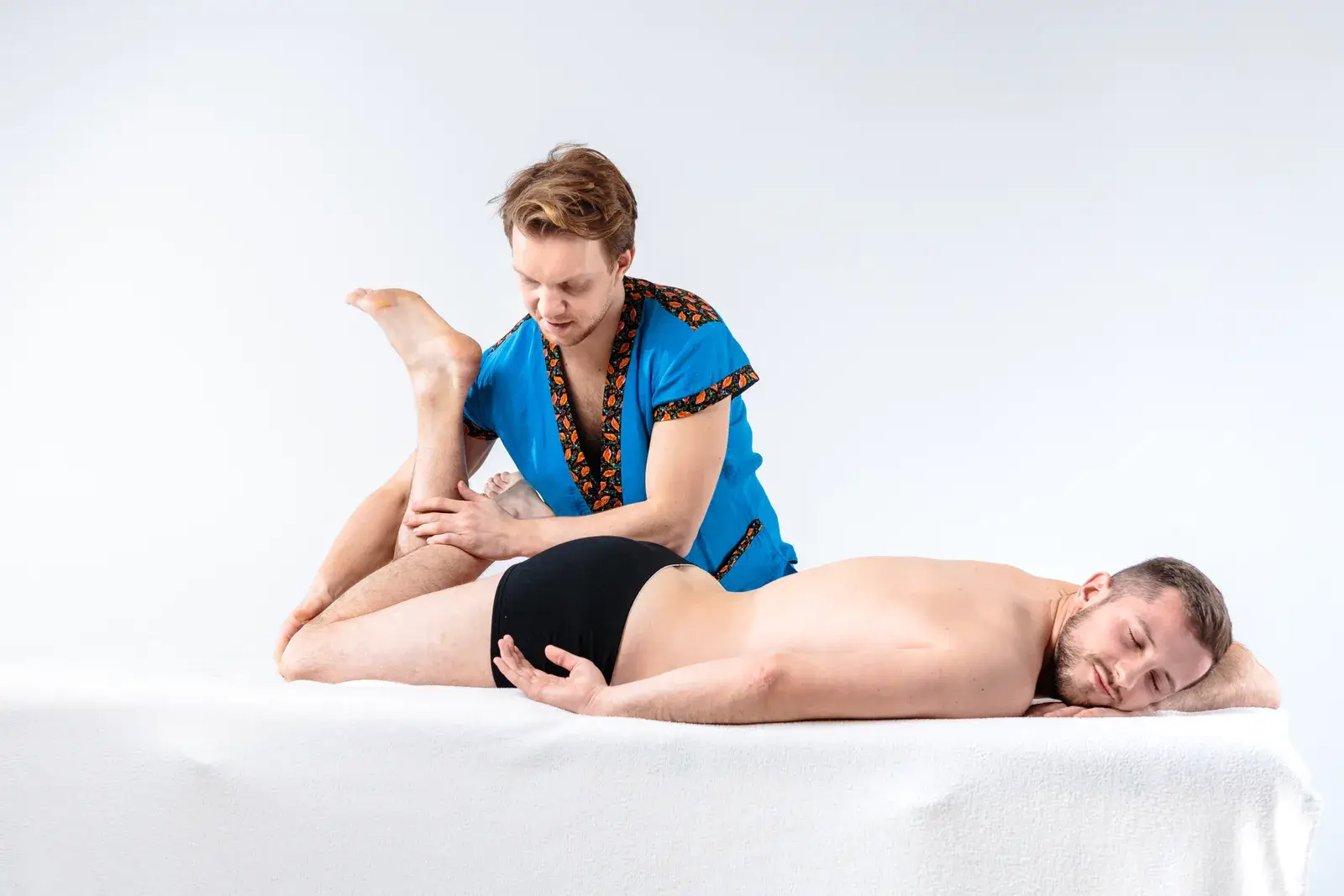
What is in the back of the knee that can hurt?
The hollow behind the knee, called the popliteal fossa, holds the ends of two hamstring tendons on either side, the two heads of the calf muscle, a small muscle called the popliteus, the back horns of both menisci, a major artery and vein, and sometimes a fluid-filled sac. Any of these can produce an ache you feel “behind” the joint.
That crowding is why location alone rarely settles the question. A therapist narrows it down by what provokes the pain: full bending, full straightening, a hamstring curl against resistance, a calf raise, or a deep squat. The pattern of positive and negative tests points to one structure far better than a finger on the sore spot.
How can I tell a Baker’s cyst from a hamstring problem?
A Baker’s cyst usually feels like fullness or a soft bulge behind the knee that is tight when you bend fully, while a hamstring problem hurts when you pull the heel toward the buttock against resistance or stretch the back of the thigh. MedlinePlus describes the cyst as joint fluid pushed into the back of the knee, often alongside a meniscus tear or arthritis.
| Possible cause | What it tends to feel like | Read more |
|---|---|---|
| Baker’s cyst | Fullness or a squashy lump, tight at full bend, may come and go | Baker’s cyst |
| Hamstring strain or tendon irritation | Pain at the inner or outer back corner with resisted bending or sprinting | Hamstring strain |
| Back of the meniscus | Deep pain with deep squats, catching or locking, often after a twist | Meniscus tear |
| Knee osteoarthritis | Stiffness after rest, ache with long walks, sometimes with a cyst | Knee osteoarthritis |
| PCL injury | Ache at the back after a fall onto a bent knee or a dashboard impact | PCL injury |
| Upper calf strain | Sudden pull at the top of the calf during a push-off | Calf strain |
Which quick self-checks help describe pain behind the knee?
These checks do not diagnose anything, but your answers make the first visit faster. Stop if any of them cause sharp pain.
- Look and feel: is there a soft swelling when you stand that softens when you bend slightly?
- Compare both calves for size, warmth and color; any difference goes to a doctor first.
- Sit and slowly straighten the knee fully: does the back pull or pinch at the end?
- Lying face down, curl your heel toward your buttock: does it hurt at one corner?
- Note whether the knee ever locks, catches or gives way.
What does a physical therapist test behind the knee?
Expect a check of full straightening and bending, meniscus provocation tests, ligament stress tests including a sag test for the PCL, resisted hamstring and calf tests at different knee angles, and a look at the hip and ankle. If a cyst is likely, the therapist treats the knee problem that feeds it, because cysts often settle when the joint calms.
Treatment is usually graded loading: hamstring work from isometric holds toward heavier curls and hinges, calf strength, and restoring full knee extension. Runners on the Monon Trail often need a short break from hills while tendons settle. If anything suggests a clot or a large tear, the therapist refers you on. The knee pain physical therapy page explains the wider approach.
How quickly should I act on pain behind my knee?
Act the same day if the calf is swollen, warm, red or tender, or if you are short of breath, because MedlinePlus warns that a burst Baker’s cyst and a blood clot both cause pain, swelling and bruising behind the knee and calf, and a clot needs medical attention right away. Otherwise, a few days of easier activity is reasonable, then start the knee questionnaire if it is not clearly improving within a week or two.
Long car trips and flights raise clot risk, so take the warning more seriously after travel or surgery. The matching team reads your answers and proposes an independent therapist with a time that fits; Indiana direct access means you do not need a referral to be evaluated.
Get urgent care for pain behind the knee if
- Your calf is swollen, warm, red or tender, especially after surgery, a long drive or a flight.
- You are short of breath or have chest pain: call 911.
- The foot is cold, pale or numb.
- The knee is hot and swollen and you have a fever.
- You heard a pop and cannot bear weight.
If you think it is an emergency, call 911.
