Hip pain when climbing stairs usually means the hip is struggling with the high, single-leg load of each step: common reasons are hip osteoarthritis, irritated gluteal tendons on the outside of the hip, impingement or a labral tear in the joint, and a strained hip flexor. Where it hurts and whether going up or down is worse narrow it down. An independent physical therapist near Carmel can test the hip, check whether the back is involved, and build the strength stairs demand.
Last reviewed By the Monon Therapy Collective editorial team
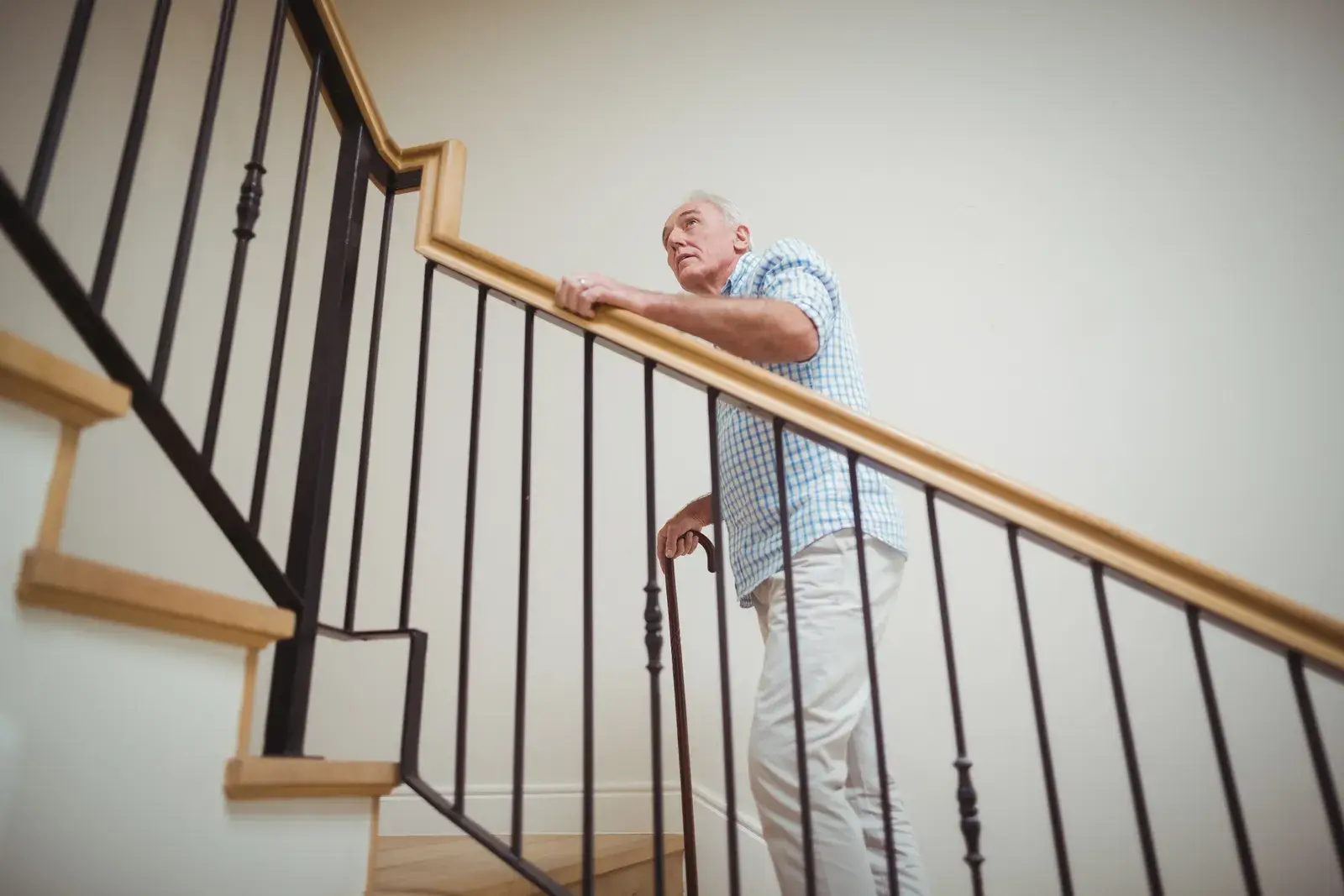
Why are stairs harder on the hip than walking on the flat?
Every step up asks one hip to lift your whole body weight from a bent position while balancing on that leg, which loads the joint and the muscles around it far more than level walking. Going down asks the same muscles to lower you under control. A hip that copes with a walk around the block can still complain on a flight of stairs.
That is why stairs are such a common early sign. MedlinePlus lists difficulty with stairs and changes in the way you walk among the hip symptoms worth raising with a provider, and AAOS OrthoInfo names stair climbing as an activity that aggravates trochanteric bursitis.
What usually causes hip pain on the stairs?
Pain location and timing usually separate these causes. The table summarizes the typical patterns.
| Possible cause | What it tends to feel like | Read more |
|---|---|---|
| Hip osteoarthritis | Groin or front-of-thigh ache, stiffness after rest, trouble putting on socks | Hip osteoarthritis |
| Gluteal tendon or bursa irritation | Pain on the outer hip, worse stepping up and lying on that side | Hip bursitis |
| Impingement or labral tear | Sharp groin pain or catching when the knee comes up high | Hip labral tear |
| Hip flexor strain | Front-of-hip pain lifting the leg onto the step | Hip flexor strain |
| Pain referred from the low back | Buttock or hip pain that changes with back movement, sometimes with leg tingling | Spinal stenosis |
Does it matter whether going up or coming down hurts more?
It can. Going up demands the hip and thigh muscles push hard from a bent hip, so it tends to bother arthritic joints, impingement and strained hip flexors. Coming down asks the outer hip muscles to control the pelvis as you lower, so outer-hip tendon pain often shows up there, along with kneecap problems that people mistake for hip pain.
Note which direction is worse and whether a handrail helps. If both directions are painful and the hip is also stiff in the morning, arthritis becomes more likely. The page on hip pain when walking covers the flat-ground version of the same problem.
How can I make stairs easier on a sore hip for now?
A few short-term tactics reduce the load while strength is rebuilt. They are general ideas, not a prescription.
- Use the handrail and take one step at a time: lead up with the stronger leg, down with the sore one.
- Keep your trunk upright and your knee over your foot instead of letting it collapse inward.
- Break long climbs into flights with a pause on each landing.
- In parking garages, use the elevator when the hip is flared and save the stairs for practice days.
- Try a few step-down exercises from a low step if they are comfortable.
What does a therapist check when stairs hurt your hip?
A therapist measures hip rotation and bending, tests the gluteal and hip flexor muscles, runs impingement and labral tests, palpates the outer hip, screens the lower back, and watches you step up and down. They often time a short stair climb or a sit-to-stand test to give you a baseline you can measure progress against.
Plans usually combine progressive strength work, such as glute bridges and step-ups, with a stair practice routine that gets harder week by week. If the hip is badly arthritic, therapy is also useful before a hip replacement. Start with the hip questionnaire.
Get medical care first for hip pain on stairs if
- You fell and now cannot bear weight or the leg looks shortened or turned out.
- The hip is hot and painful with a fever.
- You take long-term steroids and the hip pain is new and deep.
- Pain is spreading down both legs, or you have new numbness or weakness.
If you think it is an emergency, call 911.
