Physical therapy for martial artists treats the injuries that come from takedowns, joint locks, guard work and striking: neck strain, knee ligament and meniscus injuries, shoulder instability, rib and chest wall pain, and finger and ankle sprains. Grapplers and strikers near Carmel are matched by a person, not an algorithm, with an independent Indiana-licensed therapist who treats in a closed private suite at Carmel City Center. Rehab usually ends with a staged return from drilling to positional sparring to full rolls or rounds.
Last reviewed By the Monon Therapy Collective editorial team
- Common problem areas
- Neck, knees, shoulders, ribs, fingers
- Disciplines
- Jiu-jitsu, judo, wrestling, MMA, karate, taekwondo, boxing
- Return path
- Drilling, then positional sparring, then full rounds
- Suite hours
- Mon to Fri 5 AM to 9 PM; Sat and Sun 7 AM to 4 PM
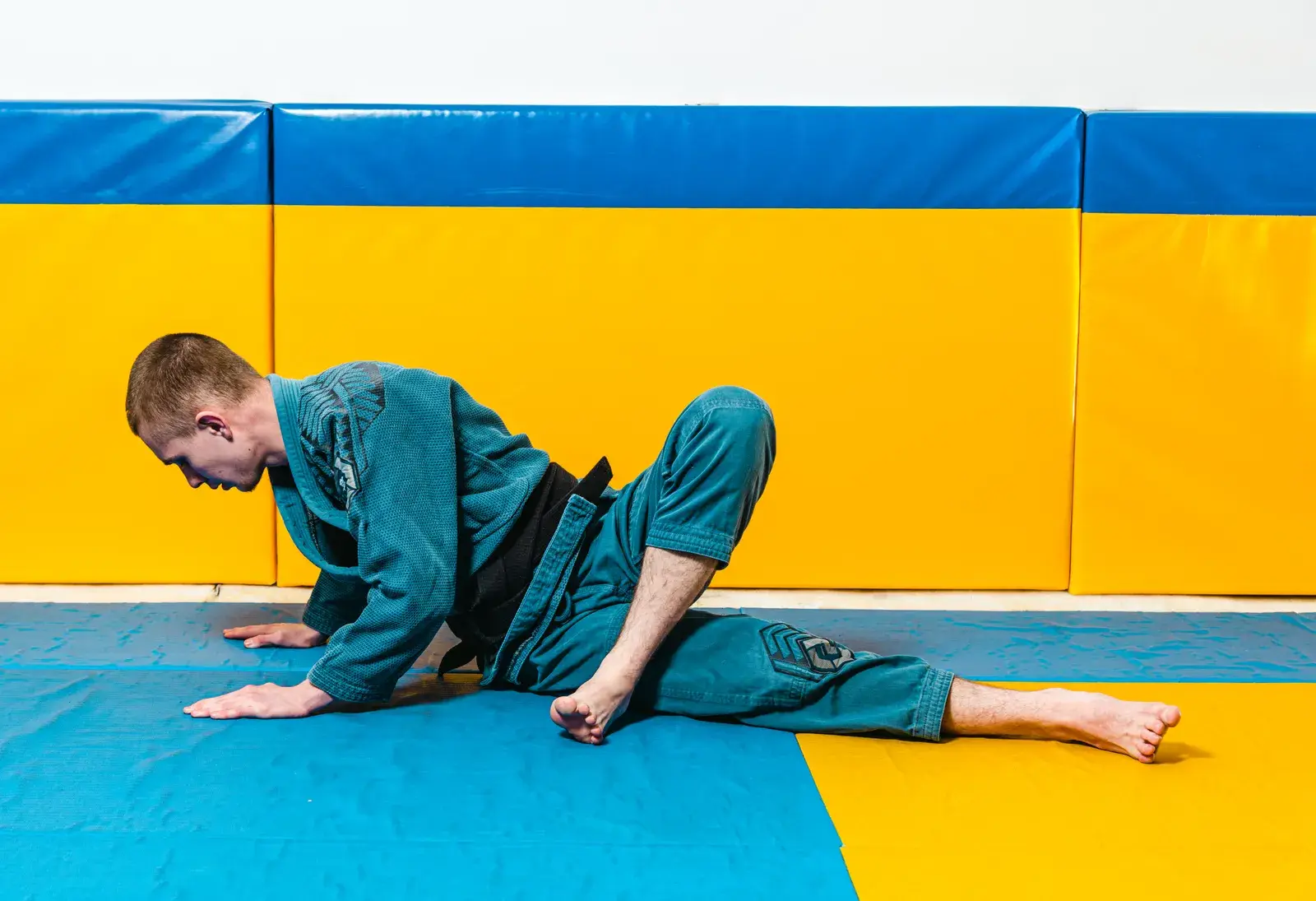
Which injuries do grapplers and strikers bring to physical therapy?
Grapplers tend to injure knees, shoulders, necks, ribs and fingers, while strikers see more ankle, foot, hand and head injuries. AAOS OrthoInfo lists sprains, strains, cuts and bruises as the most common martial arts injuries, with broken bones, concussions and neck injuries from certain holds also occurring, and names the knee, ankle, shoulder and elbow as the joints most often affected, with the hands especially vulnerable in striking styles.
Each link goes to a full page on the problem. A therapist confirms what applies after an exam, and fractures, dislocations and head injuries go to a physician first.
- MCL sprain and meniscus tear from guard play, leg locks and takedowns
- Shoulder instability and AC joint sprain from locks and throws
- Neck pain and a pinched nerve in the neck from stacking, bridging and clinch work
- Costochondritis and rib pain after heavy top pressure
- Ankle sprain from kicks, sweeps and awkward landings on the mat
- Concussion from strikes or a hard fall
Why does martial arts rehab train end ranges that other sports avoid?
Martial arts put joints into deep, loaded positions on purpose: full hip rotation in guard, a bridged neck under pressure, a shoulder twisted behind the back. Rehab therefore has to build strength and control at those end ranges, not only in the middle of the range where most gym exercises live.
A therapist might use controlled hip rotation drills on the floor, loaded neck isometrics in several directions, and slow shoulder work into internal and external rotation with a cable or band. The hip hinge and loaded carries help with lifting a partner and stance work. The goal is a joint that is strong where the sport actually takes it.
Breakfalling is also trainable. Once a shoulder or neck has settled, many therapists rebuild falling progressively, from rolling on the floor to low falls, because a fear of falling changes how someone moves on the mat.
Grip strength gets attention too, especially for gi grapplers and judoka. Hanging, towel pulls and loaded carries rebuild the forearms after an elbow or finger injury, and the cable station in each suite makes it easy to train pulling at different angles.
How do you go from drilling back to live sparring?
The usual path is a staged increase in resistance and unpredictability: solo movement, then cooperative drilling, then positional sparring with limits, then full sparring with trusted partners, then open mat or competition. Each step continues until the injured area tolerates it without a flare the next day.
Telling partners about the injury and tapping early to anything involving it are part of the plan. Many people also need a period of avoiding specific positions, such as leg entanglements after a knee injury or kimura grips after a shoulder injury, even after general training resumes.
| Stage | Training allowed | Usually needed to move on |
|---|---|---|
| Off the mat | Strength, mobility, cardio that spares the injury | Daily activities pain-free |
| Solo and drilling | Shrimping, technique with a cooperative partner | No flare the next day |
| Positional sparring | Live work from set positions, injured side protected | Confident in the positions that caused trouble |
| Full sparring | Live rounds with trusted partners, lighter intensity | Full sessions without a setback |
| Open mat or competition | Unrestricted training | Agreed with your therapist |
What does a therapist need to know about how you train?
Tell the therapist the discipline, whether you train gi or no-gi, how many sessions a week, and any upcoming tournament or grading. That context decides what the program targets: a judoka with a sore shoulder needs throwing and gripping restored, while a boxer with the same diagnosis needs punching volume.
Bring details of the moment of injury if you have them, such as a heel hook, which OrthoInfo singles out as one of the most dangerous moves for the knee, ankle and foot, a slam or a check kick, since the mechanism often points to the tissue involved. You can describe all of this in the physical therapy questionnaire, which a person on the matching team reads before proposing a therapist.
How does the network fit around evening classes in Carmel?
Many martial arts classes happen in the evening, so practitioners often prefer early sessions. Suites at Carmel City Center open at 5 AM on weekdays and at 7 AM on weekends, with garage parking a short walk away. Therapists set their own hours inside that window, and the matching team confirms what is available.
Each suite has a rack, cables, dumbbells and a bench, so strength work for carries, pulling and neck training can happen in the session. Once discharged, many people continue with post-rehab strength training. The sports physical therapy page covers the general approach.
Get medical care first if a martial arts injury involves
- Neck injury with numbness, tingling or weakness in the arms or legs: call 911 and do not move the neck.
- Loss of consciousness, confusion, vomiting or a worsening headache after a strike or fall.
- A joint that dislocated, looks deformed or cannot bear weight.
- Sharp chest pain with shortness of breath after heavy pressure or a strike.
If you think it is an emergency, call 911.
