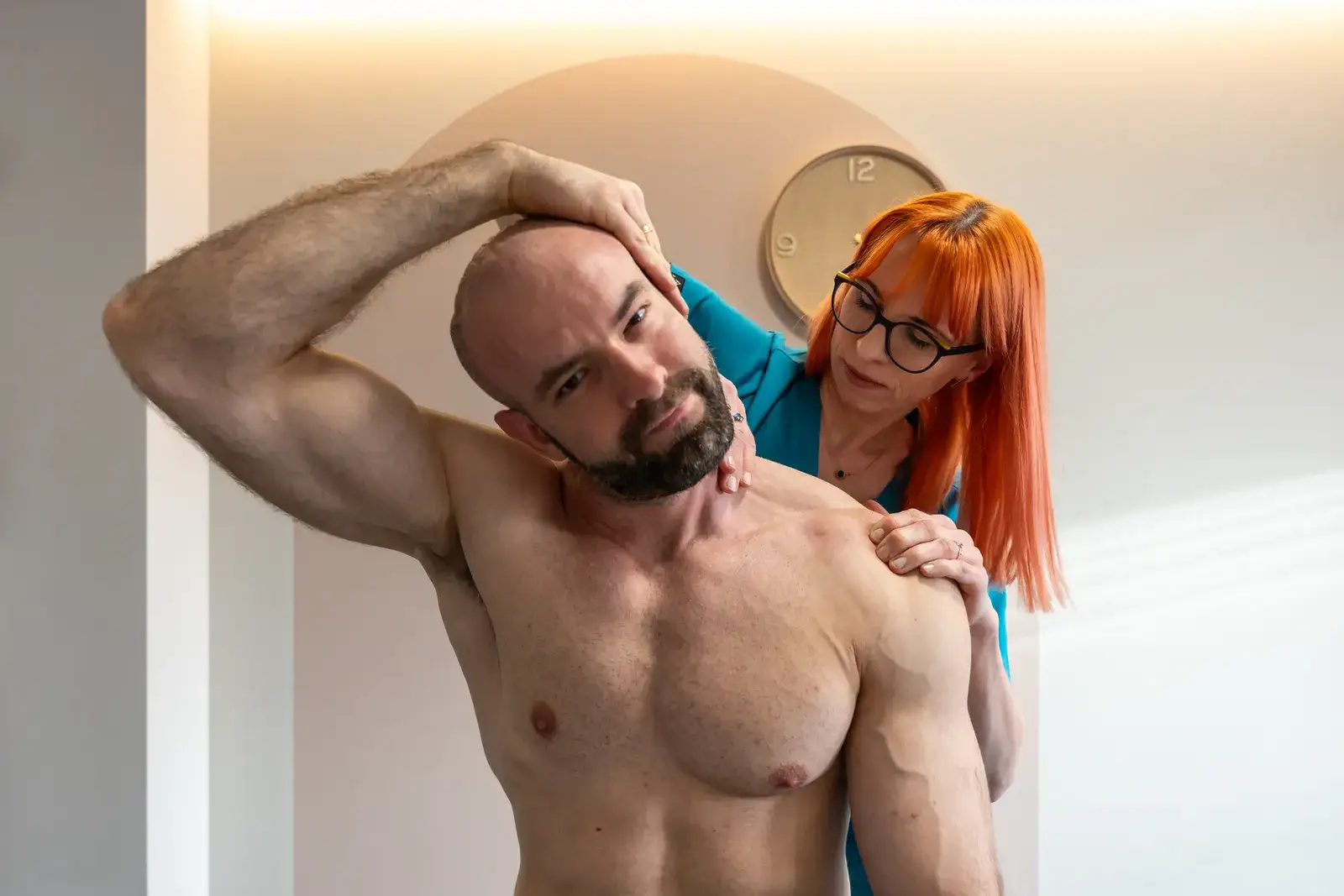
Pinched nerve in the neck physical therapy in Carmel, Indiana
A pinched nerve in the neck, called cervical radiculopathy, causes pain, tingling or weakness down one arm, and most cases improve without surgery. A licensed physical therapist in the network tests which nerve root is involved, finds positions that ease the arm, and builds neck and shoulder strength in one-on-one sessions at Carmel City Center. Progressive weakness or clumsy hands need a physician promptly.
At a glance
Common signs of pinched nerve in the neck
Also called: Cervical radiculopathy, Pinched neck nerve, Cervical nerve root compression, Neck-related arm pain.
Why does a pinched nerve in the neck cause pain in my hand?
Each nerve root leaving the neck supplies a particular strip of skin and set of muscles in the arm, so irritation near the spine is felt far away in the hand or forearm. The nerve is usually narrowed at its exit hole by a disc bulge in younger adults, or by bony spurs and thickened joints in older adults.
The C7 and C6 roots are the ones most often affected. C6 irritation tends to send symptoms toward the thumb and index finger and can weaken the biceps; C7 tends to reach the middle finger and affects the triceps. These maps are approximate, which is why a hands-on exam is needed to sort out the pattern.
Numbness in the hands has other causes too, particularly carpal tunnel syndrome at the wrist and cubital tunnel at the elbow. The page on numbness and tingling in the hands compares those patterns, and sometimes the neck and wrist are both involved.
Which tests confirm cervical radiculopathy at a first visit?
A therapist uses a small cluster of tests rather than one, because combined results are more reliable. A widely used cluster includes the upper limb tension test (a nerve-stretch sequence of the arm), Spurling’s test (gentle pressure with the head tilted toward the painful side), neck rotation measurement, and a distraction test, where lifting the head eases the arm.
Reflexes at the biceps, triceps and forearm are compared side to side, along with sensation in each finger and strength in specific muscle groups. The therapist also checks the shoulder, the elbow and the wrist, since a frozen shoulder or carpal tunnel syndrome can mimic part of the picture.
Many therapists also use a body chart, where you shade exactly where you feel pain, numbness and tingling. Comparing that chart from visit to visit is a simple way to see whether symptoms are retreating up the arm toward the neck, which is usually a good sign.
Some findings change the plan straight away: weakness that has worsened over days, loss of hand dexterity, unsteadiness when walking, or symptoms in both arms. Those point toward spinal cord involvement (myelopathy) or significant nerve compression and need a physician quickly, often with an MRI.
What exercises ease arm pain from a pinched neck nerve?
The exercises that help most are those that open space around the nerve and move it gently, alongside strengthening for the neck and shoulder blades. Early on that might mean resting the arm on the head (which often relieves pain), chin nods, and gentle nerve glides such as the median nerve glide, dosed so symptoms do not spread.
Cervical traction, either manual or mechanical, is sometimes used for a short period to relieve arm pain. The American Academy of Orthopaedic Surgeons lists it among nonsurgical options, and because research on it is mixed, therapists use it alongside exercise rather than instead of it. Thoracic mobility work helps too, because a stiff upper back pushes more motion onto the neck. The manual therapy page explains which hands-on techniques therapists may use.
As symptoms calm, strengthening progresses with rows, external rotation, deep neck flexor endurance and overhead work, using the cable stack and dumbbells in a private suite. The final stage rehearses the tasks you care about, such as a full golf swing or a day of screen work, without the arm complaining.
- Shoulder abduction relief position for flare-ups
- Chin nods and deep neck flexor holds
- Nerve glides dosed to stay below the flare point
- Rows, external rotation and scapular strength
- Thoracic rotation and extension mobility
How long does a pinched nerve in the neck usually take to recover?
Many people notice their arm pain easing within a few weeks. The American Academy of Orthopaedic Surgeons notes that for some people the pain goes away in days or weeks, that for others it takes longer, and that the majority get better over time without surgery. Numbness and mild weakness may take several months to fully recover, since nerves heal slowly. Recovery is often uneven, with good days and setbacks.
Surgery, commonly an anterior cervical discectomy and fusion (ACDF), is generally reserved for progressive weakness, signs of spinal cord compression, or severe arm pain that does not respond to a fair trial of nonsurgical care. That decision belongs to a spine surgeon. The ACDF surgery rehab page covers recovery afterward.
A useful sign of recovery is the order in which symptoms improve. Arm pain usually fades first, then pins and needles, and finally any numbness or weakness. If the arm pain retreats into the neck or shoulder blade, that shift is generally progress rather than a new problem.
Physicians sometimes offer an epidural steroid injection to calm severe arm pain while rehab continues. The answer on epidural injections versus physical therapy is written about the low back, but the trade-offs it describes are similar for the neck.
How should I set up my desk and pillow while the nerve is irritated?
Set things up so your head is not tipped back or pushed forward for long periods, since both can narrow the space for the nerve. Raise your screen so your eyes meet the top third, bring the keyboard close, and support your forearms. Change position every 20 to 30 minutes.
In the car, adjust the headrest so its middle sits level with the back of your head and raise the seat back closer to upright, which avoids craning the neck forward toward the windshield. For phone use, bring the screen up toward eye level rather than dropping your chin to it for long stretches.
At night, a pillow that keeps your head level with the middle of your body when lying on your side usually helps; avoid sleeping on your stomach with your head twisted. Some people sleep better with the painful arm resting on a pillow. The guide to sleeping positions for neck pain offers more options.
If arm symptoms are lingering beyond a week or two, the two-minute questionnaire gives the matching team what it needs to propose a licensed therapist in the network. Early weekday sessions inside the suites’ 5 AM opening can suit commuters heading south on Meridian Street.
When to see a physician or go to the ER first
Physical therapy is the right start for most pinched nerve in the neck. These symptoms are different and need medical attention before, or instead of, a physical therapy visit:
- Weakness in the arm or hand that is getting worse
- Clumsy hands, dropping things, or trouble with buttons
- Unsteady walking or new balance problems
- Symptoms in both arms or in the legs
- Bladder or bowel changes
- Neck pain with fever, unexplained weight loss or a history of cancer
If you think it is an emergency, call 911.
Two-minute assessment
Get your pinched nerve in the neck looked at
Tell us how your pinched nerve in the neck started, how long it has been going on and what it is stopping you from doing. The matching team proposes a therapist in the network who focuses on it, and you hear back, usually within one business day.
- No referral needed to start in Indiana (first 42 days)
- We check which therapists work with your plan before you book
- One-on-one care in a private suite at Carmel City Center
How therapists treat it
Kinds of care used for pinched nerve in the neck
Questions
Pinched nerve in the neck: what people ask
Information on this website is general education, not medical advice, a diagnosis or a treatment plan. Only a licensed clinician who examines you can advise on your condition. If you may be having a medical emergency, call 911.
Something we did not cover? Ask the matching team or ring (888) 353-9975.
Is a pinched nerve in the neck the same as a herniated disc?
Not always. A herniated disc is one cause, more common in younger adults and often after a sudden injury; bone spurs and joint thickening are more common causes later in life.
Should I stop lifting weights?
You may need to pause heavy overhead pressing and shrugs while symptoms are high. Lower-body work and pain-free upper-body exercises usually continue.
Why does putting my hand on my head help?
Raising the arm that way slackens the nerve roots and reduces tension on them. It is a common sign of cervical radiculopathy and a useful relief position.
Should I use a cervical pillow or a home traction device?
A supportive pillow helps some people sleep. Home traction units vary widely, so try traction under a therapist’s guidance first to see whether it eases your arm before buying one.
Can a pinched nerve cause shoulder blade pain?
Yes. Pain along or between the shoulder blades is common with neck nerve irritation, sometimes before arm symptoms appear.
Can I see a physical therapist for arm numbness without seeing a doctor first?
Indiana allows direct access to a physical therapist for up to 42 calendar days. If weakness is worsening or both arms are involved, a physician should see you first.
Google reviews
What guests say about FlexWerk
These are live Google reviews of FlexWerk at Carmel City Center, the private-suite facility where therapists in the network practise.
Related
Conditions that travel together
 Neck painHelp for stiff, aching necks, neck-related headaches and arm symptoms that start at the neck.
 Neck arthritisKeeping an arthritic neck mobile and strong, preserving the head-turning you need for driving, and knowing which signs need a physician.
 Carpal tunnel syndromeNight splinting, nerve glides and hand-use changes for numb, tingling fingers caused by pressure at the wrist.
Page reviewed By the Monon Therapy Collective editorial team

Carmel City Center · Carmel, Indiana
Start with a conversation
Tell us what hurts and what you want to get back to. We will tell you honestly whether a therapist in the network is likely a good fit for what you describe, and match you with an independent, licensed therapist who is. Only that therapist can assess what will help.
885 Monon Green Blvd, Suite 120, Carmel, IN 46032 · Monday to Friday 5 AM to 9 PM · Saturday and Sunday 7 AM to 4 PM