
Neck arthritis physical therapy in Carmel, Indiana
Neck arthritis, or cervical spondylosis, is age-related wear in the neck’s discs and joints that can cause stiffness and aching, and physical therapy is one of the most useful ways to manage it. A licensed therapist in the network keeps the neck moving, builds strength in the neck and upper back, and watches for nerve or spinal cord warning signs in one-on-one sessions at Carmel City Center.
At a glance
Common signs of neck arthritis
Also called: Cervical spondylosis, Cervical osteoarthritis, Arthritis of the neck, Degenerative neck disease.
What is cervical spondylosis, and why does it make my neck stiff?
Cervical spondylosis is the umbrella term for age-related changes in the neck: discs lose height, facet joint cartilage thins, and small bony spurs form. The American Academy of Orthopaedic Surgeons notes that more than 85 percent of people over 60 have these changes, and many have no symptoms at all. When they do, the main complaint is stiffness and aching, particularly after sleeping or long periods in one position.
The words on an imaging report can sound alarming. Terms like degenerative changes, osteophytes, disc space narrowing and foraminal narrowing describe changes that are common at this age and do not on their own predict how much pain you will have. The guide on how to read your MRI report translates them into plain language.
Stiffness tends to build as joints and surrounding muscles adapt to less movement. The neck may lose rotation first, which many people notice when checking a blind spot, reversing out of a driveway or turning to talk to a passenger.
Arthritis can also narrow the spaces where nerves leave the neck or, less often, the central canal that holds the spinal cord. That is why a therapist checks nerve function and watches for signs covered on the pinched nerve in the neck page.
Which signs of spinal cord pressure does a therapist screen for in an arthritic neck?
A therapist screens for cervical myelopathy, pressure on the spinal cord, by asking about and testing hand dexterity, balance and walking, and reflexes. Symptoms include clumsy hands, trouble with buttons or handwriting, dropping things, an unsteady or wide-based walk, and numbness in both hands.
Tests may include reflex checks such as Hoffmann’s sign, a tandem walk, grip and release speed and a balance screen. If myelopathy is suspected, the therapist stops and refers you promptly to a physician, since the condition often needs imaging and sometimes surgery.
Balance deserves attention in its own right. An arthritic neck can reduce the position sense that helps you stay steady, and some older adults notice they feel less sure on their feet when looking up or turning quickly. The balance and fall prevention page covers training that can help with that.
Most people with neck arthritis do not have myelopathy, and the rest of the exam focuses on rotation and side-bending, upper back mobility, deep neck flexor endurance, shoulder blade control and how your neck tolerates the positions your day requires.
How does a therapist keep an arthritic neck turning well enough for driving?
A therapist keeps the neck turning with regular, gentle range-of-motion drills, upper back rotation work and hands-on mobilization, combined with strength exercises that help the neck hold positions longer. Carmel’s many roundabouts make frequent head checks part of daily driving, so rotation is often a top goal.
Typical exercises include rotation and side-bending within comfort, the chin tuck for deep neck flexor endurance, rows and shoulder blade work, and thoracic rotation. Hands-on mobilization of stiff segments can make movement easier; spinal manipulation by an Indiana physical therapist requires an order or referral and depends on the individual therapist.
Practical strategies matter too. Adjusting car mirrors so you rely less on head rotation, turning the whole upper body when looking back, and taking breaks on long drives keep the neck comfortable. Some older drivers benefit from extra wide-angle mirrors.
- Gentle rotation and side-bending several times a day
- Chin tucks and deep neck flexor holds
- Thoracic rotation and extension
- Rows and shoulder blade strengthening
- Mirror adjustments and break planning for driving
Is neck arthritis something physical therapy improves, or only manages?
Physical therapy does not reverse the arthritic changes, but it often improves pain, stiffness and function, sometimes considerably. Many people notice easier movement within a few weeks; the American Academy of Orthopaedic Surgeons describes a typical program as 6 to 8 weeks at two to three visits a week, with a home routine continuing afterward.
Strength is a large part of that improvement. Neck and upper back muscles that can hold the head steady for longer reduce the strain on stiff joints during reading, driving and screen time. Endurance holds usually start at a few seconds and build gradually, with the therapist adjusting each step to how your neck responds over the following day.
Flares are common, often after a night in an unfamiliar bed, a long drive or a weekend of overhead work like painting or hanging lights. Knowing which exercises help during a flare makes them shorter and less worrying.
Surgery is usually reserved for myelopathy, progressive nerve weakness or severe arm pain that does not respond to conservative care. A spine surgeon makes that decision; if you have an anterior cervical fusion, the ACDF surgery rehab page explains recovery.
How should I sleep and set up my day with an arthritic neck?
Choose a pillow that keeps your neck level with your body: thicker if you sleep on your side, thinner if you sleep on your back, and avoid stomach sleeping with the head turned. The guide on sleeping positions for neck and back pain offers more detail, and neck pain after sleeping covers morning stiffness.
Reading glasses matter more than many people expect. Progressive lenses can lead you to tip your head back to read a screen through the lower part of the lens, which compresses the upper neck joints for hours. A dedicated pair of computer glasses, or a lower screen, often eases end-of-day aching.
During the day, change position every 30 minutes, keep screens and reading material at eye level, and use a headset for long calls. Gentle warm-up movements before activities like golf or gardening help, and a warm shower often eases morning stiffness.
When you want a plan, the neck questionnaire takes about two minutes. The matching team reads it, proposes a licensed therapist in the network whose schedule fits, and will flag any symptoms that need a physician first. If you are on Medicare, the seniors page explains what to expect.
When to see a physician or go to the ER first
Physical therapy is the right start for most neck arthritis. These symptoms are different and need medical attention before, or instead of, a physical therapy visit:
- Clumsy hands, trouble with buttons or dropping objects
- Unsteady walking or new balance problems
- Numbness or weakness in both arms or in the legs
- Bladder or bowel changes
- Neck pain with fever, unexplained weight loss or a history of cancer
- Severe neck pain after a fall, especially in older adults
If you think it is an emergency, call 911.
Two-minute assessment
Get your neck arthritis looked at
Tell us how your neck arthritis started, how long it has been going on and what it is stopping you from doing. The matching team proposes a therapist in the network who focuses on it, and you hear back, usually within one business day.
- No referral needed to start in Indiana (first 42 days)
- We check which therapists work with your plan before you book
- One-on-one care in a private suite at Carmel City Center
How therapists treat it
Kinds of care used for neck arthritis
- Orthopedic physical therapyExercise-led care for back, neck, shoulder, hip, knee and ankle problems, delivered one-on-one in a private suite.
- Manual therapyHands-on joint and soft-tissue treatment that eases stiffness so the exercise part of your plan can do its job.
- Balance and fall preventionStrength, walking and balance training for older adults who feel unsteady, have fallen, or want to stay confident on their feet.
Questions
Neck arthritis: what people ask
Information on this website is general education, not medical advice, a diagnosis or a treatment plan. Only a licensed clinician who examines you can advise on your condition. If you may be having a medical emergency, call 911.
Something we did not cover? Ask the matching team or ring (888) 353-9975.
Can neck arthritis make my shoulders and upper back ache?
Yes. Stiff neck joints often refer aching into the top of the shoulders and between the shoulder blades, and the muscles there can tighten as they work harder to hold the head. Strengthening the upper back usually eases this along with the neck.
Is neck cracking a sign of arthritis?
Painless neck noises are common and not necessarily arthritis. Noise with pain or reduced movement is worth assessing.
Should I wear a soft collar for neck arthritis?
Long-term collar use usually weakens neck muscles. A collar may help briefly during a severe flare if a physician advises it.
Can I still lift weights with neck arthritis?
Most people can, with sensible load and form. Heavy shrugs and overhead pressing may need adjusting during flares.
Will neck arthritis cause headaches?
It can contribute to headaches starting at the back of the head. The cervicogenic headache page explains that pattern.
Is neck arthritis the same as rheumatoid arthritis in the neck?
No. Cervical spondylosis is age-related wear, while rheumatoid arthritis is an inflammatory disease that can affect the upper neck and needs a rheumatologist’s care. Exercise helps in both, but the precautions differ.
Is heat or ice better for an arthritic neck?
Many people prefer heat for stiffness. Use whichever makes your neck feel better and follow it with gentle movement.
Does Medicare cover physical therapy for neck arthritis?
Medicare Part B covers medically necessary outpatient therapy with a certified plan of care. The therapist’s office verifies your benefits before the first visit.
Google reviews
What guests say about FlexWerk
These are live Google reviews of FlexWerk at Carmel City Center, the private-suite facility where therapists in the network practise.
Related
Conditions that travel together
 Neck painHelp for stiff, aching necks, neck-related headaches and arm symptoms that start at the neck.
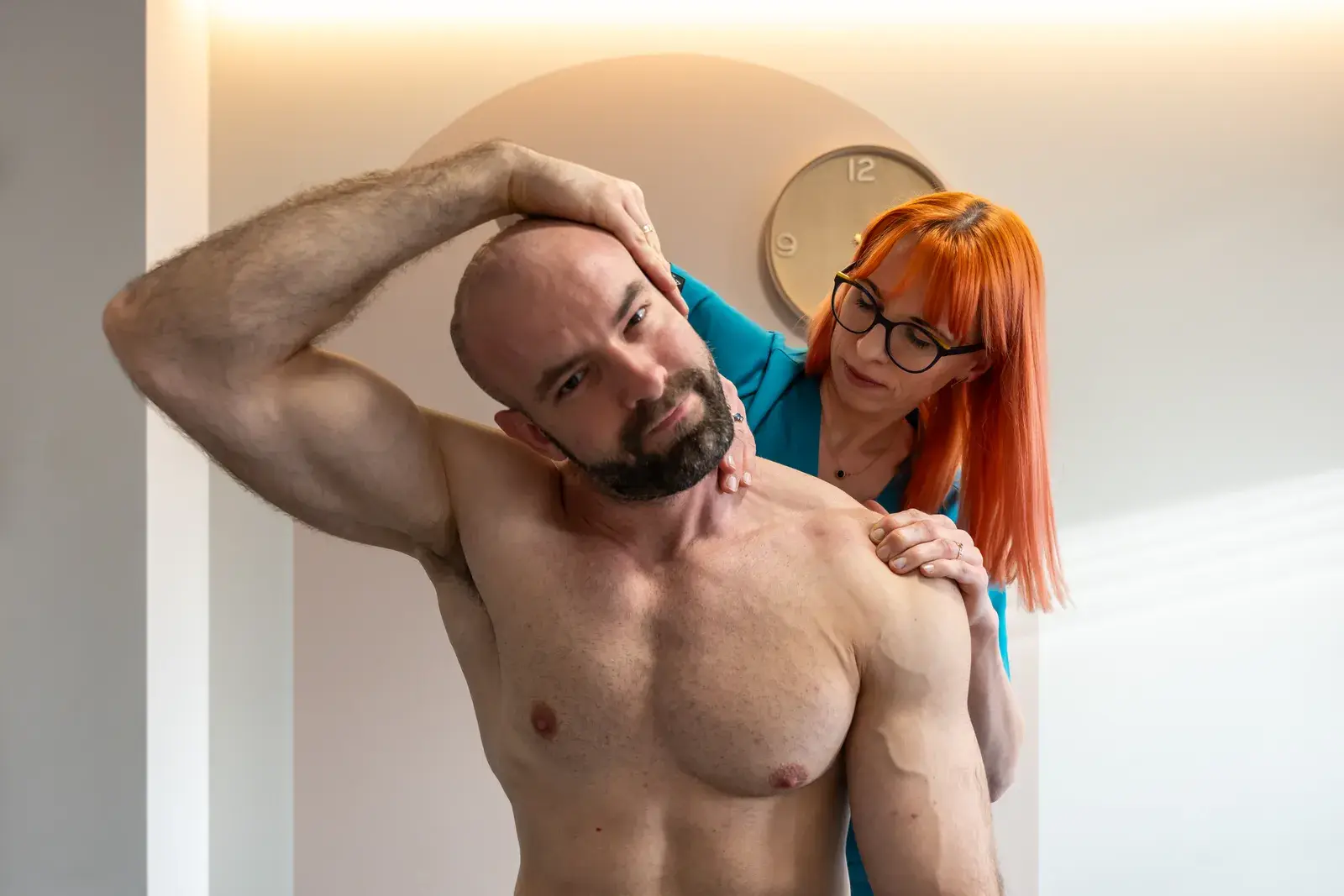 Pinched nerve in the neckTesting and treatment for cervical radiculopathy: arm pain, tingling fingers and weakness from an irritated neck nerve root.
 OsteoarthritisStrength, pacing and joint-friendly exercise for knee and hip osteoarthritis, including preparation for joint replacement.
Page reviewed By the Monon Therapy Collective editorial team

Carmel City Center · Carmel, Indiana
Start with a conversation
Tell us what hurts and what you want to get back to. We will tell you honestly whether a therapist in the network is likely a good fit for what you describe, and match you with an independent, licensed therapist who is. Only that therapist can assess what will help.
885 Monon Green Blvd, Suite 120, Carmel, IN 46032 · Monday to Friday 5 AM to 9 PM · Saturday and Sunday 7 AM to 4 PM