Physical therapy for hikers and skiers in Carmel treats the knee, ankle, shoulder and thumb injuries these sports produce and builds the downhill strength that flat Hamilton County terrain does not train. A person on the matching team reads your questionnaire and suggests an independent, Indiana-licensed therapist in the network who sees people one-on-one in a private Carmel City Center suite. A pre-season block in the couple of months before a mountain trip is a sensible time to start.
Last reviewed By the Monon Therapy Collective editorial team
- Most common ski injury
- Knee ligaments, especially the ACL
- Hiking problem to train for
- Long descents
- Indiana slopes
- Perfect North and Paoli Peaks
- Referral
- Not needed for the first 42 days
Why do flatland hikers and skiers from central Indiana get hurt on trips?
The usual reason is a mismatch between what your legs train for at home and what a trip asks of them. The Monon Trail is flat and paved, so it builds walking stamina but not the braking strength your quadriceps need on a long descent, or the ankle reactions that rocky, rooted ground demands.
Skiing adds speed and a fixed boot. Weekends at Perfect North Slopes in Lawrenceburg or Paoli Peaks in southern Indiana are short runs repeated many times, while a western trip means longer runs at altitude over several days in a row. Both reward strong legs that do not fade by the afternoon, which is when AAOS OrthoInfo notes many ski injuries happen: on the last run of a tired day.
Which injuries do hikers and skiers most often need rehab for?
Knee ligament injuries top the ski list, and OrthoInfo names ACL tears as very common, along with shoulder dislocations from falls and skier’s thumb from landing on a hand still gripping the pole. Hikers more often bring ankle sprains, knee pain on descents and overuse problems after a big week of mileage.
| Injury | Typical moment it happens | Read more |
|---|---|---|
| ACL tear | A twisting fall with the ski not releasing | ACL injury |
| MCL sprain | Knees pushed inward in a snowplow or a slow fall | MCL sprain |
| Skier’s thumb | Falling onto a hand with the pole strap on | Skier’s thumb |
| Ankle sprain | Rolling over on a root or loose rock | Ankle sprain |
| Front-of-knee pain | Hours of steep descent on tired quadriceps | Runner’s knee |
How should I get my legs ready for a ski trip or a mountain hike?
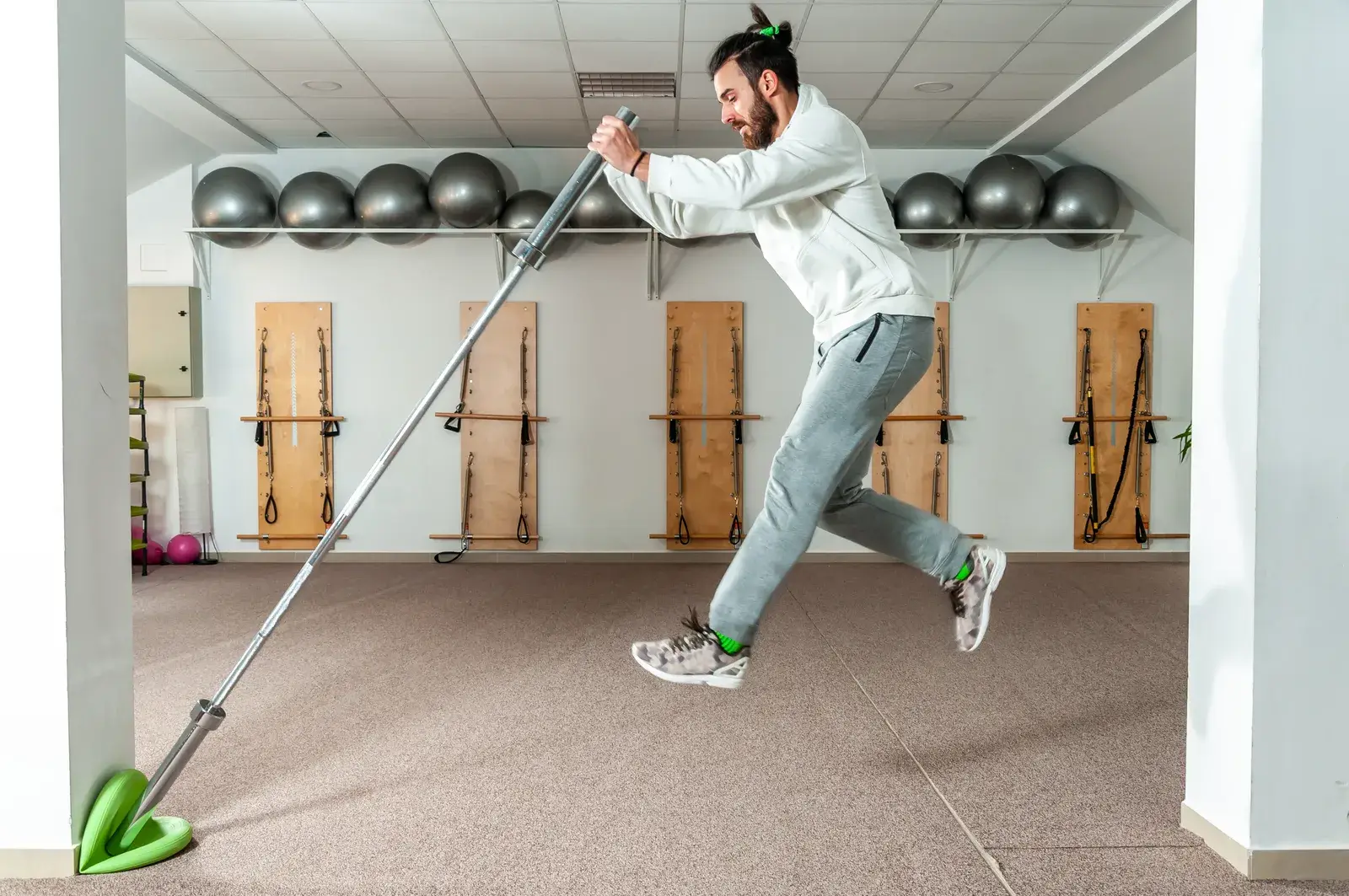
Start a couple of months out if you can, and train the specific demands: eccentric quadriceps strength for braking, single-leg control for uneven ground, and the endurance to hold a ski stance or a loaded descent for long stretches. Squats and split squats on the rack, slow step-downs and wall sits cover most of it.
Add balance and reaction work: single-leg stands on soft surfaces, lateral hops that you stick on landing, and short shuttles on the indoor turf corridor. For hikers carrying a pack, loaded step-ups and carries with a weighted bag prepare the hips and back for the hours under load. A therapist tailors the plan if you have an old knee or ankle injury that tends to complain on trips.
Cardiovascular fitness is the other half. A long day on the slopes or a full-day hike with climbing is more tiring than an hour on the Monon, and tired legs lose control. Walking with a loaded pack on the treadmill at an incline, or cycling intervals, builds the engine so your strength lasts into the afternoon. An example eight-week block, which a therapist adjusts to your starting point, looks like this.
- Weeks 1 to 2: build basic strength and check old injuries
- Weeks 3 to 5: add eccentric work, single-leg control and pack carries
- Weeks 6 to 8: add hops, lateral moves and longer endurance sets
- Trip week: keep sessions short and arrive fresh
Why does my knee hurt going downhill but not uphill?
Downhill walking makes the quadriceps work while lengthening, to brake each step, and that load is higher on the kneecap joint than climbing. Knees that cope with stairs at home can complain after an hour of descent, especially if the hips and thighs fade with fatigue. This pattern is common in hikers back from a first big trip.
A therapist usually looks at how your knee tracks on a step-down, how strong the hip and thigh muscles are, and how much descent you did compared with your usual week. Trekking poles, shorter steps and a deliberate slower pace on descents often help immediately. If stairs also hurt, read about knee pain going up and down stairs.
When can I ski again after a knee ligament injury?
Return to skiing depends on the injury and whether you had surgery, and it is earned through tests rather than a date. After an MCL sprain treated without surgery, AAOS OrthoInfo describes a gradual, progressive return to sport once motion and strength are back, sometimes with a knee brace during sport. After ACL reconstruction, OrthoInfo puts a return to full sport at 6 to 12 months depending on progress, strength and mechanics, and the ACL reconstruction rehab page explains why cutting and pivoting sports often wait toward the end of that range.
Before the first day back, a therapist checks strength side to side, single-leg hop control, and comfort with lateral and twisting movements. Starting on gentle terrain at a local hill before a big trip lets you test the knee where the stakes are lower. Some skiers wear a functional brace for the first season back, and OrthoInfo notes a doctor may suggest one during sport to help prevent reinjury; whether that makes sense for your knee is a conversation for your surgeon and therapist. For help judging a fresh injury, see how to tell whether a knee injury is serious.
Get medical care first if
Some trail and slope injuries need a physician or urgent care before rehab.
- A knee that swelled quickly after a pop or keeps giving way
- A shoulder that dislocated or looks out of place
- A thumb that is unstable or cannot pinch after a fall
- You cannot take four steps on an injured ankle
- Any head injury with confusion, vomiting or worsening headache
If you think it is an emergency, call 911.
