Rehab after ACL reconstruction usually runs from several months to a year: the first weeks restore full knee straightening and quadriceps control, the middle months rebuild strength, and the last stage tests whether the knee is ready for running, jumping and cutting. In Carmel, the matching team proposes an independent, Indiana-licensed physical therapist who follows your surgeon’s protocol one-on-one in a private suite with a lifting rack and an indoor turf corridor for later agility work. Return to sport is decided by test results, not by the calendar alone.
Last reviewed By the Monon Therapy Collective editorial team
- Typical formal rehab
- Often 4 to 6 months, longer for athletes
- Cutting and pivoting sports
- Often 9 to 12 months after surgery
- Crutches and brace
- Commonly 1 to 6 weeks, per your surgeon
- First priority
- Full knee extension and quadriceps activation
Why does the graft type change the first months of ACL rehab?
The graft your surgeon used decides which tissue around the knee is healing besides the new ligament, and that shapes the early exercise choices. A patellar tendon graft leaves the front of the knee sore with kneeling, a hamstring graft calls for patience with hamstring strengthening, and a quadriceps tendon graft can slow the return of quad strength.
Whatever the graft, the new ligament goes through a long remodeling period in which it is weaker than it will eventually be, even while the knee starts to feel fine. That mismatch is the reason ACL rehab is paced by criteria and protected for months. Any meniscus repair or cartilage work done at the same operation usually adds weight-bearing or bending limits on top, so read the operative note with your therapist at the first visit.
If you are still deciding on surgery, the ACL injury physical therapy page covers the non-operative route and what the injury itself involves.
What are the phases of rehab after ACL reconstruction, week by week?
Most protocols move through five overlapping phases, and you advance when you meet the goals of one, not on a fixed date. The weeks below are typical ranges from mainstream sources and protocols; your surgeon’s version takes priority, especially if a meniscus was repaired.
| Weeks after surgery | Main goals | Typical milestones |
|---|---|---|
| 0 to 2 | Calm swelling, get the knee fully straight, wake up the quadriceps | Straight-leg raise without a lag, walking with crutches as allowed |
| 2 to 6 | Normal walking, knee bend toward full, early strength | Off crutches when gait is normal, bike with full revolutions |
| 6 to 12 | Build leg strength and single-leg control | Step-downs without the knee diving inward, loaded squats and split squats |
| 3 to 6 months | Heavier strength, start running and landing drills | Running often begins once strength and hop criteria are met |
| 6 to 12 months | Agility, cutting, sport-specific training, testing | Strength and hop tests close to the other leg, cleared by the surgeon |
What does the ACL surgeon’s protocol decide, and what does the therapist decide?
Your surgeon’s protocol controls the protective rules: how much weight you may put through the leg, whether the brace is locked, how far the knee may bend in the early weeks, and the earliest dates for running and sport. Those limits exist because of what was done inside the knee, which only the surgeon saw.
Your physical therapist decides how to meet the goals inside those limits: the exercises, the loads, how swelling responds from session to session, and whether you have actually met each criterion before progressing. When the two seem to conflict, the therapist calls the surgeon’s office rather than guessing. Ask for a copy of the protocol at your post-operative visit; the guide on talking to your surgeon about physical therapy lists the questions worth asking.
- Weight bearing and brace settings: surgeon
- Range-of-motion limits after a meniscus repair: surgeon
- Exercise choice, sets and loads: therapist
- Whether a test criterion has been met: therapist, reported to the surgeon
- Final clearance for competitive sport: surgeon, informed by test results
What does the middle strength phase of ACL rehab involve?
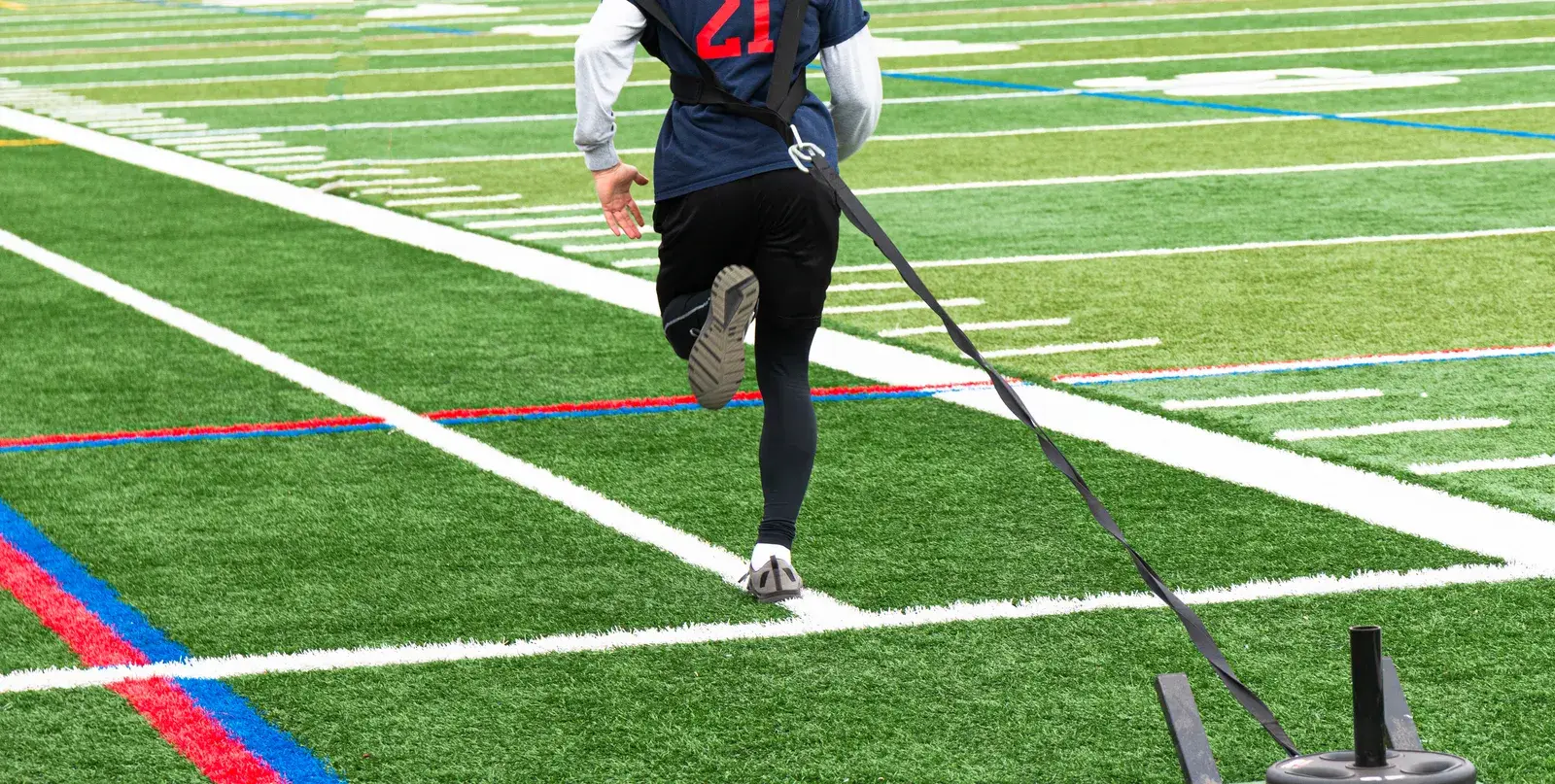
Between roughly six weeks and six months, the work is mostly about restoring quadriceps strength, which tends to lag behind everything else after ACL surgery. Expect progressively heavier squats, split squats, step-downs, hamstring work suited to your graft, and single-leg balance and control drills, adjusted each week to how the knee swells and recovers.
Because sessions are one-on-one in a closed suite with a rack, dumbbells and a cable system, loads can climb steadily rather than stalling at resistance bands. Between visits you carry the plan forward yourself, and many people find a 5 AM weekday slot before work easier to keep for months than a mid-afternoon one. Missing the strength targets in this phase is the most common reason return to sport gets pushed back.
- Quadriceps strengthening, including isolated knee extension when the protocol allows
- Hip and calf strength so the knee is not doing all the work
- Landing and deceleration drills introduced in small doses
- Conditioning on the bike while running is still off the table
How do therapists test whether a reconstructed knee is ready for sport?
Readiness is judged with a battery of measurements rather than a date: quadriceps and hamstring strength compared with the other leg, a series of single-leg hop tests, movement quality on landing and cutting, and a questionnaire about confidence in the knee. Many clinicians look for results close to the uninjured side before clearing cutting sports.
The private suites have a rack and cable system for heavy strength work, and the indoor turf corridor outside them gives room for hop, deceleration and change-of-direction drills without waiting for spring weather. Details of the testing itself are on the return to sport testing page.
Fear of reinjury is common and is worth naming. A knee that tests well but still feels untrustworthy needs more graded exposure to the movements you fear, not just more squats.
What can I do before ACL surgery to recover faster afterward?
The single most useful thing before surgery is to arrive with a calm, fully straightening knee and a quadriceps you can switch on. People who go into surgery with a stiff, swollen knee tend to fight that stiffness for weeks afterward, which is why many surgeons wait for swelling to settle first.
A few visits of prehab also let you rehearse crutch walking, the first home exercises and the brace before you are groggy from anesthesia. The prehab before ACL surgery guide sets out a plan, and the matching team can usually propose a therapist who can see you before and after the operation.
Call your surgeon promptly after ACL surgery if you notice
- Calf pain, swelling or warmth in the operated leg, which can signal a blood clot
- Shortness of breath or chest pain: call 911
- Fever, chills, or a wound that is red, hot or draining
- Swelling that keeps increasing instead of settling day by day
- Losing knee straightening you had already regained, or the knee locking
- Numbness in the foot that does not wear off as the nerve block fades
If you think it is an emergency, call 911.
