Knee pain at night most often comes from osteoarthritis or an overloaded knee settling after a busy day, aggravated by sleeping positions that keep the knee bent or press the knees together. Pain that is constant, unrelated to activity, wakes you every night, or comes with fever, a hot swollen joint or weight loss needs a medical check first. For the common patterns, an independent physical therapist near Carmel can adjust your day so the knee is calmer at night.
Last reviewed By the Monon Therapy Collective editorial team
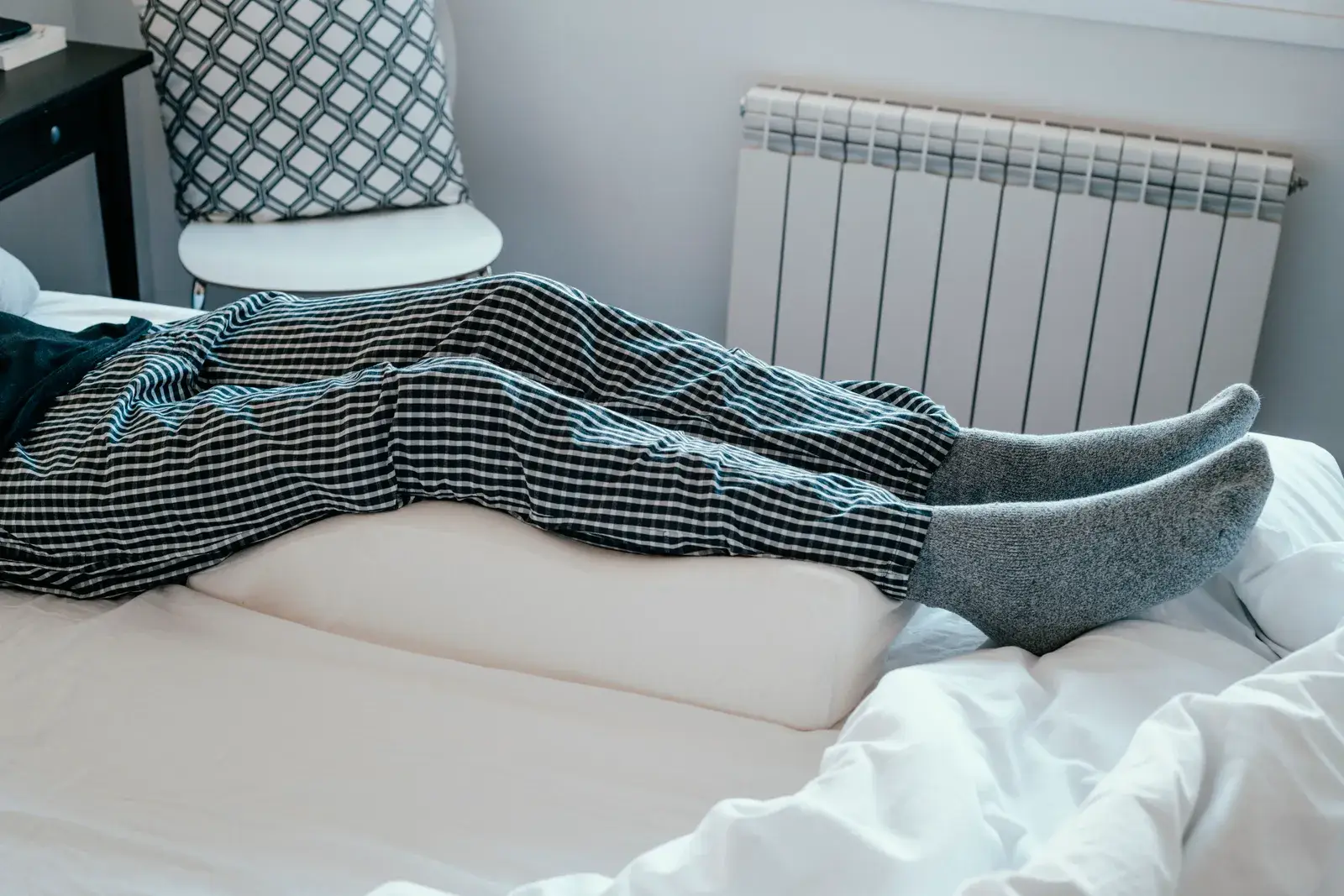
Why does my knee ache more when I lie down?
An overloaded knee often aches once you stop moving because the distractions of the day disappear and the joint stays still in one position for hours. Arthritic knees in particular stiffen with rest. A day with more walking, stairs, gardening or pickleball than usual commonly shows up as a sore night.
That link to the day is reassuring: if night pain is worse after busy days and better after quiet ones, it is behaving mechanically. Night pain that is the same regardless of what you did, or that is steadily worsening, is the pattern that needs a doctor first, as described below.
What usually causes a knee to hurt at night?
Most nighttime knee pain falls into a handful of patterns. The table lists the common ones and how they tend to behave.
| Possible cause | What it tends to feel like | Read more |
|---|---|---|
| Knee osteoarthritis | Deep ache after an active day, stiffness when you first get up | Knee osteoarthritis |
| Pes anserine bursitis | Sore inner knee when the knees press together side-lying | Knee bursitis |
| Baker’s cyst | Fullness behind the knee, tight when bent for long periods | Baker’s cyst |
| Bone stress or bone bruise | Deep, localized ache after an impact or a jump in training | Bone bruise |
| Inflammatory arthritis or gout | Hot, swollen, very painful joint, sometimes overnight | Rheumatoid arthritis |
Which sleeping positions ease a sore knee?
Positions that keep the knee near straight and cushion the knees from each other usually help most. These are general suggestions; follow your surgeon’s instructions if you have had knee surgery.
- Side-lying: a pillow between the knees and ankles stops the inner knees pressing together.
- On your back: a small, flat support under the calf rather than a thick pillow under the bent knee.
- Avoid sleeping for hours with the knee tightly bent, which stiffens it by morning.
- Plan the busier knee tasks earlier in the day, and finish with a short easy walk.
Why do surgeons warn against a pillow under the knee after surgery?
After a knee replacement or ACL reconstruction, getting the knee fully straight is an early priority, and resting for hours with a pillow under the bent knee lets it stiffen in a slightly bent position. That is why many surgical protocols say to support the calf or heel instead.
Night pain is also very common in the first weeks after knee surgery, so ask your surgeon about medication timing and icing before bed. The total knee replacement rehab guide covers what is typical, and the sleeping positions guide has more on pillows.
How does a therapist help knee pain that keeps you up?
A therapist first screens for night pain that needs a doctor, then examines the knee, looks at your weekly activity and sleep set-up, and links the bad nights to what came before. The fix is often a mix of strength work for the thigh and hip, pacing the heaviest tasks, and a short evening routine to keep the knee moving.
For arthritic knees, exercise is a core treatment, and the knee osteoarthritis page explains how plans are built. Start with the knee questionnaire; the suites open at 5 AM on weekdays if an early session suits you before a long day.
Night knee pain that needs a doctor first
- The knee is hot, red and swollen, or you have a fever or chills.
- Pain is constant, unrelated to activity, and getting worse week by week.
- Unexplained weight loss, night sweats or a history of cancer.
- Calf swelling, warmth or tenderness, especially after surgery or travel.
- Sudden, severe night pain in a joint with no injury.
If you think it is an emergency, call 911.
